
In the vast and intricate landscape of technology, where data reigns supreme and precision is paramount, understanding the fundamental building blocks is crucial. Among these foundational elements, few are as ubiquitous and powerful as the Boolean operator. Far from being an obscure concept reserved for computer scientists, Boolean operators are the invisible architects behind much of our digital interaction, enabling everything from targeted web searches to complex database queries and sophisticated programming logic. They are the linguistic glue that allows us to articulate precise relationships between pieces of information, filtering noise and highlighting relevance in an increasingly data-rich world.

At its core, a Boolean operator is a special type of keyword or symbol used in logical expressions to connect or exclude keywords or phrases, thereby refining the scope of a search or data operation. These operators leverage Boolean logic, a system of algebraic logic developed by the 19th-century British mathematician George Boole. This system, revolutionary in its simplicity and profound in its implications, reduced complex statements to binary states of “true” or “false,” laying the groundwork for digital computing and the information age we inhabit today. Without Boolean operators, navigating the deluge of data generated by modern technology would be akin to finding a needle in an infinite haysta—a task bordering on the impossible. They are the essential tools that allow us to structure our requests, commands, and algorithms with clarity and intent, turning vague inquiries into actionable instructions for machines.
The Logical Foundation: Understanding Boolean Logic
To truly grasp the power and utility of Boolean operators, one must first appreciate the underlying logic from which they derive their name and function. Boolean logic, also known as binary logic, is a branch of algebra that deals with values of true and false (or 1 and 0). Unlike traditional algebra where variables represent numbers, in Boolean algebra, variables represent truth values. This binary nature makes it perfectly suited for the digital world, where all information is ultimately processed as sequences of on/off states, or bits.
George Boole and the Birth of Binary Logic
The conceptual framework for Boolean logic was meticulously laid out by George Boole in his 1847 book, “The Mathematical Analysis of Logic,” and further elaborated in “An Investigation of the Laws of Thought” (1854). Boole’s groundbreaking insight was to apply algebraic principles to logical propositions, demonstrating that logical operations could be expressed and manipulated using mathematical equations. He introduced operators that would combine truth values, much like arithmetic operators combine numbers. This formalization of logic provided a robust system for reasoning and deduction, transforming philosophy and mathematics and, unbeknownst to him at the time, setting the stage for the digital revolution centuries later. His work created a universal language for describing logical relationships, a language that transcended human interpretation and could be directly translated into electrical circuits.
The Core Principles: True, False, and Operations
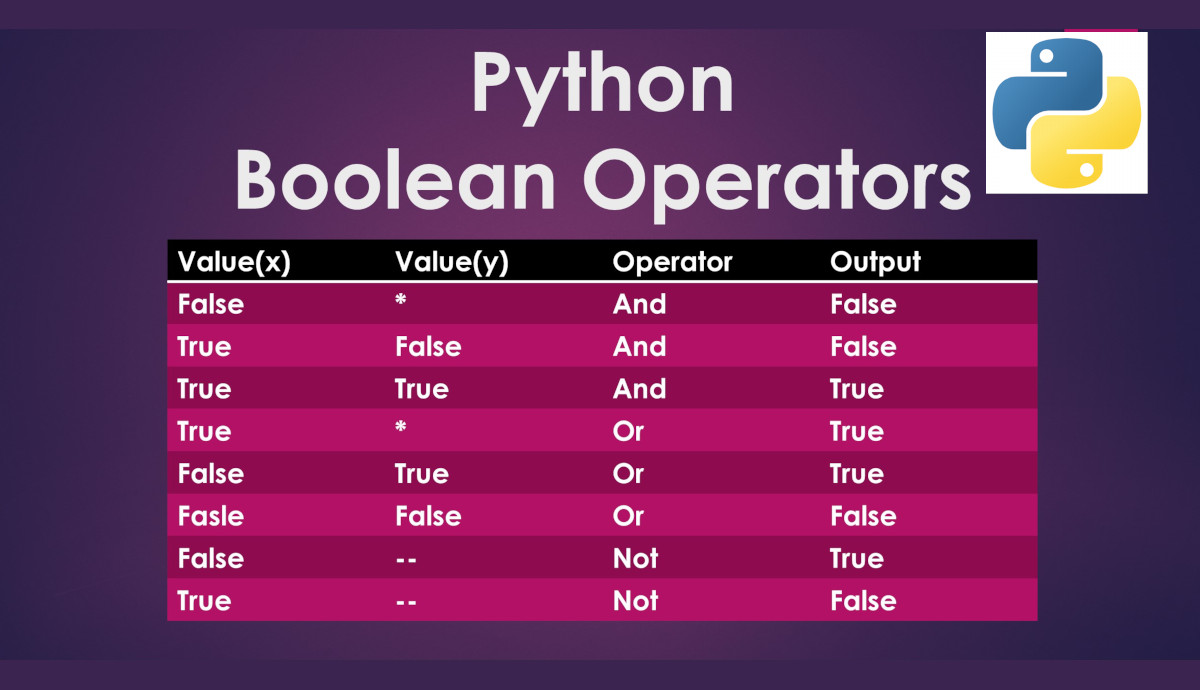
The fundamental components of Boolean logic are truth values: True (often represented as 1) and False (represented as 0). These are the only two possible states. Boolean operators then act upon these truth values to produce a new truth value. For example, if you have two statements, A and B, an operator like “AND” would combine them to produce a result that is true only if both A and B are true. This simple yet profound system allows for the construction of incredibly complex logical expressions by combining these basic operations. The beauty lies in its deterministic nature: given the input truth values, the output is always predictable and unambiguous. This certainty is what makes Boolean logic so invaluable in computing, where ambiguity is the enemy of efficiency and correctness.
Why Binary? The Digital World’s Language
The inherent binary nature of Boolean logic perfectly mirrors the fundamental operation of digital computers. At the deepest level, computers operate using electrical signals that are either on or off, representing 1s and 0s. Transistors, the tiny switches that form the basis of all modern electronics, embody this binary principle. A transistor is either conducting electricity (on) or not (off). Therefore, Boole’s logical system provided the perfect mathematical model for designing and understanding digital circuits. Every calculation, every instruction, every piece of data processed by a computer is ultimately broken down into these binary operations. From the simplest arithmetic to the most sophisticated artificial intelligence algorithms, Boolean logic provides the bedrock, making it the true lingua franca of the digital realm.
The Primary Boolean Operators: AND, OR, NOT
While Boolean logic offers a theoretical framework, Boolean operators are its practical manifestation. These are the specific keywords or symbols we use to construct logical queries and commands. The three most fundamental and widely used operators are AND, OR, and NOT. Each serves a distinct purpose in refining or expanding the scope of information retrieval or logical evaluation.
The AND Operator: Precision and Intersection
The AND operator is used to combine two or more search terms, instructing the system to return results where all specified terms are present. It acts as an intersection, narrowing your search to include only items that satisfy every condition.
-
Example (Search Engine):
climate AND changewill only show documents that contain both the word “climate” and the word “change.” -
Example (Database Query):
SELECT * FROM Users WHERE Age > 30 AND City = 'New York';retrieves users who are both older than 30 and live in New York.
Using AND increases the specificity of your search, reducing the number of results but increasing their relevance to a precise set of criteria. It’s ideal when you need to find items that meet multiple conditions simultaneously.
The OR Operator: Broadening the Scope
In contrast to AND, the OR operator expands your search, instructing the system to return results where at least one of the specified terms is present. It acts as a union, retrieving items that satisfy any of the given conditions.
-
Example (Search Engine):
dogs OR catswill show documents that contain either “dogs” or “cats” or both. -
Example (Database Query):
SELECT * FROM Products WHERE Category = 'Electronics' OR Price < 50;retrieves products that are either in the ‘Electronics’ category or cost less than 50 (or both).
OR is powerful for finding related concepts or synonyms, ensuring you don’t miss relevant information just because it’s phrased slightly differently. It increases the recall of your search, potentially yielding more results.
The NOT Operator: Exclusion and Refinement
The NOT operator, also sometimes represented as AND NOT or a minus sign (-), is used to exclude specific terms from your search results. It refines your search by removing unwanted information, ensuring your results do not contain a particular word or phrase.
-
Example (Search Engine):
apple NOT fruitwill find information about Apple (the company) but exclude results related to the actual apple fruit. -
Example (Database Query):
SELECT * FROM Employees WHERE Department = 'Sales' NOT Position = 'Intern';retrieves employees in Sales who are not interns.
NOT is crucial for disambiguation and filtering out noise, especially when dealing with homonyms or broad topics that might include irrelevant sub-topics. It drastically improves precision by eliminating false positives.
XOR (Exclusive OR): A Special Case
While less commonly encountered in basic search interfaces, the XOR (Exclusive OR) operator is vital in programming and digital circuit design. XOR returns true if exactly one of the conditions is true, but false if both are true or both are false.
- Example (Programming Logic):
A XOR Bis true if A is true and B is false, or if A is false and B is true. It is false if both A and B are true, or if both are false.
XOR is fundamental in cryptography, error detection, and various digital logic gates, where situations demanding a strict “one or the other, but not both” condition arise.
Practical Applications Across Technology
The theoretical elegance of Boolean logic translates into immense practical utility across virtually every domain of technology. Its application allows for efficient data manipulation, precise information retrieval, and robust system design.

Enhancing Search Engine Queries and Information Retrieval
Perhaps the most common public interaction with Boolean operators is through search engines like Google, academic databases, and library catalogs. Users implicitly or explicitly use Boolean logic to narrow down vast amounts of information. Understanding how to use AND, OR, and NOT (or their implicit equivalents like quotation marks for exact phrases, which act like a very specific AND) empowers users to conduct highly targeted searches, finding exactly what they need amidst billions of web pages or documents. This proficiency is a critical skill in the age of information overload.
Powering Database Management Systems (DBMS)
Boolean operators are the backbone of querying in relational database management systems (DBMS) using languages like SQL (Structured Query Language). When you write a WHERE clause to filter data, you’re directly employing Boolean logic. Retrieving specific customer records, filtering inventory, or generating targeted reports all rely on the precise application of AND, OR, and NOT to combine conditions and extract the exact subsets of data required. Without them, querying complex datasets would be unwieldy and impractical.
Programming and Conditional Logic
In software development, Boolean operators are indispensable for implementing conditional logic. If-then-else statements, loops, and function calls often depend on conditions evaluated using Boolean expressions. Programmers use && (AND), || (OR), and ! (NOT) in languages like Java, Python, C++, and JavaScript to control program flow, validate user input, manage error handling, and make decisions based on various criteria. This forms the very fabric of dynamic and responsive software.
Cybersecurity and Network Filtering
In the realm of digital security, Boolean logic plays a critical role in defining rules for firewalls, intrusion detection systems (IDS), and anti-malware software. Security policies often use complex Boolean expressions to determine whether network traffic should be allowed or blocked, if a particular action constitutes a threat, or if a file matches a known malware signature. For instance, a firewall rule might state: (Source_IP = '192.168.1.100' AND Destination_Port = 80) OR (Source_IP = '10.0.0.5' AND Protocol = 'FTP'). This allows administrators to create granular and effective security measures to protect networks and data.
Data Analysis and Machine Learning
In data science, Boolean logic is integral to data cleaning, feature engineering, and constructing logical conditions for analysis. Data analysts frequently use Boolean operations to filter datasets, identify specific patterns, or segment data based on multiple criteria before performing statistical analysis. In machine learning, decision trees and rule-based systems explicitly leverage Boolean logic to classify data or make predictions. Even in more complex models, the underlying evaluation of features and conditions often relies on Boolean principles to determine outcomes.
Advanced Concepts and Best Practices
While the basic operators are straightforward, their effective combination requires an understanding of advanced concepts and best practices to harness their full power.
Combining Operators and Order of Operations
Just like in arithmetic, Boolean operations have an order of precedence. Typically, NOT is evaluated first, then AND, and finally OR. Understanding this hierarchy is crucial to constructing accurate queries and expressions. Misunderstanding the order can lead to vastly different results than intended.
- Example:
A AND B OR Cmight be interpreted as(A AND B) OR Cby default, but if you intendedA AND (B OR C), you must use parentheses.
Parentheses for Clarity and Control
Parentheses () are your most powerful tool for overriding the default order of operations and for ensuring clarity. They force the evaluation of the enclosed expression first. Using parentheses is highly recommended when combining multiple operators, as it makes your logic explicit and prevents unintended interpretations.
- Example:
(cats OR dogs) AND (cute OR fluffy)ensures that the system first finds documents with “cats” or “dogs,” and then from those results, further filters for documents that also contain “cute” or “fluffy.” Without parentheses, the interpretation might be ambiguous.
Beyond Simple Keywords: Structured Queries
Boolean operators are not limited to simple keyword searches. They are fundamental in structured query languages (like SQL), regular expressions, and advanced programming constructs where conditions might involve comparisons, range checks, and pattern matching. The principles remain the same: combine conditions using AND, OR, and NOT to achieve precise selection.
The Importance of Context and Specificity
While powerful, Boolean operators require careful consideration of context. A term might have multiple meanings (e.g., “java” for coffee vs. programming language). Effective use involves:
-
Choosing relevant terms: Thinking critically about synonyms and related concepts.
-
Using NOT sparingly: Overuse of NOT can inadvertently exclude relevant information.
-
Iterative refinement: Starting with a broad search and gradually narrowing it down, or vice versa, by adjusting operators.
The Future of Boolean Logic in Evolving Tech
Even as technology advances at breakneck speed, the foundational principles of Boolean logic remain remarkably resilient and relevant. Its binary nature and capacity for precise logical expression ensure its continued importance in emerging fields.
Boolean Operators in AI and Natural Language Processing
While AI and Natural Language Processing (NLP) aim to understand human language’s nuances, the underlying decision-making processes often revert to Boolean logic. For instance, in rule-based AI systems, expert systems, and even certain aspects of machine learning classification, conditions are evaluated using Boolean expressions. As NLP models become more sophisticated, they generate internal representations that can then be queried and manipulated using Boolean-like operations to extract specific information or make decisions based on learned patterns.
Quantum Computing and the Expansion of Logic
Quantum computing introduces qubits, which can exist in superpositions of 0 and 1 simultaneously, fundamentally expanding beyond classical binary states. However, even within this paradigm, logical gates (quantum gates) operate on principles that are analogous to Boolean operations, albeit with quantum mechanics at play. The concept of combining states and evaluating outcomes, even probabilistically, still echoes the deterministic and exclusionary principles of Boole’s original work, albeit in a vastly more complex and multi-dimensional space. The foundational concept of defining states and operations between them persists.
Continued Relevance in a Data-Driven World
In an era defined by Big Data, cloud computing, and the Internet of Things (IoT), the ability to efficiently process, filter, and make sense of massive datasets is paramount. Boolean operators provide the indispensable tools for this task. As the volume and complexity of data continue to grow, the need for precise and unambiguous methods to retrieve specific information will only intensify. From refining highly specific job searches to controlling autonomous systems, Boolean operators will remain at the forefront, serving as the essential logical language that enables humans to command and comprehend the digital universe.
In conclusion, the simple yet profound concepts introduced by George Boole centuries ago have proven to be the bedrock of modern computing and information technology. Boolean operators are not just abstract mathematical constructs; they are practical, everyday tools that empower us to navigate, organize, and control the digital world. Their continued relevance in diverse and evolving technological landscapes underscores their timeless utility and fundamental importance to anyone seeking to master the art of digital interaction and information management.
aViewFromTheCave is a participant in the Amazon Services LLC Associates Program, an affiliate advertising program designed to provide a means for sites to earn advertising fees by advertising and linking to Amazon.com. Amazon, the Amazon logo, AmazonSupply, and the AmazonSupply logo are trademarks of Amazon.com, Inc. or its affiliates. As an Amazon Associate we earn affiliate commissions from qualifying purchases.