
The debate between iPhone and Samsung Galaxy users is one of the most enduring and passionate in the consumer technology world. For years, these two giants have dominated the smartphone market, each cultivating a fiercely loyal user base and pushing the boundaries of mobile innovation. But when it comes down to it, which one is truly “better”? The answer, as with many complex questions, is rarely black and white. It hinges on individual preferences, priorities, and what one values most in a daily digital companion.
This article delves deep into the core differentiators between Apple’s iconic iPhone and Samsung’s versatile Galaxy lineup, exploring their operating systems, design philosophies, camera capabilities, performance, and ecosystem integration. Our goal is not to declare an absolute winner, but to equip you with the insights needed to make an informed decision tailored to your specific needs and desires in the ever-evolving landscape of mobile technology.
Operating Systems: The Core Divide
At the heart of the iPhone vs. Samsung Galaxy dilemma lies the fundamental difference in their operating systems: Apple’s iOS and Google’s Android. This is arguably the most significant factor influencing user experience and often dictates a user’s loyalty.
iOS: Simplicity and Integration
Apple’s iOS is renowned for its intuitive interface, seamless user experience, and robust ecosystem. From the moment you pick up an iPhone, the learning curve is minimal, thanks to its consistent design language and straightforward navigation. This simplicity extends to app management, settings, and updates, making it an ideal choice for users who prefer a streamlined, “it just works” approach.
One of iOS’s greatest strengths is its tight integration with Apple’s hardware and services. This creates a cohesive ecosystem where devices like the iPhone, iPad, Mac, Apple Watch, and AirPods communicate effortlessly. Features like Handoff, AirDrop, and iCloud provide a smooth transition between tasks and devices, enhancing productivity and convenience for users invested in the Apple universe. Security and privacy are also cornerstones of iOS, with Apple implementing strict app store guidelines and data protection measures that give users peace of mind. Regular, timely software updates ensure that iPhones receive the latest features and security patches for many years, significantly extending their usable lifespan.
Android: Customization and Openness
In stark contrast, Samsung Galaxy phones run on Android, an open-source operating system developed by Google, heavily customized by Samsung with its One UI interface. Android is celebrated for its unparalleled flexibility and customization options. Users can personalize almost every aspect of their device, from launchers and widgets to icon packs and notification settings. This level of control appeals to power users and those who enjoy tailoring their digital experience precisely to their liking.
Android’s open nature also fosters a diverse app ecosystem, with many more options for sideloading apps or installing alternative app stores, though this comes with potential security considerations. Samsung, in particular, adds a multitude of proprietary features and apps to Android through One UI, such as DeX for desktop-like experiences, extensive S Pen functionalities on Ultra models, and advanced multi-window capabilities. This versatility allows Galaxy users to adapt their device to a wide array of personal and professional workflows. While Android updates can sometimes be fragmented across different manufacturers and models, Samsung has significantly improved its commitment to software support in recent years, offering several years of OS updates and security patches for its flagship devices.
Design, Display, and Build Quality
Beyond the software, the physical attributes of a smartphone—its design, the quality of its display, and its overall build—play a crucial role in the user’s perception and daily interaction. Both Apple and Samsung have set industry benchmarks in these areas, albeit with distinct philosophies.
Apple’s Premium Aesthetic and Ecosystem Integration
Apple’s design language is characterized by its minimalist elegance, premium materials, and meticulous craftsmanship. iPhones typically feature a sleek, uniform aesthetic across generations, with incremental refinements rather than radical overhauls. Materials like aerospace-grade aluminum and surgical-grade stainless steel, coupled with Ceramic Shield fronts, provide both a luxurious feel and enhanced durability.
The displays on iPhones, particularly the Super Retina XDR OLED panels, are renowned for their color accuracy, brightness, and contrast. While not always boasting the highest refresh rates across the entire lineup compared to some Android competitors, Apple prioritizes a consistently excellent visual experience, optimized for content consumption and creation. The notch (or Dynamic Island on recent Pro models) has become an iconic, functional design element, seamlessly integrating the front-facing camera and Face ID sensors while also serving as an innovative notification hub. This cohesive design extends to accessories, creating a unified and aesthetically pleasing Apple ecosystem.
Samsung’s Diverse Range and Innovative Screens
Samsung, on the other hand, embraces a more diverse and often more experimental design philosophy. Their Galaxy lineup spans a vast spectrum, from budget-friendly A-series phones to the cutting-edge foldable Z-series and the feature-packed S-series flagships. This diversity means there’s a Samsung phone design for virtually every taste and budget.
Samsung is a pioneer in display technology, and their AMOLED panels are consistently lauded as some of the best in the industry. Known for their vibrant colors, deep blacks, and exceptional brightness, Galaxy displays often push the boundaries with features like higher refresh rates (up to 120Hz even on non-flagship models), curved edges, and the innovative hole-punch camera cutout that maximizes screen real estate. The introduction of foldable screens with the Galaxy Z Fold and Z Flip series further showcases Samsung’s commitment to pushing design innovation. While premium Galaxy phones utilize high-quality materials like Gorilla Glass Victus and aluminum frames, Samsung’s broader range means build quality can vary more significantly across different price points than with Apple’s more concentrated premium offerings.
Camera Capabilities: Capturing the Moment
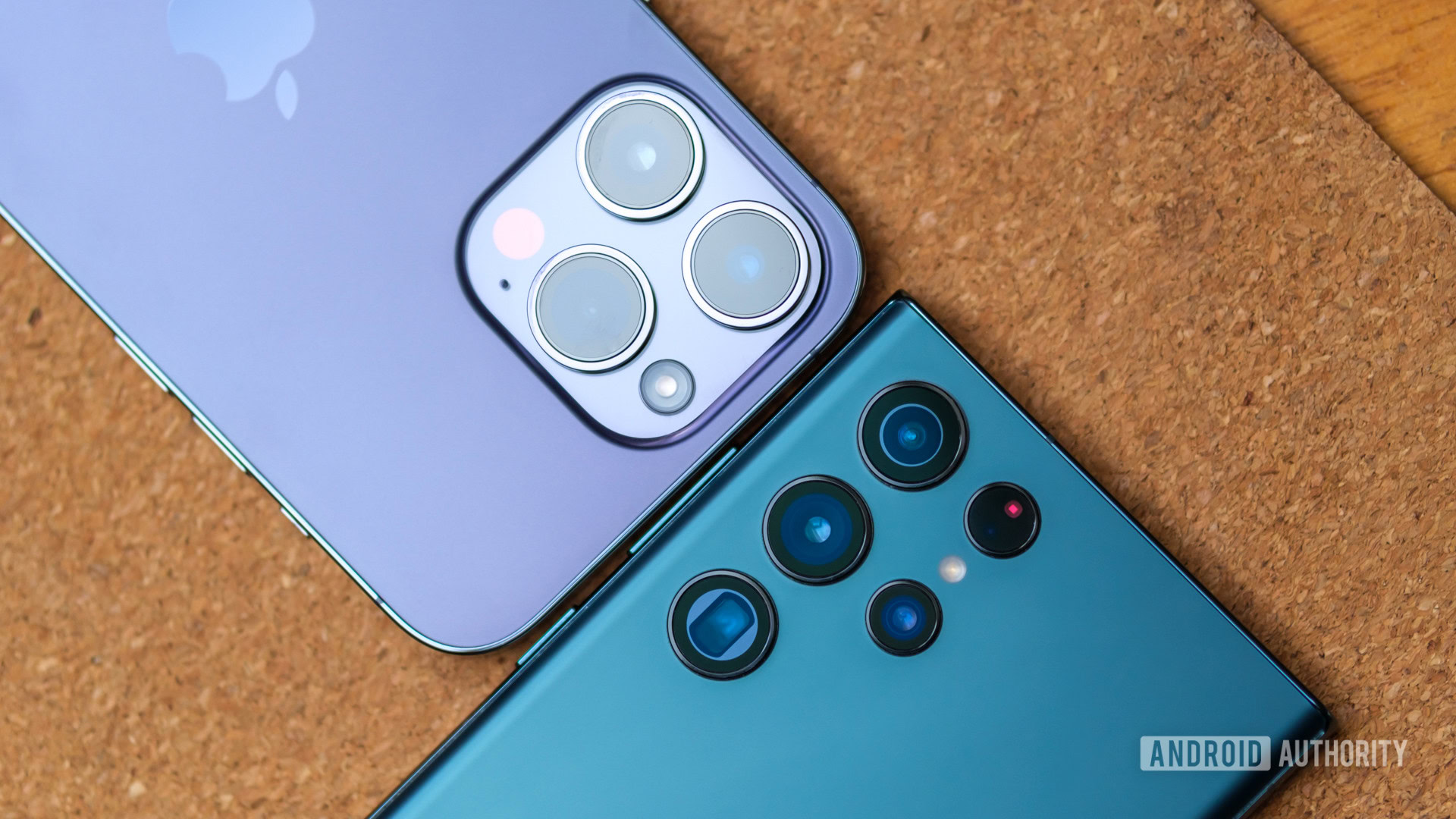
In the modern smartphone era, the camera is often a primary decision-making factor. Both iPhone and Samsung Galaxy devices consistently rank among the best camera phones, each with its own strengths and unique approach to mobile photography.
iPhone’s Consistent Performance and Computational Photography
Apple has long emphasized consistency and ease of use in its camera system. iPhones are celebrated for their “point-and-shoot” reliability, delivering consistently good results in a wide range of conditions without requiring extensive manual adjustments. The color science tends towards natural and true-to-life tones, appealing to those who prefer an authentic representation of the scene.
A key to the iPhone’s camera prowess lies in its advanced computational photography. Features like Deep Fusion, Smart HDR, and the Photonic Engine leverage powerful processors and AI to optimize images pixel by pixel, enhancing detail, dynamic range, and low-light performance. Cinematic Mode, Photographic Styles, and ProRes video recording on Pro models further cement the iPhone’s reputation as a formidable tool for both amateur and aspiring professional videographers and photographers. The video recording capabilities, in particular, are often considered best-in-class for their smoothness, stability, and high quality.
Samsung’s Versatility and Zoom Prowess
Samsung Galaxy cameras, especially on their Ultra models, often boast impressive specifications, including higher megapixel counts and a greater number of lenses, offering unparalleled versatility. The “Space Zoom” feature on Ultra devices, combining optical and digital zoom, allows users to capture distant subjects with remarkable detail, setting a benchmark for telephoto capabilities in smartphones.

Samsung’s camera software often includes a wider array of modes and features right out of the box, such as Single Take, Pro Mode for granular control, and various artistic filters, appealing to users who enjoy experimenting and customizing their shots. While Samsung photos can sometimes be criticized for oversaturation, many users appreciate the vibrant, “ready-to-share” look their cameras produce. Low-light performance has also seen significant improvements, with features like Night Mode delivering bright and clear images even in challenging conditions. The ability to switch between ultra-wide, standard, and telephoto lenses offers a broad creative canvas for photographers.
Performance, Battery Life, and Ecosystem
Beyond the immediate user interface and visual appeal, the underlying performance, stamina, and integration within a broader digital life are critical for long-term satisfaction.
Processing Power and User Experience
Apple’s A-series Bionic chips are consistently at the forefront of mobile processor technology, often outperforming competitors in raw benchmarks. This translates into incredibly fluid performance across the board, from demanding games and video editing to seamless multitasking. iPhones rarely exhibit lag or slowdowns, maintaining their speed and responsiveness for years, partly due to the optimized interplay between hardware and software.
Samsung Galaxy flagships utilize either Qualcomm’s Snapdragon chips (primarily in North America and some other regions) or Samsung’s own Exynos processors (in other markets). These are also incredibly powerful, capable of handling any task thrown at them. While benchmarks might sometimes show a slight lead for Apple, in real-world usage, the performance difference between high-end iPhones and Galaxy devices is often negligible for most users. Both provide excellent gaming, app performance, and overall responsiveness. The choice here often comes down to specific software optimizations or individual perception of speed.
Battery Longevity and Charging Solutions
Battery life is a constant concern for smartphone users. Both Apple and Samsung have made significant strides in optimizing battery performance, with current flagship models offering all-day battery life for most users.
iPhones have steadily improved their battery endurance, with Pro Max models often leading the pack. Apple’s strict control over hardware and software allows for efficient power management. Charging speeds have also improved, with fast charging capabilities, MagSafe wireless charging, and Qi wireless charging supported.
Samsung Galaxy devices typically offer competitive battery life, with many models featuring larger battery capacities. Samsung also offers a wider range of charging solutions, including faster wired charging speeds (often exceeding Apple’s in wattage), fast wireless charging, and even Wireless PowerShare, which allows the phone to wirelessly charge other Qi-compatible devices like earbuds or smartwatches. The presence of reverse wireless charging is a unique utility that Galaxy users often appreciate.
The Ecosystem Advantage: Apple vs. Samsung’s Broader Reach
The concept of an “ecosystem” is crucial in modern tech. Apple’s ecosystem is renowned for its tight integration and seamless user experience across devices (iPhone, iPad, Mac, Apple Watch, AirPods). Features like iCloud sync, AirDrop, Handoff, and Universal Clipboard make switching between tasks on different Apple devices incredibly smooth and efficient. For users deeply embedded in Apple’s world, the iPhone is a cornerstone of this interconnected experience.
Samsung, while not having the same level of proprietary hardware integration as Apple, offers its own robust ecosystem built around Android. Samsung Galaxy phones work seamlessly with Galaxy Watch, Galaxy Buds, and Samsung tablets. Moreover, Samsung’s broader reach in consumer electronics means its devices integrate well with smart home appliances and TVs. Features like Samsung DeX transform Galaxy phones into desktop-like computers, and SmartThings provides comprehensive smart home control. Furthermore, being an Android device, a Galaxy phone benefits from Google’s extensive ecosystem, including Google Assistant, Google Photos, and tight integration with Windows PCs through features like Link to Windows, offering more cross-platform flexibility than Apple typically does.
Value Proposition and Software Support
Finally, the long-term value and support for a smartphone are critical considerations for any buyer.
Pricing, Resale Value, and Long-term Investment
Both Apple and Samsung offer premium flagships that command high prices. Generally, iPhones tend to retain their value better over time, making them a more attractive option for those who frequently upgrade and sell their old devices. This strong resale value can offset the initial high purchase price. Apple also provides extensive trade-in programs.
Samsung’s pricing strategy is often more aggressive, with frequent sales and a wider range of models at different price points. While their flagships are comparable in price to iPhones, the broader selection allows consumers with varying budgets to find a suitable Galaxy device. Resale value for Samsung phones, while decent, typically doesn’t match that of iPhones, though high-end S Ultra and Z series models hold their value better than entry-level or mid-range devices. The diverse range of options means that finding a deal on a Samsung phone might be easier.
Software Updates and Longevity
Long-term software support is a significant factor in a smartphone’s longevity and security. Apple is exemplary in this regard, providing typically 5-7 years of major iOS updates for its iPhones, ensuring devices remain secure and feature-rich for an extended period. This commitment to updates significantly extends the useful life of an iPhone, making it a sound long-term investment.
Samsung has drastically improved its software update policy in recent years. Many of its flagship Galaxy devices now receive 4-5 years of major Android OS updates and up to 5 years of security updates, bringing them closer to Apple’s standard. This enhanced commitment means that a premium Samsung Galaxy phone can also be a reliable companion for many years, addressing a previous concern many Android users had.

Conclusion
Ultimately, the question of whether an iPhone or a Samsung Galaxy is “better” has no universal answer. Both are exceptional pieces of technology, representing the pinnacle of smartphone innovation, and excel in different aspects.
-
Choose iPhone if you prioritize:
-
An extremely intuitive, simple, and consistent user experience.
-
Seamless integration within a powerful, tightly controlled ecosystem (Mac, iPad, Apple Watch).
-
Industry-leading privacy and security.
-
Consistently excellent camera performance with a focus on natural colors and video.
-
Strong long-term software support and high resale value.
-
-
Choose Samsung Galaxy if you prioritize:
-
Unparalleled customization and flexibility with the Android operating system.
-
Cutting-edge display technology and innovative form factors (like foldables).
-
A versatile camera system with extensive zoom capabilities and a wide array of shooting modes.
-
More diverse hardware options and price points.
-
Openness to a broader digital ecosystem, including easier integration with Windows PCs.
-
Your choice should reflect your personal technological philosophy, your budget, and how you intend to use your device within your broader digital life. Both Apple and Samsung continue to innovate fiercely, ensuring that whichever path you choose, you’re investing in a truly capable and satisfying smartphone experience.
aViewFromTheCave is a participant in the Amazon Services LLC Associates Program, an affiliate advertising program designed to provide a means for sites to earn advertising fees by advertising and linking to Amazon.com. Amazon, the Amazon logo, AmazonSupply, and the AmazonSupply logo are trademarks of Amazon.com, Inc. or its affiliates. As an Amazon Associate we earn affiliate commissions from qualifying purchases.