
In the intricate landscape of modern financial transactions, particularly those involving substantial assets or complex conditions, trust and security are paramount. Whether you’re buying a home, acquiring a business, or engaging in a significant commercial deal, the potential for complications and disputes is ever-present. This is precisely where the role of an escrow officer becomes indispensable. Far from a mere administrative function, an escrow officer acts as an impartial linchpin, safeguarding the financial interests of all parties involved and ensuring that transactions proceed smoothly, ethically, and in strict adherence to contractual agreements. Their expertise falls squarely within the domain of Money, underpinning the security and reliability of financial undertakings ranging from personal investments to complex business finance.
The Core Function of Escrow: A Financial Safety Net
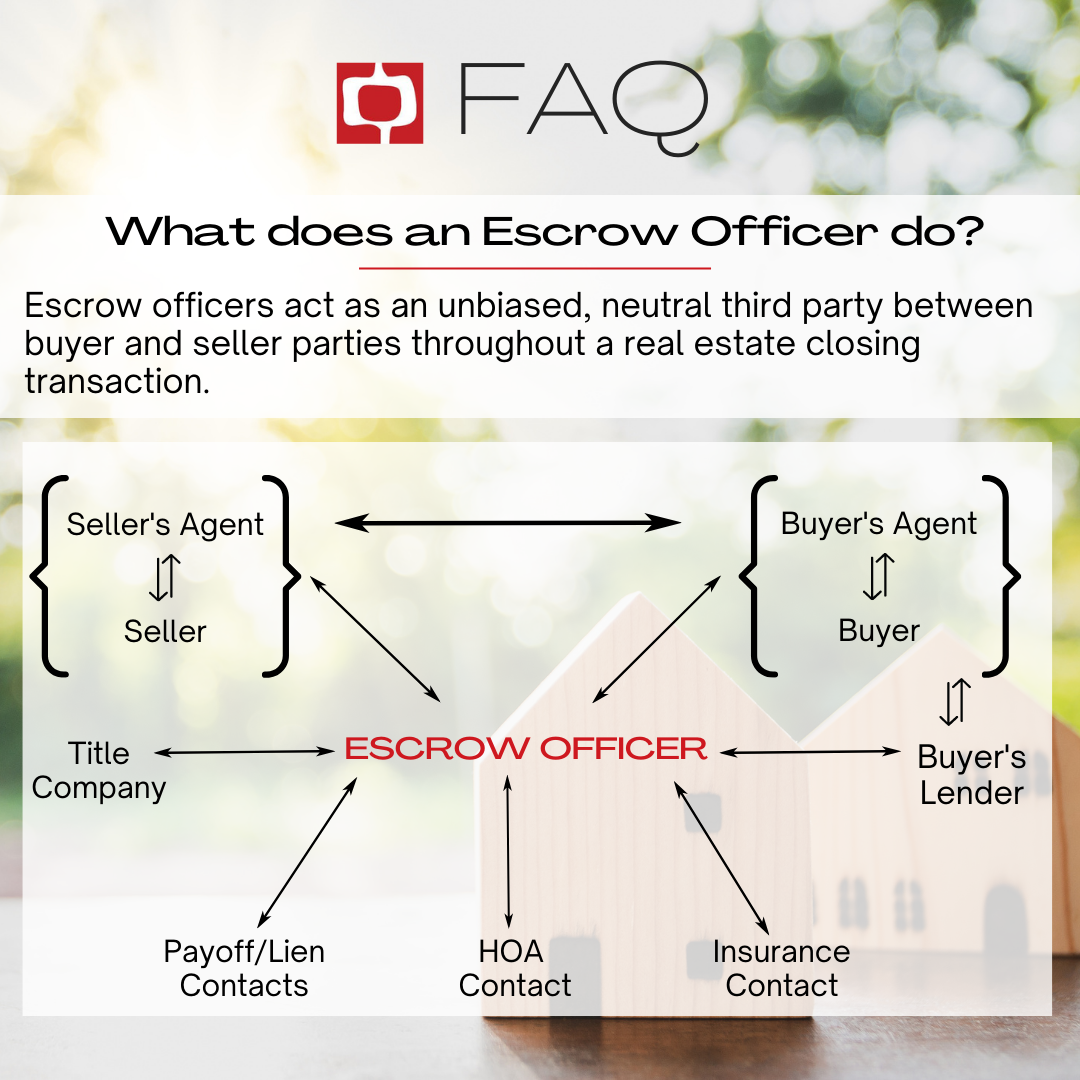
At its heart, escrow is a powerful financial mechanism designed to mitigate risk and foster trust in transactions where multiple conditions must be met before funds or assets can be transferred. It’s a contractual arrangement where an independent, neutral third party holds and disburses money, documents, or other assets until all conditions of the agreement are satisfied. The escrow officer is the human embodiment of this safety net, diligently overseeing every step of the process.
Understanding the Escrow Mechanism
Imagine a scenario where a buyer wants to purchase a property. The buyer doesn’t want to release their substantial payment until they are certain the seller has provided a clear title, all necessary repairs have been completed, and the property is legally ready for transfer. Conversely, the seller doesn’t want to transfer ownership until they are guaranteed to receive the full payment. This is a classic dilemma of trust and sequencing. Escrow resolves this by introducing a trusted intermediary – the escrow officer.
The escrow officer acts as a custodian. Both the buyer’s funds and the seller’s deed (and other relevant documents) are deposited with the escrow officer. These assets are held “in escrow,” meaning they are not released to either party until all predefined conditions, as outlined in the purchase agreement, have been met. This mechanism is not exclusive to real estate; it’s also vital in mergers and acquisitions, large equipment purchases, intellectual property licensing, and even some online transactions where high-value items are exchanged. The primary benefit is absolute security: funds and assets are protected from unexpected issues, non-compliance, or even the bankruptcy of one party, as they are held separate from the personal or corporate assets of the transacting parties.
The Escrow Officer’s Role in Practice
In practical terms, the escrow officer is the diligent guardian of the transaction’s financial integrity. They don’t represent the buyer or the seller; their sole allegiance is to the terms of the escrow agreement. Their role is to:
-
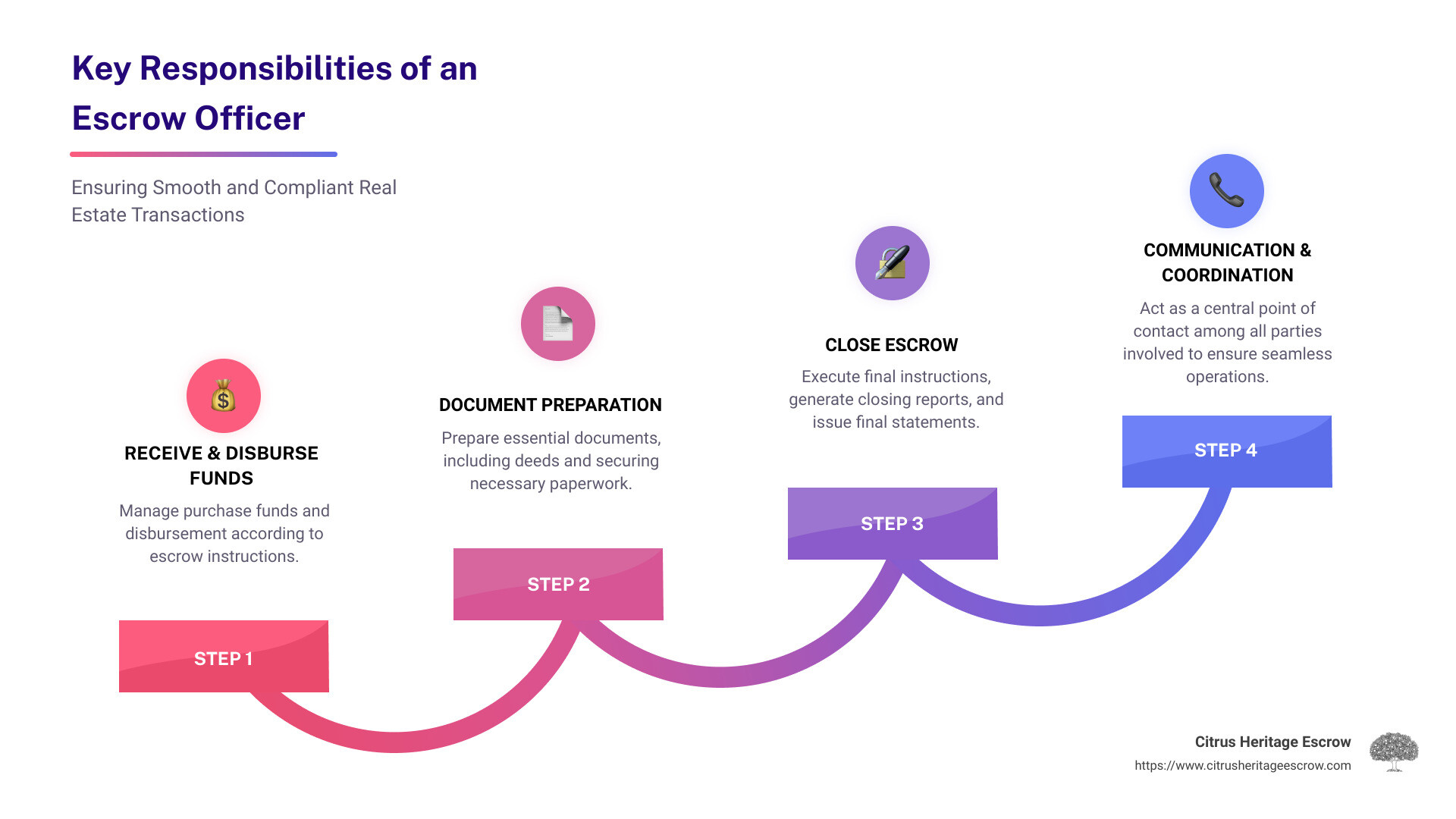
Serve as Custodian: Hold all financial deposits (earnest money, down payments, loan proceeds, final sale price) and important documents (deeds, titles, loan documents, contracts).
-
Verify Conditions: Rigorously check that all conditions stipulated in the purchase agreement or escrow instructions have been fully met by both parties. This might include obtaining lien releases, ensuring specific repairs are done, verifying loan approvals, or confirming title insurance policies are in place.
-
Facilitate Disbursement: Once all conditions are unequivocally satisfied, and only then, they disburse funds to the seller and other relevant parties (e.g., real estate agents, lenders, tax authorities) and release the deed to the buyer.
-
Maintain Impartiality: Act as an unbiased arbiter throughout the process, ensuring fairness and transparency for everyone involved.
This meticulous oversight ensures that the financial interests of all stakeholders are protected, turning what could be a precarious exchange into a secure and predictable process.
The Multifaceted Responsibilities of an Escrow Officer
The duties of an escrow officer extend far beyond merely holding documents and funds. Their role requires a deep understanding of financial processes, legal frameworks, and meticulous organizational skills. They are project managers of complex financial transactions, orchestrating a multitude of tasks to bring a deal to a successful close.
Setting Up and Managing the Escrow Account
The journey begins with the establishment of a dedicated escrow account. Upon receipt of the executed purchase agreement, the escrow officer initiates the process by opening this account. This involves:
-
Receiving Deposits: Collecting all initial deposits, such as earnest money from the buyer, and subsequent funds like down payments or loan proceeds from the lender. These funds are held in a separate, trust-based account, distinct from the escrow company’s operating funds, in compliance with strict financial regulations to ensure their safety.
-
Maintaining Meticulous Records: Every penny received and anticipated, every document submitted, and every communication made is meticulously recorded. This level of detail is crucial for accountability, transparency, and audit purposes.
-
Compliance: Ensuring that all financial aspects of the transaction adhere to state and federal regulations, including those governing trust accounts, anti-money laundering (AML), and consumer protection laws (like RESPA for real estate).
Document Management and Condition Fulfillment
Perhaps one of the most demanding aspects of the job is the relentless focus on documentation and the tracking of contingencies. An escrow officer acts as a central hub for all legal and financial paperwork. This includes:
-
Collecting and Reviewing Documents: Gathering a vast array of documents, including the original purchase agreement, loan documents, title reports, insurance policies, disclosures, inspection reports, repair invoices, and any other instruments relevant to the transaction. They must review these for completeness and accuracy.
-
Tracking Contingencies: The purchase agreement invariably contains contingencies – conditions that must be met before the sale can be finalized. These could range from the buyer securing financing, a satisfactory home inspection, the sale of the buyer’s current home, or specific repairs being completed by the seller. The escrow officer diligently tracks these, often setting deadlines and communicating with all parties to ensure timely fulfillment.
-
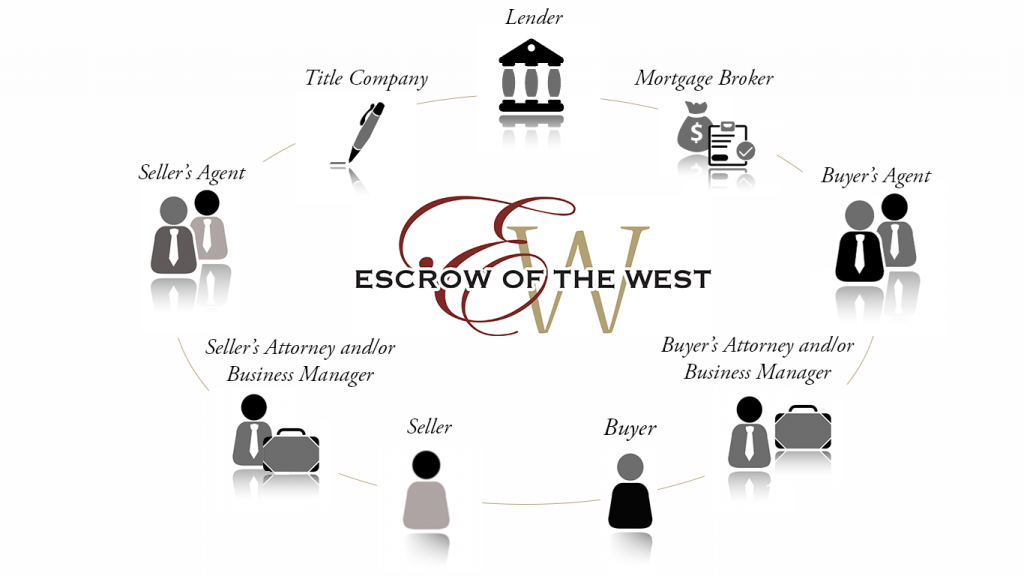
Coordinating with Parties: The escrow officer is the primary point of contact and coordinator for a diverse group of professionals: buyers, sellers, real estate agents, lenders, attorneys, title companies, home inspectors, and sometimes contractors. They facilitate communication, ensure information flows efficiently, and resolve potential bottlenecks.
The Closing Process and Disbursement
The culmination of the escrow officer’s work is the closing – the momentous event where ownership officially transfers, and funds are distributed. This involves several critical steps:
-
Preparing Closing Statements: One of the most significant tasks is the preparation of the Closing Disclosure (CD) or, for older transactions, the HUD-1 statement. These detailed documents itemize all charges and credits for both the buyer and the seller, including the sale price, loan amounts, fees (attorney fees, title insurance premiums, escrow fees), taxes, and adjustments. Accuracy here is paramount, as even small errors can have significant financial repercussions.
-
Calculating Prorations: The escrow officer is responsible for calculating prorated amounts for items like property taxes, homeowner association (HOA) dues, and utilities. This ensures that each party pays their fair share for the period they owned the property during the current payment cycle.
-
Facilitating Document Signing: They oversee the signing of all final documents, ensuring that all parties understand what they are signing and that the paperwork is executed correctly according to legal requirements.
-
Disbursement of Funds and Recording: Once all documents are signed and all conditions are met, the escrow officer orchestrates the final financial transfer. They disburse funds from the escrow account to the seller, real estate agents (commissions), lenders (payoffs for existing mortgages), and any other service providers. Simultaneously, they ensure that the new deed and other relevant documents are recorded with the appropriate government authorities, officially transferring ownership.
-
Ensuring Lien Releases: They verify that any existing liens on the property are satisfied and released, guaranteeing that the buyer receives a clear and unencumbered title.
This comprehensive set of responsibilities underscores the escrow officer’s pivotal role in managing the financial integrity and logistical complexities of major transactions.
Key Qualities and Skills for an Effective Escrow Officer
The demanding nature of an escrow officer’s role necessitates a unique blend of personal attributes and professional skills. These qualities are fundamental to upholding the financial security and ethical standards expected in this profession.
Impartiality and Integrity
At the core of an escrow officer’s effectiveness is their unwavering impartiality. They must operate as a truly neutral third party, devoid of bias towards either the buyer or the seller. This means:
-
Maintaining Neutrality: Avoiding any action or communication that could be perceived as favoring one party over another.
-
Ethical Conduct: Upholding the highest standards of ethics and trustworthiness. Parties entrust significant sums of money and critical legal documents to the escrow officer, requiring absolute confidence in their integrity.
-
Confidentiality: Protecting sensitive financial and personal information shared during the transaction.
Meticulous Attention to Detail
The financial and legal ramifications of errors in an escrow transaction can be catastrophic. Therefore, an escrow officer must possess extraordinary attention to detail:
-
Precision in Financial Figures: Accurately calculating prorations, credits, debits, and disbursement amounts. Even minor miscalculations can lead to thousands of dollars in discrepancies.
-
Thorough Document Review: Scrutinizing every clause in contracts, every entry on a title report, and every line item on a closing statement to catch inconsistencies or omissions.
-
Record-Keeping Excellence: Maintaining comprehensive, organized, and auditable records of every communication, deposit, and document related to the transaction.
Strong Communication and Problem-Solving Skills
An escrow officer is often the central communicator in a transaction, acting as a bridge between multiple parties, each with their own jargon and priorities.
-
Clear Communication: The ability to explain complex financial and legal concepts in understandable terms to clients who may have little experience with such transactions. This includes clearly outlining responsibilities, deadlines, and the implications of certain decisions.
-
Mediation and Conflict Resolution: Often, unexpected issues or disagreements arise during a transaction. An effective escrow officer can mediate disputes, identify practical solutions, and guide parties toward a consensus, all while adhering to the terms of the escrow agreement and legal requirements.
-
Proactive Information Sharing: Keeping all parties informed about the progress of the transaction, potential delays, or new developments.
Regulatory Knowledge and Adaptability
The financial and real estate industries are heavily regulated and subject to frequent changes. An escrow officer must stay current:
-
Up-to-Date Legal and Financial Knowledge: A deep understanding of relevant state and federal laws (e.g., RESPA, TILA, escrow licensing laws), local customs, and industry best practices.
-
Adaptability: The ability to adapt to changes in regulations, market conditions, and technology that impact how financial transactions are conducted. This includes understanding new forms, disclosure requirements, and electronic closing procedures.
-
Risk Management: Identifying potential risks or compliance issues early in the process and taking steps to mitigate them.
The Financial Security an Escrow Officer Provides
Ultimately, the raison d’être of an escrow officer is to provide an unparalleled layer of financial security, ensuring that significant investments are protected and that the complex dance of asset transfer concludes without unwelcome surprises.
Mitigating Risks for All Parties
The escrow mechanism, expertly managed by an escrow officer, acts as a critical risk mitigation tool for everyone involved:
-
For Buyers: An escrow officer ensures that the buyer’s funds are not prematurely released. This protects the buyer from losing their money if the seller fails to deliver a clear title, complete agreed-upon repairs, or fulfill any other contractual obligations. The buyer can proceed with confidence, knowing their investment is secure until all conditions are met.
-
For Sellers: Conversely, the escrow officer guarantees that the seller will receive the full payment once they have satisfied all their obligations. The seller is protected from the risk of transferring ownership without receiving the agreed-upon funds, avoiding potential financial losses or litigation.
-
For Lenders: Lenders providing financing rely on escrow officers to ensure that their loan funds are disbursed correctly and that their lien on the property is properly recorded, securing their financial interest in the asset.
Enhancing Trust and Transparency
In high-value financial transactions, a lack of trust can cripple a deal. An escrow officer cultivates an environment of transparency and trust:
-
Neutral Ground: They provide a neutral platform where all financial dealings are transparent, verifiable, and governed by a mutually agreed-upon contract. This eliminates the need for direct trust between potentially adversarial parties, as the trust is placed in the impartial third party.
-
Fraud Prevention: By acting as a central, audited authority for funds and documents, escrow officers significantly reduce the potential for fraud, misrepresentation, or errors that could derail a transaction and lead to financial losses.
-
Facilitating Complex Transactions: Many sophisticated financial transactions, such as the sale of a business with earn-out clauses or intellectual property transfers with milestone payments, would be virtually impossible to execute securely without the structured, impartial oversight an escrow officer provides. They turn potentially fraught, high-stakes deals into manageable, secure financial processes.
In conclusion, an escrow officer is far more than a glorified clerk. They are a highly skilled professional, critical to the integrity and security of countless financial transactions, especially in the realm of real estate and business finance. Through their impartiality, meticulous attention to detail, and deep understanding of financial and legal processes, they provide an invaluable service that safeguards investments, mitigates risk, and ensures peace of mind for buyers, sellers, and all stakeholders. Their expertise is a cornerstone of a reliable financial system, facilitating complex dealings with confidence and transparency.
aViewFromTheCave is a participant in the Amazon Services LLC Associates Program, an affiliate advertising program designed to provide a means for sites to earn advertising fees by advertising and linking to Amazon.com. Amazon, the Amazon logo, AmazonSupply, and the AmazonSupply logo are trademarks of Amazon.com, Inc. or its affiliates. As an Amazon Associate we earn affiliate commissions from qualifying purchases.