
In the digital era, an app is more than just a piece of software; it’s a direct extension of a brand, a tangible touchpoint for user interaction, and a powerful channel for delivering value. With millions of applications vying for attention across the Google Play Store and Apple App Store, merely launching a great app is no longer enough. For a brand to truly stand out, connect with its target audience, and achieve sustained growth, a sophisticated marketing strategy is indispensable. This is where App Store Optimization, or ASO, comes into play.
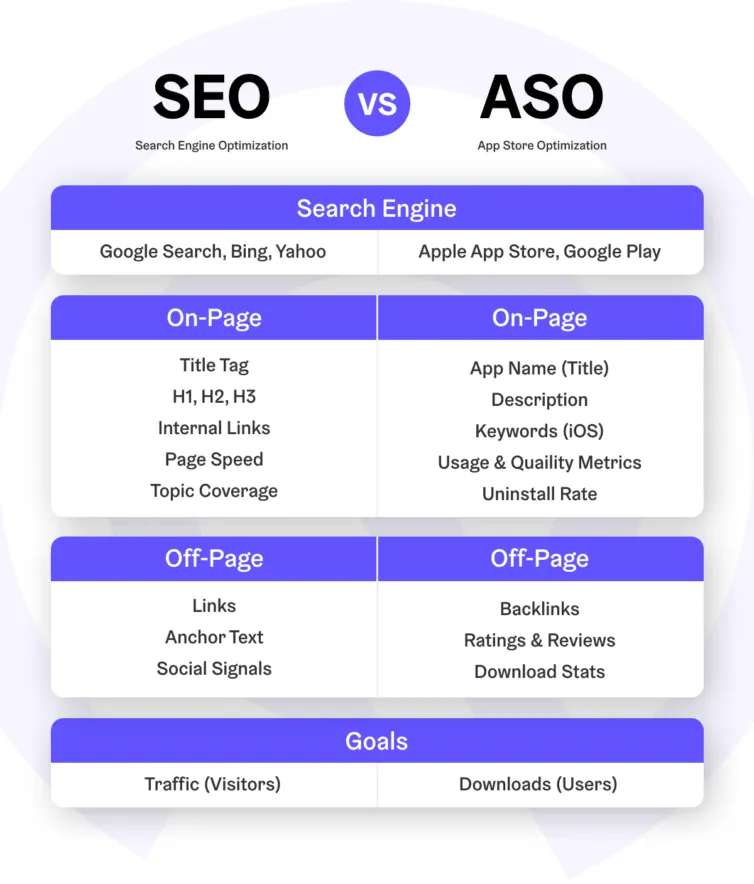
ASO is the process of improving an app’s visibility within the app stores and increasing app conversions (downloads). Much like Search Engine Optimization (SEO) aims to rank websites higher in search engine results, ASO focuses on boosting an app’s ranking in app store search results and categories. However, ASO is fundamentally a brand-building and marketing discipline, designed to ensure that your brand’s digital product not only gets discovered but also resonates effectively with potential users, compelling them to download and engage. It’s about crafting a compelling narrative and visual identity that captivates within the crowded digital storefronts, turning impressions into loyal users and elevating your brand’s presence in a highly competitive market.
The Strategic Imperative: Why ASO is Critical for Brand Discoverability
The success of any brand today hinges on its ability to be discovered by its audience. For apps, the app stores are the primary discovery platforms, acting as vast digital marketplaces. Without a strategic approach to optimize your presence in these stores, even the most innovative and well-designed app can get lost in obscurity. ASO moves beyond technical considerations, positioning itself as a core component of a brand’s overall marketing and growth strategy.
Navigating the Crowded App Landscape for Brand Recognition
Imagine walking into a massive shopping mall with thousands of stores, each selling similar products. How do you decide which one to enter? Often, it’s the store’s window display, its name, or its reputation that draws you in. The app stores operate on a similar principle, but on an exponentially larger scale. As of 2023, there are nearly 7 million apps available across the two major platforms, with thousands more being added daily. This overwhelming saturation means that organic discoverability—users finding your app through search or browsing—is incredibly challenging without intentional optimization.
For a brand, ASO isn’t just about gaining downloads; it’s about establishing recognition and authority in its niche. By optimizing an app’s store listing, a brand strategically controls its first impression. This critical initial contact influences user perception, communicates the app’s core value proposition, and differentiates it from competitors. Without a focused ASO strategy, a brand risks its app being invisible to potential customers who are actively searching for solutions it offers, effectively rendering its investment in app development futile from a marketing perspective. ASO ensures that when users search for keywords related to your brand or its offerings, your app is prominently displayed, maximizing the chances of converting searchers into users and, ultimately, brand advocates.
Integrating ASO into Your Holistic Brand Marketing Strategy
ASO should never be an isolated tactic; it must be seamlessly integrated into a brand’s broader digital marketing ecosystem. Think of it as a specialized arm of your marketing department, working in tandem with your social media campaigns, content marketing efforts, paid advertising, and public relations. While paid acquisition channels like Apple Search Ads or Google UAC can drive initial traffic, ASO is the engine for sustainable, organic growth. It helps reduce customer acquisition costs over the long term by making your app naturally discoverable.
A well-executed ASO strategy complements other marketing initiatives by reinforcing brand messaging and consistency. The keywords, visuals, and descriptions used in your app store listing should align with your brand’s overall voice, identity, and promotional materials. For instance, if your brand emphasizes innovation and cutting-edge technology in its external communications, your app store listing should reflect that same spirit through its visuals and descriptive text. This synergy ensures a cohesive brand experience across all touchpoints, building trust and familiarity. Moreover, a strong organic presence through ASO can amplify the effectiveness of paid campaigns, as users often check app store ratings and descriptions before downloading, regardless of how they discovered the app initially. By nurturing a robust organic foundation, ASO empowers brands to achieve a more efficient and impactful marketing spend across all channels, solidifying their position in the market.
On-Page ASO: Crafting Your Brand’s Story and Appeal in the App Stores
On-page ASO refers to the optimization elements directly within your app store listing that you have direct control over. These components are your brand’s storefront, brochure, and salesperson, all rolled into one. Strategically optimizing these elements is crucial for not only improving search rankings but also for effectively communicating your brand’s identity and value proposition to potential users.
App Metadata: Branding Through Words and Keywords
The textual elements of your app listing are paramount for both discoverability and conveying your brand’s essence.
-
App Name (Title): This is arguably the most critical on-page factor. It’s your brand’s headline in the app store. A strong app name should ideally include relevant keywords while clearly representing your brand. For instance, “Evernote – Notes, Planner, Organize” communicates both the brand name and its primary functions, aiding discoverability. The challenge is balancing strong keywords for search with brand memorability and conciseness.
-
Subtitle (iOS) / Short Description (Android): These brief phrases offer a second opportunity to reinforce your brand’s core offering and integrate high-value keywords. They expand upon the title, providing immediate context about your app’s main benefit or unique selling proposition. This is a prime space to grab attention and articulate what makes your brand’s app indispensable.
-
Keyword Field (iOS): This is a hidden field for developers to input relevant search terms without cluttering the visible text. Carefully chosen keywords, researched for relevance and search volume, are vital for connecting your brand with user queries.
-
Package Name (Android): While less direct, the unique identifier for your Android app can also incorporate relevant keywords, albeit with less direct impact on user-facing search.
Effective use of these metadata fields ensures that your brand’s app surfaces for relevant searches, and that the initial textual interaction powerfully communicates what your brand stands for.
Visual Assets: Iconic Branding for Instant Connection
Humans are highly visual creatures, and in the app stores, visual assets are often the first, and most lasting, impression of your brand.
-
App Icon: This tiny square is your brand’s logo in the app store. It needs to be instantly recognizable, unique, and reflective of your brand’s personality and purpose. A well-designed icon can significantly influence click-through rates and brand recall. It must be legible at various sizes and stand out against competitors.
-
Screenshots: These are your app’s visual tour. Screenshots should not merely show features but tell a story about the user experience and highlight your brand’s unique value. Use compelling captions, showcase the most engaging aspects of your app, and ensure they are visually consistent with your brand guidelines. High-quality, clear, and action-oriented screenshots are crucial for demonstrating what users can expect from your brand’s app and enticing them to learn more.
-
App Preview Video (iOS) / Promo Video (Android): A short video can be incredibly effective in conveying your app’s functionality and brand experience dynamically. It’s an opportunity to demonstrate the app in action, showcase key features, and evoke emotions that resonate with your brand’s message. A captivating video can significantly boost conversion rates by giving users a deeper, more engaging preview. These visual elements are non-negotiable for establishing strong brand identity and appealing directly to potential users.
Compelling Descriptions: Articulating Your Brand’s Value Proposition
The long description is your opportunity to flesh out your brand’s story, detail its unique features, and articulate its value proposition in full. While less impactful on direct keyword rankings than metadata, it is critical for converting curious visitors into downloads.
-
Storytelling and Value: The description should engage the reader, clearly state the problem your app solves, and elaborate on how your brand offers the best solution. Use a narrative flow that captivates and persuades.
-
Feature Highlights: Detail the core functionalities, but always frame them in terms of user benefits. How do these features enhance the user’s life or solve their pain points?
-
Keywords (Indirectly): While keyword stuffing is detrimental, naturally incorporating relevant terms throughout the description helps reinforce discoverability and provides context for app store algorithms. However, the primary focus should be on readability and persuasion.
-
Call-to-Action: Encourage users to download, emphasizing what they stand to gain.
A well-crafted description that is engaging, informative, and aligned with your brand’s voice can solidify user interest and drive the final decision to download.
Off-Page ASO: Building Brand Authority and Trust Beyond the Storefront
While on-page ASO focuses on what’s within your control directly in the app store listing, off-page ASO encompasses factors outside the app store itself that indirectly influence your app’s visibility, ranking, and crucially, your brand’s perceived authority and trustworthiness. These elements are vital for building a robust, credible brand presence in the broader digital landscape.
User Ratings and Reviews: Cultivating Brand Credibility and Loyalty
In the app market, social proof is king. User ratings and reviews are among the most influential factors for both app store algorithms and potential users making download decisions. They serve as a transparent gauge of your brand’s performance and customer satisfaction.
-
Impact on Trust and Conversions: A high average rating (e.g., 4.5 stars and above) combined with a substantial volume of positive reviews significantly boosts a brand’s credibility. Users are far more likely to download an app with strong social proof, as it signals a reliable and valuable experience. Negative reviews, if unaddressed, can severely damage brand perception and deter potential users.
-
Strategies for Cultivating Reviews: Proactively encouraging satisfied users to leave ratings and reviews is a key off-page ASO tactic. This involves timely in-app prompts (without being intrusive), clear calls-to-action, and providing an easy feedback mechanism.
-
Responding to Feedback: Equally important is a brand’s responsiveness to all reviews, both positive and negative. Professionally acknowledging positive feedback and thoughtfully addressing criticisms demonstrates that your brand values its users and is committed to continuous improvement. This interaction builds loyalty, mitigates negative sentiment, and enhances your brand’s reputation as being attentive and user-centric. Ultimately, positive ratings and reviews directly translate into improved app store rankings and stronger brand perception.
External Mentions and Backlinks: Broadening Your Brand’s Digital Footprint
Just as for websites, external recognition and mentions play a role in building an app’s authority and indirectly influencing its app store performance. While the direct algorithmic impact might be less pronounced than for SEO, the brand-building and discoverability benefits are significant.
-
Media Coverage and PR: Securing features in tech blogs, industry publications, or news outlets can drive substantial awareness and traffic to your app store listing. When reputable external sources talk about your app, it lends immense credibility to your brand. This “buzz” signals to both users and potentially app store algorithms that your app is noteworthy and relevant.
-
Influencer Marketing: Collaborating with influencers who align with your brand’s values and target audience can expose your app to a wider, engaged community. An influencer’s endorsement acts as a powerful recommendation, guiding their followers directly to your app.
-
App Store Features: Gaining a coveted “feature” by Apple or Google is perhaps the most impactful external mention. While not directly controllable, strong app store optimization, positive user reviews, and compelling branding increase the likelihood of being noticed by app store editors.
Mentions on reputable websites, social media, and through partnerships broaden your brand’s digital footprint, enhancing its discoverability and authority beyond the confines of the app stores. These external signals reinforce to algorithms that your app is a trusted and valuable resource, contributing to overall brand strength and app store ranking.
Sustaining Brand Growth: Analytics and Iteration in ASO
ASO is not a one-time task; it’s an ongoing, iterative process crucial for sustaining brand visibility and growth in the dynamic app market. Just as market trends evolve and algorithms update, so too must your brand’s app store strategy. Continuous monitoring, analysis, and adaptation are essential to maintain a competitive edge and ensure long-term success.
Measuring Brand Impact: Key ASO Metrics
To effectively manage and optimize your ASO strategy, it’s vital to track specific Key Performance Indicators (KPIs) that directly reflect your brand’s app store performance and overall impact.
-
Impressions: This metric indicates how many times your app listing was displayed in search results or category listings. It’s a foundational measure of your brand’s visibility.
-
Downloads/Installs: The ultimate goal of ASO. Tracking downloads directly shows how successful your brand is at converting visibility into user acquisition.
-
Conversion Rate: This is the percentage of users who viewed your app listing and proceeded to download it. A high conversion rate signifies that your brand messaging, visuals, and overall listing are highly effective at persuading users.
-
Keyword Rankings: Monitoring where your app ranks for its target keywords is crucial. Improved rankings indicate that your ASO efforts are boosting your brand’s discoverability for relevant searches.
-
User Retention and Engagement: While not a direct ASO metric, higher retention rates can indirectly signal effective ASO. When ASO attracts the right users (those who genuinely need and value your app), they are more likely to stay engaged, contributing to positive reviews and long-term brand loyalty.
-
Ratings and Reviews: Tracking the quantity and quality of reviews provides direct feedback on user satisfaction and brand perception.
By meticulously analyzing these metrics, brands can gain deep insights into what’s working, identify areas for improvement, and quantify the ROI of their ASO efforts, ensuring their app marketing investments are yielding optimal returns.

Agile Brand Optimization: Continuous A/B Testing and Market Adaptation
The app store environment is constantly changing, with evolving algorithms, new competitors, and shifting user preferences. To ensure sustained brand success, an agile and iterative approach to ASO is indispensable.
-
A/B Testing: This involves testing different versions of your app store assets (e.g., app icons, screenshots, descriptions) to see which performs best in terms of conversion rates. For instance, a brand might test two different app icon designs to determine which one resonates more with its target audience and drives more clicks. This data-driven approach allows for continuous refinement of your brand’s presentation.
-
Monitoring Competitors: Keeping a close eye on competitors’ ASO strategies can provide valuable insights. What keywords are they targeting? How are they presenting their app visually? Understanding the competitive landscape helps a brand identify opportunities and differentiate itself.
-
Adapting to Algorithm Changes: App store algorithms are proprietary and frequently updated. Staying informed about industry news, best practices, and subtle shifts in ranking factors allows brands to proactively adjust their ASO strategy, ensuring their app remains visible and competitive.
-
Seasonal Trends and Cultural Nuances: App store performance can be influenced by seasonal trends, holidays, and cultural events. Brands can leverage these by updating their app’s visuals or descriptions to reflect current relevance, adding a dynamic and responsive layer to their brand identity.
Through continuous A/B testing, competitive analysis, and an unwavering commitment to adapting to market dynamics, brands can ensure their app store presence remains optimized, relevant, and compelling. This ongoing process transforms ASO from a mere task into a strategic, long-term brand growth initiative that fuels user acquisition and strengthens market position.
In conclusion, App Store Optimization is far more than a technical exercise; it is an indispensable and ongoing brand marketing strategy essential for any app’s sustained success. In the fiercely competitive app marketplace, ASO empowers brands to rise above the noise, articulate their unique value, and forge meaningful connections with their target audience. By strategically optimizing app store listings, cultivating positive user experiences, and continuously adapting to market dynamics, brands can not only enhance discoverability and drive downloads but also build lasting authority, trust, and loyalty in the digital realm. Embracing ASO is not just about getting found; it’s about building a recognized, reputable, and thriving brand in the palm of every user’s hand.
aViewFromTheCave is a participant in the Amazon Services LLC Associates Program, an affiliate advertising program designed to provide a means for sites to earn advertising fees by advertising and linking to Amazon.com. Amazon, the Amazon logo, AmazonSupply, and the AmazonSupply logo are trademarks of Amazon.com, Inc. or its affiliates. As an Amazon Associate we earn affiliate commissions from qualifying purchases.