
From the earliest flickers of human ingenuity, the arrowhead has stood as a testament to our species’ capacity for innovation, problem-solving, and precise engineering. Far more than just a sharpened tip, an arrowhead represents a critical technological leap, transforming rudimentary projectiles into effective tools for survival, hunting, and defense. It embodies fundamental principles of design, material science, and manufacturing that, while ancient, laid the groundwork for countless future technological advancements. This exploration delves into the arrowhead not merely as an artifact, but as a sophisticated piece of technology, tracing its journey from primeval stone to the high-tech broadheads of today.
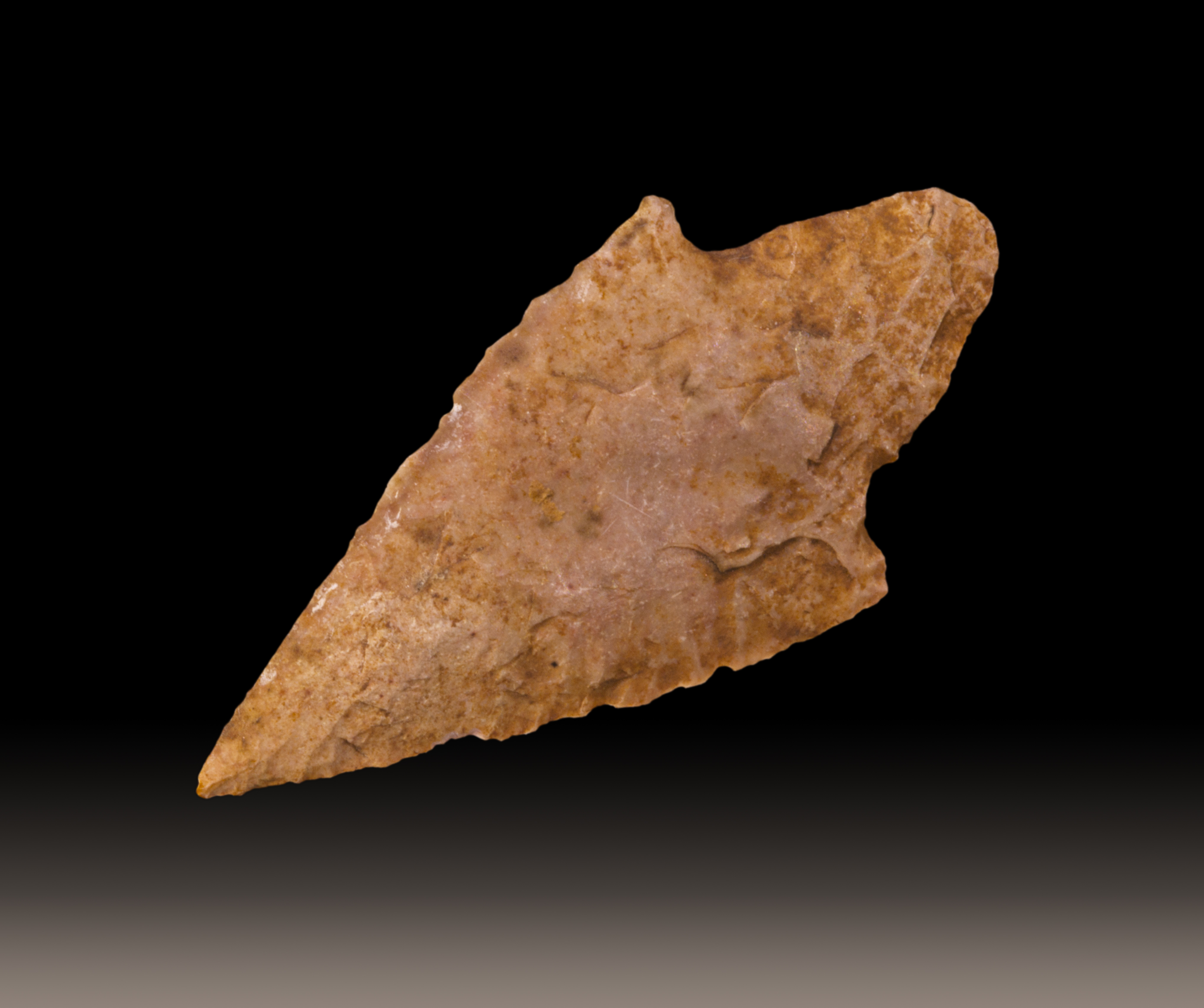
The Dawn of Precision: Arrowheads as Early Engineering Marvels
The invention of the arrowhead was a pivotal moment in human history, marking a significant advancement in hunting and warfare capabilities. It transformed simple thrown spears into projectiles capable of greater range, accuracy, and lethal penetration. This wasn’t merely about attaching a pointy rock; it involved intricate understanding of physics, material properties, and ergonomic design.
Form Follows Function: Design Principles of Early Arrowheads
Early hominids, through trial and error, developed an intuitive understanding of aerodynamic principles and terminal ballistics. An arrowhead’s shape was not arbitrary; it was meticulously crafted to optimize several critical functions. The basic triangular or leaf-like forms were designed to provide stability in flight, reducing drag and ensuring a true trajectory. Beyond flight, the primary function was penetration. Acute angles at the tip minimized resistance upon impact, allowing the projectile to pierce skin, muscle, and bone. Shoulders or barbs were incorporated not just for increased damage but, crucially, for retention—preventing the arrow from dislodging easily, thus maximizing the wound channel and increasing the likelihood of a successful kill. The weight distribution also played a role, influencing the projectile’s momentum and kinetic energy transfer, principles still relevant in modern ballistic design.
Materials Science in the Stone Age: From Flint to Obsidian
The choice of material for an arrowhead was as critical as its design. Early engineers, without the benefit of metallurgy, experimented with various lithic materials, discovering those that possessed ideal fracture mechanics. Flint, chert, obsidian, and quartzite were favored due to their conchoidal fracture properties, allowing them to be flaked into incredibly sharp edges. Obsidian, a naturally occurring volcanic glass, could produce edges sharper than surgical steel, making it highly prized. The process of knapping—percussive and pressure flaking—was a sophisticated manufacturing technique. It required a deep understanding of the stone’s internal structure, the application of precise force, and a keen eye for detail to create a symmetrical, effective tool. This ancient form of material engineering highlights a profound, albeit empirical, understanding of mechanics at a microscopic level.
Manufacturing Mastery: Crafting Tools for Survival
The creation of an arrowhead was a highly skilled craft, often passed down through generations. It was a multi-stage manufacturing process involving selecting the right raw material, decorticating (removing the outer rind), creating a preform (a rough blank), and then meticulously shaping it through controlled flaking. Specialized tools like antler billets for percussion and bone or antler pressure flakers were developed to achieve the desired precision. The final stage often involved hafting—securely attaching the arrowhead to a shaft using sinew, resin, or natural glues. This composite tool design, combining disparate materials for optimal performance, is a hallmark of ancient technological ingenuity, showcasing an understanding of material properties and structural integrity that predates formal scientific frameworks by millennia.
Evolution of a Weapon: From Stone to Steel and Beyond
As human societies evolved, so did their technology. The arrowhead, ever at the forefront of projectile innovation, underwent significant transformations driven by new material discoveries, changing hunting practices, and the exigencies of warfare.
Adaptations Across Cultures and Eras
The global spread of humans led to an astonishing diversity in arrowhead designs, each optimized for local environments, available materials, and target species. From the tiny, delicately flaked bird points of North America to the robust, heavy spearheads used for megafauna in Africa, each variant represented a specific technological solution. War arrowheads, often barbed or designed to inflict wider wounds, differed significantly from hunting points, which prioritized deep penetration for a quick kill. The development of bows and arrows, significantly increasing range and rate of fire over spears, also influenced arrowhead design, leading to lighter, more aerodynamic forms.
The Metallurgical Revolution: Bronze, Iron, and Steel Tips
The discovery and mastery of metallurgy marked a revolutionary shift in arrowhead technology. Bronze, with its superior hardness and ability to be cast into intricate shapes, replaced stone in many regions. This allowed for more consistent production, sharper edges, and new designs, such as socketed arrowheads that offered a more secure attachment to the shaft. The subsequent Iron Age brought even stronger and more abundant material. Iron arrowheads could be forged, allowing for complex forms like leaf-shaped blades, chisel points for armor penetration, and even fire-hardened tips. Steel, an alloy of iron and carbon, further refined this technology, providing unprecedented strength and edge retention, making metal arrowheads the dominant form for millennia until the advent of firearms. This transition illustrates a continuous pursuit of material excellence and manufacturing efficiency.
Specialized Design for Diverse Targets
The metallurgical revolution enabled the creation of highly specialized arrowheads. Broadheads for large game featured wide cutting surfaces to induce massive hemorrhage. Bodkin points, characterized by their narrow, robust design, were developed specifically to penetrate mail and plate armor. Barbed arrowheads were designed to make extraction difficult, increasing injury. Even “blunt” arrowheads, sometimes made of wood or antler, were used for stunning small game without damaging pelts, demonstrating a nuanced understanding of force application and desired outcomes, tailored to specific “missions.”
Modern Iterations: High-Tech Broadheads and Ballistic Applications
While firearms largely superseded bows and arrows in warfare, archery, particularly bowhunting, has experienced a resurgence, driving incredible innovation in arrowhead technology. Modern broadheads are precision-engineered devices, leveraging cutting-edge materials and aerodynamic principles.
Aerodynamic Efficiency and Flight Dynamics

Modern archery places a premium on accuracy and consistency. Broadhead designers utilize sophisticated computational fluid dynamics (CFD) to optimize aerodynamic profiles, ensuring stable flight and minimal drag. The weight, shape, and balance of a broadhead critically influence an arrow’s Front of Center (FOC) balance, which affects stability and penetration. Even the interaction with fletching (vanes or feathers) is considered to create a harmonious flight system, demonstrating an integrated systems engineering approach to projectile design.
Advanced Materials: Carbon Fiber, Titanium, and Superalloys
Today’s broadheads are a testament to advanced materials science. High-carbon steel, often surgically sharpened, forms the blades. Ferrules (the main body connecting to the arrow shaft) are often made from aircraft-grade aluminum, titanium, or even carbon fiber composites, offering a blend of strength, rigidity, and lightweight performance. These materials provide superior durability, corrosion resistance, and the ability to maintain a razor-sharp edge even after repeated impacts, pushing the boundaries of what’s possible in projectile design.
Mechanical Broadheads: Deployable Technology in Hunting
A significant innovation in modern bowhunting is the mechanical, or expandable, broadhead. These sophisticated devices feature blades that remain folded during flight, presenting a compact, aerodynamic profile similar to a field point, thus ensuring superior accuracy. Upon impact, a precisely engineered mechanism deploys the blades, creating a much wider cutting diameter than fixed-blade broadheads. This deployable technology involves intricate spring mechanisms, pivot points, and locking systems, requiring exceptional manufacturing tolerances and material strength to ensure reliable deployment and structural integrity during penetration. They represent a blend of miniature robotics and ballistic engineering.
The Digital Dimension: Simulation, Design, and Analysis
Modern technology has not only revolutionized the materials and manufacturing of arrowheads but also the very process of their design and analysis. Digital tools have become indispensable in creating the next generation of projectile tips.
CAD/CAM in Arrowhead Design
Computer-Aided Design (CAD) software is now standard in broadhead development. Engineers can model complex shapes, test various blade angles, and simulate material stresses long before a physical prototype is made. This allows for rapid iteration and optimization of designs. Computer-Aided Manufacturing (CAM) then translates these digital designs directly into machine code for precision CNC machining, ensuring perfect replication and unparalleled consistency in production, a stark contrast to the manual, empirical methods of ancient knappers.
Ballistics Software and Trajectory Optimization
Beyond the broadhead itself, advanced ballistics software helps archers and manufacturers understand and predict arrow flight dynamics under various conditions. These programs can factor in arrow speed, FOC, fletching configuration, wind, and gravity to model trajectories and impact energies with remarkable accuracy. This data is crucial for optimizing arrow setups, educating users, and designing broadheads that perform optimally within specific ballistic envelopes. It allows for a scientific approach to “aiming” that transcends traditional estimation.
Forensics and Archaeological Tech: Unveiling the Past
Modern technology also extends backward, enhancing our understanding of ancient arrowheads. 3D scanning and photogrammetry allow archaeologists to create detailed digital models of unearthed artifacts, preserving their exact form and enabling non-destructive analysis. Material science techniques, such as X-ray fluorescence (XRF) or neutron activation analysis (NAA), can determine the precise elemental composition of stone tools, revealing their geographical origin and ancient trade networks. This technological application transforms historical artifacts into data points, offering unprecedented insights into ancient technologies and the people who crafted them.
Beyond the Blade: The Enduring Legacy of Projectile Innovation
The journey of the arrowhead is a micro-history of human technological advancement. It showcases our continuous drive to improve, innovate, and master our environment, leaving an indelible mark on our past, present, and future.
From Hunting Tool to Industrial Application
The fundamental principles embedded in arrowhead design—sharpening, penetration, material strength, and aerodynamic efficiency—resonate across countless modern technologies. The concept of a “tip” or “spearhead” is pervasive, from drill bits and cutting tools in manufacturing to the nose cones of rockets. The continuous pursuit of efficient force transfer and material integrity, first manifest in the humble arrowhead, underpins much of industrial engineering today. It highlights how core technological concepts can transcend their initial application.
Ethical Considerations in Modern Projectile Design
With advanced technology comes increased responsibility. In modern bowhunting, the design of broadheads is not just about lethality but also about humane dispatch. Ethical considerations drive innovation towards designs that ensure quick, clean kills, minimizing animal suffering. This includes maximizing cutting diameter, ensuring structural integrity to prevent blade failure, and optimizing penetration depth. Safety standards for manufacturing and use are also paramount, reflecting a mature approach to designing powerful tools.

The Future of Projectile Technology: Smart Systems and Beyond
What does the future hold for “arrowhead” technology? While traditional broadheads continue to evolve, the concept could expand dramatically with emerging technologies. Imagine “smart” broadheads equipped with miniature sensors for impact data, self-sharpening materials, or even micro-guidance systems for unprecedented accuracy. The integration of AI for trajectory prediction, augmented reality for aiming, and advanced composite materials for even lighter, stronger, and more precise projectiles is not outside the realm of possibility. The arrowhead, in its essence, represents humanity’s ceaseless quest to harness technology for precision and power, a quest that continues to this day.
In conclusion, “what is an arrowhead?” is not merely a question about a historical artifact. It’s a journey through millennia of technological evolution. From its beginnings as an ingenious solution to ancient survival challenges, through the metallurgical revolutions, to its current manifestation as a high-tech marvel of engineering, the arrowhead stands as a powerful symbol of human innovation, demonstrating how foundational technological principles endure and evolve across vast stretches of time and countless scientific advancements.
aViewFromTheCave is a participant in the Amazon Services LLC Associates Program, an affiliate advertising program designed to provide a means for sites to earn advertising fees by advertising and linking to Amazon.com. Amazon, the Amazon logo, AmazonSupply, and the AmazonSupply logo are trademarks of Amazon.com, Inc. or its affiliates. As an Amazon Associate we earn affiliate commissions from qualifying purchases.