
In the vast and intricate landscape of technology, where systems operate with unprecedented complexity and data flows at an unimaginable velocity, the concept of an “anomaly” stands as a critical pillar for understanding, security, and innovation. Far from being mere quirks, anomalies represent deviations from expected patterns, a signal that something out of the ordinary is occurring. In the digital realm, identifying and interpreting these outliers is not just a statistical exercise; it’s fundamental to safeguarding digital assets, optimizing performance, and extracting deeper insights from the endless streams of information generated every second.
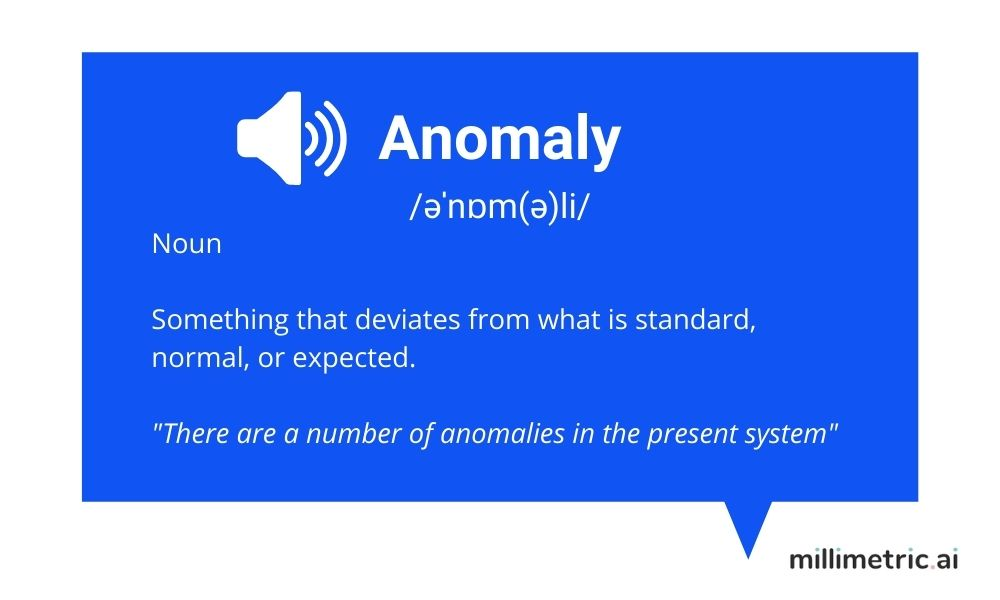
An anomaly, at its core, is anything that deviates significantly from the norm, the standard, or the expected. It’s the unexpected spike in server load, the unusual login attempt from an unknown location, or the sudden dip in sensor readings. In a world increasingly driven by data and automated processes, distinguishing these anomalies from routine noise is a monumental, yet essential, task that underpins everything from cybersecurity to predictive maintenance and user experience. This article delves into what constitutes an anomaly in the tech context, why its detection is paramount, and how cutting-edge technologies are being leveraged to uncover these vital deviations.
Understanding Anomalies in the Digital Age
The digital age thrives on predictability and structured data, yet it is also a hotbed for the unpredictable. Understanding anomalies begins with establishing a baseline of normal behavior and then meticulously observing departures from it.
Defining the Deviation
An anomaly can be formally defined as an observation or data point that significantly differs from other observations or data points in a dataset. Statistically, these are often referred to as outliers. However, in technology, the definition extends beyond mere statistical deviation to include contextual relevance. For instance, a high volume of login attempts might be normal during peak business hours but highly anomalous at 3 AM from a continent away.
Common types of anomalies include:
-
Point Anomalies: A single, isolated data instance that is abnormal. Example: A transaction of unusually high value in a user’s purchase history.
-
Contextual Anomalies: An instance that is abnormal in a specific context but normal otherwise. Example: A sudden surge in website traffic could be normal during a major product launch but anomalous on a regular Tuesday afternoon.
-
Collective Anomalies: A collection of related data instances that collectively deviate from the norm, even if individual instances are not anomalous. Example: A sequence of seemingly normal network requests that, when viewed together, indicate a sophisticated attack.
Why do these deviations matter so much? Because they often serve as early warning signs. They can indicate a system malfunction, a security breach, a fraudulent activity, or even an emerging trend that demands attention. Ignoring them can lead to significant financial losses, data breaches, operational disruptions, or missed opportunities.
Why Anomalies Matter
The ability to detect and respond to anomalies is critical across virtually all tech domains. Its importance stems from the direct impact anomalies can have on an organization’s operations, security, and strategic decision-making.
-
Cybersecurity: Anomalies are the bread and butter of threat detection. An unusual login time, an unauthorized file access, or a sudden outflow of data can all signal a cyberattack in progress, an insider threat, or a system compromise. Rapid anomaly detection is the first line of defense against sophisticated adversaries.
-
Operational Efficiency: In IT operations, anomalies can point to impending hardware failures, software bugs, network congestion, or inefficient resource utilization. Detecting these deviations early allows for proactive maintenance, preventing downtime and ensuring continuous service delivery.
-
Fraud Detection: In financial tech and e-commerce, anomalous transaction patterns are the primary indicator of fraudulent activities. Identifying these quickly saves businesses and consumers billions of dollars annually.
-
Data Integrity and Quality: Outliers in data streams can indicate sensor malfunctions, data entry errors, or corrupted data. Maintaining high data quality is crucial for accurate analytics and the reliability of AI models.
-
Business Intelligence: Unusual customer behavior, spikes in product interest, or unexpected market shifts can all be viewed as anomalies that, when properly analyzed, can reveal new market opportunities or emergent problems.
The Spectrum of Tech Anomalies
Anomalies manifest in diverse forms across the technological landscape, each with unique characteristics and implications. Categorizing them helps in developing targeted detection and response strategies.
Operational & System Anomalies
These relate to the performance and health of IT infrastructure, applications, and services.
-
Performance Deviations: Unusual spikes in CPU utilization, memory consumption, disk I/O, or network latency can indicate an application bug, a misconfiguration, or a denial-of-service attack.
-
System Errors: A sudden increase in error rates (e.g., HTTP 500 errors, database connection failures) often points to critical issues within the system architecture or dependencies.
-
Resource Exhaustion: An unexpected rapid depletion of resources like IP addresses, file descriptors, or database connections.
-
Environmental Deviations: Abnormal temperature readings in data centers or unusual power consumption patterns.
Data Anomalies
Data is the lifeblood of modern technology, and anomalies within it can corrupt insights and compromise decisions.
-
Outliers in Datasets: Values that fall outside the expected range for a given variable (e.g., a human height recorded as 10 feet).
-
Data Drift: Changes in the statistical properties of a target variable over time, which can render existing models less effective.
-
Missing or Corrupted Data: Unexpected gaps or unreadable entries in a dataset, potentially due to faulty sensors or data transfer issues.
-
Inconsistent Data: Values that contradict other related data points (e.g., a customer’s age recorded as 25 but their birth year implying 60).
Security Anomalies
Perhaps the most critical category, security anomalies are direct indicators of potential threats and breaches.
-
Unusual Access Patterns: Login attempts from geographically distant locations within a short timeframe, access to sensitive data outside working hours, or unauthorized privilege escalation.
-
Network Intrusion: Unexpected port scans, unusual traffic volumes to or from external IP addresses, or the detection of known malware signatures.
-
Account Compromise: A sudden change in user behavior, such as accessing unusual resources or sending large volumes of emails, potentially indicating a compromised account.
-
Data Exfiltration: Unusually large data transfers from internal systems to external networks.
User Behavior Anomalies
Understanding user interaction patterns is key to optimizing digital experiences and detecting fraudulent activities.
-
Website/App Usage Anomalies: A sudden drop or spike in page views, unusual navigation paths, or excessive failed login attempts.
-
Transaction Anomalies: Purchases significantly outside a user’s typical spending habits, multiple small transactions in rapid succession, or transactions from unusual IP addresses.
-
Engagement Anomalies: Uncharacteristic patterns of likes, comments, shares, or content consumption on social media platforms or content sites.
The Power of Anomaly Detection
Detecting anomalies is not a new concept, but the scale and complexity of modern data streams demand sophisticated, often AI-driven, approaches.
Traditional Statistical Methods

Before the advent of advanced AI, statistical techniques formed the backbone of anomaly detection. These methods are often simple, interpretable, and effective for well-understood data distributions.
-
Z-score and IQR: These methods identify data points that lie a certain number of standard deviations (Z-score) or interquartile ranges (IQR) away from the mean or median, respectively.
-
Clustering Algorithms: Algorithms like K-means or DBSCAN group similar data points together. Data points that do not belong to any cluster or are very far from cluster centroids are considered anomalies.
-
Control Charts: Widely used in quality control, these charts monitor processes over time, flagging points that fall outside predefined control limits.
Machine Learning and AI for Detection
The explosion of data and the need for real-time, adaptive detection have propelled Machine Learning (ML) and Artificial Intelligence (AI) to the forefront of anomaly detection.
-
Supervised Learning: When historical data with labeled anomalies is available, classification algorithms (e.g., Support Vector Machines, Random Forests, Neural Networks) can be trained to distinguish normal from anomalous patterns. However, labeled anomaly data is often scarce.
-
Unsupervised Learning: This is crucial when anomalies are rare or unknown. Algorithms like Isolation Forest, One-Class SVM, or Autoencoders learn the patterns of “normal” data and flag anything that deviates significantly. Autoencoders are particularly powerful for complex, high-dimensional data, learning to reconstruct normal data and flagging inputs with high reconstruction errors as anomalous.
-
Semi-supervised Learning: This approach uses a small amount of labeled data, typically only for normal instances, to build a model that can identify deviations.
-
Deep Learning: For time-series data, Recurrent Neural Networks (RNNs) like LSTMs can learn temporal dependencies and predict future values, flagging significant deviations from predictions as anomalies.
Real-time vs. Batch Processing
The choice between real-time and batch anomaly detection depends heavily on the use case and the criticality of immediate response.
-
Batch Processing: Suitable for less time-sensitive scenarios, where data is collected over a period and then analyzed. This allows for more comprehensive analysis but introduces latency. Good for historical analysis or identifying long-term trends.
-
Real-time Processing: Essential for critical applications like cybersecurity, fraud detection, and system monitoring, where immediate alerts and responses are necessary to mitigate harm. Stream processing frameworks (e.g., Apache Kafka, Flink) are vital here, enabling continuous analysis of data as it arrives.
Applications Across Tech Domains
The versatility of anomaly detection makes it an indispensable tool across numerous technological sectors.
Cybersecurity & Fraud Detection
This is arguably the most prominent application. Anomaly detection systems continuously monitor network traffic, system logs, user behavior, and financial transactions to identify patterns indicative of malicious activity. From detecting zero-day exploits to flagging insider threats and preventing credit card fraud, these systems are a critical layer of defense.
IT Operations & Performance Monitoring
In complex IT environments, anomaly detection tools monitor server metrics, application performance, network health, and resource utilization. They can predict hardware failures, identify performance bottlenecks, or alert IT teams to unusual resource consumption that might precede a system crash, thereby enabling proactive intervention and ensuring high availability.
IoT & Sensor Networks
With the proliferation of Internet of Things (IoT) devices, anomaly detection is crucial for managing vast networks of sensors. It can identify malfunctioning sensors, detect unusual environmental conditions (e.g., sudden temperature changes in industrial machinery), predict equipment maintenance needs, and even monitor critical infrastructure for security breaches.
Business Intelligence & User Experience
Anomaly detection provides valuable insights into customer behavior and market dynamics. Unusual spikes in product interest, changes in user engagement with a website or app, or unexpected shifts in customer feedback can signal emerging trends, marketing campaign effectiveness issues, or user experience problems that require immediate attention.
Challenges and Future of Anomaly Detection
Despite its power, anomaly detection is not without its challenges, and its evolution continues at a rapid pace.
The Dynamic Nature of Anomalies
What constitutes “normal” can evolve over time, a phenomenon known as concept drift. New threats emerge, user behaviors change, and system configurations are updated. Anomaly detection systems must be adaptive, continuously learning and updating their understanding of normal behavior to remain effective. Distinguishing genuine anomalies from natural variations or noise is a persistent challenge.
Data Volume and Velocity
The sheer volume and speed of data generated by modern systems pose significant computational challenges. Building and scaling anomaly detection systems that can process petabytes of data in real-time requires robust infrastructure, efficient algorithms, and advanced distributed computing techniques.
Explainability and False Positives
A major hurdle, particularly with complex AI models, is the lack of explainability. When an AI flags an anomaly, security analysts or operations teams need to understand why it was flagged to investigate effectively. Without this context, alerts can lead to “alert fatigue” due to a high rate of false positives, where legitimate activities are mistakenly identified as anomalous, wasting valuable time and resources.

The Rise of Explainable AI (XAI) and Automated Response
The future of anomaly detection lies in more intelligent, transparent, and autonomous systems. Explainable AI (XAI) is emerging to provide insights into why a particular instance was flagged as anomalous, helping human operators trust and act upon the system’s recommendations. Furthermore, the trend is towards automated response systems that can, upon detecting certain critical anomalies, trigger immediate countermeasures, such as isolating a compromised system, blocking an IP address, or rolling back a malicious change, without human intervention. This shift moves anomaly detection from purely an alerting mechanism to an active component of security and operational resilience.
In conclusion, anomalies are more than just statistical curiosities in the tech world; they are critical signals embedded within the vast oceans of data. Their effective detection and interpretation are paramount for maintaining the integrity, security, and performance of our digital infrastructure, driving operational excellence, and unlocking new insights that shape the future of technology. As AI continues to advance, our ability to identify, understand, and respond to these deviations will only become more sophisticated, ushering in an era of unprecedented digital resilience.
aViewFromTheCave is a participant in the Amazon Services LLC Associates Program, an affiliate advertising program designed to provide a means for sites to earn advertising fees by advertising and linking to Amazon.com. Amazon, the Amazon logo, AmazonSupply, and the AmazonSupply logo are trademarks of Amazon.com, Inc. or its affiliates. As an Amazon Associate we earn affiliate commissions from qualifying purchases.