
Agar-agar, a term commonly associated with culinary thickeners and vegan gelatin alternatives, holds a far more profound significance within the realm of technology. Beyond its kitchen utility, this versatile biopolymer is a cornerstone in microbiology, material science, and bioengineering, quietly powering innovations that shape our digital and physical worlds. To truly appreciate its technological prowess, one must first delve into its fundamental composition: “what is agar agar made of?” This seemingly simple question unlocks a complex narrative of natural resources, biochemical engineering, and cutting-edge applications, positioning agar-agar as a critical component in future technological advancements. Far from a mere food additive, agar-agar is a testament to nature’s ingenuity, refined and harnessed by human technology to solve some of the most pressing challenges in science and industry.

The Raw Materials of a Biotechnological Marvel
The journey of agar-agar begins in the ocean, specifically within the cold, pristine waters where certain species of red algae thrive. These unassuming marine plants are the primary architects of the complex carbohydrate structure that eventually becomes the ubiquitous gelling agent. Understanding this natural origin is crucial for appreciating its sustainability profile and the biological complexity that makes it so valuable to technological applications.
From Seaweed to Biopolymer: The Algal Origin
Agar-agar is primarily extracted from several genera of red algae (Rhodophyceae), most notably Gelidium, Gracilaria, and Pterocladia. These seaweeds, cultivated or harvested from natural marine beds, act as natural factories for a specific type of polysaccharide. Unlike animal-derived gelatin, agar-agar’s plant-based origin makes it a highly sought-after material for numerous applications where ethical, religious, or dietary restrictions apply, or where biodegradability and sustainability are paramount. The ability of these marine organisms to synthesize such a robust and functional biopolymer is a marvel of natural chemistry, providing a renewable resource that can be sustainably managed. The careful cultivation and harvesting of these algae constitute the initial technological challenge, involving marine biology, aquaculture engineering, and ecological management to ensure a consistent and environmentally responsible supply chain. Modern techniques often involve controlled environments to maximize yield and quality, transforming traditional harvesting into a form of bio-manufacturing.
The Chemical Backbone: Agarose and Agaropectin
At its core, agar-agar is a complex mixture of two primary polysaccharide components: agarose and agaropectin. While both are polymers of galactose units, their structural differences dictate the unique properties of agar-agar.
-
Agarose: This is the purer, uncharged, and highly gelling component of agar-agar, comprising roughly 70-80% of its dry weight. Agarose is a linear polymer made up of repeating agarobiose units, which are disaccharides consisting of D-galactose and 3,6-anhydro-L-galactose. It is agarose’s unique chemical structure, particularly its ability to form a robust double-helix network upon cooling, that grants agar-agar its exceptional gelling capabilities. The absence of charged groups in agarose contributes to its chemical inertness, making it ideal for sensitive biochemical applications where interaction with the surrounding medium must be minimized. The precise molecular architecture of agarose is a wonder of natural engineering, creating pores and matrices that are perfect for molecular separation and cellular growth.
-
Agaropectin: This component is more complex and highly branched, containing charged groups such as sulfate esters, glucuronic acid, and pyruvic acid. Agaropectin contributes less to the gelling properties but significantly influences the solubility and viscosity of the agar-agar solution. Its charged nature can sometimes interfere with certain biochemical processes, which is why highly purified agarose is often separated from agaropectin for specialized high-tech applications, particularly in molecular biology and electrophoresis. The varying ratios and structural nuances of these two components are what define different grades of agar-agar, each tailored for specific technological uses.
Understanding the precise chemical makeup of agarose and agaropectin is not just an academic exercise; it is the foundation upon which engineers and scientists develop new applications, modify existing ones, and even synthesize novel biopolymers inspired by agar-agar’s natural design. This detailed knowledge allows for the customization of agar-agar’s properties, tuning it for tasks ranging from delicate cell culture to robust bio-packaging.
The Technological Extraction and Refinement Process
The transformation of raw red algae into a high-purity, functional agar-agar product is a testament to sophisticated biochemical engineering and process technology. It involves a series of meticulously controlled steps designed to extract, purify, and refine the desired polysaccharides, tailoring their properties for a vast array of technological applications.
Traditional Methods vs. Industrial Scale-Up
Historically, agar-agar extraction was a simpler, more rudimentary process, involving boiling seaweed in water, filtering the mixture, and allowing it to gel before drying. While effective for small-scale production, this method yielded inconsistent quality and purity, unsuitable for modern technological demands.
Industrial-scale production, however, employs advanced engineering principles to ensure high yield, consistent quality, and customizable properties. The process typically involves:
-
Washing and Pre-treatment: Algae are thoroughly washed to remove impurities and then often treated with alkaline solutions to enhance the extraction of agar and improve gel strength. This pre-treatment step is critical for breaking down cell walls and optimizing the subsequent extraction.
-
Hot Water Extraction: The treated algae are boiled in large industrial reactors, often under controlled pressure and temperature, to dissolve the agar-agar. This step is optimized to maximize extraction efficiency while preventing degradation of the polymer chains.
-
Filtration: The hot solution is then filtered, often through multiple stages including pressure filters and centrifuges, to separate the liquid agar-agar solution from the residual solid seaweed pulp. This is where clarity and purity begin to be established.
-
Gelling and Freezing: The filtered solution is cooled, causing the agar-agar to gel. This gel is then typically subjected to a freeze-thaw cycle. Freezing causes the water molecules to expand and form ice crystals, pushing out the impurities and allowing for easier dewatering. Upon thawing, the water, along with most impurities, drains away, leaving behind a more concentrated and purified agar-agar.
-
Drying and Milling: The dewatered agar-agar is then dried, often using industrial dryers (e.g., spray dryers or belt dryers), until it reaches the desired moisture content. Finally, it is milled into various forms (flakes, powder) depending on the end-use application. Each of these steps involves precise control over physical and chemical parameters, employing sensors, automated systems, and chemical engineering expertise to optimize the process.
Precision Engineering of Agar-Agar Properties
One of the most impressive aspects of modern agar-agar production is the ability to precision-engineer its properties. The subtle variations in processing parameters, selection of algal species, and post-extraction treatments allow manufacturers to create distinct grades of agar-agar, each optimized for specific technological requirements.
-
Gel Strength and Melting/Setting Temperatures: By adjusting pH during extraction, alkali treatment duration, and cooling rates, the average molecular weight and purity of the agar-agar can be controlled, directly influencing its gel strength and the temperatures at which it melts and sets. High-strength gels are critical for applications requiring structural integrity, such as tissue engineering scaffolds.
-
Clarity and Purity: For sensitive biotechnological applications like electrophoresis or cell culture, optical clarity and minimal inhibitory substances are paramount. Advanced filtration techniques, enzyme treatments, and differential solubility methods are employed to remove impurities, pigments, and agaropectin, yielding highly purified agarose.
-
Viscosity and Porosity: The viscosity of agar-agar solutions and the porosity of the resulting gels can be fine-tuned. This is essential for applications where molecular diffusion rates need to be precisely controlled, such as in chromatography media or drug delivery systems.
-
Chemical Modification: Beyond physical processing, agar-agar can be chemically modified (e.g., sulfation, esterification) to alter its surface properties, enhance biocompatibility, or introduce new functionalities, opening avenues for advanced material design. This level of control over a natural biopolymer highlights the intricate interplay between biological raw materials and sophisticated chemical engineering, transforming agar-agar from a simple gelling agent into a highly engineered material.
Agar-Agar’s Role in Modern Technology and Innovation
Agar-agar’s unique blend of biocompatibility, inertness, gel-forming ability, and renewable nature has cemented its position as an indispensable material across diverse technological sectors. Its contribution extends far beyond the kitchen, becoming a silent workhorse in labs and industries pushing the boundaries of innovation.
The Unsung Hero of Biotechnology and Microbiology Labs
Perhaps agar-agar’s most historically significant technological application is its role as a solidifying agent in culture media for microbiology. Since its introduction by Robert Koch in the late 19th century, agar-agar has been fundamental to the study of microorganisms.
-
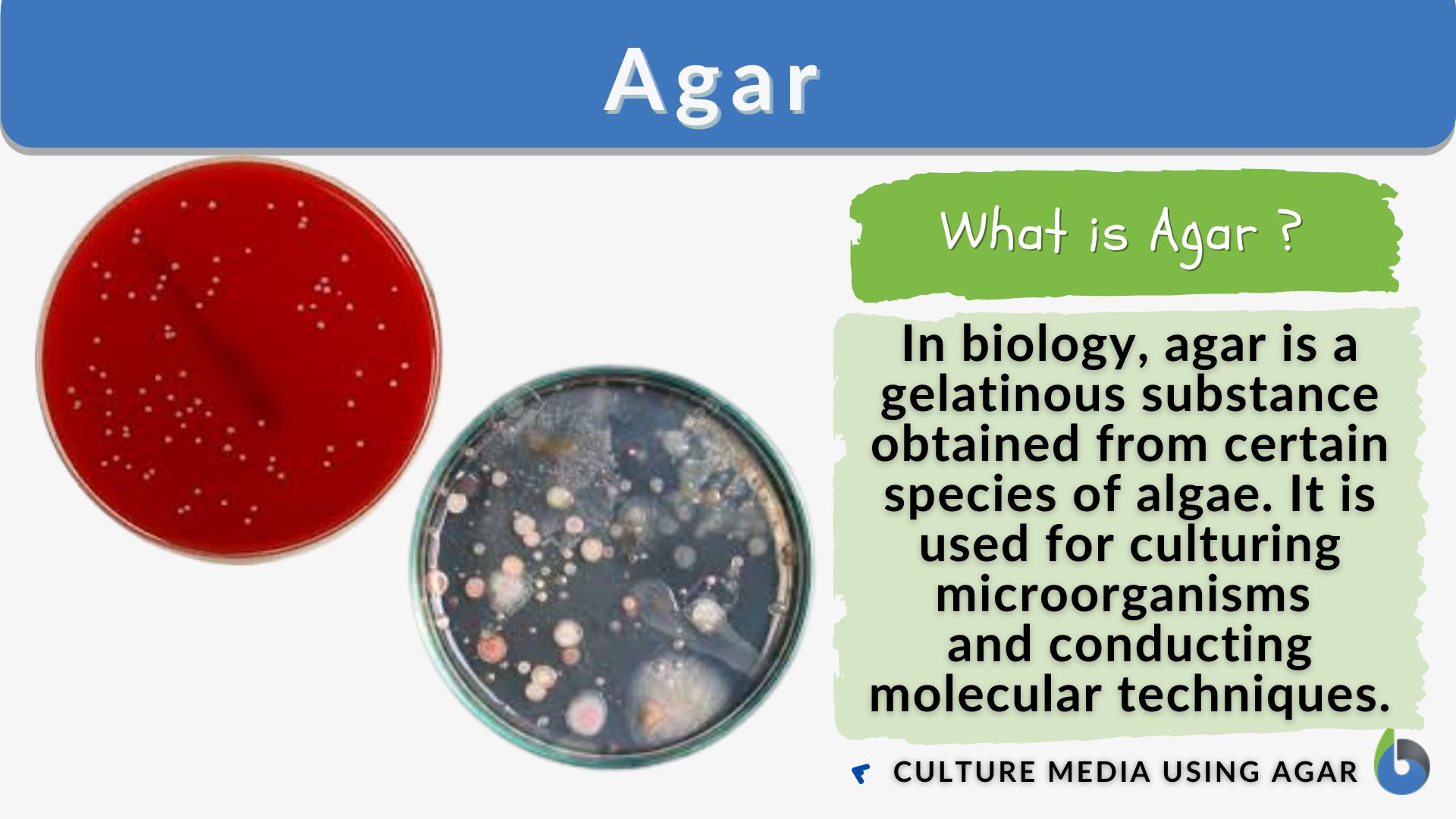
Microbial Culture Media: Its inertness means it doesn’t interfere with microbial growth, and its unique property of remaining solid at incubation temperatures (typically 37°C) while being pourable at higher temperatures (around 45°C) makes it ideal for preparing petri dishes. Agar-agar allows for the isolation, identification, and enumeration of bacteria and fungi, forming the bedrock of diagnostic microbiology, pharmaceutical development, and food safety testing.
-
Electrophoresis Gels: Highly purified agarose is the material of choice for gel electrophoresis, a critical technique in molecular biology for separating DNA, RNA, and proteins based on size. The controlled pore size of agarose gels acts as a molecular sieve, enabling precise analytical and preparative separations that are vital for genetic engineering, forensics, and disease research. Without high-purity agarose, many foundational discoveries in molecular biology would not have been possible.
Advancing Sustainable Materials and Bioplastics
In an era demanding sustainable alternatives to petroleum-based products, agar-agar is emerging as a promising biomaterial for eco-friendly solutions. Its biodegradability and plant-based origin make it an attractive candidate for packaging and other single-use items.
-
Biodegradable Packaging and Films: Research and development are actively exploring agar-agar-based films and coatings as replacements for plastic packaging. These films can be transparent, flexible, and offer good barrier properties against oxygen and moisture, making them suitable for food wraps, sachets, and other disposable packaging. Their ability to decompose naturally into harmless components significantly reduces environmental impact.
-
Edible Coatings: Beyond pure packaging, agar-agar is used as an edible coating for fruits and vegetables, extending shelf life by reducing water loss and microbial spoilage. This innovation not only lessens food waste but also diminishes the need for synthetic preservatives, aligning with consumer demands for natural and sustainable food systems.
-
3D Printing Filaments: The gelling and rheological properties of agar-agar make it suitable for certain types of 3D printing, particularly in bioprinting and the creation of customizable hydrogel structures for various applications.
Cutting-Edge Applications in Bioengineering and Medicine
Agar-agar’s biocompatibility, non-toxicity, and ability to form porous hydrogels have opened up exciting avenues in advanced bioengineering and medical technologies.
-
Tissue Engineering Scaffolds: Agar-agar hydrogels provide a biocompatible, three-dimensional matrix that can mimic the extracellular environment, supporting cell growth, differentiation, and tissue formation. Researchers are using agar-agar scaffolds for culturing various cell types and developing artificial tissues, including cartilage and skin substitutes, holding immense promise for regenerative medicine.
-
Drug Delivery Systems: The controllable porosity and biodegradability of agar-agar gels make them ideal for controlled drug release. Drugs can be encapsulated within agar-agar matrices, allowing for sustained and localized delivery, which can improve therapeutic efficacy and reduce side effects. This is particularly relevant for targeted drug delivery to specific tissues or organs.
-
Biosensors and Diagnostic Tools: Agar-agar’s stable gel structure can immobilize enzymes, antibodies, or other biorecognition elements, making it a valuable component in the development of biosensors for detecting specific molecules, pathogens, or biomarkers. These systems offer rapid, accurate, and cost-effective diagnostic capabilities.
-
3D Bioprinting: In the nascent field of 3D bioprinting, agar-agar-based bio-inks are being developed to create complex biological structures and organoids. Its ability to gel quickly and maintain structural integrity is critical for layer-by-layer fabrication of living tissues with intricate architectures.
The Future of Agar-Agar: A Sustainable Tech Staple
The trajectory of agar-agar from a natural extract to a high-tech material is far from complete. Ongoing research, coupled with advancements in automation and artificial intelligence, promises to unlock even greater potential for this remarkable biopolymer, solidifying its role as a sustainable staple in future technologies.
Research and Development in Agar-Agar Modification
Scientists are continuously exploring ways to modify agar-agar’s inherent properties to meet the demands of emerging technologies.
-
Enhanced Functionality: Chemical modifications, such as grafting other polymers onto the agar-agar backbone or introducing specific functional groups, can impart new properties like increased elasticity, conductivity, or responsiveness to external stimuli (e.g., pH, temperature). This allows for the creation of smart materials and advanced hydrogels.
-
Hybrid Materials: Combining agar-agar with other natural or synthetic polymers, nanoparticles, or reinforcing agents can lead to hybrid materials with synergistic properties. For instance, incorporating nanocellulose or graphene derivatives could enhance mechanical strength or introduce electrical conductivity, expanding its utility in electronics or advanced composites.
-
Biomimicry: Understanding the precise structure-function relationships in agar-agar also inspires the synthesis of novel synthetic biopolymers that mimic its advantageous properties, but with even greater control over molecular architecture and performance.
Automation and AI in Algal Cultivation and Processing
The optimization of agar-agar production, from cultivation to final product, is ripe for disruption by automation and artificial intelligence.
-
AI-Driven Aquaculture: AI and machine learning algorithms can analyze environmental data (water temperature, salinity, nutrient levels, light exposure) to optimize seaweed growth conditions, predict yields, and detect diseases in real-time. This can lead to more efficient and sustainable algal farming practices, ensuring a consistent and high-quality raw material supply.
-
Automated Extraction and Quality Control: Robotics and automation can streamline the extraction and purification processes, reducing human error, increasing throughput, and ensuring precise control over processing parameters. AI-powered vision systems can monitor agar-agar quality, detecting impurities or structural defects in real-time, leading to higher purity and more consistent product grades for critical tech applications.
-
Predictive Analytics for Application Development: AI can also be used to model the performance of different agar-agar formulations in various applications, accelerating the discovery and development of new uses. By simulating interactions at the molecular level, researchers can predict how modified agar-agar might behave in a new biosensor or tissue scaffold, significantly shortening R&D cycles.

Economic and Environmental Impact of Agar-Agar Technology
The growing reliance on agar-agar in technology also has significant economic and environmental implications.
-
Circular Economy Contribution: As a biodegradable, renewable, and ocean-derived resource, agar-agar aligns perfectly with the principles of a circular economy. Its widespread adoption in packaging and other single-use items can drastically reduce plastic waste and reliance on fossil fuels.
-
Sustainable Blue Economy: The expansion of agar-agar cultivation supports the development of a sustainable blue economy, providing economic opportunities for coastal communities, promoting marine biodiversity, and potentially aiding in carbon sequestration. Investing in agar-agar technology means investing in a greener future.
-
Reduced Carbon Footprint: Compared to synthetic alternatives, the production of agar-agar generally has a lower carbon footprint, further cementing its role as an environmentally responsible material choice for technology companies striving for sustainability.
In conclusion, “what is agar agar made of” transcends a simple ingredient query. It unveils a sophisticated biopolymer, derived from the depths of the ocean, whose fundamental composition of agarose and agaropectin has been precisely engineered and harnessed by human ingenuity. From its indispensable role in biological laboratories to its burgeoning applications in sustainable materials, advanced bioengineering, and medical technologies, agar-agar stands as a versatile and potent force in shaping the future of technology. As research continues to unravel its potential and technological advancements refine its production and application, agar-agar is poised to remain a vital, sustainable, and innovative component in the ever-evolving landscape of high-tech solutions.
aViewFromTheCave is a participant in the Amazon Services LLC Associates Program, an affiliate advertising program designed to provide a means for sites to earn advertising fees by advertising and linking to Amazon.com. Amazon, the Amazon logo, AmazonSupply, and the AmazonSupply logo are trademarks of Amazon.com, Inc. or its affiliates. As an Amazon Associate we earn affiliate commissions from qualifying purchases.