
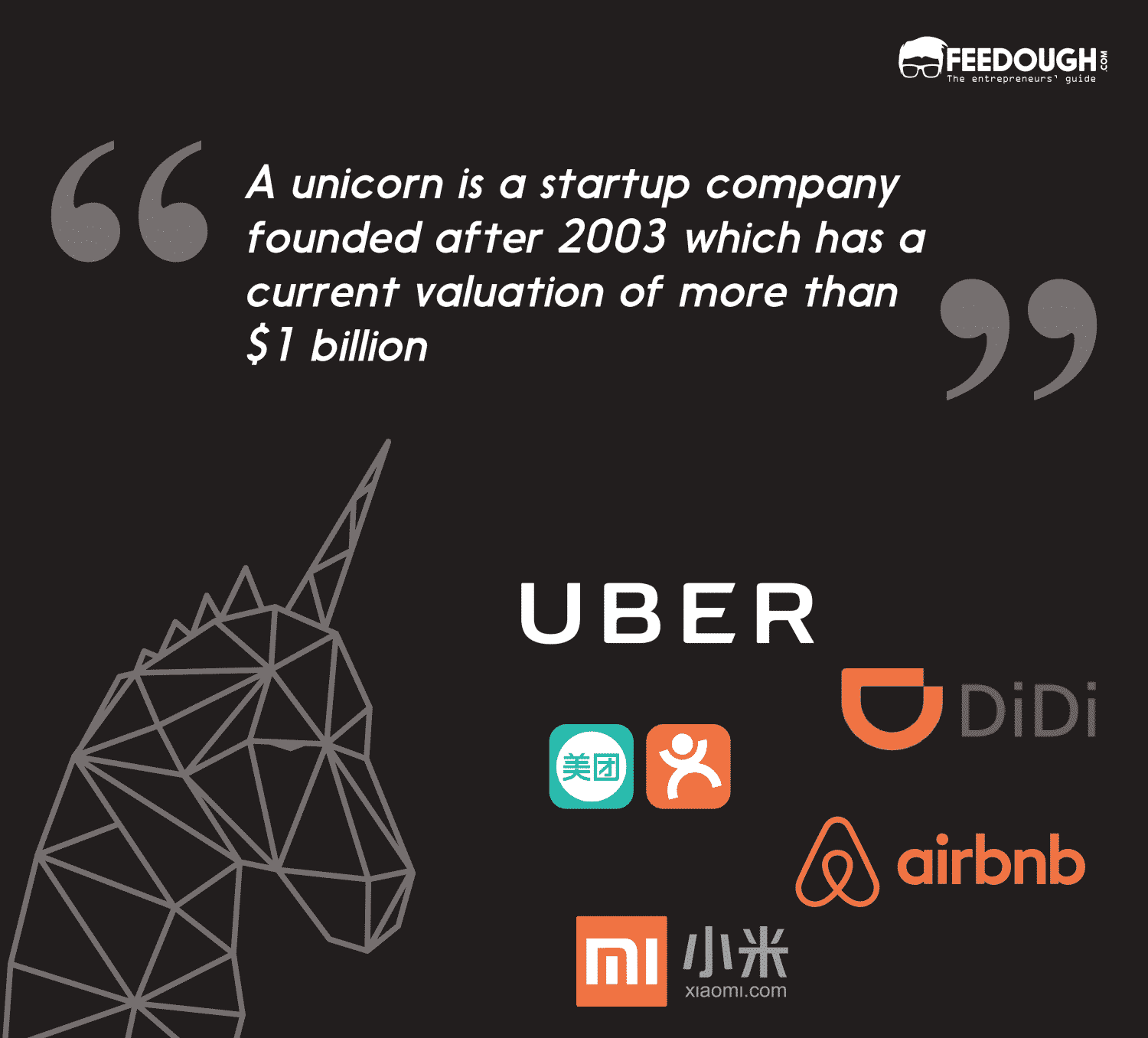
In the dynamic world of business and finance, few terms capture the imagination quite like “unicorn startup.” Coined to describe a privately held startup company with a valuation exceeding $1 billion, the term evokes a sense of rarity, magic, and immense financial potential. Far from mythical beasts, these companies represent the pinnacle of venture capital success, driving innovation, disrupting industries, and creating substantial wealth for founders, employees, and investors alike. Understanding what constitutes a unicorn startup is crucial for anyone keen on grasping the modern investment landscape, business finance, and the relentless pursuit of exponential growth.
At its core, a unicorn is a financial designation. It’s a testament to a company’s perceived future earnings potential, its ability to capture significant market share, and the confidence investors place in its leadership and business model. While many unicorns emerge from the technology sector, the defining characteristic is not their industry but their staggering financial valuation before they enter the public markets via an IPO or are acquired. This article delves into the financial anatomy of these billion-dollar enterprises, exploring their origins, the mechanisms of their funding, their profound economic impact, and the inherent challenges that come with such meteoric growth.
The Anatomy of a Unicorn: Defining the Billion-Dollar Enterprise
The term “unicorn” didn’t exist in the startup lexicon until relatively recently, but the phenomenon of rapidly growing, highly valued private companies has been a hallmark of modern capitalism. The conceptualization of a “unicorn” clarifies and quantifies this elite group, making them a focal point for investors and aspiring entrepreneurs.
Origins of the Term: A Rare Species in the Startup Ecosystem
The concept of the “unicorn” was popularized in 2013 by venture capitalist Aileen Lee, founder of Cowboy Ventures. She used the term to describe the statistical rarity of startups that achieved a $1 billion valuation. Her research at the time identified only 39 software companies founded in the 2000s that had reached this financial milestone. The metaphor of a unicorn perfectly captured the elusive nature of such success – rare, magical, and highly sought after. Prior to this, companies of such size would typically have already gone public. Lee’s insight highlighted a shift in the venture capital market, where companies were staying private longer, accumulating massive valuations on the strength of private investment rounds. This trend has only accelerated, with hundreds of unicorns emerging globally in the years since.
Key Characteristics Beyond Valuation
While the $1 billion valuation is the ultimate determinant, unicorn startups share several common financial and operational characteristics that enable them to reach such dizzying heights. Firstly, they almost invariably demonstrate disruptive innovation. They introduce new technologies, business models, or services that fundamentally change existing markets or create entirely new ones. This disruptive potential often translates into rapid user adoption and revenue growth, which are key metrics for investors.
Secondly, unicorns exhibit hyper-growth potential. Their business models are often highly scalable, meaning they can expand their operations and reach new customers without a proportional increase in costs. This scalability is a significant draw for venture capitalists, as it promises substantial returns on investment. Many unicorns leverage network effects, where the value of their service increases with each new user, further accelerating growth.
Thirdly, they typically remain privately held for an extended period. This allows them to focus on long-term growth and market dominance without the quarterly scrutiny and pressures of public markets. It also allows investors to achieve significant multiple returns before an eventual exit event. Finally, while not exclusive, a significant majority of unicorns are tech-centric, leveraging software, internet platforms, AI, or advanced hardware to achieve their scale and disruption. This often grants them significant market power and the potential to become category leaders.
Why the Billion-Dollar Threshold?
The $1 billion mark isn’t an arbitrary number; it acts as a powerful psychological barrier and a financial signal in the investment community. For investors, particularly venture capitalists, it represents a substantial return on investment (ROI) target. Investing in a startup is inherently risky, with a high percentage of failures. The potential for a “10x” or “100x” return from a unicorn compensates for these losses. Achieving a billion-dollar valuation signifies a company has moved beyond early-stage speculation and demonstrated significant market traction, a robust business model, and a credible path to sustained profitability or further growth. It becomes a badge of honor, attracting top talent, further investment, and media attention, creating a self-reinforcing cycle of success. This threshold also acts as a benchmark for comparison among private equity funds and a marker of a vibrant startup ecosystem within a region.
Fueling the Horn: The Financial Journey of a Unicorn
The path to unicorn status is rarely linear, but it is always marked by significant capital infusions. The financial journey of a unicorn is a masterclass in venture capital funding, valuation strategies, and the high-stakes game of high-growth investing.
Funding Rounds and Venture Capital’s Role
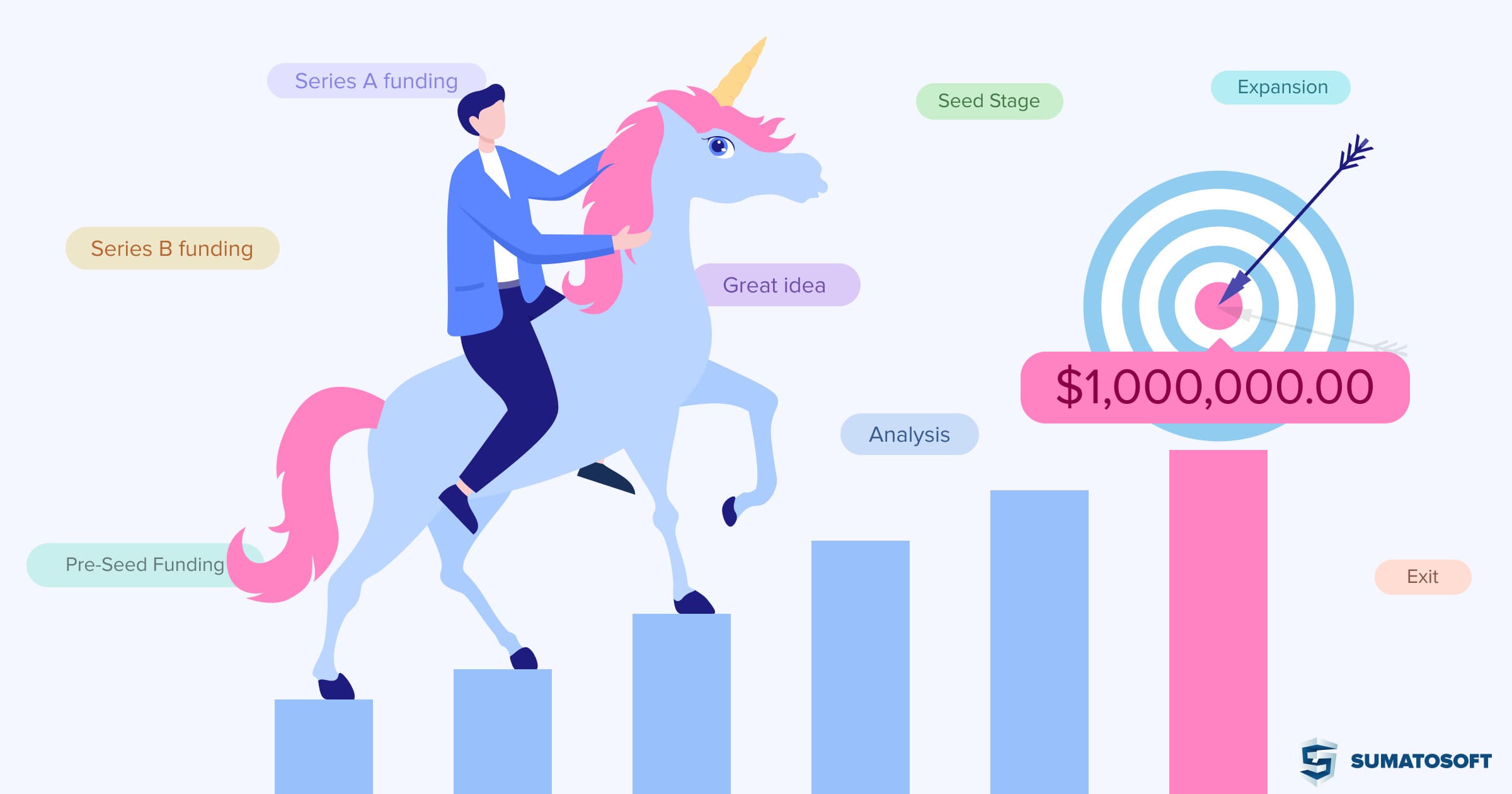
The genesis of a unicorn almost always begins with seed funding, often from angel investors or micro-VCs, providing initial capital for product development and market validation. This is followed by a series of progressively larger and more sophisticated venture capital (VC) funding rounds. These rounds are typically labeled Series A, B, C, and so forth, each reflecting a different stage of company growth and a higher valuation.
-
Series A funding helps companies scale their product, build their team, and establish a clear business model.
-
Series B capital is used for aggressive expansion, market penetration, and potentially international growth.
-
Series C, D, and beyond typically fuel further scaling, acquisitions, or prepare the company for an eventual exit.
Venture capital firms are the primary architects of unicorn creation. They provide not just capital but also strategic guidance, industry connections, and operational expertise. In return for their investment, VCs receive equity stakes in the company, betting that a small percentage of their portfolio companies will become unicorns and deliver outsized returns that compensate for the many investments that do not succeed. The due diligence process for these later-stage rounds becomes increasingly rigorous, focusing on financial performance, market size, competitive advantage, and management team strength.
Valuation Metrics and Growth Trajectories
Determining the valuation of a private company, especially a high-growth startup, is a complex financial art. Unlike public companies with readily available stock prices, private valuations are negotiated between the company and its investors. Key metrics employed include:
-
Revenue Growth: The speed at which a company’s top line is expanding. High double-digit or even triple-digit annual growth is expected.
-
User Acquisition and Engagement: For platform-based businesses, the number of active users, their engagement levels, and the cost of acquiring them are crucial.
-
Market Share and Total Addressable Market (TAM): The company’s current penetration in its target market and the overall size of that market’s potential revenue.
-
Future Potential and Discounted Cash Flow (DCF): Valuations often heavily discount future earnings, assuming continued rapid growth and eventual profitability.
-
Comparables Analysis: Benchmarking against publicly traded companies in similar sectors or recent acquisition multiples of comparable private companies.
Unicorns typically exhibit exponential growth trajectories. Their financials often show significant investment in growth over immediate profitability, a strategy supported by investors who prioritize market dominance. This often means running at a loss for years, a financial model that would be unsustainable for most mature businesses but is acceptable for high-growth startups targeting massive future market capture.
The Investor’s Perspective: High Risk, High Reward
For venture capitalists and other institutional investors, chasing unicorns is a high-risk, high-reward endeavor. Only a small fraction of startups ever achieve unicorn status, and many promising ventures fail along the way. However, the returns from a successful unicorn can be astronomical, potentially covering the losses from dozens of other failed investments.
Investors are primarily looking for two things: disruptive potential and a clear path to liquidity. They seek companies that can fundamentally alter industries, creating new monopolies or oligopolies. The “path to liquidity” refers to how investors will eventually cash out their equity stake – typically through an Initial Public Offering (IPO) or an acquisition by a larger corporation. The promise of an eventual IPO, where the company’s shares are offered to the public, or a lucrative acquisition, where a larger company buys the unicorn, is what drives significant investment into these private enterprises. These exit events are the financial realization of the unicorn dream, delivering multi-billion dollar payouts to founders and investors.

The Economic Impact and Market Dynamics of Unicorns
Unicorns are more than just financially successful companies; they are potent drivers of economic change, reshaping industries, influencing investment patterns, and fostering a culture of innovation. Their presence significantly impacts both local and global economies.
Driving Innovation and Economic Growth
Unicorn startups are at the forefront of innovation. They are often responsible for introducing cutting-edge technologies, pioneering new business models, and creating entirely new product categories that improve efficiency, convenience, or access. Companies like Uber revolutionized transportation, Airbnb transformed hospitality, and SpaceX redefined space exploration. This innovation trickles down throughout the economy, inspiring other entrepreneurs, fostering research and development, and pushing established industries to adapt or perish.
Economically, unicorns are significant job creators. As they scale rapidly, they hire thousands of employees, from engineers and designers to sales and marketing professionals. These jobs are often high-paying and skilled, contributing to higher average incomes and economic stability in the regions where these companies operate. Furthermore, their success can stimulate an entire ecosystem of supporting businesses, including legal firms, financial services, recruitment agencies, and real estate, further fueling regional economic growth.
Market Disruption and Competitive Landscape
One of the defining characteristics of unicorns is their capacity for market disruption. They enter established industries with novel approaches, often leveraging technology to offer superior services at lower costs or to address unmet consumer needs. This can put immense pressure on traditional businesses, forcing them to innovate, reduce prices, or risk losing market share. For example, direct-to-consumer unicorns have challenged legacy retail brands, while fintech unicorns have begun to chip away at the market dominance of traditional banks.
This disruption isn’t always smooth; it can lead to intense competition, price wars, and even the eventual decline of less adaptable incumbents. However, from a consumer perspective, it often leads to better products, more choice, and greater value. The rise of unicorns creates a dynamic competitive landscape where agility and innovation are paramount. It also forces a redistribution of wealth and power within industries, shifting it from entrenched players to nimble, high-growth startups.
The “Unicorn Effect” on Investment Trends
The success of unicorns has created what can be termed the “unicorn effect” on investment trends. The prospect of identifying and investing in the next billion-dollar company has intensified competition among venture capitalists. This heightened competition can lead to higher valuations for early-stage companies, as investors are willing to pay a premium to secure a stake in a potentially groundbreaking startup. This trend can sometimes be a double-edged sword, leading to concerns about inflated valuations and potential market bubbles.
The “unicorn effect” also encourages a focus on growth at all costs among startups, often at the expense of immediate profitability. Investors are increasingly comfortable with companies operating at a loss for extended periods, provided they are demonstrating robust user acquisition, market share capture, and a clear path to future monetization. This shifts investment strategies towards long-term vision and market dominance rather than immediate financial returns, a characteristic unique to the high-growth startup ecosystem.
Beyond the Billion: Challenges and Criticisms
While the unicorn status is celebrated, it’s not without its challenges and criticisms. The immense pressure to grow, the scrutiny of high valuations, and the ultimate need for a successful exit all contribute to a complex reality for these billion-dollar enterprises.
Valuation Bubbles and Sustainability Concerns
One of the most persistent criticisms leveled against the unicorn phenomenon is the concern over valuation bubbles. Critics argue that some unicorn valuations are not justified by their underlying fundamentals, revenue, or profitability, but rather by speculative investor excitement and FOMO (fear of missing out). This can lead to situations where companies are valued at billions of dollars with minimal actual profit, raising questions about the sustainability of their business models in the long run.
The rapid influx of capital can also create a disconnect between a company’s perceived value and its real financial health. Should market conditions sour, or if a company fails to meet its aggressive growth targets, these inflated valuations can collapse, leading to significant financial losses for investors and potentially impacting the broader market confidence in private equity. Ensuring a unicorn’s financial health and a clear path to profitability or sustainable growth is a constant challenge.
The Pressure Cooker Environment
Operating as a unicorn, or striving to become one, creates an incredibly high-pressure environment for founders, management teams, and employees. The expectation of rapid, continuous growth is immense. This pressure can manifest in several ways:
-
Burn Rate: Many unicorns operate with a high “burn rate,” spending vast sums of capital to fuel expansion, often leading to consistent operating losses. This necessitates continuous fundraising rounds, which can be time-consuming and distracting.
-
Profitability Challenges: The focus on market share and growth often defers profitability. Companies face immense pressure to eventually demonstrate a path to sustainable earnings to justify their valuations.
-
Employee Expectations: Employees joining unicorns are often drawn by the promise of significant equity payouts at an exit event. If the company struggles to achieve an IPO or a lucrative acquisition, morale can suffer, and retention can become an issue.
-
Regulatory Scrutiny: As unicorns grow in size and influence, they often attract increased scrutiny from regulators regarding market power, data privacy, labor practices, and competitive behavior.
The Path to Exit: IPOs and Acquisitions
For investors, the ultimate financial goal is an “exit strategy” – the point at which they can sell their shares and realize their returns. The two primary paths for a unicorn exit are an Initial Public Offering (IPO) or an acquisition.
-
Initial Public Offering (IPO): This is often the most celebrated exit, where the company’s shares are listed on a public stock exchange, allowing anyone to buy them. An IPO provides liquidity for early investors, raises significant capital for the company, and enhances its public profile. However, it also brings increased scrutiny, regulatory compliance, and the demands of quarterly earnings reports. The timing of an IPO is crucial, as market conditions significantly impact its success.
-
Acquisition: A unicorn might also be acquired by a larger, often publicly traded, company. This can be an attractive option for both the unicorn (providing a clear exit for investors and founders, and potentially resources for further growth within a larger entity) and the acquirer (gaining access to innovative technology, market share, or talent).
The journey from a seed-funded startup to a multi-billion dollar unicorn culminating in a successful IPO or acquisition is the holy grail for founders and venture capitalists alike. It is the ultimate validation of their vision, risk-taking, and financial acumen.
Conclusion
Unicorn startups, those privately held companies valued at over $1 billion, represent a fascinating and impactful segment of the global financial and business landscape. Far from being mythical, they are real drivers of innovation, economic growth, and wealth creation. Their existence is a testament to the power of venture capital, the allure of disruptive technologies, and the relentless pursuit of exponential growth.
From their origins as a rare statistical anomaly to their current prevalence, unicorns have reshaped investment strategies, accelerated technological adoption, and redefined the benchmarks of entrepreneurial success. While they embody immense financial potential and inspire countless aspiring entrepreneurs, they also navigate a treacherous path fraught with high expectations, intense competition, and the constant pressure to justify their colossal valuations. Understanding the financial mechanics, growth trajectories, and market dynamics of unicorn startups is essential for anyone seeking to comprehend the cutting edge of business finance and the future of global enterprise. They are not merely companies; they are symbols of audacious ambition and the profound financial rewards that can come with reshaping the world.
aViewFromTheCave is a participant in the Amazon Services LLC Associates Program, an affiliate advertising program designed to provide a means for sites to earn advertising fees by advertising and linking to Amazon.com. Amazon, the Amazon logo, AmazonSupply, and the AmazonSupply logo are trademarks of Amazon.com, Inc. or its affiliates. As an Amazon Associate we earn affiliate commissions from qualifying purchases.