
In the intricate world of public finance and urban development, municipalities constantly seek innovative strategies to spur economic growth, revitalize blighted areas, and fund essential infrastructure without burdening existing taxpayers. Among these strategies, Tax Increment Financing (TIF) stands out as a powerful, albeit often complex, financial tool. A TIF district, at its core, is a designated geographic area where future property tax revenues generated by new development are captured to finance eligible improvement projects within that same area. This mechanism allows local governments to invest in critical projects – from roads and utilities to schools and parks – by leveraging future economic prosperity, effectively paying for today’s development with tomorrow’s growth.

Understanding TIF districts is crucial for anyone interested in municipal finance, real estate development, urban planning, or local economic policy. It represents a delicate balancing act between stimulating growth, managing public funds, and ensuring equitable development, making it a pivotal concept in the “Money” category of economic tools.
The Core Concept of Tax Increment Financing (TIF)
At the heart of a TIF district lies a seemingly simple yet profoundly impactful financial principle: isolating and reinvesting the incremental increase in property tax revenues. This mechanism transforms potential future tax gains into a current funding source for development.
Defining TIF: A Municipal Economic Development Mechanism
Tax Increment Financing is a specific type of public financing that channels future tax revenues from a defined area into infrastructure and development projects within that same area. When a municipality designates a TIF district, it establishes a “baseline” or “original” assessed value of all taxable property within that district. Property taxes generated from this baseline value continue to flow to the various taxing bodies (e.g., city, county, school district) as they did before the TIF district’s creation.
The innovative aspect of TIF arises from the “increment.” Any increase in property value above this baseline, resulting from new development or revitalization efforts within the district, generates additional property tax revenue. This incremental revenue, rather than going to the general funds of the various taxing bodies, is diverted into a special TIF fund. This fund is then used to repay bonds or directly finance public improvements that facilitated the increased property values in the first place.
This self-financing model is attractive because it theoretically funds development without directly impacting the general operating budgets of taxing bodies or requiring an increase in tax rates for the broader community. Instead, it leverages the anticipated future growth of a specific, often underdeveloped, area.
The “Increment” in Tax Increment Financing: How Value is Captured
The concept of the “increment” is fundamental to TIF’s financial engineering. Imagine a parcel of land in a designated TIF district with an initial assessed value of $1 million. At this stage, all existing taxing bodies receive their proportionate share of property taxes based on this $1 million valuation.
Now, suppose a developer constructs a major commercial complex on that parcel, significantly increasing its assessed value to $10 million. The “increment” here is $9 million (the $10 million new value minus the $1 million baseline value). The property taxes generated from that original $1 million still go to the existing taxing bodies. However, the property taxes generated from the additional $9 million (the increment) are directed into the TIF fund.
This TIF fund accumulates these incremental revenues over the life of the district, typically 20-30 years. These funds are then utilized for a range of eligible expenses, including site acquisition, public infrastructure improvements (roads, sewers, utilities), demolition, environmental remediation, and even direct incentives to developers for qualifying projects. The captured increment essentially serves as the repayment source for the public investments made to facilitate the new development.
Historical Context and Evolution of TIF
TIF originated in California in the 1950s as a tool for urban renewal and blight elimination. Its popularity grew significantly in the 1970s and 1980s as cities faced declining industrial bases and sought new ways to stimulate reinvestment. Today, TIF is authorized in nearly 50 states across the U.S., albeit with varying regulations and applications.
Its evolution reflects a shift from solely addressing “blight” to a broader application for economic development, job creation, and strategic urban planning. While initially focused on physical revitalization, TIF has adapted to support a wider array of projects, including transit-oriented development, mixed-use projects, and even specialized commercial districts, making it a versatile financial instrument in municipal toolkits.
How TIF Districts Work: A Step-by-Step Financial Mechanism
Implementing a TIF district involves a series of carefully orchestrated financial and administrative steps, requiring collaboration between local government, developers, and the community.
Establishing a TIF District: Baseline Valuation and Project Identification
The first critical step is for a local government (city council, county board) to legally establish a TIF district. This involves:
-
Defining Boundaries: Clearly delineating the geographic area that will constitute the TIF district.
-
Determining Baseline Value: Conducting an accurate assessment of the total equalized assessed value (EAV) of all taxable property within the proposed district at the time of its creation. This EAV becomes the “frozen” base, against which all future incremental growth will be measured.
-
Identifying Blight or Redevelopment Needs: Many states require a finding that the area is “blighted” or “underperforming” to justify the use of TIF, although definitions vary widely. This step helps establish the rationale for public intervention.
-
Developing a Redevelopment Plan: Outlining the specific projects, improvements, and goals for the district. This plan details how the TIF funds will be used, including infrastructure upgrades, land acquisition, job creation targets, and private development expectations.
These initial steps are crucial as they set the financial parameters and strategic direction for the entire life of the TIF district.
Funding Mechanisms: Bonds and Pay-As-You-Go
Once a TIF district is established, the municipality needs a way to fund the planned improvements. Two primary financial mechanisms are typically employed:
-
TIF Bonds: This is the most common method. The municipality issues municipal bonds, often explicitly backed by the anticipated future incremental tax revenues. These bonds provide upfront capital to finance large-scale projects like new roads, utilities, or public plazas. As development occurs and property values rise, the generated tax increment is used to make interest payments and repay the principal on these bonds. This essentially allows the municipality to borrow against future growth.
-
Pay-As-You-Go Financing: In this approach, the municipality funds projects directly from the incremental tax revenues as they accrue. This method is more conservative, as it doesn’t require issuing debt but means projects can only proceed as funds become available. It’s often used for smaller projects or as a supplement to bond financing.
The choice of funding mechanism depends on the project’s scale, the municipality’s risk tolerance, and the projected speed of development within the district.
The Role of Property Taxes and Other Revenue Streams
Property taxes are the primary, and often sole, source of revenue for TIF districts. The mechanism specifically targets the increase in property tax collections due to enhanced assessed values within the district. However, in some jurisdictions, TIF statutes may allow for the capture of other incremental revenues, such as sales tax increments or utility tax increments, although this is less common and depends heavily on state-specific legislation.
The reliance on property tax increments means the success of a TIF district is directly tied to robust real estate development and increasing property values. If development does not occur as anticipated, or if property values stagnate or decline, the TIF fund may not generate enough revenue to cover its obligations, leading to financial challenges for the municipality.
Duration and Sunset Clauses of TIF Districts
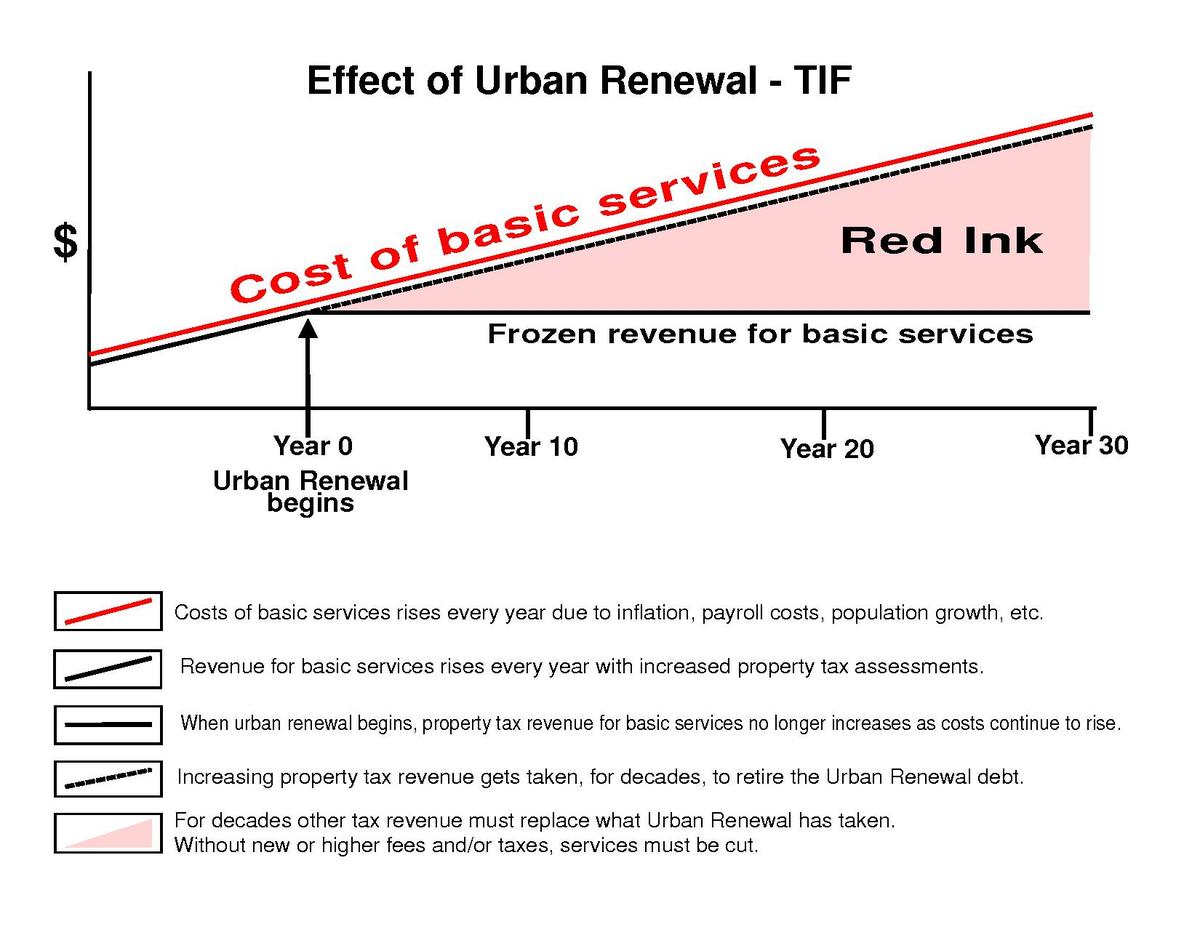
TIF districts are not permanent. They typically have a statutory lifespan, often ranging from 20 to 30 years, depending on state law. This “sunset clause” ensures that the diversion of incremental tax revenues is temporary. Once the TIF district expires, or once all project costs and bond obligations have been repaid (whichever comes first), the district is dissolved. At that point, all property tax revenues, including those generated from the new, higher assessed values, revert to the general funds of the various taxing bodies (city, county, school district, library, etc.).
This finite lifespan is a crucial financial safeguard, preventing indefinite diversion of funds and ensuring that all taxing bodies eventually benefit from the full, enhanced property tax base created by the TIF-funded development.
The Financial Rationale and Economic Impact of TIF
From a purely financial perspective, TIF is designed to address market failures and create economic opportunities that might not otherwise materialize.
Stimulating Development in Underperforming Areas
One of the primary financial justifications for TIF is its ability to catalyze development in areas that conventional market forces have overlooked or deemed too risky. These “underperforming” areas often lack adequate infrastructure, suffer from environmental contamination, or require significant upfront investment to become attractive to private developers. By providing a mechanism to fund these costly preconditions, TIF can bridge the financial gap, making otherwise unprofitable projects viable. This is a direct intervention in the market to correct perceived inefficiencies or attract capital where it’s most needed.
Attracting Private Investment and Job Creation
TIF funds can be used to mitigate the financial risk for private developers by covering a portion of the development costs, particularly for public infrastructure components. This financial incentive can be the deciding factor for a company to choose a particular TIF district for a new facility or commercial venture. Such private investment, in turn, leads to job creation – both during the construction phase and in the long-term operations of new businesses – boosting local employment and stimulating economic activity. The financial benefits ripple through the local economy, from increased consumer spending to the creation of ancillary service jobs.
Funding Public Infrastructure Without Raising General Taxes
A major appeal of TIF from a public finance perspective is its ability to fund significant public improvements – such as new roads, water and sewer lines, public parks, or even schools – without requiring a direct increase in general property tax rates for the entire municipality. Instead, the growth generated within the district effectively pays for its own infrastructure needs. This can be politically attractive as it avoids widespread tax hikes, relying instead on the “growth pays for growth” principle. It shifts the burden of funding new infrastructure to the beneficiaries of the new development (the new property owners and businesses, and indirectly, the consumers) rather than the existing tax base.
The Interplay with Local Government Budgets and Services
While TIF is designed to be self-financing, its impact on local government budgets and services is a critical financial consideration. During the TIF district’s life, the incremental property tax revenue is diverted away from the general funds of various taxing bodies, including school districts, counties, and park districts. This means these bodies do not immediately benefit from the increased property values in the TIF district, even though they may incur increased costs to serve the new development (e.g., more students for the school district, increased demand for police/fire services).
Careful financial planning is required to ensure that the services provided to the TIF district’s new residents and businesses do not strain the existing budgets of these taxing bodies. However, once the TIF district sunsets, these bodies do receive the full tax base, potentially providing a substantial future windfall.
Navigating the Complexities: Benefits and Criticisms from a Financial Perspective
While TIF is a powerful financial tool, it is not without its controversies and requires careful consideration of its potential upsides and downsides.
Advantages for Municipalities and Developers
For municipalities, the primary financial advantage is the ability to finance costly urban redevelopment projects without tapping into existing general funds or raising taxes on the broader populace. It provides a dedicated, revenue stream for targeted development. For developers, TIF can significantly reduce the upfront costs of a project, particularly for public infrastructure, making otherwise financially challenging projects feasible. It also signals a municipal commitment to a specific area, potentially attracting further private investment.
Potential Financial Risks and Opportunity Costs
One of the main criticisms revolves around financial risk. If the anticipated development and property value increases do not materialize, the TIF fund may not generate enough revenue to repay its bonds or cover project costs, leaving the municipality liable for the debt. This can strain municipal budgets and potentially impact credit ratings.
Additionally, critics argue about the “opportunity cost.” The funds diverted to a TIF district could potentially have been used for other municipal priorities or allowed to flow directly to taxing bodies, particularly school districts, which often derive a significant portion of their funding from property taxes. There’s also the risk of “spillover” or “phantom” increment – where development that would have happened anyway is credited to the TIF, thus diverting revenues unnecessarily.
Transparency, Accountability, and Public Oversight
The financial complexity of TIF districts often leads to challenges in transparency and accountability. Public oversight is crucial to ensure that funds are used appropriately, projects are delivered as promised, and financial benefits are broadly shared. Regular audits, clear reporting on TIF fund balances, expenditures, and project progress are essential to maintain public trust and prevent misuse of funds. Without robust oversight, TIF districts can become opaque financial instruments susceptible to political influence rather than purely economic decision-making.
Equity Concerns and Impact on Other Taxing Bodies
A significant concern from an equity standpoint is the impact on other taxing bodies, particularly school districts, which are often the largest recipients of property tax revenues. During the life of a TIF, schools may not receive the incremental taxes from new development, even though they might have to educate additional students moving into the TIF-supported projects. This can create financial strain and lead to calls for more equitable distribution mechanisms or compensation for lost revenues. The long-term benefits are contingent on the TIF district’s success and expiration.
Key Considerations for Stakeholders in TIF Districts
Understanding TIF districts is critical for various stakeholders, each with unique financial interests and perspectives.
For Property Owners and Businesses: Understanding Financial Implications
Existing property owners within or adjacent to a TIF district should understand that while their property values may increase due to revitalization, the incremental portion of their property taxes will be redirected to the TIF fund. New businesses and residents moving into a TIF district benefit from improved infrastructure and amenities, but they are indirectly contributing to the repayment of the TIF debt through their property taxes. It’s essential for these stakeholders to understand the terms, duration, and specific projects supported by the TIF to gauge the financial benefits and impacts on their investments.
For Investors: Evaluating TIF-Backed Debt
Investors considering municipal bonds backed by TIF revenues must conduct thorough due diligence. This includes evaluating the economic fundamentals of the TIF district, the strength of the development plan, the historical and projected property value growth, and the legal framework governing the TIF. The creditworthiness of TIF bonds is directly tied to the success of the underlying development projects and the generation of incremental tax revenues, making them distinct from general obligation bonds.
For Local Governments: Strategic Implementation and Management
Local governments must approach TIF implementation with strategic foresight and robust financial management. This includes conducting rigorous feasibility studies, establishing clear project goals, ensuring adequate public participation, and designing strong oversight mechanisms. Effective TIF management requires ongoing monitoring of property values, development progress, and financial performance to make timely adjustments and ensure the district meets its objectives without creating undue financial burden on the municipality or other taxing bodies.

Conclusion
A TIF district is a powerful and flexible financial instrument designed to ignite economic development and revitalize communities by strategically reinvesting future tax revenues. It embodies the “Money” category through its direct manipulation of public finance, property valuation, tax streams, and investment incentives. While offering a compelling pathway to fund crucial infrastructure and attract private capital without raising general taxes, TIF’s complexities demand careful financial planning, transparent governance, and a balanced consideration of its benefits against potential risks and equity concerns. As cities continue to evolve, TIF districts will remain a critical, albeit debated, component of the financial toolkit employed to shape urban landscapes and foster economic prosperity.
aViewFromTheCave is a participant in the Amazon Services LLC Associates Program, an affiliate advertising program designed to provide a means for sites to earn advertising fees by advertising and linking to Amazon.com. Amazon, the Amazon logo, AmazonSupply, and the AmazonSupply logo are trademarks of Amazon.com, Inc. or its affiliates. As an Amazon Associate we earn affiliate commissions from qualifying purchases.