
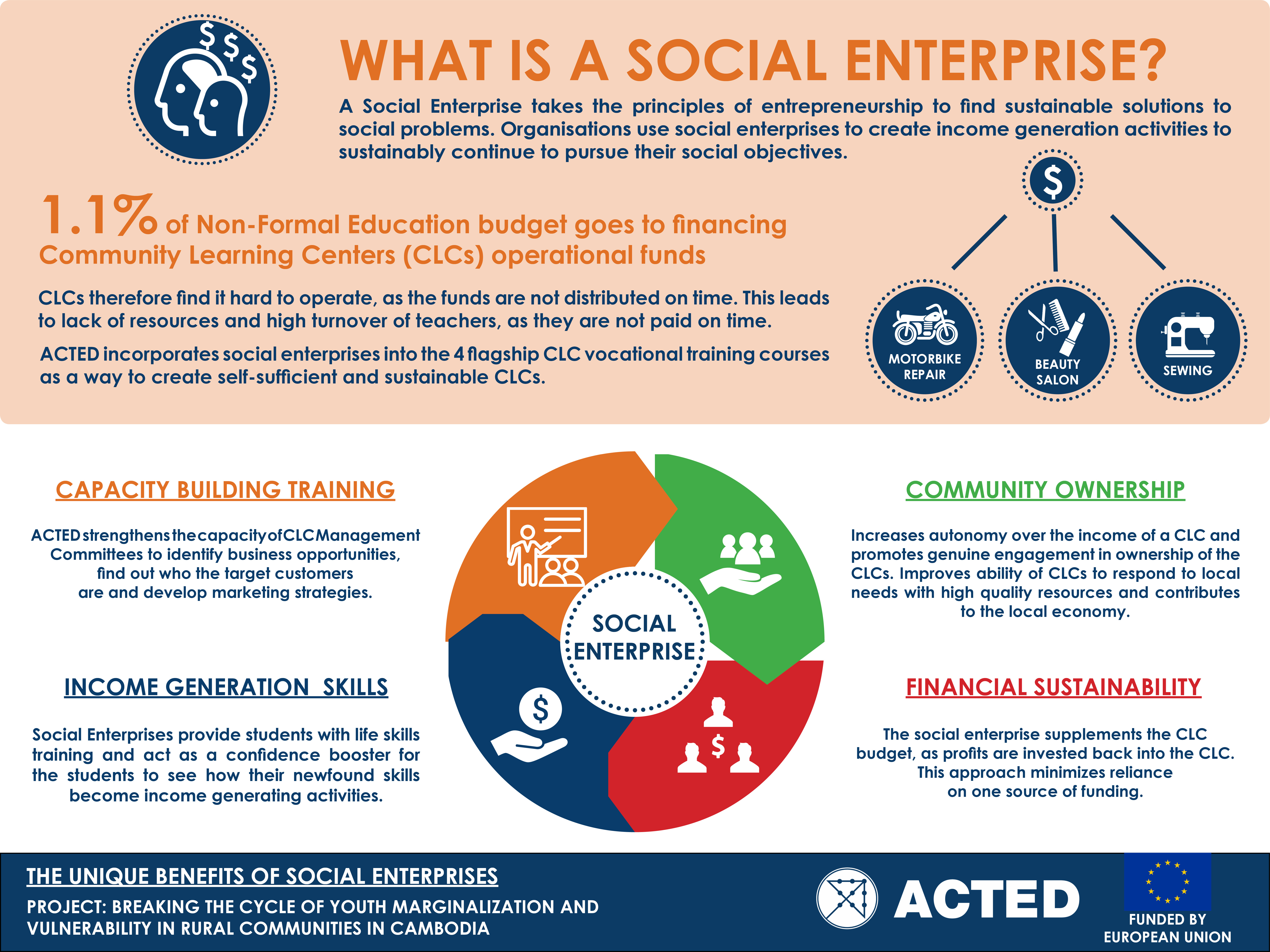
In an increasingly conscious global economy, a new breed of organization is bridging the gap between traditional philanthropy and pure profit-seeking ventures: the social enterprise. Far from being merely a charitable endeavor, a social enterprise is fundamentally a business, strategically structured and financially driven to achieve a specific social or environmental mission alongside its economic objectives. It’s a model that inherently recognizes money not just as an outcome, but as a critical tool for driving impactful change. For entrepreneurs, investors, and consumers alike, understanding the financial architecture and operational distinctiveness of a social enterprise is paramount. These entities embody a “dual bottom line,” valuing both financial solvency and measurable social impact, making them a compelling subject within the realm of business finance.
Defining the Dual Bottom Line: The Financial and Social Imperative
At the heart of every social enterprise is a commitment to a dual bottom line, a concept that fundamentally reshapes the traditional view of business success. Unlike conventional charities, which primarily rely on donations and grants to fund their mission, social enterprises generate revenue through the sale of goods or services. Unlike traditional for-profit businesses, however, their primary purpose isn’t to maximize shareholder wealth but to address a pressing social or environmental problem. This creates a unique financial imperative: to be profitable enough to sustain and scale their mission, yet always re-investing or directing profits towards that mission rather than solely distributing them to owners.
Beyond Profit: The Social Mission at Core
For a social enterprise, the social or environmental mission is not merely a marketing add-on or a corporate social responsibility (CSR) initiative; it is intrinsically woven into the business model itself. Whether it’s providing employment to marginalized communities, developing sustainable products, or delivering essential services to underserved populations, the core business activity directly contributes to solving a societal challenge. From a financial perspective, this means that every expenditure and revenue stream must be evaluated not just for its economic efficiency, but also for its alignment with and contribution to the social mission. This often requires creative financial modeling to ensure that the pursuit of impact doesn’t undermine economic viability, and vice-versa.
The Business Model: Generating Revenue for Good
The defining characteristic of a social enterprise is its reliance on earned income. This self-sufficiency distinguishes it from a non-profit organization that largely depends on philanthropic contributions. Social enterprises engage in commercial activities, selling products or services that appeal to a market, thereby creating a sustainable funding mechanism for their social goals. For example, a social enterprise might sell handcrafted goods made by vulnerable artisans, with profits reinvested into training and fair wages. Another might offer affordable renewable energy solutions in developing regions, generating revenue that funds further expansion and community development. This earned income model fosters financial independence, allowing the enterprise to expand its impact without perpetual donor dependency.
Balancing Act: The Integration of Purpose and Profit
Achieving the dual bottom line requires a delicate and often complex balancing act. Financial decisions in a social enterprise are rarely purely transactional; they are always viewed through the lens of impact. This might mean choosing suppliers based on ethical labor practices rather than just cost, investing in environmentally friendly production methods that initially cost more, or setting prices to be accessible to low-income populations, even if it reduces profit margins. The challenge lies in integrating these social costs and benefits into traditional financial statements and decision-making processes, ensuring that the pursuit of purpose doesn’t jeopardize the financial stability necessary for long-term survival and impact.
Funding Models and Revenue Generation for Social Enterprises
The financing landscape for social enterprises is as diverse as the missions they pursue. Moving beyond the traditional binary of “donations for non-profits” and “equity for for-profits,” social enterprises often navigate a hybrid financial ecosystem. Their ability to generate earned income gives them a unique position, allowing them to attract various forms of capital while maintaining their social mandate. Understanding these distinct funding models is crucial for anyone looking to invest in, establish, or work with a social enterprise.
Diverse Capital Streams: From Grants to Investments
Unlike traditional businesses that typically seek venture capital or bank loans, social enterprises often tap into a wider array of funding sources. Early-stage social enterprises might secure grants from foundations or government agencies to kickstart their operations and prove their concept, much like a non-profit. However, as they mature and demonstrate market viability, they become attractive to “impact investors” – individuals or funds that seek both financial returns and positive social or environmental impact. This can include patient capital, loans with flexible terms, revenue-share agreements, or even equity investments where investors accept a lower financial return in exchange for significant social dividends. Hybrid models, combining grant funding with earned income, are also common, particularly in sectors requiring significant upfront capital or serving extremely marginalized communities.
Earned Income Strategies: Self-Sufficiency Through Market Activities
The cornerstone of a social enterprise’s financial sustainability is its ability to generate earned income. This can take numerous forms, from direct sales of products (e.g., ethical fashion, organic food) and services (e.g., consulting, training programs for the unemployed) to licensing intellectual property or even providing B2B services with a social mission (e.g., IT support from a firm employing individuals with disabilities). The key is that the revenue-generating activity is directly aligned with, and ideally reinforces, the social mission. This self-sufficiency not only reduces reliance on external funding but also instills market discipline, requiring the enterprise to create value that customers are willing to pay for, thereby proving the validity and demand for its products or services.
Impact Investing and Patient Capital
Impact investing has emerged as a significant financial engine for social enterprises. This growing field involves investments made with the intention to generate positive, measurable social and environmental impact alongside a financial return. Impact investors often have a higher tolerance for risk, a longer investment horizon, and may accept a lower financial return compared to traditional investors, prioritizing the “social return on investment” (SROI). Patient capital, a subset of impact investing, is particularly suited for social enterprises, offering long-term investment that allows organizations to grow and prove their model without immediate pressure for high returns. These types of investments are vital for social enterprises, providing the financial runway needed to develop sustainable solutions to complex problems.
Measuring Impact and Financial Sustainability
For social enterprises, success is not solely measured by profit and loss statements. It encompasses a holistic evaluation of both financial performance and the achievement of social or environmental goals. This necessitates robust measurement frameworks that track both traditional financial metrics and specific impact indicators, ensuring accountability to stakeholders and demonstrating the effectiveness of the enterprise’s dual mission. The challenge lies in quantifying often intangible social benefits and integrating them meaningfully with financial data.

The Challenge of Quantifying Social Return on Investment (SROI)
Measuring the Social Return on Investment (SROI) is a critical yet complex aspect of social enterprise finance. Unlike financial ROI, which is straightforwardly calculated, SROI attempts to assign monetary values to social and environmental impacts that typically aren’t traded in markets. For example, how do you financially value improved health outcomes, reduced recidivism, or increased community cohesion? While methods like SROI frameworks exist to systematically assess these values, they require significant data collection, stakeholder engagement, and often involve making reasonable assumptions. Despite the complexity, these measurements are essential for demonstrating efficacy to impact investors, donors, and the public, proving that the enterprise’s financial inputs are indeed generating desired social outputs.
Key Financial Metrics for Social Enterprises
While social impact is paramount, financial sustainability remains foundational. Social enterprises must track traditional financial metrics rigorously. These include revenue growth, profit margins, cash flow (especially critical for managing the operational costs of social programs), debt-to-equity ratios, and break-even analysis. Additionally, metrics like customer acquisition cost, retention rates, and unit economics are vital for understanding the viability of their business model. For social enterprises, these financial indicators are not merely ends in themselves but are tools to ensure the organization has the resources to continue and expand its social mission. A financially unstable social enterprise, no matter how noble its mission, cannot sustain its impact.
Building Resilient Financial Models
Creating a resilient financial model for a social enterprise involves more than just balancing books; it means designing a revenue strategy that is diverse, adaptable, and aligned with its social mission. This might involve creating diversified income streams (e.g., combining product sales with consulting services, or grants with earned revenue), building strong reserves, and carefully managing operational costs. Resilience also means being able to absorb unexpected shocks, such as economic downturns or shifts in donor priorities, without compromising the core mission. This often requires careful budgeting, scenario planning, and a deep understanding of the market dynamics in which the enterprise operates, ensuring it can weather financial storms while continuing to deliver impact.
Legal Structures and Their Financial Implications
The legal form a social enterprise chooses has significant financial and operational consequences. It influences everything from access to capital and tax obligations to governance and accountability to stakeholders. Unlike traditional businesses that typically choose between sole proprietorship, partnership, or corporation, social enterprises often navigate a more complex landscape, seeking structures that best accommodate their dual mission.
Hybrid Models: Balancing Legal Forms for Dual Objectives
Many social enterprises adopt hybrid legal structures, blending elements of non-profit and for-profit entities. For instance, an organization might operate a for-profit arm that generates revenue through commercial activities, with profits then channeled to a non-profit arm that delivers social programs. This allows the for-profit entity to attract traditional investors while the non-profit can access grants and maintain tax-exempt status for certain activities. Understanding the financial implications of such structures – including taxation, reporting requirements, and the flow of funds between entities – is crucial for both founders and investors to ensure compliance and maximize both financial and social returns.
Benefit Corporations and Certified B Corps
A significant development in the legal landscape for social enterprises is the emergence of the “Benefit Corporation” (or B Corp) legal structure in many jurisdictions. A Benefit Corporation is a for-profit entity committed to creating a general public benefit, in addition to shareholder value. This legal designation provides a framework for directors to consider the impact of their decisions on all stakeholders (workers, community, environment) rather than just shareholders. Financially, becoming a Benefit Corporation can enhance a company’s appeal to impact investors and socially conscious consumers. Similarly, obtaining “Certified B Corp” status (a third-party certification) signals a verified commitment to social and environmental performance, accountability, and transparency, which can positively influence brand perception and attract mission-aligned capital.
The Financial Regulatory Landscape
Navigating the regulatory landscape is another critical financial consideration. Different legal structures come with distinct financial reporting requirements, auditing standards, and tax implications. For example, a non-profit social enterprise will face strict regulations regarding the use of funds and public disclosure, while a for-profit social enterprise, even with a social mission, will adhere to corporate tax laws. For social enterprises operating across national borders or receiving international funding, the complexity can multiply. Ensuring compliance with financial regulations is not just a legal necessity but a key component of maintaining credibility and attracting sustained financial support from a diverse range of stakeholders.
The Future of Social Enterprise Finance
The social enterprise movement is gaining momentum, and its financial evolution is poised for significant growth and innovation. As the world confronts complex social and environmental challenges, the demand for sustainable, market-based solutions is skyrocketing, drawing increasing attention from both the financial sector and public policy makers. The future promises a more integrated and sophisticated approach to funding and scaling impact.
Mainstreaming Impact Investing
What was once a niche segment of finance, impact investing is rapidly moving into the mainstream. Large institutional investors, pension funds, and major banks are increasingly allocating capital towards ventures that deliver both financial returns and measurable social good. This mainstreaming means more capital will be available for social enterprises, potentially at more competitive rates. It also pushes for greater standardization in impact measurement and reporting, making it easier for investors to compare and assess opportunities. The integration of Environmental, Social, and Governance (ESG) criteria into investment analysis further blurs the lines, embedding social considerations into conventional financial decision-making.
Technological Advancements and Financial Inclusion
Technological advancements are set to revolutionize how social enterprises are funded and how they manage their finances. Blockchain technology, for example, could offer transparent and efficient ways to track impact and disburse funds, particularly for enterprises operating in remote areas. Crowdfunding platforms have already democratized access to capital, allowing social enterprises to raise funds directly from a global community of supporters, often with hybrid models that blend donation-based funding with equity or debt. Mobile banking and digital payment systems are also enabling social enterprises to reach underserved populations, both as customers for their products/services and as recipients of their social programs, thereby fostering greater financial inclusion.

The Role of Consumers and Policy
The growing consciousness of consumers is another powerful driver shaping the future of social enterprise finance. Consumers are increasingly willing to pay a premium for products and services from companies with strong social and environmental credentials, creating a powerful market incentive for social enterprises. This demand directly translates into revenue and financial viability. Simultaneously, supportive government policies – such as tax incentives for impact investments, procurement policies favoring social enterprises, or simplified legal structures for hybrid organizations – can significantly reduce the financial barriers to entry and growth. As these forces converge, the financial ecosystem for social enterprises will become more robust, efficient, and capable of channeling capital towards scalable solutions for global challenges.
In conclusion, a social enterprise business represents a potent fusion of commerce and purpose. Its very definition is rooted in its innovative financial model—one that generates sustainable income to drive impactful change. As the world seeks more holistic solutions, understanding the financial dynamics of social enterprises becomes not just an academic exercise but a vital exploration of a powerful engine for a more equitable and sustainable future.
aViewFromTheCave is a participant in the Amazon Services LLC Associates Program, an affiliate advertising program designed to provide a means for sites to earn advertising fees by advertising and linking to Amazon.com. Amazon, the Amazon logo, AmazonSupply, and the AmazonSupply logo are trademarks of Amazon.com, Inc. or its affiliates. As an Amazon Associate we earn affiliate commissions from qualifying purchases.