
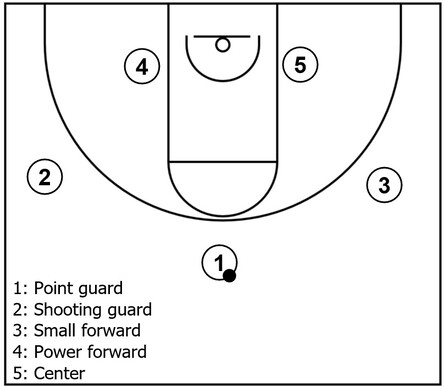
The Power Forward (PF), traditionally known as the “four” position, serves as one of the most physically demanding and tactically versatile roles on a basketball court. Throughout the history of the sport, the definition of a Power Forward has undergone a radical metamorphosis. Originally envisioned as a bruising interior presence tasked primarily with rebounding and defensive intimidation, the modern PF has evolved into a multi-dimensional threat capable of stretching the floor, facilitating offense, and switching onto perimeter defenders. Understanding the essence of the Power Forward requires an analysis of both its historical roots and the contemporary requirements of a high-performance basketball system.

The Traditional Role and Evolution of the Power Forward
For decades, the Power Forward was characterized by size, strength, and proximity to the basket. In the eras defined by legendary players like Karl Malone, Charles Barkley, and Kevin Garnett, the PF operated primarily within the “paint.” Their value was measured by their ability to secure defensive rebounds, establish position on the low block, and finish with high-percentage shots around the rim.
The Defensive Anchor
Historically, the PF worked in tandem with the Center to protect the restricted area. They were the muscle of the defense, responsible for boxing out opponents, denying entry passes to the post, and serving as secondary rim protectors. Their physical stature allowed them to withstand the grueling contact of the interior, effectively clearing space for the team to transition into fast-break opportunities.
The Mid-Range Specialist
As the game progressed into the late 20th century, the role began to shift slightly outward. The most elite Power Forwards developed a reliable mid-range jump shot. By pulling opposing defenders away from the basket, these players opened up lanes for guards to drive to the rim. While not yet the primary focus of offensive schemes, this tactical adjustment marked the beginning of the end for the “pure” interior post player, signaling a move toward more spacing-oriented basketball.
The Modern PF: The Rise of the “Stretch Four”
In the current landscape of professional and collegiate basketball, the traditional interior-focused Power Forward has largely been superseded by the “Stretch Four.” This evolution is a direct result of the analytics revolution, which has prioritized three-point efficiency and floor spacing. The modern Power Forward is often required to possess the skill set of a wing player while maintaining the physical frame of a frontcourt athlete.
Perimeter Shooting Efficiency
The primary objective of a modern PF is to act as a floor spacer. By camping behind the three-point line, the Power Forward draws the opposing team’s best interior defender away from the rim. This tactical spacing is essential for modern offensive systems, such as “Five-Out” or “Pick-and-Pop” sets. A Power Forward who lacks a perimeter shot can often become a liability, as their defender can sag off them to help in the paint, effectively clogging the passing lanes for the rest of the team.
Versatility in Transition
Modern basketball emphasizes pace and space. The Power Forward is no longer expected to lumber up the court after a missed shot. Instead, they are frequently tasked with initiating the break or running the wings. This requires a level of aerobic conditioning and basketball IQ that was seldom required of the position thirty years ago. Players like Giannis Antetokounmpo or Draymond Green represent the pinnacle of this transition, utilizing their size to grab a rebound and immediately push the tempo, forcing the defense to scramble before they have a chance to set up.
Tactical Responsibilities and In-Game Impact
Beyond individual skill sets, the Power Forward serves as the fulcrum of a team’s tactical execution. Their versatility allows coaches to manipulate defensive matchups and dictate the tempo of the game.
Defensive Flexibility and “Switchability”
One of the most critical aspects of the modern PF is their ability to defend multiple positions. In a league dominated by high-speed pick-and-roll action, stationary defenders are frequently exploited. A versatile PF must be capable of “switching” onto smaller, faster guards on the perimeter and then recover to contest shots in the paint. This defensive fluidity is the hallmark of championship-caliber teams, as it negates the ability of the opposing offense to find a “weak link” to attack.
Playmaking and Passing
The “Point Forward” archetype has further blurred the lines between positions. Many modern Power Forwards now serve as secondary playmakers. By operating at the high post or the elbow, they act as the hub through which an offense flows. Their ability to read double-teams and find cutting teammates or open shooters on the perimeter is a luxury that elevates the ceiling of any roster. When a PF can pass effectively, the defense is forced to respect them as both a scorer and a facilitator, preventing the opposition from effectively collapsing on star players.
Strategic Value and Roster Construction
Building a winning basketball team requires a precise balance of skill sets, and the Power Forward is arguably the most vital piece of the puzzle when it comes to roster construction. Teams often look for a “glue guy”—a player whose contributions may not always show up in the box score but are instrumental to the team’s cohesion.
The “Glue” Player
The most successful Power Forwards often specialize in the intangible aspects of the game: screen-setting, vocal defensive leadership, and hustle plays. Setting high-quality screens for ball-handlers creates openings that allow the offense to flow effortlessly. Furthermore, because the PF occupies a central spot on the court, they are ideally positioned to direct defensive rotations. A high-IQ Power Forward acts as an extension of the head coach on the floor, calling out assignments and ensuring that defensive coverage remains disciplined during high-pressure possessions.
Matching Up Against Small-Ball Lineups
The shift toward “small-ball”—where teams sacrifice size for shooting and speed—has forced the Power Forward position to become even more agile. When an opponent plays a lineup with four guards and one mobile big man, the opposing PF must be agile enough to guard a wing while retaining the rebounding prowess to neutralize the opponent’s size advantage. The ability to adapt to these shifting lineups is a testament to the tactical depth required of a modern PF. Those who cannot adapt are often forced out of rotation, illustrating that the position is no longer defined by height, but by the ability to impact the game on both ends of the floor.

Conclusion: The Indispensable Nature of the PF
The Power Forward of the 21st century is a hybrid athlete who embodies the fluidity of modern basketball. No longer tethered to the low block, the contemporary PF is a weapon of versatility, capable of draining perimeter shots, facilitating offensive sets, and shutting down elite perimeter scorers on the defensive end.
As the game continues to evolve, the distinction between positions will likely continue to fade, with the Power Forward serving as the primary example of this “positionless” trend. Whether they are acting as the primary rim protector or a secondary floor general, their impact remains foundational. The Power Forward is no longer just a position; it is a role defined by movement, adaptation, and the relentless pursuit of maximizing offensive and defensive efficiency. For any team aspiring to compete at the highest level, the development and deployment of an effective Power Forward remains one of the most critical challenges and opportunities in the sport. Through a deep understanding of their multifaceted duties, fans and analysts alike can appreciate the complexity and strategic importance of the “four” in the modern basketball landscape.
aViewFromTheCave is a participant in the Amazon Services LLC Associates Program, an affiliate advertising program designed to provide a means for sites to earn advertising fees by advertising and linking to Amazon.com. Amazon, the Amazon logo, AmazonSupply, and the AmazonSupply logo are trademarks of Amazon.com, Inc. or its affiliates. As an Amazon Associate we earn affiliate commissions from qualifying purchases.