
In the dynamic world of modern business, traditional hierarchical structures are often too rigid to keep pace with rapid market changes, complex project demands, and the pervasive need for cross-functional collaboration. This is where the “matrix environment” emerges as a crucial organizational paradigm, fundamentally reshaping how companies manage their resources, projects, and ultimately, their brand. Far from a mere buzzword, a matrix environment represents a sophisticated interplay of functional expertise and project-specific focus, designed to amplify agility, foster innovation, and ensure brand consistency across diverse operational fronts.
For brand leaders, marketers, and anyone vested in corporate identity, understanding the matrix environment is not just an academic exercise; it’s a strategic imperative. It dictates how brand messaging is developed and disseminated, how marketing campaigns are executed, and how the very essence of a company’s identity is maintained and evolved in a multi-faceted operational landscape. This article will unpack the intricacies of the matrix environment, explore its profound implications for brand strategy and execution, and provide insights into how organizations can not only survive but thrive within its often complex yet highly rewarding structure.
Unpacking the Matrix: A Foundational Understanding
At its core, a matrix environment is an organizational structure where individuals report to more than one manager. Unlike traditional hierarchies where employees report exclusively to a single functional manager, a matrix setup introduces a dual reporting line—typically to a functional manager (e.g., Head of Marketing, Head of Design) and a project or product manager (e.g., Brand Launch Manager, Digital Campaign Lead). This creates a grid-like or “matrix” arrangement of authority and responsibility, aiming to combine the benefits of functional specialization with the agility of project-based work.
Defining the Matrix Organization
The defining characteristic of a matrix organization is its dual reporting lines. An employee might be a Graphic Designer (functional role) who reports to the Creative Director (functional manager) but is also assigned to a specific campaign project where they report to the Brand Campaign Lead (project manager) for the duration of that project. This structure facilitates cross-functional collaboration, enabling experts from different departments—marketing, sales, product development, communications—to coalesce around specific brand initiatives or projects without losing their functional departmental affiliation.
The degree of matrix implementation can vary:
-
Weak Matrix: The project manager has limited authority, acting more as a coordinator. The functional manager retains most of the power.
-
Balanced Matrix: The functional and project managers share power more equally. This is often the ideal, though difficult to achieve in practice.
-
Strong Matrix: The project manager has significant authority and control over project resources and personnel.
Each variant carries distinct implications for how brand strategies are formulated and executed, influencing everything from budget allocation for marketing efforts to the final sign-off on creative assets.
Historical Context and Evolution
The concept of the matrix environment isn’t new; it emerged in the mid-20th century, particularly within industries characterized by complex, large-scale projects like aerospace and defense. NASA’s Apollo program, for instance, famously leveraged a matrix structure to manage its myriad specialized teams and integrate their efforts towards a singular, monumental goal. The need to bring together diverse scientific and engineering disciplines for a highly specific mission necessitated a flexible structure that could transcend rigid departmental silos.
In recent decades, as businesses became more globalized, digitized, and competitive, the matrix structure evolved beyond these specialized niches. The rise of project management as a distinct discipline, coupled with the increasing complexity of product development and marketing, pushed many organizations to adopt matrix models. Today, it’s a common sight in large corporations, tech companies, and multinational brands, where agility, innovation, and global consistency are paramount. For brand managers, this evolution means that their role increasingly involves navigating a web of stakeholders and influencing outcomes across functional and project lines, rather than simply dictating from a single hierarchical position.
The Matrix Environment’s Impact on Brand Strategy and Execution
For brand-centric organizations, the matrix environment presents both powerful opportunities and significant challenges. Its structure directly influences how brand strategy is conceived, communicated, and translated into tangible market presence.
Fostering Brand Consistency Across Silos
One of the greatest promises of a matrix structure for brand management is its potential to foster brand consistency. In traditional silos, different departments might develop their own interpretations of the brand, leading to fragmented messaging or disparate visual identities. A matrix structure, by bringing together individuals from marketing, sales, product, and communications into unified project teams, inherently encourages a more holistic view.
For instance, when launching a new product, a project team comprising representatives from all relevant functions can ensure that the product’s design, packaging, marketing copy, sales pitch, and customer service approach all align with the overarching brand values and identity. This integrated approach is crucial for building a cohesive and recognizable brand image. However, maintaining a singular brand voice requires vigilant coordination. Without clear guidelines and strong leadership from the project manager and the central brand team, differing functional priorities could still lead to inconsistencies, making the brand sound disjointed. Effective communication protocols and a shared understanding of brand guidelines are vital to prevent such fragmentation.
Driving Innovation through Diverse Perspectives
The very nature of cross-functional collaboration within a matrix environment is a powerful engine for innovation. When individuals with different functional expertise, backgrounds, and perspectives come together, they are more likely to challenge assumptions, generate novel ideas, and arrive at creative solutions that single-function teams might miss.
Consider a marketing campaign: a matrix team might include a data analyst (Money niche overlap, but within the scope of Brand strategy and campaign effectiveness), a creative designer, a digital marketing specialist, and a content strategist. Each brings a unique lens to the problem, leading to more comprehensive strategies, more engaging content, and more effective campaign execution. This diversity of thought can lead to breakthroughs in product positioning, messaging, and customer engagement, allowing brands to stand out in crowded markets. The dynamic interplay of these varied viewpoints can spark creativity, leading to campaigns that are not only innovative but also deeply resonant with target audiences because they have been vetted from multiple angles.
Enhancing Internal Brand Advocacy
A brand’s strength is not just external; it’s deeply rooted in its internal culture and the advocacy of its employees. A matrix environment, by its collaborative nature, can significantly enhance internal brand advocacy. When employees are regularly engaged in cross-functional projects focused on specific brand initiatives, they gain a deeper understanding and appreciation of the brand’s values, mission, and strategic objectives.
Being part of a project team dedicated to a new brand launch or a rebranding effort empowers employees, making them feel more connected to the brand’s journey. This direct involvement can transform employees into enthusiastic brand ambassadors who not only understand the brand story but genuinely believe in it and communicate it authentically, both internally and externally. Training, transparent communication, and involving employees in the strategic decisions that shape the brand are paramount to leveraging the matrix structure for internal brand building.
Navigating the Complexities: Advantages and Challenges for Brand Leaders
While the advantages of a matrix environment for brand management are compelling, its inherent complexities demand careful navigation. Brand leaders must be acutely aware of both its potential and its pitfalls to harness its full power.
Key Advantages for Brand Building

The strategic adoption of a matrix structure offers several profound benefits for building and sustaining a powerful brand:
-
Resource Optimization: A matrix structure allows for the flexible allocation of specialized talent across multiple projects. Instead of duplicating roles within each project team, experts (e.g., a specific UX designer or a PR specialist) can contribute their skills to various brand initiatives as needed, maximizing their utility and reducing overhead. This means marketing budgets can be stretched further, and specialized talent can impact more brand touchpoints.
-
Knowledge Sharing and Learning: The constant interaction between functional experts and project teams fosters a rich environment for knowledge transfer. Best practices, insights from market research, and lessons learned from past campaigns can be shared more fluidly across the organization, leading to continuous improvement in brand strategy and execution. This also promotes professional development for individuals, broadening their understanding of how their functional expertise contributes to the larger brand picture.
-
Agility in Market Response: In today’s fast-paced markets, brands need to be able to pivot quickly. A well-functioning matrix enables rapid formation of project teams to address emerging market trends, competitive threats, or new product opportunities. This agility ensures that brand messaging remains relevant, campaigns are launched promptly, and the brand can adapt its identity or offerings to meet evolving consumer demands.
Overcoming Common Pitfalls
Despite its benefits, the matrix environment is not without its challenges, which can significantly impact brand consistency and effectiveness if not managed proactively:
-
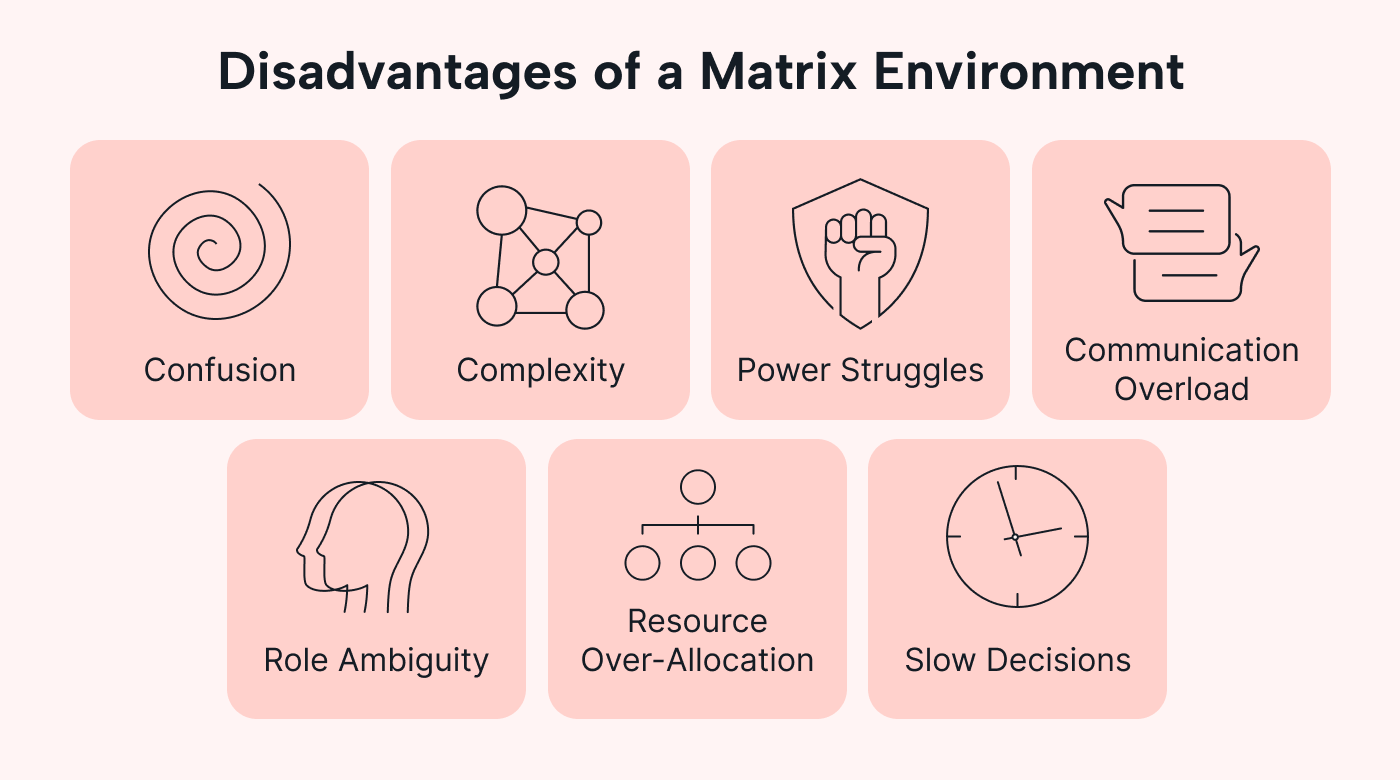
Power Struggles and Role Ambiguity: The dual reporting structure can lead to confusion over authority and priority. Employees might feel caught between conflicting directives from their functional manager (who focuses on technical excellence) and their project manager (who prioritizes project delivery). This ambiguity can cause stress, reduce morale, and delay brand initiatives. Brand leaders must establish clear lines of authority and decision-making frameworks.
-
Communication Overhead and Decision-Making Delays: While designed to improve communication, a poorly managed matrix can actually increase communication overhead. More stakeholders mean more meetings, more emails, and potentially slower decision-making processes. This can be detrimental when rapid decisions are needed for time-sensitive marketing campaigns or crisis communication, potentially impacting the brand’s responsiveness and reputation.
-
Maintaining Accountability in Dual Reporting: Determining who is ultimately accountable for project outcomes, especially when things go wrong, can be challenging in a matrix. If a marketing campaign underperforms, is it the functional marketing team’s fault for strategy, or the project team’s for execution? Clear project charters, well-defined metrics, and transparent performance reviews are essential to ensure accountability remains intact and to avoid blame games that erode team trust.
Strategies for Thriving in a Matrix Brand Environment
Successfully navigating a matrix environment requires more than just understanding its structure; it demands strategic planning, robust processes, and a strong emphasis on leadership and culture. For brand leaders, these strategies are critical to ensuring the matrix serves, rather than hinders, their brand objectives.
Cultivating Clear Communication Channels
Effective communication is the lifeblood of any successful matrix environment. Given the potential for ambiguity and information overload, establishing clear, consistent, and efficient communication channels is paramount for brand consistency and project success.
-
Establishing Robust Feedback Loops: Beyond formal reporting, creating informal and formal feedback loops ensures information flows both vertically (between managers and employees) and horizontally (between different functional representatives on a project). Regular project stand-ups, cross-functional debriefs, and transparent progress reports keep everyone aligned on brand goals and campaign status.
-
Leveraging Technology for Collaboration: Modern collaboration tools (e.g., project management software like Asana or Monday.com, communication platforms like Slack or Microsoft Teams, shared document repositories) are indispensable. These tools centralize information, streamline task management, and provide a single source of truth for brand guidelines, campaign assets, and strategic documents, reducing miscommunication and ensuring brand elements are consistently applied.
Defining Roles and Responsibilities with Precision
Ambiguity in roles and responsibilities is a major pitfall of the matrix. For brand initiatives, clarity is essential to ensure tasks are completed, quality is maintained, and brand standards are upheld.
-
Project Charters and RACI Matrices: Every brand-related project should begin with a clear project charter outlining its objectives, scope, deliverables, and key stakeholders. The use of a RACI (Responsible, Accountable, Consulted, Informed) matrix can further clarify who does what, who makes decisions, and who needs to be in the loop for every brand task. This significantly reduces overlap and gaps in responsibility.
-
Empowering Project and Functional Managers: Both types of managers need clearly defined authority. Project managers should have clear autonomy over project execution, resource allocation within the project scope, and project-specific brand messaging. Functional managers retain authority over professional development, quality of functional output, and adherence to overarching brand standards. Mutual respect and understanding between these managerial roles are crucial.
Leadership and Culture: The Human Element
Ultimately, the success of a matrix environment in supporting brand objectives hinges on its people and the culture in which they operate.
-
Developing “Soft Skills” (Negotiation, Influence): In a matrix, managers and individual contributors alike often need to achieve results through influence rather than direct authority. Developing skills in negotiation, conflict resolution, active listening, and persuasive communication becomes vital. Brand leaders must foster an environment where these “soft skills” are valued and actively developed through training and mentorship.
-
Fostering a Culture of Trust and Shared Ownership: A collaborative culture built on trust, psychological safety, and a shared commitment to the brand’s success is indispensable. When individuals feel safe to voice concerns, share ideas, and admit mistakes, innovation flourishes, and potential conflicts are addressed constructively. Leaders must champion a culture where contributing to the overall brand vision is celebrated, regardless of functional allegiance. This means promoting transparency, recognizing cross-functional contributions, and reinforcing the idea that everyone is working towards a common brand goal.
The Future of Brand Management in Evolving Matrix Structures
As business landscapes continue to transform, so too will the matrix environment. For brand managers, anticipating these evolutions is key to future-proofing their strategies and ensuring their brand remains relevant and impactful.
Agility and Adaptability as Core Competencies
The demand for speed and flexibility is only intensifying. Future matrix structures will emphasize even greater agility and adaptability. This means moving away from static project teams to more fluid, on-demand arrangements. Brands will need to quickly assemble “squads” or “tribes” (borrowing from Agile methodologies) of cross-functional experts to address specific brand challenges or opportunities, disbanding them once the mission is complete. This requires a workforce that is comfortable with constant change, continuous learning, and shifting priorities—a brand’s competitive edge will increasingly depend on its organizational metabolism.
Technology’s Role in Streamlining Matrix Operations
Technology will play an increasingly pivotal role in making matrix environments more efficient and less cumbersome.
-
Advanced Project Management Software: Expect more sophisticated AI-powered project management tools that can predict resource needs, optimize schedules, and flag potential conflicts in dual reporting structures before they arise. These tools will offer greater transparency into project progress and brand asset management.
-
AI-driven Insights for Collaboration and Strategy: Artificial intelligence can help analyze communication patterns to identify bottlenecks, suggest optimal team configurations for specific brand campaigns, and even provide insights into sentiment across different functional groups. This data-driven approach will empower brand leaders to make more informed decisions about resource allocation and communication strategies within the matrix.

The Evolving Role of the Brand Manager
In this evolving matrix landscape, the role of the brand manager will transform. They will move from being solely a director of brand guidelines to becoming a true orchestrator and facilitator.
-
From Director to Orchestrator: Brand managers will need to be skilled at coordinating diverse teams, influencing stakeholders without direct authority, and ensuring that the brand narrative remains consistent across all touchpoints, regardless of who is delivering it. Their focus will shift to enabling cross-functional teams to embody the brand rather than simply enforcing rules.
-
Emphasis on Influence and Emotional Intelligence: Success will increasingly depend on a brand manager’s emotional intelligence—their ability to understand and manage emotions within complex team dynamics, build consensus, and inspire commitment to the brand vision. The capacity to navigate political landscapes, mediate conflicts, and motivate individuals from different functional reporting lines will become indispensable.
In conclusion, the matrix environment, while inherently complex, is an incredibly powerful organizational model for brands seeking agility, innovation, and consistency in a turbulent world. For brand leaders, mastering its nuances is no longer optional; it is essential. By understanding its foundational principles, strategically leveraging its advantages, proactively addressing its challenges, and adapting to its future evolutions, organizations can transform their matrix into a robust engine for brand growth, ensuring their identity remains strong, cohesive, and resonant across every touchpoint. The future belongs to those who can harmoniously blend functional depth with project-based agility, creating a brand that is truly greater than the sum of its parts.
aViewFromTheCave is a participant in the Amazon Services LLC Associates Program, an affiliate advertising program designed to provide a means for sites to earn advertising fees by advertising and linking to Amazon.com. Amazon, the Amazon logo, AmazonSupply, and the AmazonSupply logo are trademarks of Amazon.com, Inc. or its affiliates. As an Amazon Associate we earn affiliate commissions from qualifying purchases.