
In the vast lexicon of scientific and meteorological tools, one instrument stands out as the definitive answer to measuring atmospheric pressure: the barometer. Far from being a mere relic of scientific history, the barometer, in its myriad forms, remains a pivotal piece of technology, underpinning everything from daily weather forecasts to advanced aerospace navigation and climate research. Understanding “what instrument is used to measure air pressure” is to embark on a journey through technological evolution, from rudimentary liquid columns to sophisticated digital sensors integrated into the fabric of our connected world.
The Barometer: A Cornerstone of Meteorological Technology
The concept of measuring air pressure might seem intuitive today, but its discovery and the subsequent invention of the barometer represented a monumental leap in humanity’s understanding of the atmosphere. Before the 17th century, the very idea of air having “weight” or exerting “pressure” was largely unknown or misunderstood. The barometer didn’t just provide a tool; it fundamentally changed how we perceived the invisible forces shaping our planet’s weather and climate.
Historical Roots and Early Innovations
The story of the barometer begins in the early 17th century with Evangelista Torricelli, a student of Galileo Galilei. It was Torricelli who, in 1643, conducted a groundbreaking experiment that demonstrated the existence of atmospheric pressure. He filled a glass tube, sealed at one end, with mercury and inverted it into a basin of mercury. Rather than flowing out completely, a column of mercury remained in the tube, held up by the pressure of the surrounding air on the mercury in the basin. Torricelli famously concluded that “we live at the bottom of an ocean of elemental air,” and the varying height of this mercury column directly indicated changes in atmospheric pressure. This pioneering device became known as the mercury barometer.
Following Torricelli’s revelation, scientists like Blaise Pascal further experimented with the device, famously demonstrating that atmospheric pressure decreases with altitude by carrying a barometer up a mountain. Robert Hooke later made significant improvements, designing a wheel barometer that used a float and counterweight system to move a dial, making readings easier and more accessible. These early innovations laid the groundwork for centuries of atmospheric science and paved the way for more refined and practical pressure-measuring technologies.
The Fundamental Principle of Atmospheric Measurement
At its core, a barometer measures the force exerted by the column of air above a given point on the Earth’s surface. This force, or pressure, is influenced by several factors, including temperature, humidity, and altitude. High pressure typically indicates stable, fair weather, as the heavy air mass prevents moist air from rising and condensing into clouds. Conversely, low pressure often signals unsettled, stormy weather, as the lighter air allows moist air to ascend, cool, and form precipitation.
The genius of the barometer lies in its ability to translate this invisible atmospheric force into a tangible, measurable reading. Whether through the height of a liquid column, the deformation of a metal capsule, or the electrical resistance of a semiconductor, the instrument provides a quantifiable metric that allows meteorologists and countless other professionals to monitor, predict, and understand the dynamic nature of our atmosphere. It’s a testament to simple yet profound technological design that continues to influence complex modern systems.
Types of Barometers: From Analog to Digital Precision
Over the centuries, the basic principle of pressure measurement has been refined and adapted, leading to a diverse array of barometric technologies. Each type offers distinct advantages, catering to different applications and levels of precision, reflecting a continuous drive for innovation within the tech landscape.
Mercury Barometers: The Classic Standard
The mercury barometer, a direct descendant of Torricelli’s original design, remained the gold standard for atmospheric pressure measurement for hundreds of years. Its operation is straightforward: a sealed glass tube, typically about 80 cm long, is inverted into a reservoir of mercury. The atmospheric pressure acting on the surface of the mercury in the reservoir supports a column of mercury in the tube. The height of this column, measured in millimeters (mmHg) or inches, directly corresponds to the atmospheric pressure.
While renowned for its accuracy and reliability—often used as a calibration standard for other barometers—the mercury barometer has significant drawbacks in the modern era. Mercury is a toxic heavy metal, posing environmental and health risks in case of breakage. Its large size, fragility, and sensitivity to temperature changes also limit its practicality for portable or robust applications. Consequently, while historically crucial, mercury barometers are now largely confined to specialized laboratories and historical displays, replaced by safer and more versatile alternatives.
Aneroid Barometers: Mechanical Ingenuity
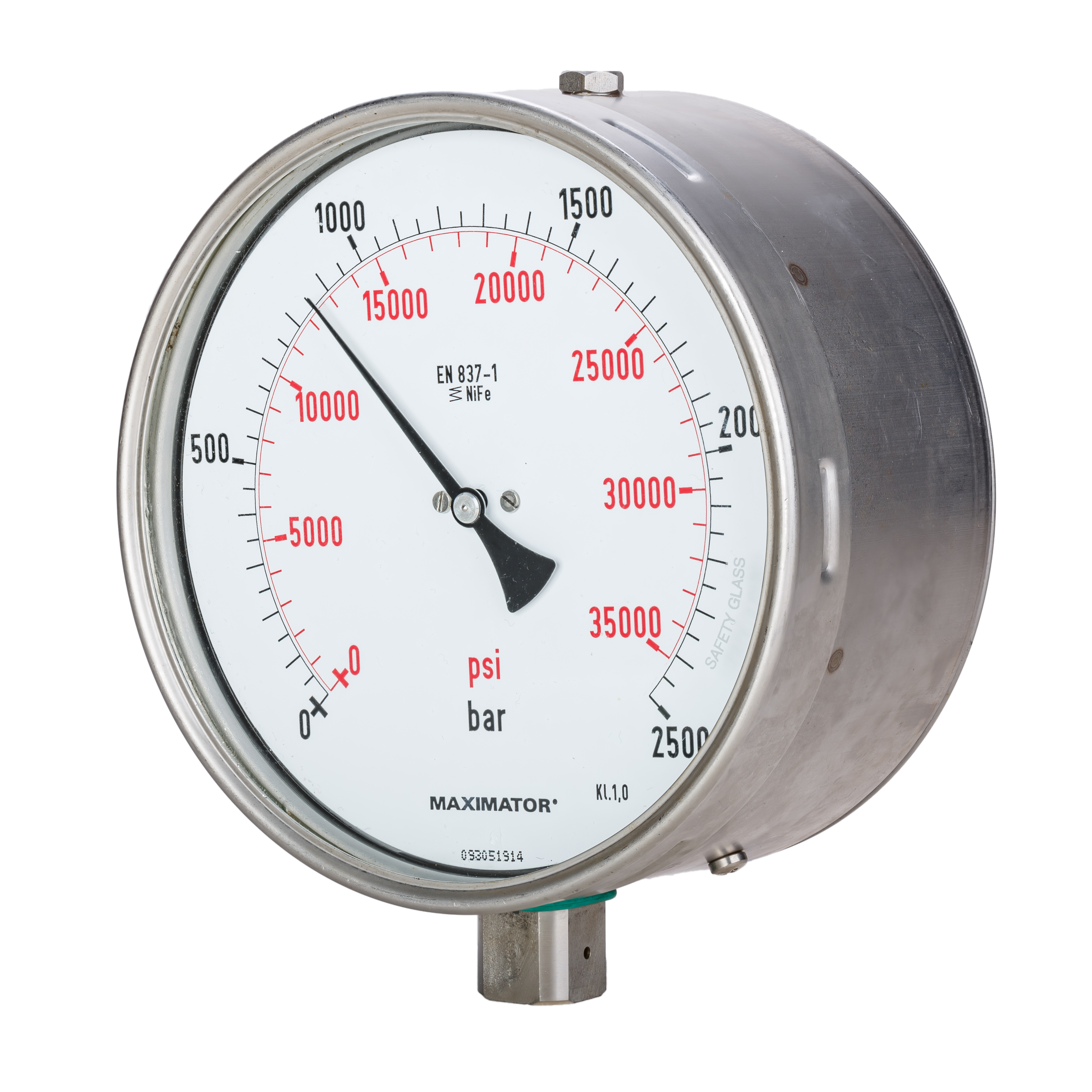
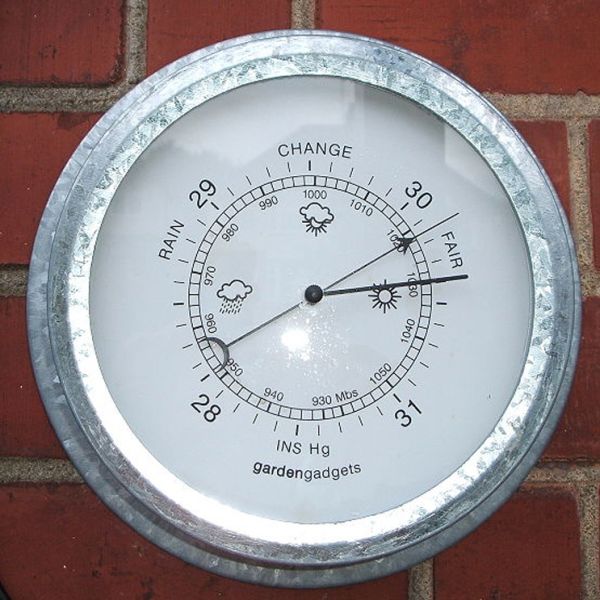
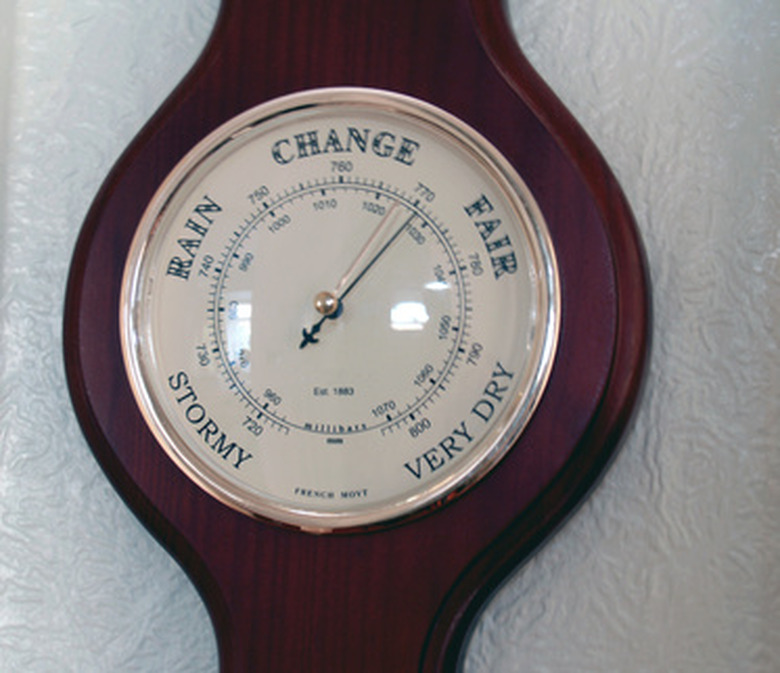
The aneroid barometer, invented in 1844 by Lucien Vidi, marked a significant technological leap. The term “aneroid” means “without liquid,” highlighting its key differentiator from mercury barometers. This device relies on a small, flexible, airtight metal box (often made of beryllium copper alloy) called an aneroid capsule or Bourdon tube. This capsule has had most of the air pumped out of it, creating a partial vacuum.
As atmospheric pressure changes, the capsule either expands or contracts. A system of levers and springs amplifies these minute movements, translating them into the rotation of a needle across a calibrated dial. Aneroid barometers are compact, portable, and considerably more robust than their mercury counterparts. They are widely used in home weather stations, altimeters (which measure altitude based on pressure changes), and barographs (which record pressure changes over time on a rotating drum). Their mechanical nature makes them reliable without requiring power, a significant advantage for many applications.
Digital Barometers and Modern Sensors: The Age of Data
The advent of microelectronics and semiconductor technology ushered in a new era for pressure measurement: the digital barometer. These devices leverage various sensor technologies, most commonly Micro-Electro-Mechanical Systems (MEMS) sensors, piezoresistive sensors, or capacitive sensors.
-
MEMS Barometers: These tiny silicon-based sensors integrate mechanical and electrical components on a single chip. They often feature a diaphragm that deforms under pressure, and this deformation is then converted into an electrical signal. MEMS barometers are incredibly small, power-efficient, and highly accurate, making them ideal for integration into smartphones, wearables, drones, and smart home devices.
-
Piezoresistive Sensors: These sensors utilize materials whose electrical resistance changes when subjected to mechanical stress (like pressure). The change in resistance is then measured and correlated to pressure.
-
Capacitive Sensors: These sensors measure changes in capacitance caused by the deformation of a diaphragm under pressure.
Digital barometers offer instant readings, often with higher precision than analog devices, and can easily be integrated into data logging systems, allowing for continuous monitoring and analysis. Their compact size and low power consumption have made them ubiquitous, transforming how we interact with and utilize atmospheric pressure data in daily life and specialized technological systems.
Technological Advancements and Applications in the Modern Era
The evolution of the barometer from a standalone scientific instrument to an integrated component within complex digital ecosystems showcases its enduring relevance and adaptability within the tech landscape. Modern pressure sensors are not just measuring devices; they are critical data nodes feeding into vast networks and intelligent systems.
Integration with IoT and Smart Systems
The miniaturization and cost-effectiveness of digital barometers have made them ideal candidates for the Internet of Things (IoT). Smart weather stations, personal fitness trackers, and even smart home environmental control systems frequently incorporate barometric pressure sensors. These devices can monitor local pressure trends, provide more accurate short-term weather predictions, and even help adjust indoor air quality systems. In wearables, barometric sensors are crucial for accurately tracking elevation changes, providing precise data for activities like hiking and stair climbing, supplementing GPS data, which can be less accurate vertically.
Aerospace and Aviation Applications
In the aerospace industry, the barometer is indispensable. Altimeters, which indicate an aircraft’s altitude, are essentially specialized aneroid or digital barometers calibrated to measure pressure altitude. As an aircraft ascends, atmospheric pressure decreases, and the altimeter translates this pressure change into an altitude reading. Modern aircraft utilize sophisticated air data computers that integrate pressure readings from multiple sensors to provide highly accurate altitude, airspeed, and vertical speed information, crucial for flight safety and navigation. Drones also heavily rely on barometric pressure sensors for stable altitude hold and autonomous flight, allowing them to maintain a consistent height above the ground.
Climate Science and Environmental Monitoring
For climate scientists and environmental researchers, barometric pressure data is a foundational element. Networks of weather stations, both terrestrial and oceanic, continuously collect pressure readings, which are then aggregated and analyzed to understand global atmospheric circulation patterns, track severe weather systems like hurricanes and typhoons, and contribute to long-term climate modeling. High-resolution pressure data, combined with other meteorological parameters, helps in refining predictive models for everything from localized thunderstorms to long-term climate change scenarios, offering critical insights into the Earth’s dynamic systems.
Industrial and Research Uses
Beyond weather and consumer tech, pressure measurement is vital in numerous industrial and research settings. In manufacturing, precise pressure control is essential for processes like vacuum forming, pneumatic systems, and cleanroom environments, where maintaining specific pressure differentials prevents contamination. In material science, pressure sensors are used in high-pressure experiments to study material properties under extreme conditions. Medical devices, such as blood pressure monitors and ventilators, also rely on highly accurate pressure sensing technology. Each application demands specific sensor characteristics—robustness, sensitivity, range, and stability—driving continuous innovation in sensor design and calibration.
Calibration, Accuracy, and the Future of Pressure Sensing
The utility of any measurement instrument is directly tied to its accuracy and reliability. For barometers, ensuring consistent and precise readings is paramount, influencing everything from the safety of air travel to the integrity of scientific data.
Ensuring Reliability: The Importance of Calibration
Calibration is the process of comparing the readings of a barometer with a known standard to ensure its accuracy. Over time, environmental factors, wear and tear, or electronic drift can cause a barometer’s readings to deviate. Regular calibration, performed against primary or secondary pressure standards, is crucial to maintain the instrument’s performance. For professional meteorological equipment or critical aerospace sensors, calibration is a rigorously scheduled and documented process, often performed in controlled laboratory environments that simulate various conditions. This ensures that data collected from different sources can be reliably compared and integrated into larger systems.
Factors Affecting Accuracy
Several factors can influence a barometer’s accuracy. Temperature is a significant one; for mercury barometers, temperature affects the density of the mercury, necessitating temperature compensation. Aneroid and digital barometers can also be affected, requiring internal temperature sensors and compensation algorithms. Altitude also plays a direct role, as pressure naturally decreases with height. While barometers measure absolute pressure, readings are often corrected to sea level pressure to allow for consistent comparisons across different geographic locations. Sensor drift, environmental contaminants, and even the physical orientation of the sensor can introduce inaccuracies, which advanced designs and smart algorithms aim to mitigate.
Emerging Technologies in Pressure Measurement
The future of pressure sensing promises even greater precision, miniaturization, and integration. Researchers are exploring novel materials, such as graphene and other 2D materials, for creating ultra-sensitive and flexible pressure sensors. These advanced materials could lead to even smaller, more robust sensors capable of operating in extreme environments or being integrated into flexible electronics and smart fabrics. Artificial intelligence and machine learning are also beginning to play a role, enhancing sensor calibration, drift compensation, and predictive capabilities, allowing for more intelligent and autonomous pressure monitoring systems. The ability to create self-calibrating, highly networked, and extremely durable pressure sensors will unlock new applications, further embedding this essential technology into the fabric of our increasingly interconnected and data-driven world.
From its humble beginnings in Torricelli’s laboratory, the instrument used to measure air pressure—the barometer—has undergone a remarkable technological journey. It has evolved from a scientific curiosity to an indispensable tool, adapting through mechanical ingenuity and digital innovation. Today, barometric technology is not just about observing weather; it’s a fundamental pillar of modern technology, empowering advanced systems in aviation, environmental science, consumer electronics, and beyond, continually pushing the boundaries of what we can measure and understand about the air around us.
aViewFromTheCave is a participant in the Amazon Services LLC Associates Program, an affiliate advertising program designed to provide a means for sites to earn advertising fees by advertising and linking to Amazon.com. Amazon, the Amazon logo, AmazonSupply, and the AmazonSupply logo are trademarks of Amazon.com, Inc. or its affiliates. As an Amazon Associate we earn affiliate commissions from qualifying purchases.