
In an increasingly interconnected and often noisy world, clear communication is paramount. From bustling coffee shops to open-plan offices and remote work setups, background distractions can significantly impede our ability to hear and be heard. This challenge has given rise to a sophisticated technological solution: voice isolation. Far more than simple noise cancellation, voice isolation is a cutting-edge audio processing technique designed to precisely identify, separate, and enhance a primary speaker’s voice while aggressively suppressing all other ambient sounds. It’s a nuanced dance between intricate algorithms and advanced hardware, aiming to deliver crystal-clear vocal fidelity in even the most chaotic environments. As virtual meetings become the norm, content creation booms, and accessible communication tools proliferate, understanding the intricate workings and profound impact of voice isolation technology is crucial for anyone navigating the modern digital landscape. This article delves into the core principles, underlying technologies, practical applications, and the exciting future of this transformative audio innovation.

The Core Concept of Voice Isolation: Beyond Simple Noise Reduction
At its heart, voice isolation is about intelligent audio separation. Unlike traditional noise cancellation, which broadly reduces overall ambient sound, voice isolation specifically targets and elevates human speech. It operates on the premise that the human voice has a unique acoustic signature, and by identifying this signature, other non-speech elements can be filtered out with remarkable precision. This distinction is critical for applications where the clarity of spoken words is the absolute priority.
How It Works: Signal Processing and AI in Harmony
The magic of voice isolation lies in its multi-layered approach to audio analysis. When sound waves are captured by microphones, they contain a complex mix of frequencies and patterns. Voice isolation systems employ a combination of sophisticated digital signal processing (DSP) algorithms and, increasingly, artificial intelligence (AI) to dissect this raw audio feed.
First, the system typically identifies the primary speaker’s voice. This can involve analyzing the direction from which sound is coming (using multiple microphones), recognizing speech patterns, and even learning individual voice characteristics over time. Once the speech component is identified, the system then works to differentiate it from all other sounds, which are categorized as noise. This “noise” can include anything from keyboard clicks, air conditioner hums, traffic sounds, other people talking, or even a dog barking in the background.
The AI component, often powered by deep learning models, plays a significant role here. These models are trained on vast datasets of speech and various types of background noise. This extensive training enables the AI to “learn” what constitutes human speech and what doesn’t, allowing it to dynamically adapt and apply highly specific filters in real-time. It can distinguish between desired speech and undesired noise with a level of accuracy that traditional rule-based DSP alone struggles to achieve, especially in unpredictable acoustic environments.
Differentiating from Noise Cancellation
While often confused, voice isolation and noise cancellation are distinct technologies with different objectives.
-
Noise Cancellation (e.g., in active noise-cancelling headphones) primarily aims to reduce ambient noise for the listener. It often works by generating an inverse sound wave to cancel out incoming noise, or by passively blocking sound. Its goal is a quieter listening experience overall, not necessarily to extract a specific voice.
-
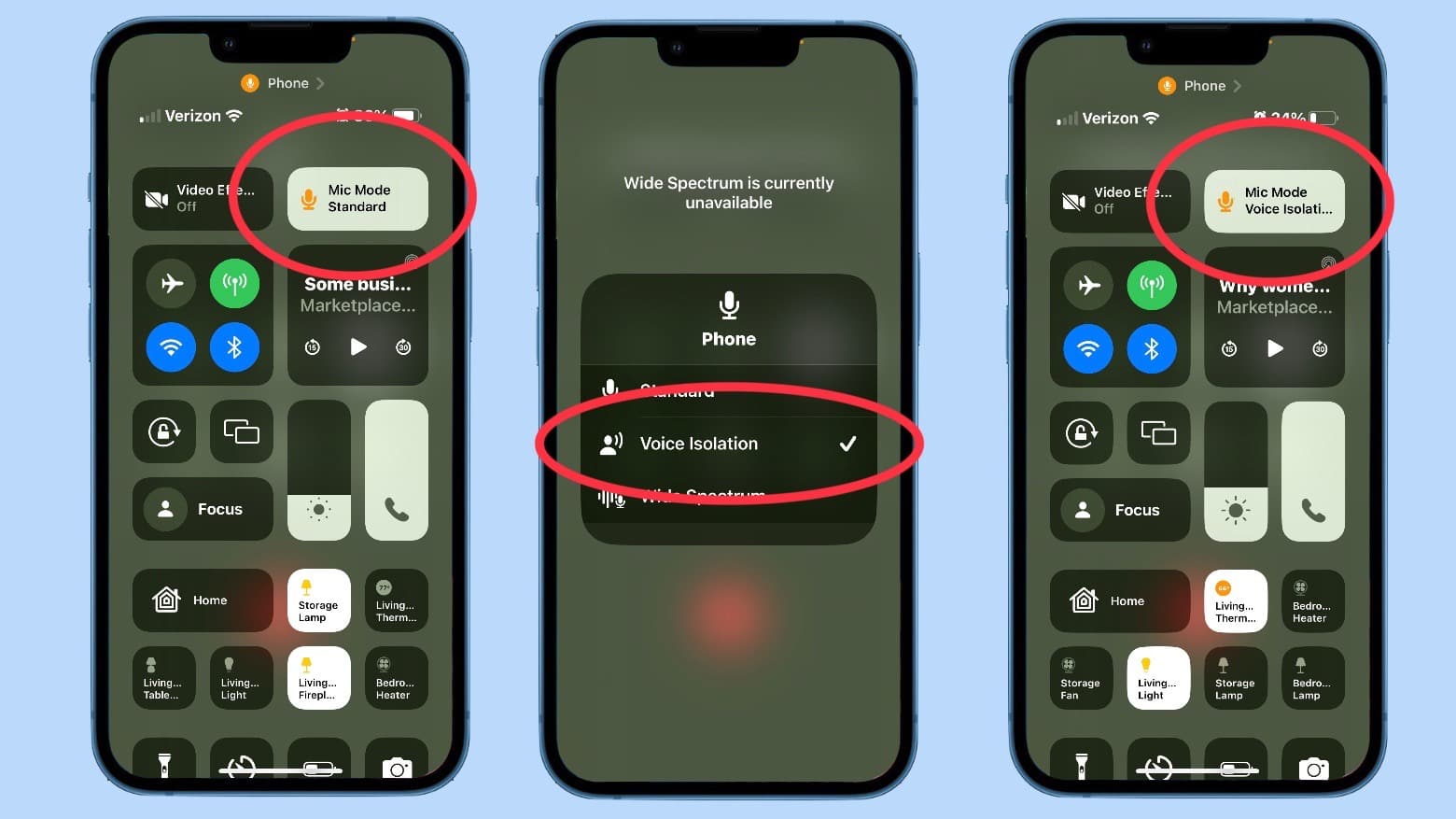
Voice Isolation focuses on the speaker’s voice and aims to purify it for others to hear. It’s about enhancing the outgoing audio stream so that the speaker’s voice is clear on the receiving end, regardless of the listening environment. It actively processes the captured audio to remove unwanted elements from the speech signal itself. Think of noise cancellation as soundproofing a room, while voice isolation is like using a spotlight to illuminate just one person speaking in a crowded room.
Practical Applications and Transformative Benefits
The ability to deliver unparalleled vocal clarity has opened up a myriad of practical applications for voice isolation technology across various sectors, significantly enhancing communication efficiency and accessibility.
Enhancing Virtual Meetings and Remote Work
Perhaps the most immediately impactful application of voice isolation is in the realm of virtual collaboration. As remote work and hybrid models become standard, video conferencing platforms like Zoom, Microsoft Teams, and Google Meet have integrated voice isolation features. This allows participants to join meetings from any location – be it a bustling home, a public space, or a shared office – without their background noise distracting others. The result is more productive discussions, reduced listening fatigue, and a more professional presentation, regardless of the speaker’s physical environment. For presenters, educators, and anyone leading virtual sessions, this technology ensures their message is delivered with maximum impact.
Improving Communication in Noisy Environments
Beyond virtual meetings, voice isolation is revolutionizing communication in inherently noisy settings. Call centers, for instance, often struggle with agents’ voices being muddled by coworker chatter or office equipment. Implementing voice isolation at the agent’s microphone can drastically improve customer service quality, as customers can clearly understand the agent without strain. Similarly, first responders, field workers, and construction site supervisors can benefit from devices equipped with voice isolation, ensuring critical communications are heard above alarms, machinery, or ambient commotion, potentially saving lives or preventing errors.
Use Cases in Content Creation and Podcasting
For content creators, podcasters, YouTubers, and streamers, audio quality is paramount. Professional studios are expensive and not always accessible. Voice isolation technology provides a powerful tool for recording clear vocals even in suboptimal environments. A podcaster can record an episode from their home office, and the voice isolation software can filter out the hum of their computer, neighborhood sounds, or children playing in the background, making their audio sound as if it were recorded in a soundproof booth. This democratizes high-quality audio production, making it more accessible to independent creators.
Accessibility and Hearing Aid Integration

Voice isolation also holds immense promise for accessibility. Individuals with hearing impairments often struggle to differentiate speech from background noise, even with hearing aids. Integrating advanced voice isolation into hearing aids or assistive listening devices can significantly improve speech intelligibility in challenging acoustic environments. By purifying the speech signal before it reaches the listener, this technology can provide a clearer, less fatiguing listening experience, empowering individuals with hearing loss to participate more fully in conversations and social interactions.
Key Technologies Powering Voice Isolation
The sophistication of modern voice isolation stems from the convergence and advancement of several key technological disciplines.
Digital Signal Processing (DSP)
DSP forms the foundational layer of voice isolation. It involves the mathematical manipulation of digitized audio signals to enhance, modify, or remove specific components. In voice isolation, DSP algorithms perform tasks such as:
-
Filtering: Applying various filters (e.g., band-pass filters) to isolate frequency ranges typically associated with human speech while attenuating others.
-
Echo Cancellation: Removing echoes that can occur in hands-free communication.
-
Noise Gating: Automatically cutting off audio when the signal falls below a certain threshold, preventing ambient noise from being transmitted during silences.
-
Dynamic Range Compression: Adjusting the volume levels to make softer sounds louder and louder sounds softer, improving overall clarity.
DSP chips are highly optimized for these real-time calculations, crucial for seamless voice isolation.
Machine Learning and Neural Networks
While DSP provides the framework, machine learning (ML), particularly deep neural networks, injects the “intelligence” into voice isolation. ML models are trained on vast datasets containing millions of hours of speech recorded in diverse environments and paired with various types of noise. Through this training, the neural network learns to:
-
Identify Speech Patterns: Distinguish the complex phonetics, intonations, and rhythms unique to human speech.
-
Characterize Noise: Recognize and categorize different types of background noise (e.g., fan hum, traffic, music, other voices).
-
Separate Sources: Develop “masks” that can precisely separate the speech component from the noise component, even when their frequency ranges overlap significantly.
Once trained, these models can make real-time inferences, dynamically adjusting their filtering mechanisms to adapt to changing acoustic conditions and effectively isolate the desired voice. Techniques like “source separation” algorithms are heavily reliant on deep learning.
Microphone Arrays and Spatial Audio
Many advanced voice isolation systems leverage multiple microphones arranged in an array. This setup allows for spatial audio processing techniques such as:
-
Beamforming: By analyzing the tiny time differences in which a sound wave arrives at each microphone, the system can determine the direction of the sound source. It can then create a “beam” of sensitivity pointed towards the speaker, effectively “listening” more intently in that direction while attenuating sounds coming from other directions.
-
Acoustic Echo Cancellation (AEC): With multiple microphones, the system can better differentiate between sounds originating from the local speaker and those coming from the far end (e.g., through conference call speakers), preventing echoes.
These hardware enhancements, combined with sophisticated software, provide crucial spatial information that significantly aids the separation of speech from noise, especially in complex multi-source environments.
The Evolution and Future of Voice Isolation
Voice isolation technology is not static; it’s a rapidly evolving field with continuous advancements pushing the boundaries of what’s possible in audio clarity.
Current Limitations and Challenges
Despite its impressive capabilities, voice isolation still faces certain limitations.
-
Computational Intensity: Real-time, highly accurate voice isolation is computationally demanding, requiring powerful processors, especially for complex algorithms. This can be a challenge for battery-powered mobile devices.
-
Distinguishing Similar Sounds: While excellent at separating speech from non-speech, some systems can struggle when the “noise” is another human voice, especially if it’s very close to the desired speaker.
-
Adapting to Novel Noises: While AI models are robust, they might perform less optimally when encountering entirely new types of background noise not present in their training data.
-
Latency: In real-time communication, introducing complex processing can potentially add a small amount of latency, which needs to be minimized to ensure natural conversation flow.
Emerging Trends and Future Directions
The future of voice isolation promises even greater sophistication and ubiquitous integration.
-
Real-time Personalized Isolation: Future systems could learn and adapt to individual users’ voices and preferred listening environments, offering truly personalized audio experiences. Imagine a system that knows your specific vocal characteristics and filters based on your past habits.
-
Ultra-Low Latency and On-Device Processing: As chipsets become more powerful and efficient, more complex voice isolation will occur entirely on-device, reducing reliance on cloud processing and minimizing latency, crucial for immersive AR/VR applications.
-
Integration with AR/VR and Spatial Computing: In augmented and virtual reality, clear voice communication will be essential for natural interaction. Voice isolation will be critical for filtering real-world noise from virtual interactions and vice versa, creating truly immersive and distraction-free experiences.
-
Enhanced Multi-Speaker Separation: Advanced algorithms will get even better at separating multiple simultaneous speakers in a conversation, allowing users to focus on a specific voice within a group. This could involve visual cues or gaze tracking to inform the audio processing.
-
AI-Powered Contextual Awareness: Future systems might leverage contextual data (e.g., calendar appointments, location, paired devices) to anticipate communication needs and dynamically adjust isolation settings, offering a proactive and seamless experience.
Impact on Human-Computer Interaction
As voice interfaces become more prevalent (voice assistants, smart home devices, dictation), robust voice isolation will be indispensable. It will allow us to interact with technology naturally, even in noisy environments, making voice commands more reliable and dictation more accurate. This will bridge the gap between human speech and machine understanding, fostering a more intuitive and seamless human-computer interaction paradigm.
Conclusion
Voice isolation represents a profound leap forward in audio technology, transforming how we communicate in a world overflowing with sound. By meticulously separating desired speech from unwanted noise, it ensures clarity, enhances productivity in remote work, empowers content creators, and significantly improves accessibility for those with hearing challenges. From its foundational DSP algorithms to the cutting-edge intelligence of machine learning and the spatial precision of microphone arrays, this technology is continually evolving. As we move towards a future filled with even more interconnected devices and immersive digital experiences, voice isolation will not merely be a convenience but a fundamental enabler of effective, effortless, and equitable communication for everyone. Its impact will continue to shape our digital lives, making every conversation clearer, every message more impactful, and every interaction more meaningful.
aViewFromTheCave is a participant in the Amazon Services LLC Associates Program, an affiliate advertising program designed to provide a means for sites to earn advertising fees by advertising and linking to Amazon.com. Amazon, the Amazon logo, AmazonSupply, and the AmazonSupply logo are trademarks of Amazon.com, Inc. or its affiliates. As an Amazon Associate we earn affiliate commissions from qualifying purchases.