
The equation $y = mx + b$ is one of the most fundamental and universally recognized formulas in mathematics, representing the elegant simplicity of a straight line. Often introduced in early algebra, it describes a relationship where a dependent variable ($y$) changes at a constant rate ($m$) with respect to an independent variable ($x$), anchored by an initial value or intercept ($b$). While its origins are purely mathematical, its applications span an incredible array of disciplines, from engineering to biology, and perhaps most crucially, to the world of finance and economics.
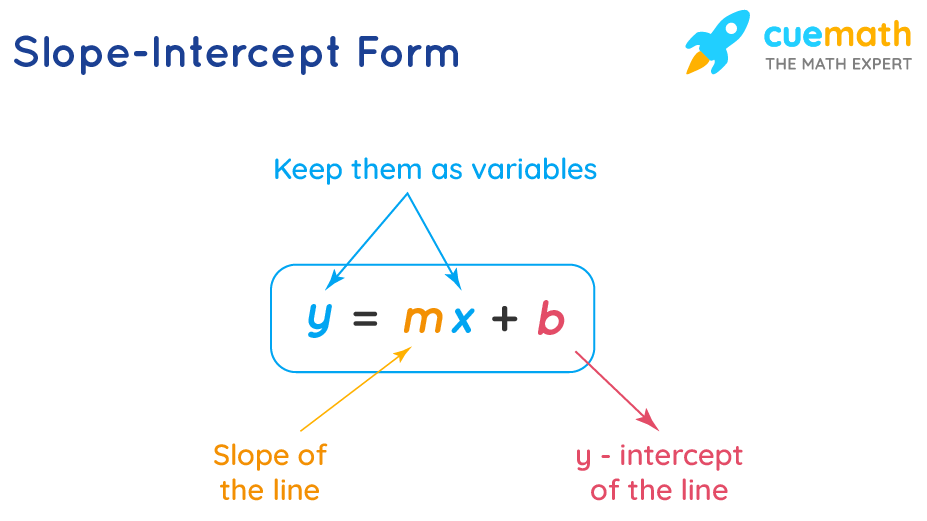
In the realm of money, understanding the components of this seemingly simple equation can unlock profound insights into personal finance, business operations, investment strategies, and economic forecasting. The ‘b’, often relegated to a mere y-intercept in classroom settings, transforms into a critical financial anchor—representing fixed costs, initial investments, baseline revenues, or fundamental economic constants. This article delves into the multifaceted financial significance of ‘b’, exploring how this mathematical constant provides crucial context and foundational understanding across various monetary scenarios, helping individuals and organizations make more informed and strategic financial decisions. By dissecting its role, we reveal how ‘b’ is far more than just a starting point; it’s often the bedrock upon which financial realities are built and understood.
The ‘b’ as Your Financial Baseline: Understanding Fixed Values
In the dynamic world of finance, certain elements remain constant regardless of activity levels. The ‘b’ in $y = mx + b$ serves as an invaluable representation of these fixed values, establishing a critical baseline from which all variable financial activities are measured. Whether in personal budgeting or corporate finance, identifying and understanding these fixed components is the first step toward effective financial management and strategic planning.
Start-Up Costs and Initial Investments
For entrepreneurs and established businesses alike, the initial outlay of capital is a significant financial hurdle and a perfect embodiment of ‘b’. When launching a new venture or expanding an existing one, certain costs are incurred upfront, irrespective of sales volume or production output. These include expenditures such as securing a business license, purchasing essential equipment, paying for initial inventory, setting up an office space, or investing in preliminary marketing campaigns. In a financial model where ‘y’ might represent total costs and ‘x’ the number of units produced or services rendered, ‘b’ unequivocally stands for these fixed start-up costs. They are the financial foundation, the non-negotiable expense that must be covered before any revenue-generating activity even begins.
Consider a small online retailer. Their ‘b’ might include the cost of building their website, purchasing an initial batch of products from a supplier, and a one-time fee for business registration. These costs don’t change whether they sell one item or a thousand. Understanding this ‘b’ is crucial for calculating the initial capital requirement and setting realistic funding goals. Similarly, in personal finance, ‘b’ can represent an initial investment required to kickstart a long-term goal. For instance, the down payment for a house, the capital required to open a brokerage account, or the initial lump sum deposit into a savings fund all function as the ‘b’—the indispensable fixed starting point from which future growth or expenditure is calculated. Without establishing this baseline, projecting subsequent financial needs and performance becomes speculative and unreliable.
Base Income and Fixed Expenses
Beyond initial investments, ‘b’ also finds robust application in representing fixed components of income and recurring expenses. In the context of personal finance, ‘b’ can signify a base salary or a guaranteed minimum income. For someone working on commission, their monthly earnings (‘y’) might be represented by a base salary (‘b’) plus a commission rate (‘m’) multiplied by their sales performance (‘x’). Here, ‘b’ provides a sense of financial security, ensuring a minimum income floor regardless of variable performance. This clarity is essential for personal budgeting, allowing individuals to cover essential fixed expenses before considering discretionary spending linked to variable income.
Conversely, ‘b’ is arguably most intuitively understood in budgeting as fixed expenses. These are the costs that remain constant each month, regardless of personal consumption or lifestyle choices. Rent or mortgage payments, insurance premiums, subscription services (like streaming platforms or gym memberships), and loan repayments (car, student) are classic examples of ‘b’. If ‘y’ represents total monthly expenditure, and ‘x’ represents variable spending categories (like dining out or entertainment), then ‘b’ captures these non-negotiable fixed outflows. Identifying and quantifying this ‘b’ is paramount for sound financial planning. It dictates the minimum income required to simply stay afloat and forms the first layer of any budget. Any surplus generated above ‘b’ can then be allocated towards savings, investments, or discretionary spending. Both in income and expenditure, ‘b’ acts as the unwavering anchor, providing stability and predictability in an otherwise fluctuating financial landscape.
Unveiling Financial Intercepts: ‘b’ in Cost and Revenue Analysis
In the realm of business finance, where decisions hinge on understanding profitability and operational efficiency, the ‘b’ in $y = mx + b$ takes on critical importance in cost and revenue analysis. It often represents the fixed costs that a business must cover regardless of its production or sales volume, forming a crucial intercept that dictates the financial viability and strategic direction of an enterprise.
Break-Even Point Analysis
One of the most fundamental applications of $y = mx + b$ in business is in break-even analysis, where ‘b’ explicitly represents fixed costs. In a simplified model, a company’s total cost ($TC$) can be expressed as $TC = FC + VC cdot Q$, where $FC$ is fixed costs, $VC$ is variable cost per unit, and $Q$ is the quantity produced. Here, ‘b’ is equivalent to $FC$. These fixed costs, such as rent, salaries of administrative staff, insurance, and depreciation, must be paid even if no units are produced or sold. Understanding ‘b’ is the first step toward determining the sales volume required to cover all expenses and avoid a loss.
For a business to break even, its total revenue ($TR$) must equal its total cost ($TC$). If total revenue is expressed as $TR = Price cdot Q$, then by setting $TR = TC$, businesses can solve for the quantity ($Q$) needed to reach the break-even point. The magnitude of ‘b’ (fixed costs) directly influences this critical threshold. A higher ‘b’ means a business must produce and sell a larger quantity of goods or services to cover its fixed overhead before it can start generating profit. Conversely, a lower ‘b’ allows a business to reach profitability sooner, requiring less sales volume to cover its baseline expenses. This insight is indispensable for strategic planning, pricing decisions, and evaluating the feasibility of new projects. Businesses frequently use break-even analysis to assess the risk of new ventures, adjust operational structures, and set realistic sales targets, all fundamentally anchored by the value of ‘b’.
Profit Maximization and Sensitivity
The astute management of ‘b’ (fixed costs) is a cornerstone of profit maximization strategies. While ‘m’ (variable costs per unit) and ‘x’ (sales volume) also play significant roles, ‘b’ represents a non-negotiable expense that chips away at revenue before any profit can be realized. Businesses constantly strive to optimize their cost structure, and this often involves a careful balancing act between fixed and variable costs. Reducing ‘b’ can have a profound impact on a company’s bottom line and its sensitivity to market fluctuations.
For instance, a company with high fixed costs (‘b’) is highly sensitive to changes in sales volume. If sales decline, the large ‘b’ quickly erodes profitability, leading to significant losses, a concept often referred to as high operating leverage. Conversely, a company with a lower ‘b’ has more flexibility; it can absorb downturns in sales more easily because its baseline expenses are lower. Understanding this relationship helps businesses decide whether to invest in large, fixed assets (like owning a factory) or opt for more variable arrangements (like outsourcing production). Managers use ‘b’ in sensitivity analysis to simulate how changes in fixed costs would affect profitability targets and break-even points. For example, negotiating a lower rent, automating a process to reduce administrative staff, or finding more cost-effective insurance plans directly reduces ‘b’, thereby lowering the break-even point and increasing the potential for profit given the same level of sales. The value of ‘b’ is not static; it’s a strategic lever that, when understood and managed effectively, can significantly enhance a company’s financial performance and resilience.
‘b’ in Investment Strategy and Financial Modeling

Beyond basic cost analysis, the concept of ‘b’ extends its influence into sophisticated financial modeling and investment analysis. In these contexts, ‘b’ often represents a baseline return, an intrinsic value, or an intercept that provides crucial context for evaluating asset performance, risk, and valuation independent of market fluctuations or specific drivers.
The Y-Intercept in Regression Analysis
One of the most powerful applications of $y = mx + b$ in financial modeling is within linear regression analysis. Financial analysts frequently use regression to identify and quantify relationships between financial variables. For example, an analyst might regress a stock’s returns ($y$) against the returns of a market index ($x$) to understand how the stock performs relative to the broader market. In such a model, ‘m’ (often referred to as Beta in this context) measures the stock’s sensitivity to market movements, while ‘b’ (the y-intercept) represents the expected return of the stock when the market return is zero.
This ‘b’ often goes by the name ‘Alpha’ in capital asset pricing model (CAPM) contexts. A positive Alpha (or ‘b’) suggests that an investment has generated returns independently of the market, potentially indicating superior performance or skill by a fund manager. A negative Alpha, on the other hand, implies the investment underperformed even when accounting for market movements. Interpreting ‘b’ in regression analysis provides invaluable insights into the intrinsic characteristics of an asset or strategy. It allows investors to discern if an investment offers a standalone benefit or merely tracks broader market trends. Understanding this ‘b’ helps portfolio managers identify investments that add true diversification or superior risk-adjusted returns, rather than simply mimicking market performance.
Portfolio Performance and Risk Assessment
The ‘b’ component is fundamental to assessing the performance and risk of investment portfolios. In many financial models, ‘b’ can signify a risk-free rate of return or a baseline expected return, providing a critical benchmark for evaluating investment decisions. For instance, when constructing a portfolio, investors often consider the potential return of each asset. If we model the expected return of an asset, ‘b’ might represent the risk-free rate (e.g., the return on a U.S. Treasury bill), which is the return an investor can expect for taking on no risk. Any additional return ($mx$) would then be compensation for taking on additional risk.
Furthermore, ‘b’ plays a role in understanding the inherent characteristics of different asset classes. For example, in valuing real estate, ‘b’ might represent the baseline value of the land itself, separate from any improvements or income-generating structures built upon it. In assessing a company’s valuation, ‘b’ could represent the intrinsic value of its core assets or operations, independent of external market multipliers or growth projections. For risk assessment, a high ‘b’ (e.g., a high fixed base cost in a business venture) can imply higher operational leverage and thus higher financial risk if revenue streams are volatile. Conversely, a stable and predictable ‘b’ in a revenue stream or investment return can contribute to lower overall portfolio risk. By carefully analyzing the ‘b’ component within various financial models, investors and analysts gain a deeper understanding of the underlying drivers of performance and risk, enabling more robust portfolio construction and strategic asset allocation.
Practical Applications: Leveraging ‘b’ for Better Financial Decisions
The theoretical understanding of ‘b’ in $y = mx + b$ translates directly into tangible, practical applications across personal finance and business. Recognizing the role of this constant allows individuals and organizations to build more resilient budgets, make more accurate forecasts, and craft more effective financial strategies.
Budgeting and Financial Planning
For personal finance, the power of ‘b’ lies in establishing clarity around fixed expenses. The first step in effective budgeting is to identify your ‘b’—your non-negotiable monthly outlays like rent/mortgage, utility bills, loan payments, and insurance premiums. Once this baseline is established, you can determine your absolute minimum required income to cover essentials. This understanding prevents overspending and highlights how much disposable income remains for variable expenses ($mx$) or savings ($y – mx$). By meticulously tracking and potentially reducing your ‘b’ (e.g., refinancing a loan, finding cheaper insurance, or cutting unnecessary subscriptions), you directly improve your financial flexibility and capacity for saving and investing, irrespective of fluctuations in your income. This foundational knowledge is crucial for setting realistic savings goals, planning for retirement, or managing debt efficiently. For example, if your ‘b’ is a significant portion of your income, it signals a need to either increase income or find ways to reduce these fixed commitments to achieve financial freedom.
Business Forecasting and Strategic Planning
In the corporate world, leveraging ‘b’ in financial models is indispensable for accurate forecasting and strategic planning. Businesses routinely use models where ‘b’ represents fixed operating costs, allowing them to project profitability under various sales scenarios. For example, knowing the fixed cost ‘b’ and variable cost per unit ‘m’ allows a company to predict total costs for different production volumes (‘x’) and thus estimate profit margins. This is critical for setting production targets, determining pricing strategies, and evaluating potential investments in new equipment or facilities. Furthermore, understanding ‘b’ is vital for conducting sensitivity analysis. What happens to profitability if rent increases? How does a new minimum wage law affect fixed labor costs? By adjusting ‘b’ in their models, businesses can assess the impact of changes in their fixed cost structure, enabling proactive decision-making and risk mitigation. This allows managers to explore different strategic options, such as investing in automation to lower variable costs at the expense of higher fixed costs, or vice versa, to optimize their cost structure for long-term growth and stability.
Investment Analysis and Valuation
For investors, comprehending ‘b’ within financial models offers a richer understanding of asset performance and valuation. In regression analysis, as discussed, ‘b’ (Alpha) helps distinguish between market-driven returns and unique outperformance, guiding investors toward assets that offer true value beyond market correlation. When valuing companies, analysts might use discounted cash flow models where certain baseline operational costs (fixed costs, ‘b’) or initial investment outlays are factored in before projecting future growth and revenues. The stability and predictability of a company’s fixed cost base (its ‘b’) can heavily influence its perceived risk profile and, consequently, its valuation multiples.
Moreover, ‘b’ can represent a base dividend yield or a fundamental component of an asset’s total return profile. Investors use these insights to assess whether an asset offers a stable return foundation or if its performance is overwhelmingly reliant on highly variable factors. By understanding the intrinsic ‘b’ components of an investment, investors can make more informed decisions about asset allocation, portfolio diversification, and risk management. It enables them to look beyond superficial market trends and delve into the fundamental economics that drive an investment’s value, fostering a more disciplined and strategic approach to building wealth.
Conclusion
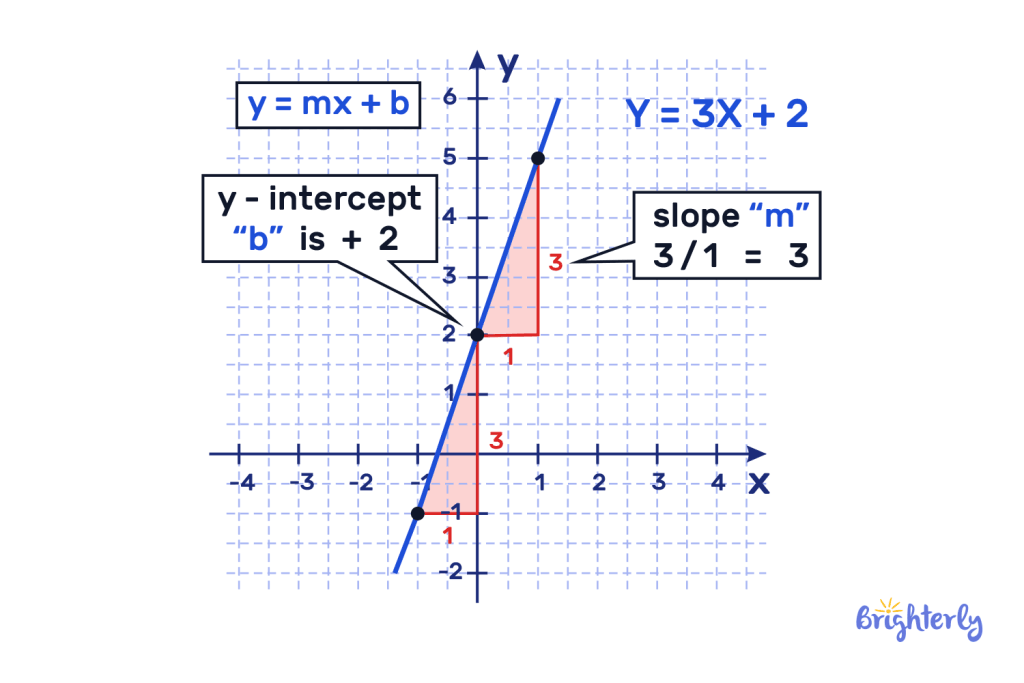
The simple linear equation $y = mx + b$ holds a surprisingly profound and versatile significance in the world of money. While ‘m’ (the slope) captures the dynamics of change and ‘x’ (the independent variable) drives activity, it is ‘b’ – the y-intercept – that consistently provides the essential baseline, the fixed foundation, or the initial context for nearly every financial calculation and strategic decision.
From the foundational fixed costs that anchor a business’s break-even point to the base salary that underpins personal budgeting, and from the Alpha in complex investment models to the intrinsic value components in asset valuation, ‘b’ is far more than a mathematical constant. It represents the non-negotiable realities, the initial investments, and the recurring commitments that shape our financial landscapes. Understanding ‘b’ empowers individuals to construct more resilient personal budgets, helps businesses optimize their cost structures for maximum profitability, and enables investors to make more insightful decisions about asset performance and risk.
In essence, ‘b’ is the financial anchor, the unwavering point of reference in a sea of fluctuating variables. By dissecting its diverse meanings and applications within the money niche, we gain a clearer, more nuanced perspective on how financial systems operate and how strategic decisions can be made to navigate them more effectively. The mastery of ‘b’ is not just about understanding algebra; it’s about grasping a fundamental truth of financial reality.
aViewFromTheCave is a participant in the Amazon Services LLC Associates Program, an affiliate advertising program designed to provide a means for sites to earn advertising fees by advertising and linking to Amazon.com. Amazon, the Amazon logo, AmazonSupply, and the AmazonSupply logo are trademarks of Amazon.com, Inc. or its affiliates. As an Amazon Associate we earn affiliate commissions from qualifying purchases.