
In the vast lexicon of digital communication, where brevity often reigns supreme and the subtleties of human interaction are distilled into text and symbols, emojis have emerged as indispensable tools. They bridge the gap between spoken word and written message, imbuing plain text with emotion, tone, and personality. Among the myriad of expressive icons, the smirk emoji ( ) stands out for its intriguing complexity. Unlike the straightforward joy of or the unequivocal sadness of , the smirk operates in a nuanced territory, often leaving recipients to ponder its true intent.

Understanding the smirk emoji isn’t just about interpreting a single icon; it’s about grasping a fundamental aspect of how technology shapes our communication. It reflects the inherent challenge of conveying intricate human emotions through digital interfaces and highlights the evolving semiotics of our tech-driven interactions. This article delves into the multifaceted meanings of the smirk emoji, exploring its technical underpinnings, common interpretations, and its role in both personal and professional digital spheres, all within the overarching context of modern communication technology.
The Smirk Emoji’s Digital Anatomy: Form, Function, and Technical Representation
To truly grasp the smirk emoji, one must first appreciate its technical foundation and how its visual presentation across various digital platforms influences its perception. It’s a testament to how even subtle graphical variations, enabled by different operating systems and applications, can alter a message’s emotional resonance.
A Visual Overview: The Iconography of Indifference and Intent
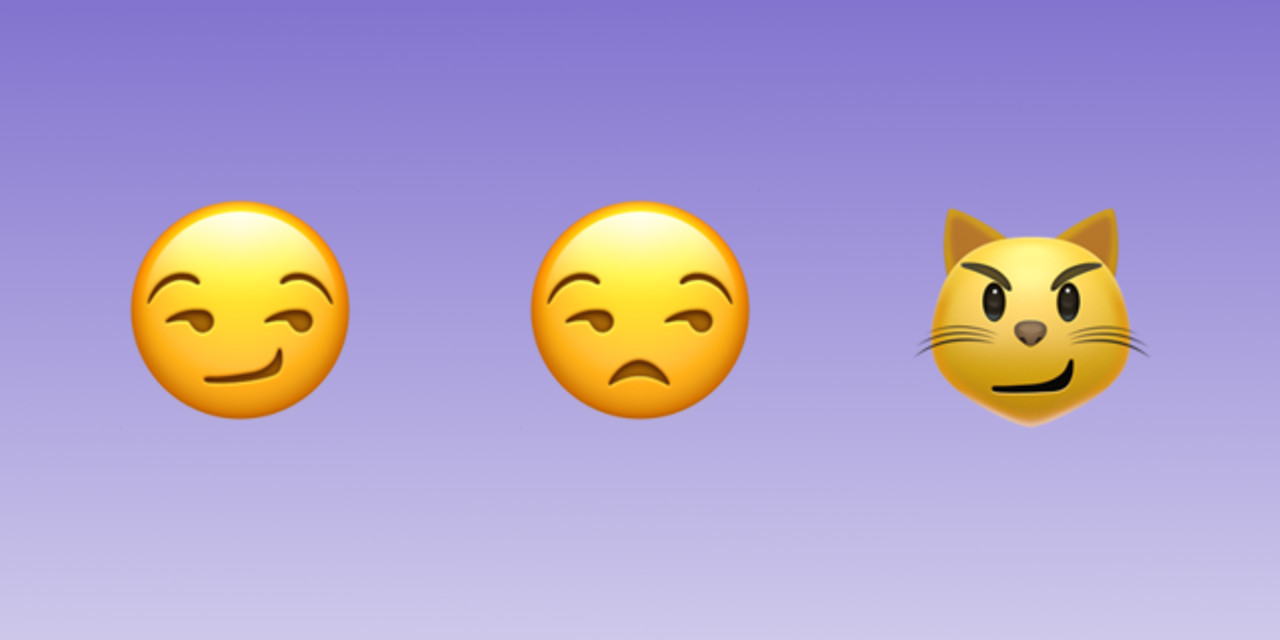
At its core, the smirk emoji depicts a face with a subtle, lopsided smile, often accompanied by a raised eyebrow. This minimalist design is crucial to its ambiguous nature. The “smirk” isn’t a full-blown grin of happiness, nor is it a frown of displeasure. Instead, it hovers in an intriguing middle ground, suggesting a hidden thought, an unspoken jest, or a knowing glance.
The slightly downturned corner of one side of the mouth, paired with an upward curve on the other, creates a sense of casual confidence or underlying cunning. The raised eyebrow, a classic non-verbal cue in face-to-face interaction, translates digitally as an indicator of skepticism, flirtation, or ironic detachment. These subtle visual cues are packed into a few pixels, demonstrating the efficiency with which digital icons convey complex human emotions, a feat made possible by sophisticated rendering engines and display technologies that bring these tiny images to life on screens large and small.
Encoding Emotion: Technical Standards and Platform Variations
The smirk emoji, like all standardized emojis, is part of the Unicode Standard, specifically designated as U+1F60F. This universal encoding ensures that when you send a smirk emoji from an iPhone, it is recognized and rendered as a smirk emoji on an Android phone, a Windows desktop, or a web browser. However, while the concept of the smirk is standardized, its visual execution varies significantly across different platforms.
Apple’s iOS might render the smirk with a particular shade of yellow and a slightly different eye shape than Google’s Android or Facebook’s Messenger. These subtle differences in design—the angle of the smirk, the intensity of the eyebrow raise, the exact shade of skin tone—can subtly alter the emoji’s perceived meaning. An iOS smirk might appear more playful, while an Android smirk could seem more mischievous, or a Samsung smirk more indifferent. These variations, while seemingly minor, highlight a fundamental challenge in digital communication: how technology’s diverse implementations can introduce slight shifts in meaning, leading to potential misinterpretations. For developers and UI/UX designers, ensuring consistent emotional representation across diverse tech ecosystems remains a perpetual challenge, impacting the clarity and universal understanding of digital emotional cues.
Beyond Pixels: The Role of Context in Algorithmic Interpretation
While human interpretation is paramount, the increasing role of artificial intelligence in analyzing digital communication also touches upon emojis. Sentiment analysis algorithms, used in customer service bots, social media monitoring, and even some smart keyboards, attempt to gauge the emotional tone of text. For a complex emoji like the smirk, algorithmic interpretation poses a significant challenge. Without robust contextual data, an AI might struggle to differentiate between a playful smirk and a sarcastic one.
This emphasizes that even for advanced algorithms, understanding the “true” meaning of a smirk emoji often requires analyzing surrounding text, previous interactions, and user profiles. The complexity of the smirk emoji serves as a potent example of how human nuance remains challenging for even the most sophisticated technological interpretations, underscoring the gap that AI still needs to bridge in comprehending the subtleties of human digital expression.
Navigating the Nuances: Common Interpretations in Digital Dialogue
The smirk emoji’s ambiguity is precisely what gives it power, allowing it to serve a multitude of purposes in digital conversations. Its meaning is rarely singular but instead a fluid interpretation shaped by sender, recipient, and the specific communicative context.
Playful Teasing and Flirtation: The Lighter Side of the Smirk
One of the most frequent uses of the smirk emoji is to inject a sense of playful teasing or lighthearted flirtation into a message. In the absence of vocal inflections, body language, or direct eye contact, the smirk emoji acts as a digital wink or a knowing glance. When someone sends “Oh, you think so? ,” it often conveys a challenge, a gentle mockery, or an invitation for more banter.
In flirtatious contexts, the smirk can signify attraction, a shared secret, or a cheeky remark. It softens potentially bold statements, making them less aggressive and more engaging. It tells the recipient, “I’m interested, and I’m having fun with this.” This usage highlights how emojis, enabled by messaging technologies, allow individuals to express complex social cues that were once exclusive to face-to-face interaction, thereby enriching the emotional bandwidth of digital communication.
Sarcasm, Irony, and Mischief: When Words Aren’t Enough
Another prevalent interpretation of the smirk emoji is as a digital signifier of sarcasm or irony. Text-based communication notoriously struggles with conveying ironic tone. A statement like “Sure, I love Mondays” can be read literally or ironically. Adding a smirk emoji (e.g., “Sure, I love Mondays “) immediately clarifies the ironic intent, preventing misinterpretation.
Beyond sarcasm, the smirk also signals mischief or a “I know something you don’t” attitude. It’s often paired with a subtly boastful remark or a mischievous plan. For example, “Just deployed that update, let’s see what happens ” conveys a sense of playful risk-taking or a confident expectation of a certain outcome. In these instances, the emoji serves as a crucial emotional modifier, enhancing the textual message and guiding the recipient’s understanding of the sender’s underlying mood, a testament to how these digital symbols augment the often-flat nature of purely text-based exchanges.
Confidence, Superiority, or Self-Satisfaction: A More Assertive Edge
The smirk can also carry a more assertive, even smug, undertone, conveying confidence, a sense of superiority, or self-satisfaction. When someone shares a personal victory, like “Crushed that presentation today ,” the smirk adds a layer of quiet triumph or self-assurance, perhaps even a hint of “I told you so.”
In competitive or challenging contexts, it can signal a confident prediction or a slightly boastful attitude, as in, “We’ll see who finishes first .” This usage leans into the emoji’s ambiguous nature, allowing the sender to imply a confident knowingness without explicitly stating it, providing a subtle yet powerful layer to their digital communication. It speaks to the efficiency of emojis in conveying complex, multi-layered emotional states that would otherwise require much more verbose explanations in text.

The Smirk in Professional and Public Digital Spheres: Risks and Best Practices
While the smirk emoji thrives in informal chats, its use in professional and public digital environments demands careful consideration. The very ambiguity that makes it versatile in personal communication can become a liability in contexts demanding clarity and professionalism.
Corporate Communication Conundrums: When to Smirk (or Not)
In the realm of corporate communication tools like Slack, Microsoft Teams, or professional email, the use of emojis, especially nuanced ones like the smirk, is a nuanced tightrope walk. While emojis can foster a friendly, less formal atmosphere, excessive or inappropriate use can undermine professionalism and lead to misunderstandings.
A smirk emoji in a professional context can easily be misconstrued as sarcastic, passive-aggressive, or even disrespectful. It might be acceptable among close colleagues who share a strong rapport and understanding of each other’s communication styles. For instance, “Got that bug fixed on the first try ” might be fine with a well-known team member who understands your playful pride. However, using it with a new client, a senior executive, or in a formal report is generally ill-advised. The prevailing rule in professional tech communication is to prioritize clarity over ambiguity. When in doubt, err on the side of caution and opt for more universally understood expressions or stick to plain text to convey your message precisely. The sophisticated communication platforms that facilitate modern work require users to develop an advanced form of digital literacy to navigate their social complexities.
Public Platforms and Personal Branding: Managing Perception
On public platforms like Twitter, LinkedIn, Instagram, or TikTok, the smirk emoji takes on additional layers of complexity due to the broad and diverse audience. What might be understood by a close friend could be completely misinterpreted by a global audience, potentially impacting one’s personal brand or public image.
A social media post with a smirk can be perceived differently by various groups: some might find it witty and engaging, while others might see it as arrogant, smug, or even offensive. For individuals and professionals managing their online presence, careful consideration of emoji usage is paramount. The smirk emoji, in particular, requires a robust understanding of the audience and the potential for diverse interpretations. It’s a powerful example of how digital tools, while enabling vast reach, also demand a heightened sense of responsibility and awareness regarding how one’s digital persona is crafted and perceived. Digital literacy extends not just to using tech, but to understanding its social implications.
The Algorithmic Lens: How Platforms Might Process Emoji Sentiment
Beyond human perception, it’s worth noting that social media platforms and content moderation systems increasingly employ AI to analyze user-generated content, including emojis. While sophisticated AI might contextualize emoji use, a raw smirk emoji could, in certain automated analyses, be flagged for conveying potentially negative or non-neutral sentiment, depending on the algorithm’s training data.
This algorithmic interpretation could, in niche scenarios, affect content visibility, ad targeting, or even lead to automated review processes. While this is less about the smirk’s explicit meaning and more about its potential classification by machine learning models, it underscores how even seemingly innocuous digital symbols are processed by the underlying technology of our communication platforms, adding another layer of consideration for users.
Evolving Meanings and the Future of Digital Expression
The smirk emoji is not a static symbol; its meanings, like those of language itself, are fluid and subject to change, reflecting the dynamic nature of digital culture and the continuous evolution of communication technologies.
The Dynamic Nature of Digital Semiotics: A Living Language
Emoji meanings are largely community-driven and evolve over time, much like slang or new words entering the lexicon. The smirk emoji’s multifaceted interpretations are a testament to this living, breathing aspect of digital semiotics. New contexts, internet memes, and cultural trends can introduce fresh nuances to existing emojis, or even shift their primary meaning entirely.
This constant evolution is enabled by the very platforms we use—the rapid spread of information and cultural artifacts across global networks allows for quick adoption and reinterpretation of digital symbols. The smirk emoji’s journey from a Unicode character to a rich, often ambiguous, expression encapsulates the dynamic interplay between human communication and the technological infrastructure that supports it.
The Role of Contextual AI and Smart Keyboards in Decoding Intent
Looking to the future, technological advancements may help bridge some of the ambiguity inherent in emojis like the smirk. AI-powered keyboards and communication apps are already offering context-aware emoji suggestions. In the future, we might see even more sophisticated tools that can analyze the surrounding text and even the history of a conversation to suggest the most appropriate emoji or even offer an interpretation of a received emoji’s likely intent.
Imagine a messaging app that, upon receiving a smirk, might offer a gentle prompt like “They might be teasing you” or “They seem confident.” Such features, while still nascent, point towards a future where technology actively assists in decoding the complex emotional landscape of digital communication, making nuanced emojis like the smirk more accessible and less prone to misunderstanding. These developments could enhance emotional intelligence in our digital interactions by leveraging advanced AI to better understand human expression.
Bridging the Empathy Gap: Emojis as Tools for Human Connection
Despite its potential for ambiguity, the smirk emoji, and emojis in general, play a crucial role in enriching our digital conversations. They are vital tools for bridging the empathy gap that can arise from purely text-based communication. By providing quick, visual cues, they help us convey tone, personality, and emotion, making our interactions feel more human and connected.
The smirk, in particular, allows for a range of subtle, non-verbal expressions that add depth and flavor to our messages. In a world increasingly mediated by screens, these small digital icons are powerful enablers of human connection, allowing us to share not just information, but also feelings and intentions, in ways that plain text alone cannot achieve. They are a testament to how technology, when wielded thoughtfully, can augment and enhance the richness of human interaction.
Conclusion
The smirk emoji ( ) is far more than just a simple graphic; it’s a fascinating microcosm of digital communication in the age of advanced technology. From its technical rendering across diverse platforms to its multifaceted interpretations spanning flirtation, sarcasm, confidence, and mischief, the smirk highlights the profound ways in which technology both enables and complicates our efforts to convey human emotion digitally.
Its ambiguity is its strength, offering a versatile tool for adding nuance and personality to our messages, but also its challenge, requiring careful consideration in professional and public contexts. As digital communication continues to evolve, understanding the subtle art of emoji usage—especially for complex icons like the smirk—becomes an essential component of digital literacy. Ultimately, the smirk emoji reminds us that even in the most technologically advanced communication systems, the human element of interpretation, context, and empathy remains paramount, continually shaping and redefining the very language of our digital interactions.
aViewFromTheCave is a participant in the Amazon Services LLC Associates Program, an affiliate advertising program designed to provide a means for sites to earn advertising fees by advertising and linking to Amazon.com. Amazon, the Amazon logo, AmazonSupply, and the AmazonSupply logo are trademarks of Amazon.com, Inc. or its affiliates. As an Amazon Associate we earn affiliate commissions from qualifying purchases.