
In the intricate world of chemical engineering and industrial processes, efficiency is not just a buzzword; it’s the bedrock upon which entire industries are built. From refining petroleum into usable fuels to purifying life-saving pharmaceuticals, the ability to separate complex mixtures into their pure components is paramount. At the heart of understanding and optimizing these sophisticated separation processes lies a seemingly abstract yet profoundly powerful concept: the theoretical plate. Far from being a physical piece of equipment, a theoretical plate is a conceptual marvel – a hypothetical stage that allows engineers to demystify complex mass transfer phenomena and design the highly efficient systems that power our modern world. In an era increasingly defined by technological prowess and intelligent systems, grasping this foundational concept is key to unlocking further advancements in process technology, sustainable manufacturing, and smart industrial design.
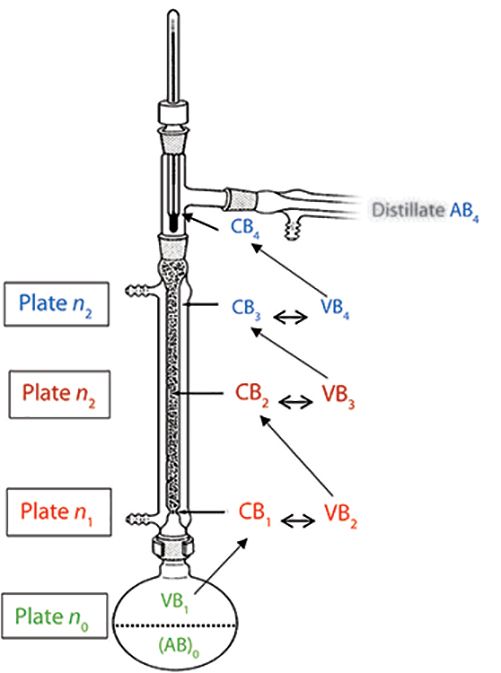
The Foundational Concept of a Theoretical Plate
The theoretical plate is a cornerstone of chemical engineering, a concept that translates the continuous process of separation into discrete, manageable steps. It provides a common language for engineers to quantify the performance of various separation technologies, ensuring precision in design and operation.
A Hypothetical Unit of Equilibrium
At its core, a theoretical plate represents a single, hypothetical stage within a separation process where two phases (for example, liquid and vapor in distillation, or stationary and mobile phases in chromatography) come into intimate contact and achieve thermodynamic equilibrium. In this idealized scenario, the components distribute themselves between the two phases according to their equilibrium partition coefficients, as if the process were occurring stepwise rather than continuously.
Crucially, it is essential to understand that a theoretical plate is not a physical tray or section in a column, although real-world equipment might contain actual trays. Instead, it’s a conceptual tool that simplifies the complex, dynamic interplay of diffusion, convection, and phase transfer. By breaking down a continuous separation into a series of equilibrium stages, engineers can apply fundamental thermodynamic principles and mass balance equations to predict the behavior of a system. This abstraction allows for the mathematical modeling of separation processes, enabling a level of predictability and control that would be impossible to achieve through purely empirical methods. It’s a testament to the power of theoretical modeling in tackling real-world technological challenges.
Bridging Theory and Industrial Practice
The utility of the theoretical plate concept extends far beyond academic understanding; it serves as a critical bridge between laboratory-scale experimentation and industrial-scale production. When a chemist develops a new separation technique in a lab, the theoretical plate concept provides a framework for scaling that process up to meet commercial demands.
Engineers use this concept to calculate the required number of theoretical plates (N) needed to achieve a desired purity or separation efficiency for a given mixture. This calculation then guides the design of actual industrial equipment, such as the height of a distillation column or the length of a chromatographic column. Without this theoretical framework, designing such complex systems would be largely based on trial and error – a costly, time-consuming, and inefficient approach in high-tech manufacturing. By providing a quantifiable measure of separation power, theoretical plates enable engineers to predict the performance of a proposed design, optimize operating conditions, and troubleshoot existing systems, thus ensuring that industrial processes run as efficiently and economically as possible. This theoretical underpinning is what allows process technology to continuously evolve and meet ever-increasing demands for purity, yield, and sustainability.
Applications Across Advanced Separation Technologies
The versatility of the theoretical plate concept is evident in its widespread application across various sophisticated separation technologies that underpin numerous industries. Its principles are universal, adapting to different phase interactions and separation mechanisms.
Distillation: The Cornerstone of Chemical Processing
Perhaps the most recognized application of theoretical plates is in distillation, a process critical for separating components with different boiling points. In industries ranging from petrochemicals to alcoholic beverages, distillation columns are ubiquitous. Here, the number of theoretical plates directly correlates with the column’s ability to achieve a clean separation. A higher number of theoretical plates implies a greater separation power, meaning the column can separate components more effectively or handle mixtures with very similar boiling points.
For tray columns, engineers calculate the number of theoretical plates and then design the number of physical trays, often accounting for tray efficiency (where one physical tray might not equal one theoretical plate). For packed columns, which offer continuous contact between phases, the concept of Height Equivalent to a Theoretical Plate (HETP) is employed. HETP is the height of packing material required to achieve one theoretical plate. By knowing the HETP for a given packing material and operating condition, engineers can calculate the total required height of the packed column. This precise calculation, guided by the theoretical plate concept, ensures that distillation columns are designed to meet specific product purity targets with optimal energy consumption, making them technological marvels of efficiency.
Chromatography: High-Precision Analytical and Preparative Separations
Beyond distillation, theoretical plates are equally fundamental in chromatography, a powerful set of techniques used for high-resolution separation and analysis. Whether it’s gas chromatography (GC), high-performance liquid chromatography (HPLC), or ion exchange chromatography, the theoretical plate count (N) is a key metric for evaluating column performance.
In chromatography, a higher number of theoretical plates signifies a more efficient column capable of providing better separation (resolution) between closely eluting compounds. The theoretical plate concept helps quantify the broadening of a sample band as it travels through the column, which is influenced by factors like diffusion, mass transfer kinetics, and flow rate. Chromatographers use N to compare different columns, optimize mobile phase compositions, and fine-tune flow rates to achieve maximum resolution and sensitivity for analytical purposes or efficient purification for preparative applications. This precision is vital in fields like pharmaceuticals for drug purity analysis, environmental monitoring for detecting trace contaminants, and biotechnology for separating complex biomolecules. The theoretical plate concept provides the mathematical rigor needed to push the boundaries of analytical and preparative science.
Other Emerging Separation Techniques
The underlying principle of quantifying separation efficiency using theoretical stages extends metaphorically to other advanced separation techniques. While not always termed “theoretical plates,” analogous concepts are used in processes like solvent extraction, absorption, and membrane separation. In these areas, engineers evaluate the number of ideal stages or the effectiveness of a unit operation in achieving a specific degree of separation. For instance, in multistage solvent extraction, each stage aims to bring the two immiscible liquid phases into equilibrium for optimal solute transfer. This demonstrates the broad applicability of thinking about separation in terms of idealized equilibrium steps, even as new and innovative separation technologies continue to emerge, often driven by needs for increased sustainability and lower energy consumption.
Quantifying Efficiency: The Role of Number of Theoretical Plates (N) and HETP
To truly leverage the theoretical plate concept in technology design and process optimization, engineers rely on quantifiable metrics: the number of theoretical plates (N) and the Height Equivalent to a Theoretical Plate (HETP). These metrics are the backbone of efficient separation system engineering.
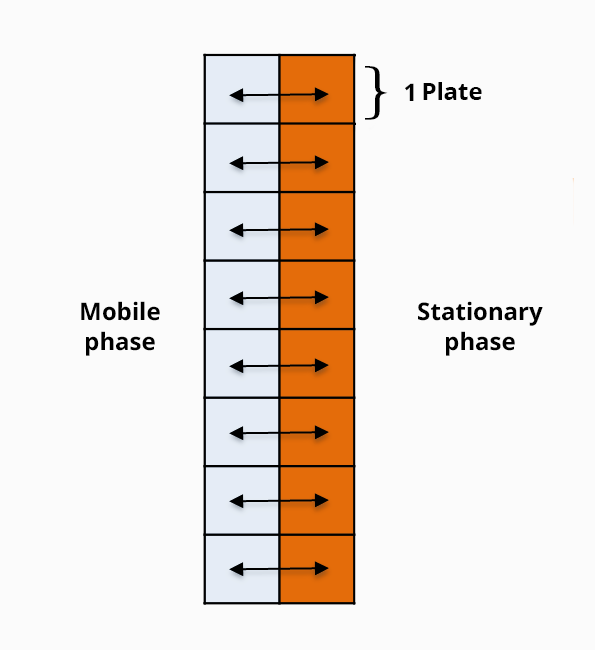
Calculating N: A Measure of Separation Power
The number of theoretical plates (N) directly quantifies the separating power of a column. For chromatographic separations, N can be calculated from a chromatogram using the peak retention time ($tR$) and the peak width ($W$, often at the base or half-height). A common formula is $N = 16 (tR / W)^2$. A higher N value indicates that the column can perform more individual separation steps within its length, leading to sharper peaks and better resolution between different components.
In distillation, N is typically calculated through more complex iterative methods using mass and energy balances across each theoretical stage, often with the aid of computational software. These calculations reveal the minimum number of theoretical plates required to achieve a target separation given the mixture’s properties and desired product purity. By providing a numerical value for separation capability, N becomes a critical benchmark for comparing different column designs, packing materials, or operational strategies, ensuring that technological solutions are maximally effective.
Height Equivalent to a Theoretical Plate (HETP): Physical Design Implications
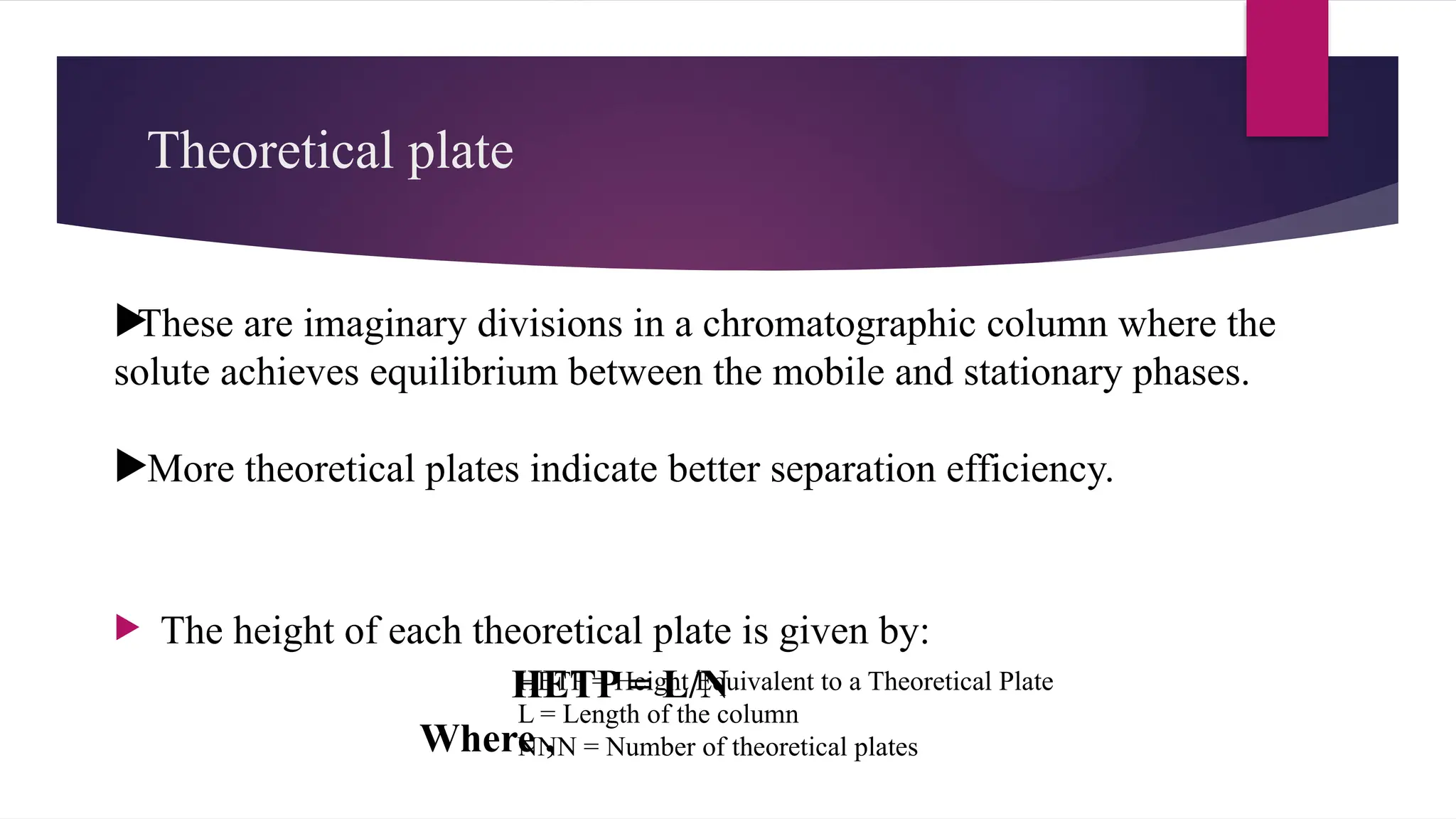
While N tells us how many ideal stages are needed, HETP ($HETP = L/N$, where L is the physical length of the column) translates this theoretical requirement into practical dimensions for packed columns. HETP is the physical length of packing material that performs the equivalent of one theoretical plate. A lower HETP indicates a more efficient packing material or column design, as less physical height is needed to achieve the same separating power.
Factors influencing HETP are diverse and include the type and size of the packing material, the flow rates of the phases, temperature, pressure, and the physical properties of the compounds being separated (e.g., diffusion coefficients). Engineers meticulously choose packing materials (e.g., structured packing, random packing) and optimize operating conditions to minimize HETP, thereby reducing the physical height and cost of a column while maximizing its efficiency. This direct link between theoretical efficiency and physical dimensions highlights how the theoretical plate concept is instrumental in the tangible design and construction of industrial process equipment.
Optimizing Process Parameters for Maximum Efficiency
The true power of N and HETP lies in their application to process optimization. Engineers continuously strive to maximize N and minimize HETP for optimal separation. This involves a systematic approach to adjusting various process parameters. For instance, in distillation, optimizing reflux ratio, reboiler duty, and feed location directly impacts the effective number of theoretical plates and separation efficiency. In chromatography, modifying mobile phase composition, column temperature, and flow rate can significantly alter N.
Advanced engineering tools, including sophisticated process simulation software and experimental design methodologies, are routinely used to explore the parameter space. By understanding how changes in operating conditions affect N and HETP, engineers can fine-tune processes to achieve the desired product specifications while minimizing energy consumption, waste generation, and operational costs. This iterative optimization, guided by the theoretical plate framework, is a continuous driver of innovation and efficiency in high-tech manufacturing.
The Technological Impact and Future Directions
The theoretical plate, while a mature concept, remains intensely relevant, driving technological advancements and shaping the future of industrial processing. Its principles are continuously integrated with emerging digital tools to push the boundaries of efficiency and sustainability.
Driving Industrial Efficiency and Sustainability
A profound understanding and application of the theoretical plate concept directly contribute to the efficiency and sustainability of industrial operations. By enabling the precise design of separation equipment, it ensures that only the necessary energy is expended to achieve a desired separation. This translates to smaller, more efficient columns, reduced utility consumption (e.g., heating and cooling), and lower capital expenditure.
Furthermore, improved separation efficiency leads to higher product purity and yield, minimizing waste streams and reducing the need for costly reprocessing. In an era where environmental stewardship and resource conservation are paramount, the theoretical plate serves as a fundamental principle guiding the development of greener chemical processes and more sustainable manufacturing practices. From optimizing solvent recovery to improving the purity of recycled materials, its impact on environmental and economic sustainability is undeniable, making it a critical tool in the ongoing quest for circular economies and reduced industrial footprints.
Advanced Modeling and Simulation Tools
The computational revolution has dramatically enhanced the application of theoretical plate concepts. Modern process simulation software packages like Aspen HYSYS, AVEVA PRO/II, and ChemCAD are built upon these foundational principles. These powerful tools allow engineers to model complex separation processes with unprecedented accuracy, simulating the performance of distillation columns, absorbers, and extractors under various operating conditions.
By inputting thermodynamic data, feed compositions, and desired product specifications, these software platforms can calculate the required number of theoretical plates, optimize column dimensions, and predict energy consumption. They integrate sophisticated thermodynamic models, fluid dynamics, and mass transfer equations to provide a virtual testbed for process design. This capability significantly reduces the need for expensive and time-consuming pilot plant trials, accelerating the development cycle for new processes and enabling rapid optimization of existing ones. These simulation tools, powered by the theoretical plate concept, are indispensable for modern process design and plant operation, representing a key technological enabler.
Integrating AI and Machine Learning for Predictive Optimization
Looking ahead, the theoretical plate concept is poised for integration with cutting-edge artificial intelligence (AI) and machine learning (ML) technologies. While traditional simulation tools excel at deterministic calculations, AI/ML can unlock new levels of predictive optimization. By analyzing vast datasets generated from real-time plant operations, laboratory experiments, and existing simulation models, AI algorithms can learn complex relationships between process parameters, equipment design, and separation efficiency (expressed in terms of N and HETP).
This opens doors for real-time process optimization, where AI systems can autonomously adjust operating conditions to maintain peak separation performance despite fluctuations in feed quality or ambient conditions. Furthermore, ML could be used to predict optimal column configurations or even suggest novel packing materials that achieve unprecedented HETP values. The integration of AI with theoretical plate principles could lead to “smart” separation units that are self-optimizing, highly adaptive, and capable of achieving unparalleled efficiency and sustainability in the future of advanced manufacturing and chemical processing. This heralds an exciting new chapter for a foundational engineering concept.
The theoretical plate is far more than a mere academic construct; it is a fundamental technological concept that has shaped, and continues to shape, the very fabric of industrial processing. From the towering distillation columns of petrochemical refineries to the precise analytical instruments in pharmaceutical labs, its principles underpin the design, optimization, and control of virtually every advanced separation technology. As industries move towards greater efficiency, sustainability, and digital integration, the theoretical plate remains an indispensable tool, empowering engineers to innovate and push the boundaries of what is possible. Its enduring relevance, particularly when synergized with modern simulation software and the transformative potential of artificial intelligence, ensures its critical role in the technological advancements of tomorrow.
aViewFromTheCave is a participant in the Amazon Services LLC Associates Program, an affiliate advertising program designed to provide a means for sites to earn advertising fees by advertising and linking to Amazon.com. Amazon, the Amazon logo, AmazonSupply, and the AmazonSupply logo are trademarks of Amazon.com, Inc. or its affiliates. As an Amazon Associate we earn affiliate commissions from qualifying purchases.