
Minecraft, the global phenomenon lauded for its boundless creativity and open-world exploration, consistently introduces new challenges to keep its vast player base engaged. Among these, the “raid” stands out as a unique, dynamic, and often intense event that tests a player’s preparation, combat skills, and strategic thinking. Far more than a simple monster attack, a raid is a multi-wave assault by a specialized group of hostile mobs known as Illagers, targeting a player-established or natural village. Understanding the intricacies of a raid is crucial for survival, resource acquisition, and ultimately, mastering a significant aspect of the game’s combat and defense mechanics. This article delves deep into the anatomy of a Minecraft raid, offering insights into its triggers, phases, enemies, and the strategies required to emerge victorious.
The Mechanics of a Minecraft Raid: An In-Depth Look
A Minecraft raid isn’t a random occurrence; it’s a meticulously designed event with specific triggers and progression rules. From the moment it initiates to its climatic conclusion, players must interact with a sophisticated system that governs the flow of battle.
How Raids Are Triggered: The Bad Omen Effect
The genesis of every raid lies with the “Bad Omen” status effect. This ominous debuff is acquired when a player defeats an Illager captain – identifiable by the distinctive banner he carries – within a Pillager Outpost or a random Illager patrol. Once obtained, the Bad Omen status persists until it either times out or the player consumes a bucket of milk, which negates all status effects.
However, the true danger of Bad Omen manifests when a player carrying this status enters a village. Upon stepping within the bounds of a village (defined by existing villagers and their workstations/beds), the Bad Omen status is immediately consumed, and a raid timer begins. This deliberate activation means players often have some control over when and where a raid will commence, allowing for crucial preparation time. The level of the Bad Omen effect (ranging from I to V, determined by how many captains were killed consecutively before entering a village) directly influences the number of waves and the difficulty of the raid that follows, escalating the challenge significantly.
Understanding Pillager Outposts and Patrols
Pillager Outposts serve as the primary strongholds of the Illagers and are constant sources of the Bad Omen effect. These tall, dark structures are frequently found in various biomes and are guarded by multiple Pillagers, including captains. Clearing an outpost is not only a way to gather unique loot like enchanted crossbows and dark oak wood but also a direct path to acquiring Bad Omen, making them strategic points of interest for players looking to initiate or avoid raids.
Beyond outposts, Illager patrols randomly spawn in the overworld, consisting of a small group of Pillagers, often led by a captain. These patrols can catch an unprepared player off guard, especially if they are close to a village, as defeating a captain from a patrol can inadvertently trigger a raid if the player isn’t careful. Recognizing and strategically engaging these patrols is key to managing raid activations.
Raid Waves: Escalating Challenges
Once triggered, a raid unfolds in a series of waves, each progressively more difficult than the last. The number of waves is determined by the Bad Omen level and the difficulty setting of the game. On Easy, there are typically 3 waves; on Normal, 5 waves; and on Hard, 7 waves. Each wave introduces a new contingent of Illagers, often combining different types of enemies to create complex combat scenarios.
A bell will ring at the beginning of each wave, signaling the arrival of new foes. A progress bar at the top of the screen indicates the remaining enemies in the current wave. The raid is only considered won when all enemies from the final wave have been defeated. Should all villagers be killed, or all beds destroyed, the raid will end prematurely in defeat, sometimes leaving the player with dire consequences for the village’s economy and sustainability.
Preparing for the Onslaught: Strategic Defense and Resource Management
Successfully defending against a raid is less about brute force and more about meticulous planning and resource allocation. A well-prepared player can turn the tide of battle even against overwhelming odds.
Essential Gear and Potions
Before the first wave even spawns, players should ensure they are adequately equipped. Diamond or Netherite armor, ideally enchanted with Protection and Thorns, is paramount for mitigating incoming damage. A powerful sword (Sharpness, Sweeping Edge), an enchanted bow (Power, Infinity, Punch), and a reliable crossbow (Multishot, Quick Charge) are essential for offensive capabilities. A shield is arguably one of the most vital defensive tools, capable of blocking most incoming projectile damage from Pillagers and even deflecting Ravager charges.
Potions play a crucial supporting role. Healing potions (Instant Health) are indispensable for recovery during intense combat. Potions of Strength or Haste can boost offensive power or mining speed, respectively, useful for last-minute fortifications. Perhaps most overlooked are Potions of Slow Falling, which can negate fall damage inflicted by Ravagers, and Potions of Regeneration, for sustained healing.
Fortifying Your Village: Architecture and Traps
A strong defense often starts with the village itself. Walls, particularly those two blocks high, can delay or funnel ground-based Illagers, giving the player precious time to pick them off. Gaps in walls can be strategically placed to create choke points. Moats filled with water or lava can be effective deterrents, though lava carries the risk of burning loot.
Advanced players might employ Redstone traps, such as piston doors that seal off entrances, dispensers firing arrows, or even complex TNT traps (though these carry a high risk of destroying village infrastructure). Simple trenches can also be effective in slowing down Ravagers. Elevating key structures like villager homes or the player’s primary defensive position can provide a vantage point and protect villagers from ground-based threats. However, beware of Vindicators, who can sometimes pathfind around obstacles, and Evokers, whose vexes can fly over defenses.
The Role of Iron Golems and Villagers
Iron Golems are powerful allies in a raid. These player-created protectors automatically target hostile mobs and deal significant damage. Constructing several Iron Golems before a raid can significantly bolster a village’s defenses, providing valuable distractions and damage output. However, Golems are not invincible and can be overwhelmed by large numbers of Illagers or powerful Ravagers.
Villagers themselves are vulnerable and passive. Protecting them is often the primary objective, as their demise contributes to a raid’s failure. Building safe houses for villagers, preferably underground or in enclosed, well-lit spaces, is a common strategy. Ensure their beds and workstations are safe, as their destruction can also contribute to raid failure conditions. Healing villagers with golden carrots or apples can also prolong their survival if they take damage.
Navigating the Enemies: A Bestiary of Pillager Forces
The Illagers are not a monolithic threat; they comprise several distinct mob types, each with unique abilities and weaknesses. Understanding these foes is paramount to developing effective counter-strategies.
Pillagers and Vindicators: The Core Threat
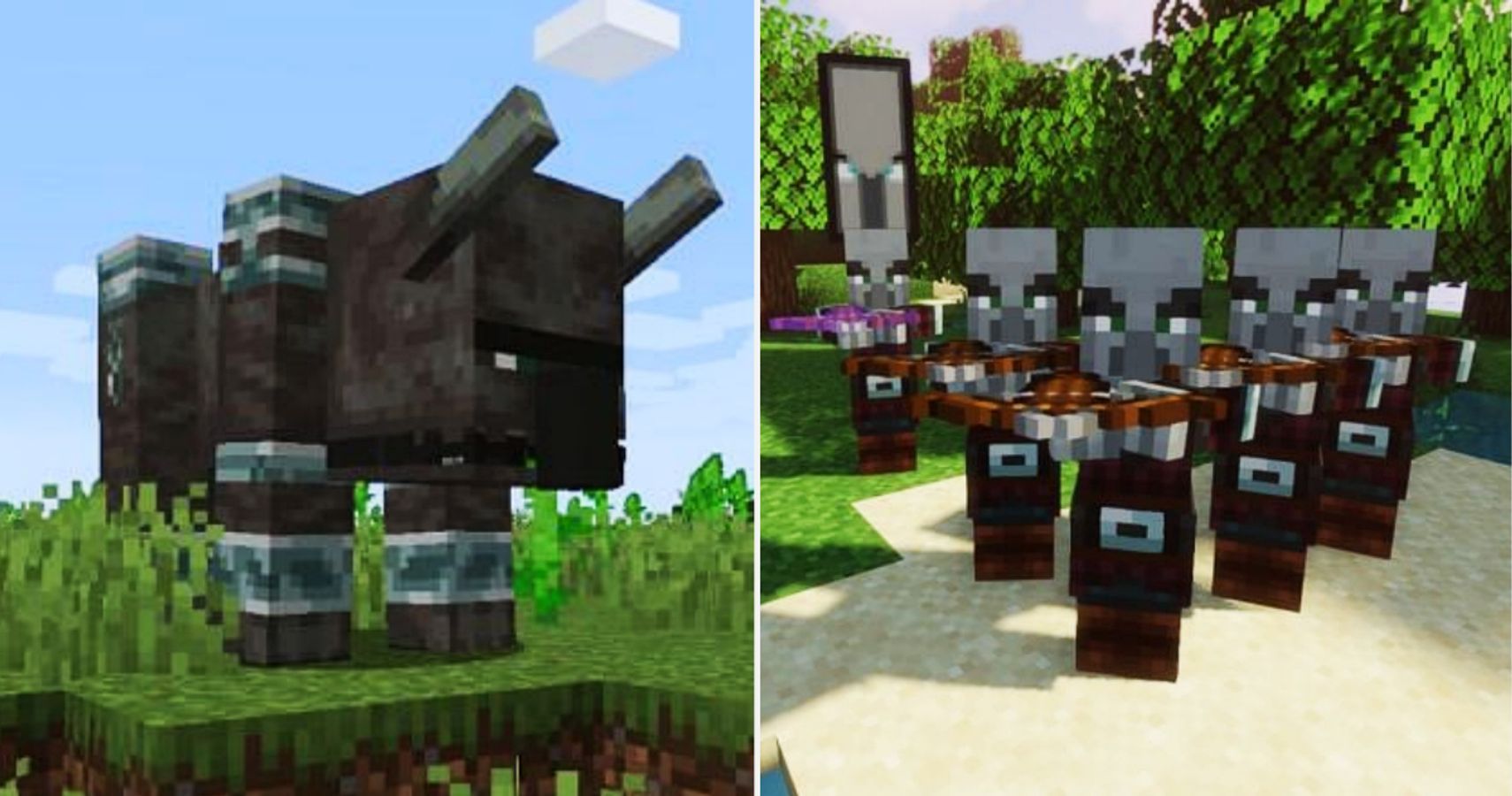
Pillagers are the most common Illager mob, wielding crossbows and firing arrows. They are the standard ranged unit of the raid, capable of dealing steady damage from a distance. Their numbers can be overwhelming, making cover and shield usage critical. Prioritizing their elimination reduces incoming projectile spam.
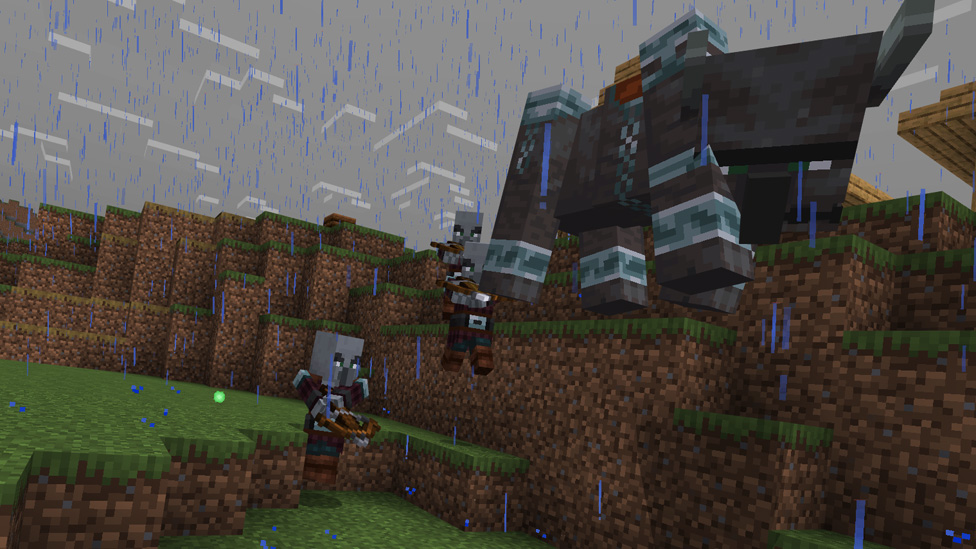
Vindicators are melee-focused Illagers armed with iron axes. They are faster, hit harder, and pose a significant close-range threat. Vindicators often charge directly at players and villagers, making them high-priority targets. Their powerful axe attacks can also disable shields temporarily, so timing blocks and counter-attacks is crucial.
Ravagers and Witches: Specialized Foes
Ravagers are large, beast-like mobs that act as heavy-hitters. They possess immense health and deal massive damage, capable of breaking through defenses and knocking players into the air with their charge attack. Ravagers are often ridden by other Illagers, adding an extra layer of complexity. They are slow but relentless. Their roar attack can also knock back multiple entities, including Iron Golems. Due to their high health, they often require sustained focus fire or environmental traps.
Witches are dangerous support units. They throw various splash potions at both players and other mobs. Their offensive potions (Poison, Slowness, Weakness) can severely hinder combat effectiveness, while defensive potions (Healing, Fire Resistance) can aid their Illager allies. Witches themselves are immune to potion effects, making them tricky to deal with. Eliminating them early is vital to prevent debuffs and healing for the enemy.
Evokers and the Totem of Undying
Evokers are among the most dangerous and rare Illagers, typically appearing in later waves. They are magic-users who employ two primary spells:
-
Fangs: A line of sharp fangs emerges from the ground, damaging and knocking back anything in their path.
-
Vexes: Evokers can summon up to three Vexes, small, flying, ghost-like creatures that pass through blocks and attack with iron swords. Vexes are persistent and can be incredibly annoying, especially when you’re trying to focus on other threats.
Evokers also drop the highly coveted Totem of Undying upon defeat, a rare item that grants a player a second chance at life by preventing death and restoring health when held in hand or off-hand. This valuable drop makes Evokers high-priority targets, but their powerful magic requires careful engagement. They are often found tucked away behind other mobs, making them harder to reach.
Rewards and Repercussions: Post-Raid Dynamics
The conclusion of a raid, whether in victory or defeat, leaves lasting impacts on the player and the targeted village. These consequences are an integral part of the raid mechanic, influencing future gameplay and resource management.
Hero of the Village Effect: Economic Impact
A victorious raid bestows the “Hero of the Village” status effect upon the defending player. This beneficial status grants significantly reduced prices for trades with villagers in that specific village, and in some cases, villagers may even throw gifts at the player. The level of the Hero of the Village effect depends on the Bad Omen level that triggered the raid, meaning a harder raid yields greater economic benefits. This incentivizes players to engage in raids, turning a dangerous combat scenario into a lucrative opportunity for efficient trading and resource acquisition. The effect lasts for a generous amount of time, making it a powerful boon for active traders.
Loot Drops: Emeralds, Saddle, and More
Beyond the Hero of the Village effect, individual Illagers drop various items upon defeat. Pillagers frequently drop arrows and occasionally their crossbows. Vindicators drop their iron axes. Ravagers drop saddles, a relatively rare item useful for riding horses. Witches drop glass bottles, glowstone dust, gunpowder, redstone, sugar, and spider eyes, all valuable potion ingredients.
However, the most prized loot comes from the Evoker: the Totem of Undying. As mentioned, this item is a lifesaver, offering unparalleled protection against fatal blows. Accumulating Totems of Undying through repeated raids can significantly enhance a player’s survivability in dangerous situations like exploring the Nether or fighting the Ender Dragon.
Village Sustainability and Recovery
A successful raid defense ensures the continued prosperity of the village. The surviving villagers can resume their trades, breed new villagers (assuming there are enough beds), and contribute to the player’s overall progress. However, a raid can also be a brutal test of a village’s resilience. Lost villagers mean fewer trade options and a reduced potential for population growth. Replacing destroyed beds and workstations is crucial for the village’s recovery and its ability to function as a viable economic hub.
Conversely, a failed raid, where all villagers perish or all beds are destroyed, can leave a village desolate and abandoned. While players can repopulate a village by curing zombie villagers or transporting new ones, it’s a time-consuming and resource-intensive process. The long-term impact on a player’s base of operations can be substantial, emphasizing the importance of dedicated defense.
Advanced Raid Strategies and Community Insights
As players become more experienced, they develop refined techniques and innovative approaches to handle raids, often pushing the boundaries of what’s considered standard gameplay.
Raid Farms: Ethical Considerations and Efficiency
For players focused on maximizing resources, “raid farms” have become a popular, albeit technically complex, endgame endeavor. These elaborate contraptions are designed to automatically trigger and defeat raids, typically at high Bad Omen levels, to generate large quantities of emeralds, Totems of Undying, and other valuable drops. Raid farms often involve intricate Redstone circuitry, mob-pathing manipulation, and specific village layouts to ensure maximum efficiency and minimal player intervention.
While highly effective, building and operating a raid farm requires a deep understanding of game mechanics, particularly mob spawning, pathfinding, and chunk loading. It represents a pinnacle of technical mastery in Minecraft, allowing players to transcend traditional gameplay challenges into automated resource generation. Debates often arise within the community regarding the “legitimacy” or “fun” of such highly automated systems, but their technical ingenuity is undeniable.
Multiplayer Raid Dynamics
Raids take on an entirely new dimension in multiplayer environments. A single player with Bad Omen can still trigger a raid on a shared village. This necessitates team coordination, with players specializing in different roles: melee combat, ranged support, potion distribution, or villager protection. Communication becomes paramount, as players can cover each other, draw aggro, and execute coordinated attacks. Multiplayer raids can be exhilarating team challenges, fostering camaraderie and strategic planning among friends. The shared rewards and the combined effort make them a highlight for many server communities.

Common Pitfalls and How to Avoid Them
Despite preparation, raids can still go awry. Common mistakes include underestimating enemy numbers, particularly in later waves, or failing to prioritize dangerous threats like Evokers or Ravagers. Ignoring the threat of witches and their debilitating potions can lead to a quick demise. Forgetting to protect villagers or their beds, even with a strong player defense, can lead to a surprise raid failure.
To avoid these pitfalls, players should always:
-
Scout: Before triggering a raid, understand the terrain and plan defensive positions.
-
Prioritize: Focus on high-threat targets first (Evokers, Witches, Ravagers).
-
Adapt: Be ready to change tactics if a wave introduces an unexpected challenge.
-
Protect: Ensure villagers are safe, perhaps in a hidden bunker or behind layers of defense.
-
Restock: Always bring ample healing items and spare weapons/armor.
In conclusion, raids in Minecraft are a testament to the game’s evolving complexity and its ability to present players with sophisticated, engaging challenges. They are not merely combat encounters but intricate puzzles requiring foresight, strategic planning, resource management, and adaptability. Mastering the raid mechanic not only provides valuable rewards but also deepens a player’s understanding of Minecraft’s technical systems, ultimately enriching their overall gameplay experience.
aViewFromTheCave is a participant in the Amazon Services LLC Associates Program, an affiliate advertising program designed to provide a means for sites to earn advertising fees by advertising and linking to Amazon.com. Amazon, the Amazon logo, AmazonSupply, and the AmazonSupply logo are trademarks of Amazon.com, Inc. or its affiliates. As an Amazon Associate we earn affiliate commissions from qualifying purchases.