
In the intricate landscape of finance, numbers tell a story. They reveal patterns, signal opportunities, and warn of risks. At the heart of many financial narratives are fundamental mathematical operations, with division playing a particularly crucial role. Understanding its core components—the dividend, divisor, and quotient—is not merely an academic exercise; it’s an essential skill for anyone navigating personal finance, investing, or business management. While these terms originate in basic arithmetic, their application in financial contexts transforms them into powerful tools for analysis, valuation, and strategic decision-making.
Moreover, the term “dividend” itself carries a dual meaning that is uniquely significant in finance: referring both to the number being divided and, separately, to the distribution of profits to shareholders. This article will explore both facets, demystifying these concepts and demonstrating their pervasive utility across the financial spectrum.
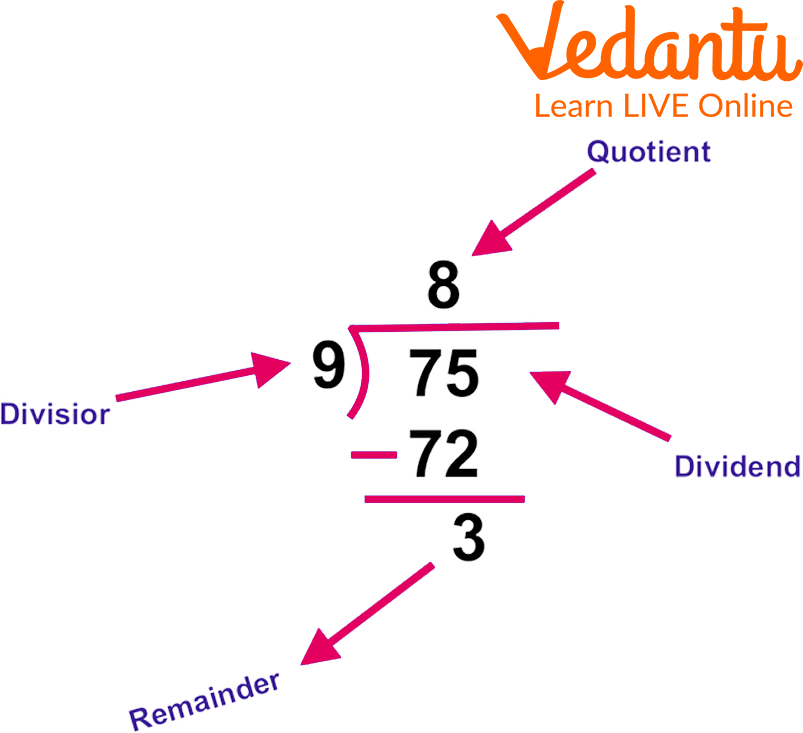
The Mathematical Foundation: Demystifying Division’s Core Elements
Before delving into their financial implications, let’s establish a clear understanding of the mathematical definitions of quotient, dividend, and divisor. These terms represent the three main components of a division problem.
The Dividend: The Quantity Being Divided
Mathematically, the dividend is the number that is being divided. It represents the total amount or quantity that needs to be distributed, split, or measured against another factor. In the equation A ÷ B = C, ‘A’ is the dividend.
In financial terms: The dividend often represents a total pool of resources, a cumulative sum, or an overarching value that needs to be broken down.
-
Example 1: Revenue per Unit. If a company has a total revenue of $1,000,000 (the dividend) from selling 50,000 units, and you want to find the revenue per unit, the $1,000,000 is your dividend.
-
Example 2: Total Investment Portfolio Value. If an investor has a portfolio valued at $500,000 (the dividend) and wants to calculate the average value per asset class, the total portfolio value serves as the dividend.
-
Example 3: Total Operating Expenses. A business’s total operating expenses of $250,000 over a quarter (the dividend) might need to be divided by the number of working days to understand daily cost burn.
Recognizing the dividend correctly is the first step in any financial calculation involving division, as it sets the scope for what is being analyzed.
The Divisor: The Factor of Distribution
The divisor is the number by which the dividend is divided. It represents the factor, group, period, or unit against which the total quantity is measured. In the equation A ÷ B = C, ‘B’ is the divisor.
In financial terms: The divisor is the metric that provides context or scales the dividend. It helps answer “per what?” or “how many times?”
-
Example 1: Number of Units Sold. Continuing the revenue per unit example, the 50,000 units sold (the divisor) are used to split the total revenue.
-
Example 2: Number of Asset Classes. To find the average value per asset class from the $500,000 portfolio, the number of distinct asset classes (e.g., 5 for stocks, bonds, real estate, cash, commodities) would be the divisor.
-
Example 3: Number of Working Days. To understand daily cost burn, the number of working days in the quarter (e.g., 60 days) would be the divisor for the total operating expenses.
The choice of divisor is critical; an incorrect divisor will lead to misleading or irrelevant quotients, fundamentally distorting financial analysis.
The Quotient: The Result of the Division
The quotient is the answer obtained from dividing the dividend by the divisor. It represents the result of the distribution, the ratio, the average, or the rate. In the equation A ÷ B = C, ‘C’ is the quotient.
In financial terms: The quotient is the derived insight—the critical metric that helps in understanding performance, efficiency, or value.
-
Example 1: Revenue per Unit. If revenue is $1,000,000 and units sold are 50,000, the quotient is $20 per unit. This tells the business the average selling price or revenue generated by each unit.
-
Example 2: Average Value per Asset Class. If a $500,000 portfolio is divided across 5 asset classes, the quotient is $100,000 per asset class, indicating an even distribution if not otherwise specified.
-
Example 3: Daily Cost Burn. Total expenses of $250,000 over 60 working days yield a quotient of approximately $4,167 per day, providing insight into daily operational costs.
The quotient is the “so what?” of the division problem, offering actionable intelligence for financial decision-making.
Beyond Arithmetic: The “Dividend” as a Financial Distribution
While the mathematical “dividend” is the number being divided, the financial world uses the term “dividend” in a distinct and crucial way: as a distribution of a portion of a company’s earnings to its shareholders. This dual meaning often causes confusion but highlights a pivotal concept in investing.
Understanding Shareholder Dividends
A shareholder dividend is a payment made by a corporation to its shareholders, typically as a distribution of its profits. When a company earns profits, it can either retain those earnings to reinvest in the business or distribute them to shareholders. Dividends are typically paid out of retained earnings. For investors, dividends represent a return on their investment and can be a significant component of total shareholder return, especially for income-focused portfolios.
Types of Dividends and Their Implications
Dividends are not always paid in cash and come in various forms, each with unique financial implications:
-
Cash Dividends: The most common type, paid directly to shareholders’ brokerage accounts. These reduce a company’s cash reserves but increase shareholder wealth directly.
-
Stock Dividends: Instead of cash, shareholders receive additional shares of the company’s stock. This dilutes the existing shares but conserves the company’s cash.
-
Property Dividends: Less common, these involve distributing assets other than cash (e.g., shares of a subsidiary company) to shareholders.
-
Special Dividends: One-time payments, usually larger than regular dividends, issued after an exceptionally profitable period or a significant asset sale.
Understanding the type of dividend is critical for investors, as it affects liquidity, tax obligations, and the perceived health and strategy of the issuing company.
Dividend Payouts and Investment Strategy
For investors, dividend payouts are a key factor in several investment strategies.
-
Income Investing: Many investors seek out “dividend stocks” for a steady stream of income, often retirees or those looking for passive income.
-
Dividend Growth Investing: This strategy focuses on companies that consistently increase their dividend payments over time, indicating financial strength and a commitment to shareholder returns.
-
Dividend Yield: Calculated as the annual dividend per share divided by the share price, dividend yield is a crucial metric for comparing the income-generating potential of different stocks. A high dividend yield can be attractive but also might signal underlying problems if the payout is unsustainable.
Companies with a history of paying and growing dividends are often seen as stable and mature, making them attractive to certain investor profiles.
Quotient and Divisor in Action: Key Financial Ratios and Metrics
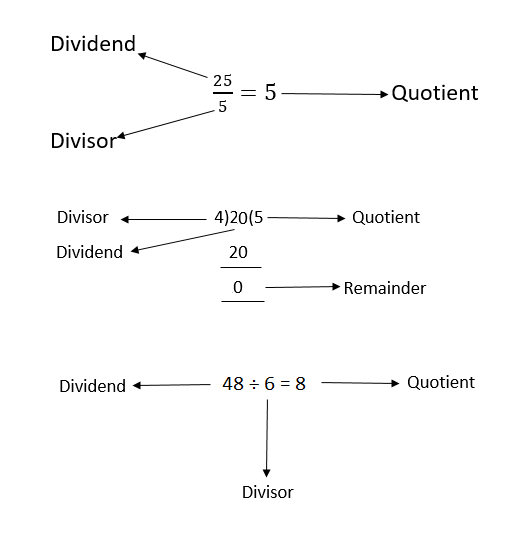
In finance, division is the bedrock of ratio analysis. Financial ratios, which are essentially quotients, provide standardized ways to compare companies, assess performance over time, and gain insights into various aspects of a business’s health and efficiency. Here, the mathematical dividend is typically one financial metric, and the divisor is another, with the quotient being the resulting ratio.
Profitability Ratios
These ratios measure a company’s ability to generate earnings relative to its revenue, operating costs, balance sheet assets, or shareholder equity.
-
Net Profit Margin: (Net Income ÷ Revenue). This quotient shows how much profit a company makes for every dollar of revenue. Net income is the dividend, revenue is the divisor.
-
Return on Equity (ROE): (Net Income ÷ Shareholder Equity). This quotient indicates how much profit a company generates for each dollar of shareholder equity, measuring management’s efficiency in using shareholders’ investments.
Liquidity Ratios
Liquidity ratios assess a company’s ability to meet its short-term obligations.
-
Current Ratio: (Current Assets ÷ Current Liabilities). This quotient measures a company’s ability to pay off its short-term liabilities with its short-term assets. Current assets are the dividend, current liabilities are the divisor.
-
Quick Ratio (Acid-Test Ratio): ([Current Assets – Inventory] ÷ Current Liabilities). A more conservative measure than the current ratio, excluding inventory which might not be quickly convertible to cash.
Valuation Ratios
These ratios help investors determine the intrinsic value of a stock.
-
Price-to-Earnings (P/E) Ratio: (Share Price ÷ Earnings Per Share). This widely used quotient indicates how much investors are willing to pay for each dollar of a company’s earnings. Share price is the dividend, earnings per share is the divisor.
-
Dividend Yield: (Annual Dividend Per Share ÷ Share Price). As discussed, this quotient represents the percentage return an investor receives in dividends relative to the stock’s market price.
Debt Management Ratios
These ratios evaluate a company’s ability to repay its debts and manage its leverage.
- Debt-to-Equity Ratio: (Total Debt ÷ Shareholder Equity). This quotient reveals the proportion of equity and debt used to finance a company’s assets, indicating the reliance on debt financing.
Strategic Applications: Leveraging Division for Financial Insight
Beyond specific ratios, the principles of dividend, divisor, and quotient are integral to strategic financial planning and operational management across all sectors.
Budgeting and Resource Allocation
Effective budgeting involves dividing a total financial pool (dividend) across various categories, departments, or time periods (divisors). For instance, a total annual marketing budget (dividend) might be divided by 12 (divisor) to determine a monthly allocation (quotient), or by different marketing channels (divisors) to allocate funds strategically. This systematic division ensures resources are aligned with objectives and tracked efficiently.
Performance Analysis and Benchmarking
Businesses constantly divide their performance metrics (e.g., sales, costs, production units – dividends) by relevant benchmarks, periods, or competitors’ figures (divisors) to generate quotients that reflect efficiency, growth, or areas for improvement. Comparing a company’s profit margin (quotient) to industry averages (divisor for the industry average) helps in understanding its competitive standing.
Risk Assessment and Diversification
While diversification is about spreading investments, the underlying principle often involves conceptual division. A total investment capital (dividend) is divided across different asset classes, industries, or geographies (divisors) to mitigate risk. Though not a direct mathematical division for risk itself, the analysis of risk often uses quotients, such as the Sharpe Ratio (excess return ÷ standard deviation of return), to quantify risk-adjusted performance.
Unit Economics and Business Scaling
For startups and growing businesses, understanding unit economics is paramount. This involves dividing total costs or revenues by the smallest measurable unit of a business (e.g., per customer, per product, per transaction).
-
Customer Acquisition Cost (CAC): (Total Marketing & Sales Spend ÷ Number of New Customers Acquired). This quotient is vital for assessing the efficiency of customer acquisition efforts.
-
Customer Lifetime Value (LTV): (Average Revenue Per User × Gross Margin ÷ Churn Rate). While more complex, the underlying concept involves dividing value over time or against a rate.
-
Contribution Margin Per Unit: (Per Unit Revenue – Per Unit Variable Costs). This quotient helps determine the profitability of each unit sold.
These quotients are critical for understanding profitability, scalability, and overall business viability.
Financial Tools and the Power of Division
Modern financial tools leverage the power of division to simplify complex calculations and provide instant insights, empowering users from individual investors to corporate financial analysts.
Spreadsheets and Financial Models
Microsoft Excel, Google Sheets, and other spreadsheet software are ubiquitous in finance. They enable users to easily perform division operations for various scenarios, build intricate financial models, and conduct “what-if” analyses. From calculating cash flow per share to projecting future revenues based on growth rates (which often involve a division of change over an initial value), spreadsheets automate the creation of hundreds of quotients.
Investment Calculators and Portfolio Management Software
Online investment calculators rely heavily on division to compute metrics like compound annual growth rate (CAGR), dividend yields, return on investment (ROI), and asset allocation percentages. Portfolio management software uses these calculations to track performance, rebalance portfolios, and assess risk, presenting complex quotients in user-friendly dashboards.
Accounting Software and Reporting
Modern accounting software packages (e.g., QuickBooks, SAP, Oracle Financials) automatically generate financial statements and reports that are rich in quotients. They can instantly produce profit and loss statements, balance sheets, and cash flow statements, then use embedded functions to calculate key ratios and metrics. This automation allows businesses to monitor their financial health in real-time without manually performing hundreds of division calculations.

Conclusion
The concepts of dividend, divisor, and quotient are far more than just elementary mathematical terms; they are foundational pillars of financial literacy and strategic decision-making. From calculating basic averages in personal budgeting to understanding complex corporate profitability and valuation ratios, division provides the framework for meaningful financial analysis. The unique financial meaning of “dividend” further enriches this understanding, connecting fundamental arithmetic to the practical distribution of wealth in investment. By grasping these core elements and their pervasive applications, individuals and organizations alike can gain deeper insights into their financial situations, make more informed choices, and navigate the dynamic world of money with greater confidence and precision.
aViewFromTheCave is a participant in the Amazon Services LLC Associates Program, an affiliate advertising program designed to provide a means for sites to earn advertising fees by advertising and linking to Amazon.com. Amazon, the Amazon logo, AmazonSupply, and the AmazonSupply logo are trademarks of Amazon.com, Inc. or its affiliates. As an Amazon Associate we earn affiliate commissions from qualifying purchases.