
In an era increasingly dominated by embedded chips, contactless payments, and digital wallets, the venerable magstripe card might seem like a relic from a bygone technological era. Yet, for decades, this simple plastic rectangle, distinguished by its black or brown magnetic stripe, was the cornerstone of countless transactions, a silent enabler of global commerce, and a testament to clever data storage. Understanding “what is a magstripe card” delves into a foundational piece of payment technology that, while facing obsolescence in many regions, laid the groundwork for the secure and convenient payment systems we rely on today. At its heart, a magstripe card is a data carrier, utilizing magnetism to store and transmit information, facilitating everything from credit card payments to building access.
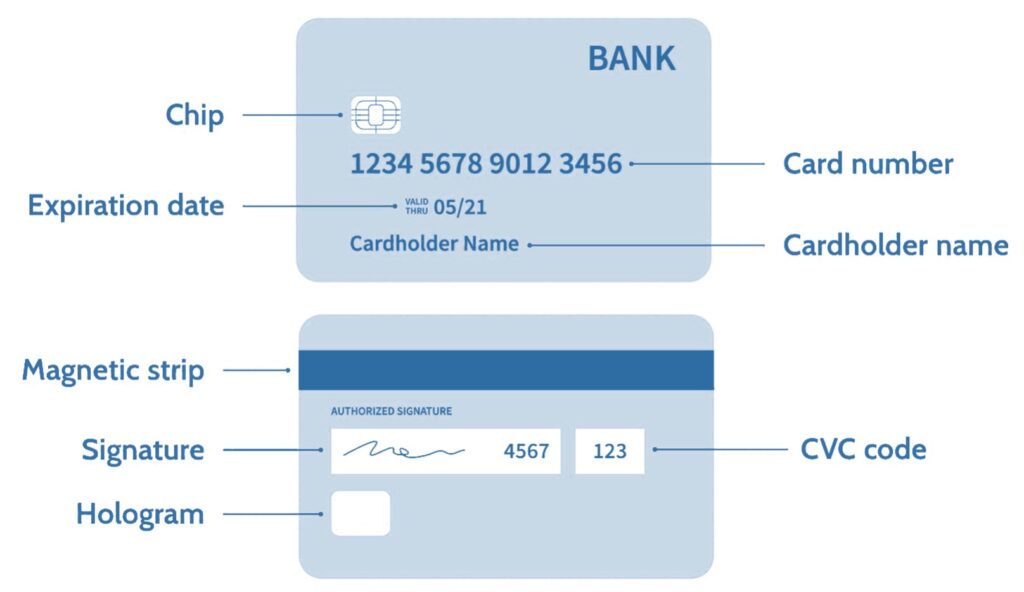
The Core Anatomy of a Magstripe Card: A Blueprint of Data
To truly grasp the essence of a magstripe card, one must peel back its layers, both physical and technological, to reveal how it functions. Far from a simple piece of plastic, it is an engineered product designed for specific data storage and retrieval purposes.
The Magnetic Stripe: Data’s Home
The defining feature of a magstripe card is, unequivocally, its magnetic stripe. Typically a prominent black or brown band running across the back of the card, this stripe is not merely decorative. It is composed of tiny magnetic particles of iron-based material, often iron oxide, embedded in a resin. These particles can be magnetized in specific patterns, acting as miniature magnets that store binary data. This technology is analogous to that used in old audio or video cassette tapes, where sound or images were recorded as magnetic patterns.
The magnetic stripe is usually divided into three tracks, each designed to store different types of information and having varying data capacities and recording densities:
-
Track 1 (IATA): This track is read-only and can store up to 79 alphanumeric characters. It typically holds the cardholder’s full name, card number, expiration date, and service code. It’s often the track used by credit and debit cards and has a higher data density, allowing for more detailed information.
-
Track 2 (ABA): Also read-only, this track can store up to 40 numeric characters. It contains the primary account number (PAN), expiration date, and service code, often with a discretionary data field. This track is widely used for financial transactions and is often the primary track read by point-of-sale (POS) terminals.
-
Track 3 (ISO/ABA): This track is designed for read/write capabilities, meaning data can be both read from and written to it. It can store up to 107 numeric characters and was originally intended for more dynamic data, such as transaction counters or loyalty points. However, due to its read/write nature and security implications, it is less commonly used in modern financial applications compared to tracks 1 and 2.
The magnetic material itself comes in two main coercivity levels:
-
High-coercivity (HiCo): These stripes are more resistant to demagnetization from external magnetic fields and are therefore more durable for long-term use. They are commonly found on credit cards, ATM cards, and employee ID badges where data integrity over time is crucial. HiCo stripes are typically black.
-
Low-coercivity (LoCo): These stripes are easier to magnetize and demagnetize. While less durable, they are also less expensive to produce and are often used for applications with shorter lifespans or where cards are frequently re-encoded, such as hotel key cards or gift cards. LoCo stripes are typically brown.
Card Body and Other Components
Beyond the magnetic stripe, the card itself is a carefully constructed piece of engineering. The standard card dimensions (ID-1 size, 85.60 × 53.98 mm) are governed by ISO/IEC 7810. The primary material is typically PVC (polyvinyl chloride) or sometimes composite materials, chosen for their durability, flexibility, and cost-effectiveness. The card body provides a stable platform for the magnetic stripe and other elements like the embossed or printed card number, the cardholder’s name, the issuing institution’s logo, and security features such as holograms or signature panels. While these elements are crucial for identification and visual security, they do not contribute to the electronic data storage or transmission that defines the magstripe card’s core functionality.
How Data is Encoded
The process of encoding data onto a magstripe involves sophisticated machinery that applies strong magnetic fields to areas of the stripe, altering the magnetic polarity of the embedded particles. This is done in a precise pattern, with each alteration representing a binary ‘0’ or ‘1’. When the card is swiped, a read head detects these magnetic variations, translating them back into the original digital data. This encoding process adheres to strict ISO standards (ISO/IEC 7811) to ensure global interoperability between cards and readers.
The Technological Mechanism: Swiping into Action
The apparent simplicity of a card swipe belies the underlying technological process that enables the transfer and interpretation of data. Understanding this mechanism is key to appreciating both the innovation and the limitations of magstripe technology.
The Read Head and Magnetic Fields
When a magstripe card is swiped through a card reader, the magnetic stripe passes over a read head. This read head contains a small coil of wire wrapped around a magnetic core. As the magnetized particles on the stripe move past the read head, they induce a fluctuating magnetic field. According to Faraday’s Law of Induction, this changing magnetic field generates a corresponding electrical current in the coil. This electrical current is an analog signal that mirrors the magnetic patterns encoded on the stripe. The speed and consistency of the swipe are important for accurate reading, as variations can distort the signal.
Data Transmission and Verification
Once the analog signal is generated by the read head, it is then amplified and converted into a digital signal by the card reader’s internal circuitry. This digital data stream, representing the information from tracks 1 and 2 (and potentially 3), is then transmitted to a payment processor or host system. For a credit or debit card transaction, this typically involves sending the card number, expiration date, and other service codes.
The payment processor then performs several crucial steps:
-
Authorization Request: The data is forwarded to the card network (e.g., Visa, Mastercard) and subsequently to the issuing bank (the bank that issued the card).
-
Verification: The issuing bank verifies the card’s validity, checks for sufficient funds or credit limit, and performs fraud screening based on internal algorithms and transaction history.
-
Authorization Response: The bank sends an authorization or decline message back through the card network to the POS terminal.
-
Transaction Completion: If authorized, the transaction is completed, and the cardholder receives confirmation.
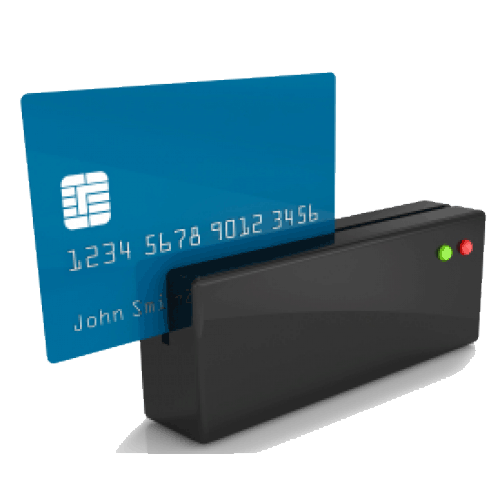
This entire process, from swipe to authorization, typically takes only a few seconds, a testament to the efficiency of modern telecommunication networks and backend processing systems.
Limitations of the Technology
Despite its widespread success, magstripe technology inherently possesses several limitations, particularly concerning security:
-
Static Data: The data on tracks 1 and 2 is static and does not change with each transaction. This makes it vulnerable to copying.
-
Skimming: Criminals can use “skimmers” – devices often attached to legitimate card readers – to illegally copy the magnetic stripe data during a transaction. Once copied, this data can be encoded onto a blank card, creating a counterfeit card that is virtually indistinguishable from the original to a magstripe reader.
-
Lack of Strong Authentication: Magstripe transactions primarily rely on a signature or, less commonly, a PIN, which can be less secure than cryptographic methods.
-
Vulnerability to Wear and Tear: The magnetic stripe can degrade over time due to repeated use, exposure to strong magnetic fields, or physical damage, leading to read errors.
Magstripe Cards in the Digital Age: A Legacy Technology
The limitations of magstripe technology, particularly its security vulnerabilities, spurred a global migration towards more advanced payment solutions. Yet, magstripe cards persist in various capacities, reflecting their historical dominance and the inertia of technological adoption.
Evolution to EMV Chips and Contactless Payments
The most significant evolution beyond the magstripe is the EMV (Europay, MasterCard, and Visa) chip card, often referred to as a “chip card” or “smart card.” Introduced in the mid-1990s and widely adopted in the 2000s and 2010s, EMV technology addresses the core security flaw of magstripes by employing dynamic data.
-
Dynamic Data: Each EMV transaction generates a unique, cryptographically encrypted transaction code. Even if a chip card’s data is stolen, this unique code cannot be reused for subsequent transactions, making counterfeiting significantly more difficult.
-
Enhanced Authentication: EMV transactions often require a PIN (Chip and PIN) or signature (Chip and Signature) verified by the chip itself, providing stronger authentication.
-
Contactless Technology: Building on EMV, NFC (Near Field Communication) technology allows for “tap-to-pay” transactions. The chip communicates wirelessly with the reader, offering even greater convenience while maintaining the same strong security protocols as contact chip payments.
The global push for EMV adoption has largely been driven by liability shifts, where the party least secure (e.g., a merchant not equipped for chip cards) bears the financial responsibility for fraud. This incentivized merchants and card issuers to upgrade their infrastructure, gradually reducing reliance on the magstripe.
Security Vulnerabilities and Fraud Risks
The static nature of magstripe data has made it a prime target for fraudsters. Skimming, where devices secretly capture card data, and subsequent cloning of cards remain significant threats in environments that still rely on magstripe readers. Data breaches at retailers, where magstripe data stored in databases can be compromised, also pose a substantial risk. Once the card number, expiration date, and service code are obtained, fraudsters can use them for online transactions (card-not-present fraud) or create physical counterfeit cards. This inherent vulnerability contrasts sharply with the layered security provided by EMV chips, which are designed to resist such mass replication.
Continued Relevance and Niche Applications
Despite the shift, magstripe cards and readers are not entirely obsolete. They maintain relevance in several niche applications and regions:
-
Legacy Systems: Many older POS terminals, especially in smaller businesses or certain industries, may still only support magstripe reading. Upgrading all systems globally is a massive undertaking, so magstripes serve as a fallback.
-
Gift Cards and Loyalty Programs: For applications where security isn’t paramount, such as closed-loop gift cards, membership cards, or loyalty programs, the cost-effectiveness of magstripe technology makes it an attractive option.
-
Access Control: Magstripe cards are widely used for building access, hotel room keys, and time-and-attendance systems. In these contexts, the data stored is often less sensitive, and the convenience and cost of magstripe technology are advantageous.
-
Backup in Hybrid Cards: Many modern payment cards are hybrid, featuring both an EMV chip and a magnetic stripe. The magstripe serves as a fallback mechanism for situations where a chip reader is unavailable or malfunctioning, ensuring universal acceptance.
The Future Landscape: Phasing Out or Adapting?
The trajectory of magstripe technology in the payment and access control landscape is one of gradual obsolescence in high-security, high-value applications, while retaining a foothold in less critical areas.
Global Trends in Payment Technology Adoption
Different regions of the world have adopted EMV and contactless technologies at varying paces. Europe and Canada were early adopters, largely eliminating magstripe-only terminals years ago. The United States, while a major player, was relatively late to the EMV migration, leading to a period where both technologies coexisted extensively. Developing nations are often leapfrogging directly to mobile and contactless payments, sometimes bypassing widespread EMV chip card infrastructure. Regulatory mandates and industry-driven liability shifts continue to accelerate the move away from magstripe reliance for financial transactions globally. The trend is clear: for payment processing, the magstripe is being systematically phased out.
Innovations Beyond the Stripe
The march of innovation continues far beyond the magnetic stripe. Biometric authentication (fingerprint, facial recognition), tokenization (replacing sensitive card data with unique, non-sensitive tokens), and advanced encryption techniques are becoming standard in digital payment ecosystems. Mobile payment solutions like Apple Pay, Google Pay, and various proprietary apps leverage NFC and secure element technology within smartphones, effectively turning a mobile device into a highly secure, convenient payment instrument. These innovations offer not only enhanced security but also superior user experience, further marginalizing the need for a physical magstripe.

The Interplay of Old and New Technologies
While the magstripe card’s dominance has waned, its legacy is undeniably etched into the fabric of modern payment systems. The very concept of a standardized, portable data carrier for identity and financial transactions owes much to the magstripe. Today, hybrid cards symbolize the transition, offering backward compatibility while pushing forward with enhanced security. The interplay between old and new technologies often involves designing systems that can gracefully handle both, ensuring that as new standards emerge, a bridge exists for existing infrastructure and user habits. Ultimately, the story of the magstripe card is a powerful example of how technology evolves: an ingenious solution for its time, eventually superseded by innovations that address its limitations, yet leaving an indelible mark on the technological journey. Its eventual retirement from mainstream financial use is not a failure, but rather a natural progression towards more secure, efficient, and user-friendly digital experiences.
aViewFromTheCave is a participant in the Amazon Services LLC Associates Program, an affiliate advertising program designed to provide a means for sites to earn advertising fees by advertising and linking to Amazon.com. Amazon, the Amazon logo, AmazonSupply, and the AmazonSupply logo are trademarks of Amazon.com, Inc. or its affiliates. As an Amazon Associate we earn affiliate commissions from qualifying purchases.