
In the vast and often complex landscape of enterprise software, JBoss stands as a name synonymous with robust, open-source middleware solutions for building, deploying, and integrating applications. While often colloquially referred to as a single entity, “JBoss” is, in fact, a broad ecosystem of products and technologies, predominantly under the stewardship of Red Hat. For developers, architects, and IT professionals, understanding JBoss is crucial to navigating the world of Java Enterprise Edition (Java EE, now Jakarta EE) applications, microservices, and modern cloud-native deployments. This article delves into the origins, key components, benefits, and contemporary relevance of JBoss, demystifying its role in empowering enterprise IT.
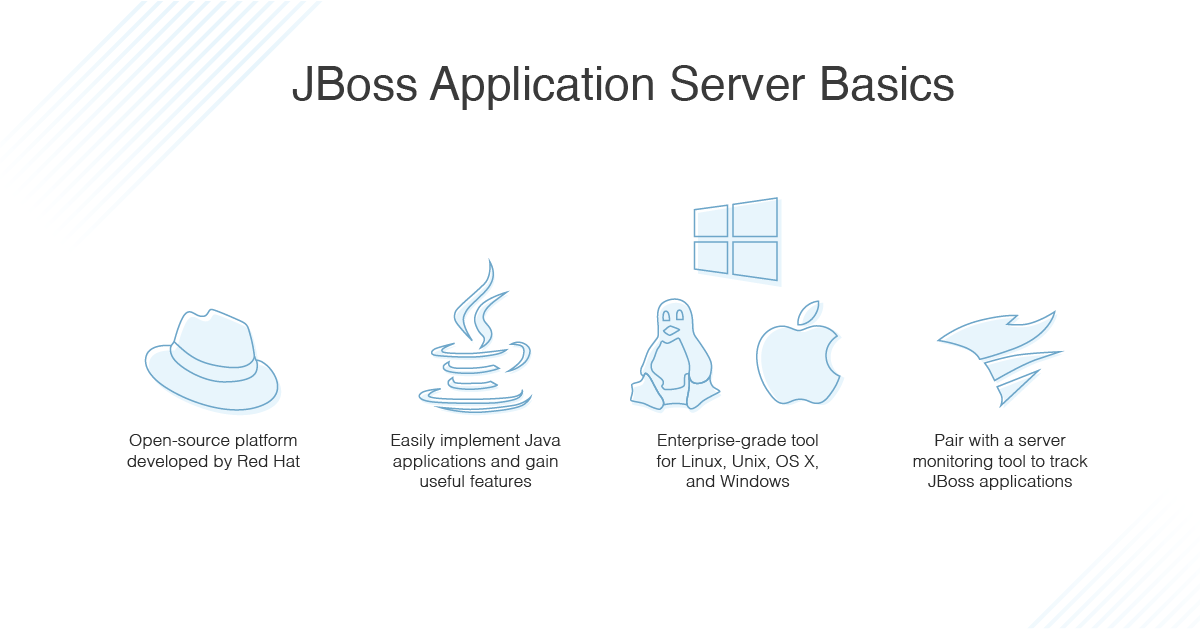
Unpacking the JBoss Ecosystem: More Than Just an Application Server
To truly grasp “what is JBoss,” one must journey back to its roots and trace its evolution from a pioneering open-source project to a comprehensive suite of enterprise-grade tools.
The Origins: JBoss AS and Java EE
The story of JBoss began in 1999 with the launch of the JBoss application server, an open-source alternative to commercial Java EE application servers. At its core, the JBoss Application Server (JBoss AS) aimed to provide a runtime environment for Java EE applications, enabling developers to deploy enterprise JavaBeans (EJBs), servlets, JavaServer Pages (JSPs), and other Java EE components. Its open-source nature quickly garnered a significant following, offering flexibility and cost-effectiveness that proprietary solutions couldn’t match. It provided essential services like transaction management, security, connectivity to databases, and remote access, becoming a cornerstone for many mission-critical Java applications. This initial success laid the groundwork for a much broader initiative.
Red Hat’s Influence: From Open Source Project to Enterprise Powerhouse
In 2006, Red Hat, a global leader in open-source solutions, acquired JBoss Inc., marking a pivotal moment in the ecosystem’s trajectory. This acquisition transformed JBoss from a collection of community-driven projects into a commercially supported, enterprise-grade product line. Under Red Hat, the JBoss Application Server evolved into the highly stable and certified JBoss Enterprise Application Platform (JBoss EAP), while the community project continued as WildFly. Red Hat’s commitment to open source, coupled with its robust support and certification processes, propelled JBoss into the forefront of enterprise middleware, offering businesses the best of both worlds: the innovation of open source with the reliability of a commercial vendor. Red Hat’s stewardship ensured long-term viability, regular updates, security patches, and professional services, which are critical for enterprise adoption.
JBoss Middleware: A Suite of Enterprise Solutions
Today, the term “JBoss” most accurately refers to Red Hat JBoss Middleware, a comprehensive portfolio of integrated software products designed to build, automate, integrate, and manage complex business processes and applications. This suite goes far beyond just an application server, encompassing tools for integration, messaging, data management, business process management, and more. It represents a strategic collection of components that can be used independently or together to construct sophisticated enterprise architectures, supporting everything from traditional monolithic applications to modern microservices and serverless functions deployed in hybrid cloud environments. This expanded vision of JBoss empowers organizations to accelerate digital transformation and respond more rapidly to market demands.
Key Components of the JBoss/Red Hat Middleware Stack
The richness of the JBoss ecosystem lies in its diverse set of specialized products, each designed to address specific enterprise IT challenges. Understanding these components is essential for leveraging the full potential of JBoss.
JBoss Enterprise Application Platform (JBoss EAP) and WildFly
At the heart of the JBoss offering remains the application server. JBoss EAP is Red Hat’s flagship, commercially supported, and Jakarta EE (formerly Java EE) certified application server. It’s optimized for performance, stability, and scalability, providing a secure and reliable platform for developing and deploying enterprise Java applications. Its management console and CLI offer powerful administrative capabilities. WildFly is the upstream open-source community project from which JBoss EAP is derived. It acts as an innovation hub, introducing new features and technologies that are later stabilized and incorporated into JBoss EAP. Developers often use WildFly for rapid prototyping and non-production environments, while JBoss EAP is the preferred choice for mission-critical deployments due to its extensive testing, long-term support, and certifications.
JBoss Fuse: Enterprise Integration and API Management
JBoss Fuse (now known as Red Hat Fuse) is a lightweight, flexible, and powerful integration platform. Built on Apache Karaf and Apache Camel, it enables businesses to connect disparate applications, services, and data sources, whether they reside on-premise, in the cloud, or span hybrid environments. Fuse supports a wide array of integration patterns, protocols, and data formats, making it ideal for creating complex integration flows, exposing services as APIs, and building microservices-based architectures. It also offers features for API management, ensuring secure and governed access to integrated services.
JBoss AMQ: Messaging for Distributed Systems
JBoss AMQ (now Red Hat AMQ) provides a high-performance, open-source messaging platform based on Apache ActiveMQ Artemis. It facilitates asynchronous communication between applications, ensuring reliable message delivery even in distributed and high-load scenarios. AMQ supports various messaging patterns, including point-to-point and publish-subscribe, and is critical for building decoupled, resilient architectures. It’s often used in conjunction with Fuse for robust enterprise integration and for enabling event-driven microservices.
JBoss Data Grid: In-Memory Data Management
JBoss Data Grid (now Red Hat Data Grid) is an in-memory data store for fast access to frequently used application data. Based on the open-source Infinispan project, it provides a distributed cache that can significantly improve application performance by reducing the need for repeated database queries. It supports various caching strategies, offers high availability, and can scale horizontally to handle massive amounts of data. Data Grid is particularly valuable for applications requiring low-latency data access, such as real-time analytics, e-commerce platforms, and financial trading systems.
JBoss BPM Suite / Red Hat Process Automation Manager: Business Process Management
JBoss BPM Suite (now Red Hat Process Automation Manager) is a comprehensive platform for developing, deploying, and monitoring business processes and complex event processing. It allows organizations to model, automate, and optimize their business operations using standards-based notations like BPMN2. It includes tools for process design, simulation, monitoring, and analysis, empowering businesses to achieve greater operational efficiency and agility. This suite helps bridge the gap between business analysts and developers, ensuring that technical implementations align with business objectives.
JBoss BRMS / Red Hat Decision Manager: Business Rules Management
JBoss BRMS (now Red Hat Decision Manager) focuses on externalizing business logic from application code, enabling business users to manage and change business rules without requiring developer intervention. Based on the Drools rule engine, it provides a powerful environment for defining, executing, and managing complex business rules, policies, and decisions. This separation of concerns improves agility, reduces development cycles, and ensures consistency in applying business logic across various applications. Decision Manager works hand-in-hand with Process Automation Manager to create intelligent and adaptive applications.
Why JBoss Matters: Benefits for Developers and Enterprises

The continued relevance and widespread adoption of JBoss technologies stem from several compelling advantages that benefit both the development community and the enterprises that deploy these solutions.
Open Source Advantage and Community Support
Being deeply rooted in open source, JBoss technologies offer the benefits of community-driven innovation, transparency, and flexibility. Developers can access the source code, contribute to projects, and leverage a vast global community for support, knowledge sharing, and problem-solving. This collaborative environment fosters rapid development and ensures that the platforms evolve to meet emerging industry standards and developer needs. For enterprises, the open-source model often translates to lower initial licensing costs and avoidance of vendor lock-in.
Robustness, Scalability, and Performance
Red Hat JBoss Middleware is engineered for enterprise-grade demands. Products like JBoss EAP are built for high availability, fault tolerance, and exceptional performance, capable of handling large transaction volumes and user loads. The modular architecture of many JBoss components allows for horizontal scaling, enabling organizations to expand their infrastructure seamlessly as their needs grow. This reliability is crucial for mission-critical applications where downtime is unacceptable.
Comprehensive Solution for Enterprise Applications
Unlike point solutions, the JBoss middleware stack offers a holistic approach to enterprise application development and integration. From application servers and messaging to data grids and process automation, the integrated portfolio provides a cohesive ecosystem. This allows organizations to build end-to-end solutions with interoperable components, streamlining development, reducing complexity, and ensuring consistency across their IT landscape.
Hybrid Cloud Ready and Containerization Support
JBoss technologies are designed with modern deployment paradigms in mind. They are optimized for container environments like Docker and Kubernetes, making them ideal for deploying applications in hybrid cloud setups. Red Hat’s strong focus on OpenShift, its enterprise Kubernetes platform, ensures seamless integration and operational efficiency for JBoss applications running in cloud-native environments. This readiness for containerization and cloud deployment positions JBoss as a key enabler for digital transformation strategies.
JBoss in the Modern Development Landscape
The evolution of JBoss hasn’t stopped; it continues to adapt to and influence contemporary software development trends, particularly in areas like microservices and DevOps.
Microservices and Cloud-Native Architectures
While JBoss EAP traditionally served monolithic applications, the broader JBoss middleware portfolio is highly conducive to microservices and cloud-native architectures. JBoss Fuse (Red Hat Fuse) is a prime example, providing a lightweight runtime for deploying individual integration services. JBoss AMQ (Red Hat AMQ) supports asynchronous communication patterns essential for loosely coupled microservices. Red Hat’s strong emphasis on Kubernetes and OpenShift provides the ideal orchestration layer for deploying and managing JBoss-based microservices, allowing developers to break down large applications into smaller, manageable, and independently deployable units.
Integration with DevOps Practices
JBoss technologies inherently support DevOps methodologies. Their open-source nature, command-line interfaces, and API-driven management capabilities facilitate automation of build, test, and deployment processes. Integration with CI/CD pipelines is straightforward, enabling rapid iteration and continuous delivery. Red Hat’s strong tooling and ecosystem surrounding JBoss products also provide monitoring, logging, and management capabilities that are vital for operational efficiency in a DevOps culture. This integration helps teams deliver high-quality software faster and more reliably.
Security and Compliance Considerations
For enterprise applications, security is paramount. Red Hat invests heavily in ensuring the security of its JBoss middleware products, regularly providing patches and updates to address vulnerabilities. JBoss EAP, for instance, offers robust security features, including authentication, authorization, encryption, and integration with enterprise identity management systems. Compliance with industry standards and certifications is also a key focus, allowing organizations in regulated industries to confidently deploy JBoss solutions.
Getting Started with JBoss Technologies
For developers and organizations new to the ecosystem, getting started with JBoss can seem daunting given its breadth. However, numerous resources make the learning curve manageable.
Choosing the Right JBoss Product
The first step is to identify the specific need. Do you require a robust application server for Java EE? JBoss EAP or WildFly is the answer. Do you need to integrate disparate systems? JBoss Fuse is your tool. For messaging, look to JBoss AMQ, and for business process automation, Red Hat Process Automation Manager. Understanding your project’s requirements will guide you to the appropriate component within the JBoss family.
Installation and Configuration Basics
Each JBoss product comes with detailed documentation for installation and configuration. Most follow standard Java application deployment practices. For WildFly and JBoss EAP, basic setup involves downloading the server, running a script, and deploying your WAR/EAR files. Tools like Maven and Gradle are commonly used for building and managing JBoss-based projects. Red Hat provides comprehensive guides and tutorials that walk users through initial setup and common use cases.

Community Resources and Official Documentation
The JBoss community is vibrant and active, offering forums, mailing lists, and open-source project pages where users can find help and contribute. For commercially supported products, Red Hat’s customer portal provides extensive documentation, knowledge base articles, and access to professional support. Tutorials, online courses, and certification programs are also available to help developers master JBoss technologies.
In conclusion, “JBoss” is far more than a simple application server; it represents a mature, powerful, and ever-evolving suite of open-source middleware technologies critical for modern enterprise IT. Under Red Hat’s guidance, it provides a comprehensive, reliable, and flexible foundation for building, integrating, and automating complex applications across diverse environments, from traditional data centers to cutting-edge hybrid clouds and microservices architectures. Its continued innovation ensures that JBoss remains a cornerstone technology for developers and enterprises seeking to leverage the power of open source to achieve their digital transformation goals.
aViewFromTheCave is a participant in the Amazon Services LLC Associates Program, an affiliate advertising program designed to provide a means for sites to earn advertising fees by advertising and linking to Amazon.com. Amazon, the Amazon logo, AmazonSupply, and the AmazonSupply logo are trademarks of Amazon.com, Inc. or its affiliates. As an Amazon Associate we earn affiliate commissions from qualifying purchases.