
The relationship between the modern pharmaceutical landscape and the human microbiome is one of the most critical considerations in contemporary healthcare. Antibiotics are life-saving tools designed to eradicate pathogenic bacteria, yet they lack the precision to distinguish between harmful invaders and the essential microbial community residing in your gut. As a result, the “collateral damage” often leads to digestive distress, ranging from mild bloating to severe, antibiotic-associated diarrhea. For the health-conscious individual looking to maintain systemic wellness while navigating a course of treatment, selecting the right probiotic is not just a health choice—it is a strategic investment in long-term bodily resilience.
The Mechanism of Disruption: Why Antibiotics Alter Your Internal Ecosystem
To understand why a probiotic is necessary during antibiotic therapy, one must first recognize how antibiotics function. Broad-spectrum antibiotics, while effective at clearing systemic infections, act like a forest fire in the gut. They neutralize the microbial diversity that keeps your immune system regulated, your mood stabilized, and your digestion efficient.
The Depletion of Microbial Diversity
When you introduce an antibiotic, your gut microbiome loses a significant portion of its “good” bacteria. This creates a vacuum. Opportunistic pathogens, such as Clostridioides difficile, thrive in environments where competition for resources has been eliminated. This is why many people experience secondary infections or persistent gut inflammation following a standard antibiotic regimen.
The Window of Opportunity
The primary goal of taking a probiotic alongside antibiotics is to maintain “colonization resistance.” By introducing exogenous beneficial bacteria, you provide a buffer that prevents harmful bacteria from taking hold. However, timing is everything. If you take your probiotic at the same time as your medication, the antibiotic may simply kill the probiotic bacteria before they have a chance to colonize. The clinical gold standard is to space your doses at least two to three hours apart, ensuring that the probiotic has the best possible chance to survive and support your gut integrity.
Identifying High-Quality Probiotic Strains for Antibiotic Recovery
Not all probiotics are created equal. When selecting a supplement to mitigate the effects of antibiotics, you must look for specific strains that have demonstrated clinical efficacy in gastrointestinal protection. Generic “multi-strain” formulas may contain high colony-forming unit (CFU) counts, but without the right genetic markers, they may offer little protection.
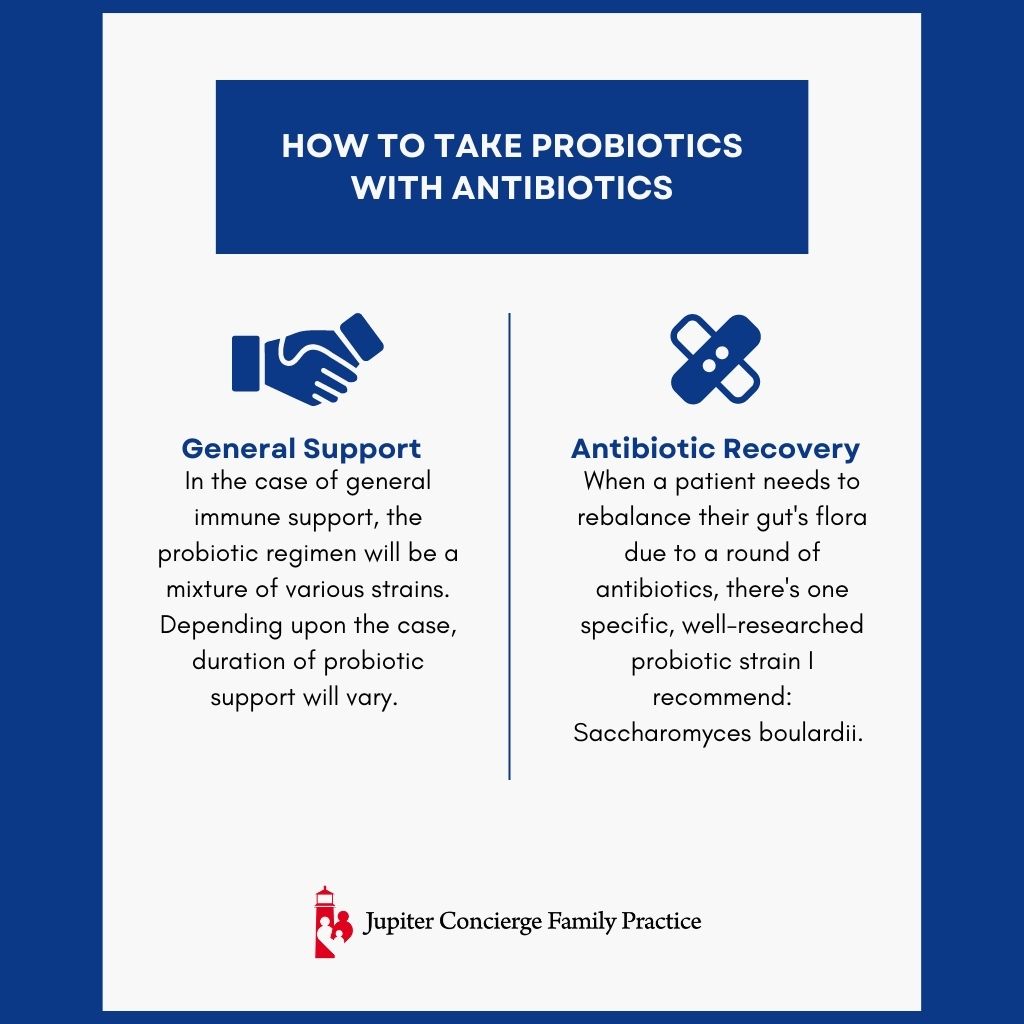
Saccharomyces boulardii: The Yeast-Based Protector
Perhaps the most robust choice for those on antibiotics is Saccharomyces boulardii. Unlike most probiotics, which are bacterial, S. boulardii is a beneficial yeast. Because it is a fungus, it is inherently resistant to the antibiotics that would typically destroy a bacterial probiotic. Studies have consistently shown that S. boulardii is highly effective at reducing the risk of antibiotic-associated diarrhea. Its unique ability to survive the harsh environment of the gut while antibiotics are present makes it the top candidate for concurrent supplementation.
The Lactobacillus and Bifidobacterium Powerhouse
If you prefer a bacterial probiotic, look for formulations containing Lactobacillus rhamnosus GG (LGG) and Bifidobacterium lactis. L. rhamnosus GG has been extensively studied for its ability to adhere to the intestinal lining, creating a physical barrier against pathogen colonization. Bifidobacterium species are essential for the production of short-chain fatty acids, which fuel the cells of the colon and support a healthy inflammatory response. A combined formula featuring these two genera provides a multi-pronged approach to restoring balance once the antibiotic course is finished.
Strategic Selection Criteria: Quality Over Quantity

When walking down the supplement aisle, the number of “billions of CFUs” can be misleading. A massive CFU count does not guarantee survival through the stomach’s acidic environment, nor does it guarantee the stability of the product on the shelf. As a consumer, you should focus on criteria that ensure potency and safety.
Delivery Systems and Survivability
The stomach is a hostile environment with a low pH designed to break down organic matter. If your probiotic does not utilize an advanced delivery system, the majority of the bacteria may die before they ever reach the small intestine. Look for brands that employ delayed-release capsules or enteric coating. These technologies ensure that the capsule survives the trip through the stomach and dissolves only once it enters the intestines, where the probiotics are needed most.
Third-Party Testing and Transparency
The supplement industry is loosely regulated, which makes third-party verification essential. Look for products that feature a “USP Verified” or “NSF Certified” seal. These certifications ensure that the ingredients listed on the label are actually present in the capsule and that the product is free from heavy metals or contaminants. Furthermore, prioritize brands that clearly state the specific strain—not just the species—on the label. For example, knowing you are getting Lactobacillus rhamnosus GG is far more valuable than simply seeing “Lactobacillus” printed on the bottle.
Optimizing the Recovery Phase: Beyond the Supplement
Probiotics are only one part of the equation. To truly recover from the microbial disruption caused by antibiotics, you must view your gut health through the lens of long-term sustainability. The probiotic is the “seed,” but your diet acts as the “fertilizer.”
The Role of Prebiotics
Prebiotics are the non-digestible fibers that feed your good bacteria. Without a steady supply of prebiotics, even the most expensive probiotic will struggle to survive and proliferate. Incorporating foods rich in inulin, such as chicory root, garlic, onions, leeks, and asparagus, can significantly boost the effectiveness of your probiotic regimen. If your gut is sensitive, introduce these foods gradually to avoid excessive gas or bloating.
Fermented Foods as Daily Support
While supplements offer high concentrations of specific strains, traditional fermented foods offer a diverse “living” environment for your gut. After your antibiotic course is complete, transition from pure supplement reliance to a diet rich in sauerkraut, kimchi, kefir, and kombucha. These foods provide a wide array of microbial species that can help diversify your microbiome far more effectively than any single-strain pill.
Consistency and Duration
Many people stop taking their probiotics the moment they finish their antibiotics. This is a mistake. The period immediately following the final dose of antibiotics is when your gut is most vulnerable. Continue taking your chosen probiotic for at least two to four weeks after completing your antibiotic prescription. This extra window of time allows your microbial population to stabilize, ensuring that the beneficial bacteria have established a firm footing in the intestinal tract.

Conclusion: Empowering Your Gut Through Informed Choice
Navigating the intersection of antibiotics and probiotics requires a blend of caution and proactive care. By choosing a probiotic that is resistant to antibiotic interference, such as Saccharomyces boulardii, or one featuring highly researched strains like L. rhamnosus GG, you are taking a definitive step toward safeguarding your health.
Remember that a probiotic is not a “magic bullet” that permits you to ignore your overall lifestyle. It is a support tool. By combining strategic supplementation with a prebiotic-rich diet and a commitment to long-term gut diversity, you create a foundation for resilience. Whether you are dealing with a routine infection or a more complex health challenge, the goal remains the same: protecting the delicate microbial ecosystem that governs your digestion, immunity, and overall vitality. Stay informed, read labels with a critical eye, and prioritize the long-term integrity of your internal microbiome throughout the duration of your recovery.
aViewFromTheCave is a participant in the Amazon Services LLC Associates Program, an affiliate advertising program designed to provide a means for sites to earn advertising fees by advertising and linking to Amazon.com. Amazon, the Amazon logo, AmazonSupply, and the AmazonSupply logo are trademarks of Amazon.com, Inc. or its affiliates. As an Amazon Associate we earn affiliate commissions from qualifying purchases.