
Navigating the landscape of college financing can often feel like deciphering a complex code, filled with acronyms, forms, and critical dates. Among the most important of these financial aid components is the Free Application for Federal Student Aid, commonly known as FAFSA. While most applicants are aware of a general deadline for submission, a lesser-understood but immensely powerful concept is the “priority deadline.” This isn’t just another date on the calendar; it’s a strategic checkpoint that can significantly impact the amount and type of financial assistance a student receives. Understanding and respecting the FAFSA priority deadline is a cornerstone of a successful financial aid strategy, potentially unlocking access to funds that are otherwise quickly depleted.
Unpacking the FAFSA Application Process
The journey to securing financial aid for higher education begins with the FAFSA. This comprehensive application collects detailed financial information from students and their families to determine their eligibility for various aid programs. Its role is foundational, serving as the gateway to a wide array of support designed to make college more affordable.
The Role of FAFSA in Student Aid
The FAFSA is much more than just a form; it’s the primary determinant of a student’s eligibility for federal financial aid. Upon submission, the information provided is used to calculate an Expected Family Contribution (EFC) – soon to be replaced by the Student Aid Index (SAI) – which colleges then use to assess a student’s financial need. This need calculation is crucial because it directly influences the types and amounts of aid a student may receive.
Federal aid available through the FAFSA includes:
-
Grants: These are funds that do not need to be repaid, such as the Pell Grant or Federal Supplemental Educational Opportunity Grant (FSEOG). They are typically awarded based on financial need.
-
Scholarships: While many scholarships are merit-based and separate from FAFSA, some institutional scholarships require FAFSA completion to determine financial need or overall aid eligibility.
-
Work-Study Programs: These allow students to earn money through part-time jobs on or off campus to help pay for educational expenses.
-
Federal Student Loans: These include Direct Subsidized Loans (interest is paid by the government while the student is in school), Direct Unsubsidized Loans (interest accrues immediately), and PLUS Loans for parents or graduate students. Unlike grants, these must be repaid.
Almost any student planning to attend college, regardless of their family’s income level, should complete the FAFSA. Many mistakenly believe they won’t qualify for aid, but even higher-income families may be eligible for unsubsidized federal loans or specific institutional aid programs.
Key FAFSA Deadlines Explained
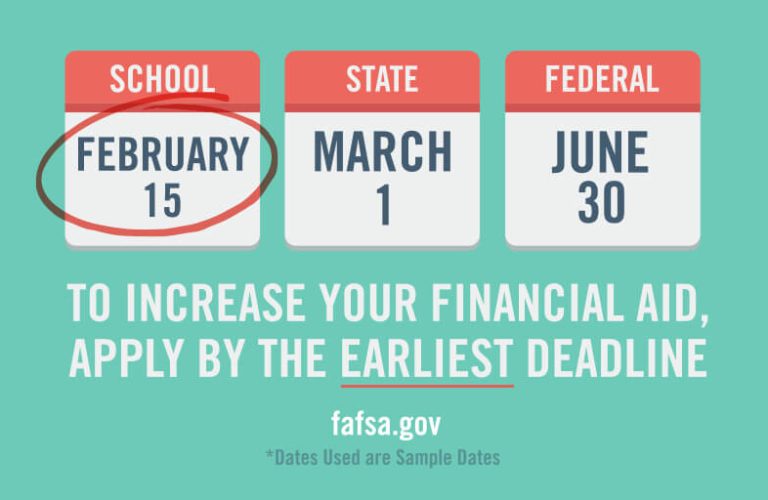
To maximize the chances of receiving aid, it’s essential to understand that there isn’t just one FAFSA deadline. Instead, there are typically three layers of deadlines, each with its own significance:
-
Federal Deadline: This is the absolute last date by which the FAFSA must be submitted to be considered for federal financial aid. The federal deadline for the upcoming academic year is usually in June, almost a full year after the FAFSA first becomes available. While it’s a critical cutoff, it’s often too late to qualify for many state and institutional aid programs.
-
State Deadline: Many states offer their own financial aid programs for residents. These state-specific grants and scholarships often have their own deadlines, which can vary significantly from state to state and are frequently much earlier than the federal deadline. Missing a state deadline means forfeiting eligibility for state-funded aid.
-
College/Institutional Deadline: Each college or university to which a student applies will have its own FAFSA submission deadline. These dates are crucial because they dictate eligibility for the institution’s own grants, scholarships, and work-study programs. These deadlines can align with application deadlines or be slightly later.
Amidst these varied dates, the “priority deadline” emerges as the most strategic and impactful. It’s a specific institutional or state deadline that, while not a hard cutoff for all aid, acts as the golden ticket for the most desirable and limited forms of financial assistance.
Decoding the FAFSA Priority Deadline
Understanding what a priority deadline truly signifies is the linchpin of a financially astute approach to college admissions. It’s a date that, when met, can open doors to significant savings and opportunities that might otherwise remain closed.
What Exactly is a Priority Deadline?
A FAFSA priority deadline is the date by which a college or, less commonly, a state recommends submitting your FAFSA application to receive the fullest consideration for its limited pool of financial aid funds. It’s not necessarily a hard and fast rule that you cannot submit after this date, but rather a strong suggestion that submitting by then will place you in the best position to receive aid.
Think of it like a popular concert: tickets are available until they sell out. The priority deadline is akin to being in the front of the line for those tickets. While others might get tickets later, those who queue up early are guaranteed the best selection and availability. For financial aid, this means priority consideration for grants, institutional scholarships, and other “gift aid” that doesn’t need to be repaid. Missing it doesn’t mean you get no aid, but it significantly reduces your chances of getting the best aid.
Why the Priority Deadline Matters Most
The emphasis on meeting the priority deadline stems from several critical factors that directly impact a student’s financial aid package:
-
First-Come, First-Served Principle: Many colleges and states operate on a “first-come, first-served” basis for distributing certain types of financial aid, particularly those with finite budgets. Grants and institutional scholarships are prime examples. Students who submit their FAFSA early (by the priority deadline) are often reviewed and awarded aid before funds are exhausted. Late applicants may find that the most generous aid has already been allocated.
-
Need-Based Aid Prioritization: While the FAFSA helps determine financial need, institutions often use the priority deadline to identify and prioritize students with the highest demonstrated need for limited funds. An early submission ensures that your need is assessed while the maximum amount of aid is still available to address it.
-
Consideration for Merit-Based and Institutional Aid: Beyond federal aid, many colleges offer their own institutional scholarships and grants, which can be need-based, merit-based, or a combination of both. Meeting the FAFSA priority deadline ensures your application is complete and available for review when these institutional awards are being determined. Some schools might even link consideration for certain merit scholarships to an early FAFSA submission, wanting a full financial picture.
-
Access to State-Specific Aid: If a state has its own priority deadline, meeting it is essential for tapping into state-funded grants and programs, which can be very generous and often stack with federal and institutional aid. These funds are usually distributed quickly.
Who Sets These Deadlines?
The responsibility for setting FAFSA priority deadlines primarily rests with individual colleges and universities. Each institution tailors its deadline to align with its admissions cycle and financial aid awarding processes. For example, a university with an early action or early decision admissions option might have an earlier FAFSA priority deadline to ensure aid packages can be prepared alongside admission offers.
Additionally, some state higher education agencies may establish priority deadlines for their state-specific financial aid programs. It’s crucial for students to check both their prospective colleges’ financial aid websites and their state’s higher education department website to identify all relevant priority deadlines. Assuming all deadlines are the same across the board is a common and costly mistake.
The Tangible Benefits of Meeting the Priority Deadline
The strategic advantage of submitting your FAFSA by the priority deadline translates into concrete, positive outcomes that can significantly reduce the cost of higher education and alleviate financial burdens.
Maximizing Your Aid Package
The most compelling reason to meet the priority deadline is the potential to receive a more robust and favorable financial aid package.
-
Access to More Grant Money: Grants, which are “free money” that doesn’t need to be repaid, are often the first funds to be depleted. Submitting your FAFSA by the priority deadline significantly increases your chances of being awarded federal grants (like the Pell Grant, if eligible) and, crucially, institutional grants provided directly by the college. These can amount to thousands of dollars annually.
-
Higher Likelihood of Receiving Institutional Scholarships: Colleges often use FAFSA data to award their own institutional scholarships. While some are purely merit-based, many have a need-based component or require a complete financial profile to determine overall eligibility. Early submission ensures you’re in the pool for these competitive awards.
-
Better Work-Study Opportunities: Federal Work-Study programs are also limited. Students who submit their FAFSA by the priority deadline have a better chance of being allocated these funds, which provide part-time employment opportunities to help cover educational expenses.
-
More Favorable Aid Mix: By securing grants and scholarships early, students may find themselves needing to borrow less in federal loans, or at least be able to rely more heavily on subsidized loans (where interest doesn’t accrue while in school) rather than unsubsidized loans. This reduces overall debt and the cost of borrowing.
Reduced Financial Stress and Better Planning
Beyond simply getting more money, meeting the priority deadline offers substantial psychological and logistical benefits.

-
Early Notification of Aid: Submitting by the priority deadline generally means receiving your financial aid offer letter earlier. This allows you ample time to compare aid packages from different schools, understand the true “net price” of attendance, and make a well-informed decision about where to enroll without the pressure of a looming commitment deadline.
-
Time to Appeal Aid Decisions: Should your initial aid offer be insufficient or not reflect changed family circumstances, having an early offer provides time to appeal the decision. Financial aid offices are typically more responsive and have more flexibility to reconsider aid packages for students who applied early, as they still have funds available.
-
Opportunity to Plan for Remaining Costs: Knowing your aid package early enables you to accurately calculate your remaining out-of-pocket costs. This allows families to plan for tuition, fees, housing, books, and other expenses, whether through savings, payment plans, or private loans, well in advance of the semester start.
Avoiding Missed Opportunities
The flip side of the benefits is the cost of missing the priority deadline.
-
Funds Often Run Out: The most common consequence of missing a priority deadline is that the limited, “free money” aid (grants, scholarships) has already been distributed. Later applicants may only be offered federal student loans, which, while helpful, still need to be repaid.
-
Missing Out on Specific State or Institutional Programs: Many unique state-specific grants or college-specific scholarship programs are strictly tied to their respective priority deadlines. Missing these means permanently forfeiting eligibility for that specific funding source for the academic year.
-
Limited Negotiation Power: Without an early aid offer, students have less leverage to negotiate aid packages or to appeal effectively, as colleges have fewer funds remaining to reallocate.
Strategies for Navigating FAFSA Deadlines
Successfully maneuvering through the FAFSA process requires proactive planning, meticulous organization, and a clear understanding of the varied deadlines at play. It’s a strategic undertaking that can yield significant financial rewards.
Early Bird Gets the Worm (and the Aid):
The most crucial piece of advice for FAFSA is to submit it as soon as possible after it opens on October 1st each year. While the federal deadline is months away, and priority deadlines vary, completing the application early ensures you are at the front of the line for all potential aid.
-
Gather Required Documents in Advance: The FAFSA requires specific financial documentation. Before October 1st, gather your (and your parents’ if you’re a dependent student) tax returns (usually from two years prior, e.g., for the 2024-2025 FAFSA, you’d use 2022 tax information), W-2s, records of untaxed income, bank statements, and investment records. Having these documents ready makes the application process much smoother and faster.
-
Create an FSA ID: Both the student and one parent (if dependent) will need an FSA ID to access and sign the FAFSA electronically. Create these well in advance, as it can take a few days for the ID to become active.
-
Start Early, Even If Unsure: Don’t wait until you’ve decided on a college. You can list up to 10 schools on your FAFSA initially and add more later if needed. The goal is to get your information processed promptly.
Identifying Your Specific Deadlines
Given the multitude of deadlines, organization is key.
-
Check Each College’s Financial Aid Website: This is non-negotiable. Every college you’re considering will have its own specific FAFSA priority deadline listed on its financial aid or admissions website. Some may have different deadlines for early decision/action applicants versus regular decision.
-
Consult State Higher Education Agency Websites: Visit the website for your state’s department of higher education or student financial aid commission to learn about state-specific grants and their deadlines. These often have distinct priority dates.
-
Maintain a Centralized Tracker: Create a spreadsheet or use a calendar to meticulously record the federal, state, and, most importantly, the priority deadlines for every school and state aid program you’re interested in. Highlight the earliest dates to ensure you meet them all.
Common Pitfalls to Avoid
Even with the best intentions, certain missteps can jeopardize your financial aid prospects.
-
Procrastination: The biggest enemy of securing aid. Waiting until the last minute increases the risk of errors, technical glitches, or missing out on funds.
-
Errors on the Application: Rushing through the FAFSA can lead to mistakes, which can delay processing or result in an inaccurate aid offer. Review every section carefully before submitting.
-
Not Knowing All Relevant Deadlines: Assuming that meeting one deadline (e.g., the federal one) covers all bases is a critical error. Each layer of aid (federal, state, institutional) often has its own set of dates.
-
Assuming You Won’t Qualify: Many families believe they make too much money for aid. This is a myth. The FAFSA determines eligibility for a wide range of aid, including federal loans, and is often a prerequisite for many merit scholarships and institutional grants regardless of income level. Always apply.
What if You Miss a Priority Deadline?
Missing a priority deadline isn’t the end of your financial aid journey, but it does mean that the most coveted aid may be off the table.
-
Still Submit Your FAFSA: Absolutely still submit your FAFSA! You will remain eligible for federal student loans (Direct Subsidized and Unsubsidized) and potentially some remaining federal or institutional grant funds if they haven’t been fully depleted.
-
Contact Financial Aid Offices Directly: Reach out to the financial aid office at each school. Explain your situation and ask what aid might still be available for late applicants. They can often provide guidance on alternative funding sources or institutional payment plans.
-
Explore Other Avenues: Focus on external scholarships from private organizations, local community groups, and national foundations. These often have their own application processes and deadlines independent of the FAFSA.
Beyond the Deadline: What Happens Next?
Submitting your FAFSA, particularly by the priority deadline, is a monumental first step. However, the process doesn’t end there. Understanding the subsequent stages is vital for managing your financial aid effectively.
Understanding Your Student Aid Report (SAR)
Within a few days to a few weeks after submitting your FAFSA, you’ll receive a Student Aid Report (SAR). This document summarizes the information you reported on your FAFSA and provides your Expected Family Contribution (EFC) – soon to be replaced by the Student Aid Index (SAI) – which is an index number used to determine your eligibility for federal student aid.
-
Review for Accuracy: Carefully review every piece of information on your SAR. Even a minor error can affect your aid eligibility.
-
Correct Any Errors Promptly: If you find any mistakes, log back into your FAFSA online account and make the necessary corrections. Submitting corrections swiftly ensures your accurate information is sent to colleges without further delay.
Receiving Your Financial Aid Offer Letters
Once colleges have received your FAFSA information and determined your eligibility, they will send you a financial aid offer (or award) letter. These letters detail the specific types and amounts of aid they are offering you.
-
Compare Offers from Different Schools: It’s critical to compare aid offers side-by-side, considering the “net price” (cost of attendance minus grants and scholarships) rather than just the sticker price. A school with a higher sticker price might offer a more generous aid package, making it ultimately more affordable.
-
Understand the Breakdown of Aid: Differentiate between “gift aid” (grants and scholarships that don’t need to be repaid) and “self-help aid” (loans and work-study that do). Prioritize schools that offer more gift aid.
-
Respond to Offers: Most colleges require you to formally accept or decline the aid offered, often by a specific date, which usually coincides with the college decision deadline.
Appealing Aid Decisions
Life circumstances can change unexpectedly, or perhaps your financial aid offer doesn’t adequately reflect your family’s current financial situation. In such cases, you may have grounds to appeal your aid decision.
-
When to Appeal: Common reasons for appeal include a recent job loss or reduction in income, significant medical expenses not covered by insurance, death of a parent, or other unusual financial hardships.
-
How to Present Your Case: Contact the financial aid office at the college to understand their appeal process. You will typically need to write a letter explaining your circumstances and provide supporting documentation (e.g., layoff notices, medical bills). Being polite, persistent, and organized is key.
-
Timeliness Matters: While you can appeal later, doing so after an early FAFSA submission provides the financial aid office with more time and potentially more funds to consider your request.
Conclusion
The FAFSA priority deadline stands as a critical juncture in the pursuit of higher education funding. It is more than just a date; it is a strategic advantage that can dramatically enhance a student’s eligibility for the most coveted forms of financial assistance—grants, institutional scholarships, and work-study opportunities. By understanding its significance, preparing diligently, and acting promptly, students and their families can move from passively hoping for aid to actively securing the maximum possible support.
Missing this deadline often means missing out on free money that never needs to be repaid, potentially leading to greater reliance on loans and increased debt. Therefore, the takeaway is clear: don’t just aim to meet the FAFSA priority deadline; strive to beat it. Proactive engagement with the FAFSA process, armed with an awareness of all relevant deadlines, is an investment that pays dividends, significantly easing the financial burden of college and paving the way for a more secure educational future.
aViewFromTheCave is a participant in the Amazon Services LLC Associates Program, an affiliate advertising program designed to provide a means for sites to earn advertising fees by advertising and linking to Amazon.com. Amazon, the Amazon logo, AmazonSupply, and the AmazonSupply logo are trademarks of Amazon.com, Inc. or its affiliates. As an Amazon Associate we earn affiliate commissions from qualifying purchases.