
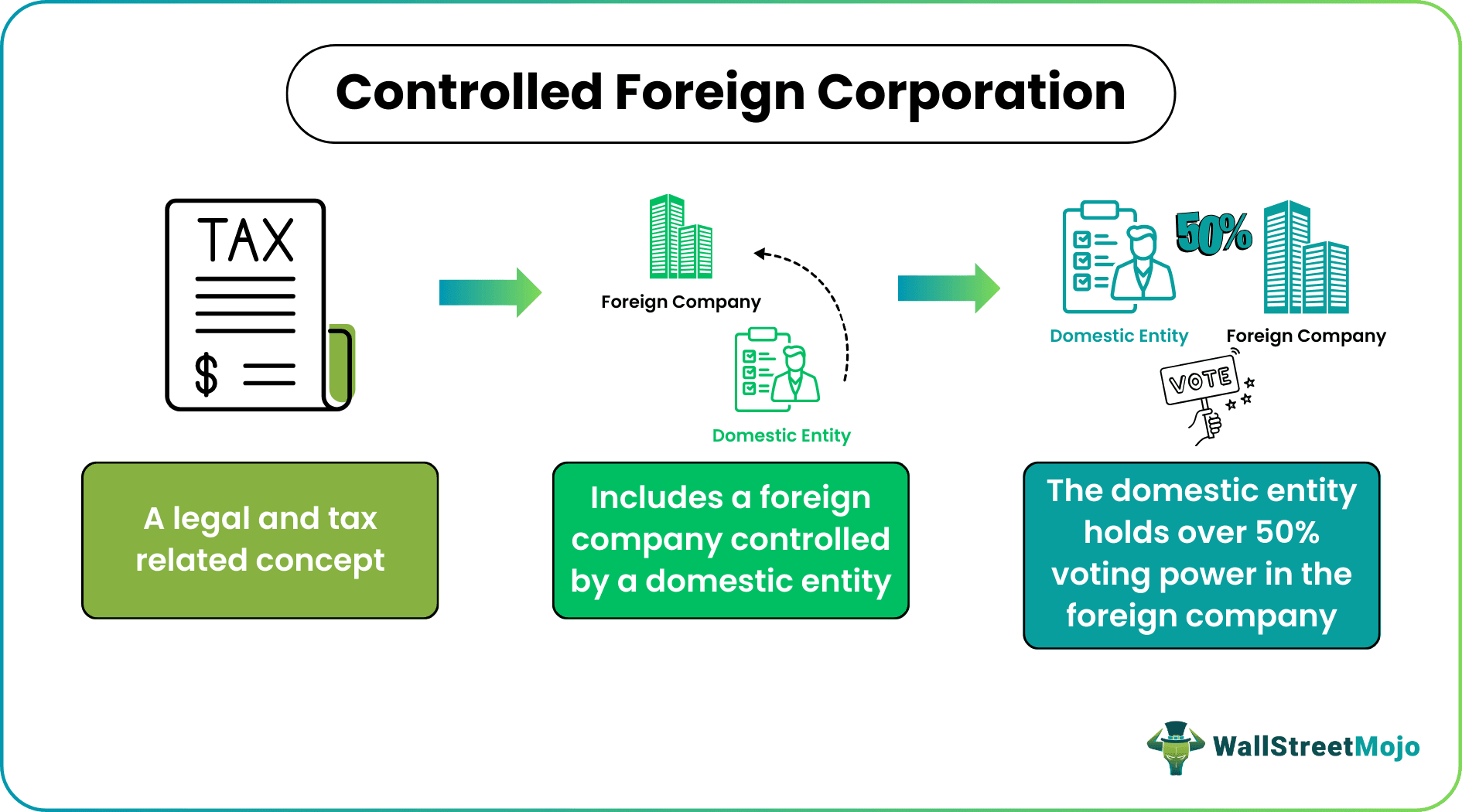
In the intricate world of international finance and taxation, the term “Controlled Foreign Corporation” (CFC) is a fundamental concept that frequently arises when businesses expand beyond their domestic borders. Far from being a mere accounting jargon, understanding what a CFC is, why it exists, and its implications is crucial for any entity engaging in cross-border operations, especially those with ties to the United States. At its core, a CFC is a foreign corporation in which U.S. shareholders hold a significant ownership stake. However, its definition and the complex web of regulations surrounding it are designed to address a critical issue: preventing the deferral or avoidance of U.S. taxes on income earned abroad. This concept forms a cornerstone of U.S. international tax policy, aimed at ensuring fairness and preventing companies from easily shifting profits to low-tax jurisdictions without immediate U.S. tax consequences.
The Genesis and Purpose of Controlled Foreign Corporations
The concept of a Controlled Foreign Corporation didn’t emerge in a vacuum; it was a direct response to the sophisticated tax planning strategies employed by multinational corporations. Historically, companies would establish foreign subsidiaries in low-tax jurisdictions, accumulating profits there without paying U.S. tax until those profits were repatriated (brought back to the U.S.). This deferral could last indefinitely, giving these companies a significant advantage. To combat this, Congress introduced the CFC rules in 1962, seeking to tax certain types of foreign income immediately, even if not distributed to U.S. shareholders.
Defining a CFC: The Core Criteria
For a foreign entity to be classified as a Controlled Foreign Corporation, it must meet specific criteria as defined by the Internal Revenue Code (IRC). These criteria revolve primarily around ownership:
-
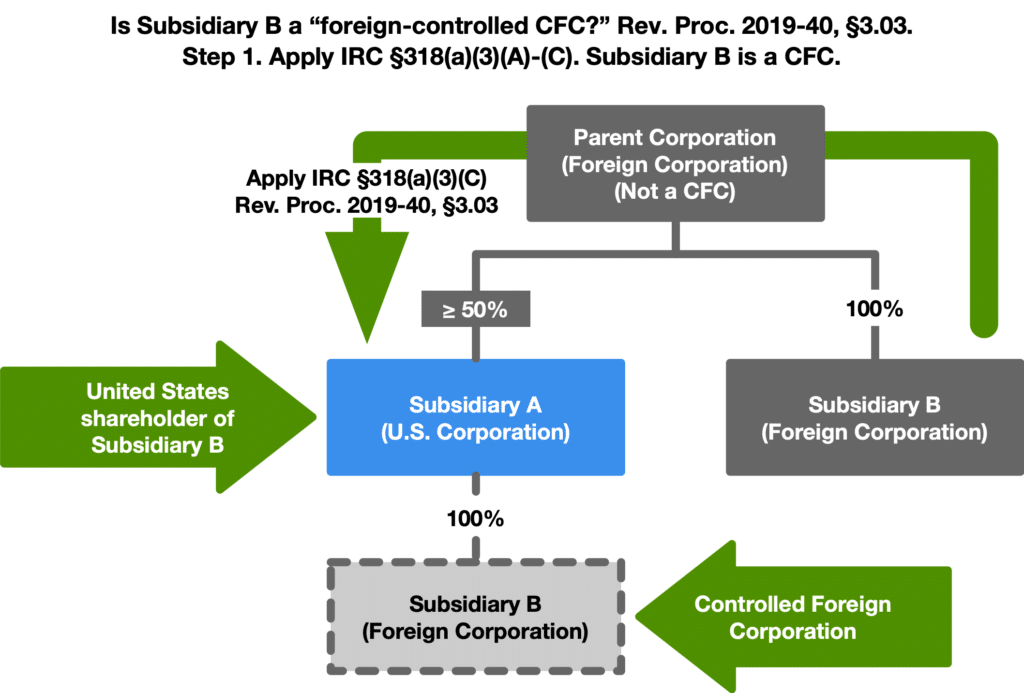
Ownership Test: A foreign corporation is generally considered a CFC if more than 50% of its total combined voting power or the total value of its stock is owned by “U.S. Shareholders” on any day during the foreign corporation’s taxable year. This threshold is critical and continuously monitored.
-
U.S. Shareholder Definition: A “U.S. Shareholder” for CFC purposes is not just any U.S. person who owns shares. Instead, it specifically refers to a U.S. person (individual, corporation, partnership, trust, or estate) who owns 10% or more of the total combined voting power of all classes of stock entitled to vote or 10% or more of the total value of shares of all classes of stock of the foreign corporation. This “10% or more” threshold is key to determining which U.S. owners trigger CFC status.
-
Foreign Corporation Definition: Simply put, a foreign corporation is any corporation that is not domestic (i.e., not created or organized in the U.S. or under the law of the U.S. or any state).
It’s important to note that constructive ownership rules often apply, meaning that stock owned indirectly through other entities or by family members can be attributed to a U.S. person when determining the 10% threshold and the overall 50% control test.
Why CFCs Exist: Preventing Tax Deferral and Evasion
The primary legislative intent behind CFC rules was to prevent U.S. taxpayers from using foreign corporations to indefinitely defer U.S. income tax on certain types of passive or easily movable income. Without CFC rules, a U.S. company could establish a subsidiary in a tax haven, funnel investment income, royalty payments, or sales profits through it, and avoid U.S. tax until the funds were brought back to the U.S., potentially never. This created an unfair advantage for multinational corporations and eroded the U.S. tax base. By treating certain income of a CFC as if it were immediately distributed to U.S. shareholders (even if it isn’t), the CFC regime acts as an anti-deferral mechanism, ensuring that “mobile” income doesn’t escape U.S. taxation simply by residing offshore.
Key Tax Implications and the Subpart F Income Regime
Once a foreign corporation is identified as a CFC, the immediate and most significant tax consequence revolves around its income. Not all income of a CFC is immediately taxable to U.S. shareholders, but specific categories, designed to be easily manipulated for tax avoidance, are. This is where the notorious “Subpart F” income regime comes into play, significantly influencing how U.S. multinationals structure their global operations.
Understanding Subpart F Income
Subpart F income is a specific category of income earned by a CFC that is deemed to be immediately taxable to its U.S. shareholders, regardless of whether that income has been actually distributed as a dividend. This “deemed distribution” prevents U.S. companies from deferring tax on passive or easily transferable income by parking it in a low-tax foreign subsidiary. Common examples of Subpart F income include:
-
Foreign Personal Holding Company Income (FPHCI): This is largely passive income, such as dividends, interest, royalties, rents, annuities, and gains from the sale of property that gives rise to such income. The rationale is that this type of income is highly mobile and can be easily shifted to a low-tax jurisdiction without significant economic activity there.
-
Foreign Base Company Sales Income (FBCSI): This arises when a CFC purchases property from, or sells property to, a related person (e.g., its U.S. parent) and the property is manufactured and sold for use outside the CFC’s country of incorporation. It targets income generated from buy-sell activities structured to shift profits.
-
Foreign Base Company Services Income (FBCSvI): This category includes income derived from performing services for or on behalf of a related person outside the country of the CFC’s incorporation. This targets income from services that could easily be performed elsewhere for tax advantage.
-
Foreign Base Company Shipping Income: Income from the use of vessels or aircraft in foreign commerce.
-
Certain Insurance Income: Income from insuring U.S. risks or related-party foreign risks.
The complexity of Subpart F lies in its numerous exceptions and nuances, requiring careful analysis of the nature of the CFC’s business activities, its geographic location, and its transactional relationships with related parties.
Global Intangible Low-Taxed Income (GILTI): A Modern Addition
The Tax Cuts and Jobs Act of 2017 (TCJA) introduced a significant new component to the U.S. international tax system: Global Intangible Low-Taxed Income (GILTI). While Subpart F primarily targets passive or “tainted” income, GILTI takes a broader approach. It aims to tax a wider range of active business income earned by CFCs that exceeds a “routine” return on their tangible assets.

Essentially, GILTI applies to the net CFC tested income, which is the gross income of a CFC, excluding Subpart F income, effectively connected income, and certain other items, less allocable deductions. From this, a “qualified business asset investment” (QBAI) amount is subtracted, representing a 10% return on the CFC’s depreciable tangible property. The remaining amount is generally considered GILTI and is immediately included in the U.S. shareholder’s gross income.
The purpose of GILTI is to discourage U.S. companies from shifting profits, particularly those derived from intellectual property (often considered “intangible” assets), to low-tax jurisdictions. While U.S. corporate shareholders can typically claim a 50% deduction for GILTI (reducing the effective tax rate to 10.5% at the 21% corporate rate) and can utilize a portion of foreign tax credits, it significantly expanded the scope of immediate U.S. taxation on foreign earnings, making tax deferral much more challenging.
Navigating the Complexities: Reporting and Compliance
Operating a business that involves CFCs is not merely about understanding the rules; it’s also about meticulous compliance and strategic planning. The Internal Revenue Service (IRS) imposes stringent reporting requirements, and failure to adhere to them can lead to substantial penalties.
Essential IRS Reporting Requirements (Form 5471)
The cornerstone of CFC compliance for U.S. shareholders is IRS Form 5471, “Information Return of U.S. Persons With Respect To Certain Foreign Corporations.” This form is an information return, not a tax return itself, but it must be filed annually by certain U.S. persons who are officers, directors, or shareholders of a foreign corporation.
There are five categories of filers for Form 5471, ranging from U.S. persons who are officers or directors of a CFC to U.S. persons who acquire or dispose of stock in a foreign corporation, and most importantly, U.S. shareholders of CFCs. The form requires a comprehensive disclosure of information about the foreign corporation, including:
-
Its organizational structure and ownership percentages.
-
Its financial statements (balance sheet, income statement).
-
Calculations of Subpart F income and GILTI inclusions.
-
Details of transactions between the CFC and U.S. related parties.
-
Information on previously taxed earnings and profits.
The penalties for failing to file Form 5471 on time or accurately can be severe, including a $10,000 penalty for each unfiled or incomplete form, with additional penalties if the failure continues after notification from the IRS. This underscores the critical importance of diligent record-keeping and professional guidance.
Strategic Planning for CFCs
Given the complexities and potential tax implications, strategic planning is indispensable for businesses with CFCs. The goal is often to operate efficiently while minimizing tax exposure within the confines of the law.
-
Repatriation Strategies: Deciding how and when to bring foreign earnings back to the U.S. (repatriation) requires careful consideration. Dividends from CFCs, for example, can be subject to various rules, including potential foreign tax credits to offset U.S. tax. Alternatives like intercompany loans or liquidations also have distinct tax consequences.
-
Earnings & Profits (E&P) Management: Understanding and tracking a CFC’s E&P is vital, as it impacts whether distributions are treated as taxable dividends, non-taxable returns of capital, or capital gains. Proper E&P analysis is also crucial for Subpart F and GILTI calculations.
-
Utilizing Foreign Tax Credits: U.S. tax law allows U.S. shareholders to claim credits for foreign income taxes paid by CFCs on their Subpart F and GILTI inclusions, as well as on actual dividends. This prevents double taxation (both foreign and U.S.) on the same income, but the rules for calculating and limiting these credits are complex.
-
Restructuring and Operations: Businesses might strategically structure their foreign operations, considering factors like the location of manufacturing, sales, or service activities, the type of income generated, and the tax rates in different jurisdictions, to optimize their overall tax position while remaining compliant with CFC rules. This might involve centralizing certain functions or decentralizing others to align with economic substance.
The Evolving Landscape of International Taxation and CFCs
The global tax environment is in constant flux, driven by technological advancements, international cooperation efforts, and shifts in economic policy. CFC rules, while foundational, are not immune to these changes and continue to evolve.
BEPS and Global Tax Harmonization Efforts
The Organization for Economic Co-operation and Development (OECD) has been at the forefront of efforts to address Base Erosion and Profit Shifting (BEPS). The BEPS project aims to tackle tax avoidance strategies that exploit gaps and mismatches in tax rules to artificially shift profits to low- or no-tax locations. While CFC rules are a national anti-avoidance measure, the BEPS initiative, particularly its “Pillar Two” proposal for a global minimum tax rate, directly impacts the rationale and effectiveness of traditional CFC planning. Pillar Two aims to ensure that multinational enterprises (MNEs) pay a minimum effective tax rate (currently proposed at 15%) on their profits in every jurisdiction where they operate. This could significantly reduce the incentive to shift profits to low-tax CFCs, as any shortfall below the minimum rate would be “topped up” by the MNE’s home country or other jurisdictions.
The Future of CFCs in a Digital Economy
The rise of the digital economy presents new challenges for international taxation. Traditional tax rules, including CFC provisions, were often designed with physical presence and tangible assets in mind. Digital businesses, however, can generate significant profits with minimal physical footprint, making it difficult to determine where value is created and where profits should be taxed. While CFC rules attempt to capture certain mobile income, the ongoing debates around taxing the digital economy (e.g., through digital services taxes or the OECD’s “Pillar One” for reallocation of taxing rights) suggest that further evolution in international tax frameworks, and consequently, CFC implications, is likely. Businesses must remain agile and informed to navigate these future changes.
In conclusion, the Controlled Foreign Corporation framework is an enduring and critical component of U.S. international tax law, designed to prevent the erosion of the domestic tax base and ensure a more level playing field for businesses. Understanding its complex definitions, the nuances of Subpart F income and GILTI, the rigorous reporting requirements, and the necessity of strategic planning is not optional but imperative for any U.S. person or entity engaged in significant foreign operations. As the global tax landscape continues to transform, staying abreast of these developments and seeking expert advice will be paramount to successful and compliant international business endeavors.
aViewFromTheCave is a participant in the Amazon Services LLC Associates Program, an affiliate advertising program designed to provide a means for sites to earn advertising fees by advertising and linking to Amazon.com. Amazon, the Amazon logo, AmazonSupply, and the AmazonSupply logo are trademarks of Amazon.com, Inc. or its affiliates. As an Amazon Associate we earn affiliate commissions from qualifying purchases.