
The United Arab Emirates (UAE) is globally recognized as a powerhouse of innovation, luxury, and economic dynamism. Far from a monolithic entity, the UAE is a federation of seven distinct emirates, each contributing uniquely to the nation’s overall financial might and strategic economic vision. To truly understand “what are the emirates in UAE” from a monetary perspective is to delve into their individual economic engines, investment strategies, and their collective role in shaping a resilient, diversified, and globally integrated economy. This exploration moves beyond mere geography to uncover the financial DNA of each emirate, offering insights into their business environments, investment opportunities, and future economic trajectories.

The Economic Pillars of the UAE: A Collective Powerhouse
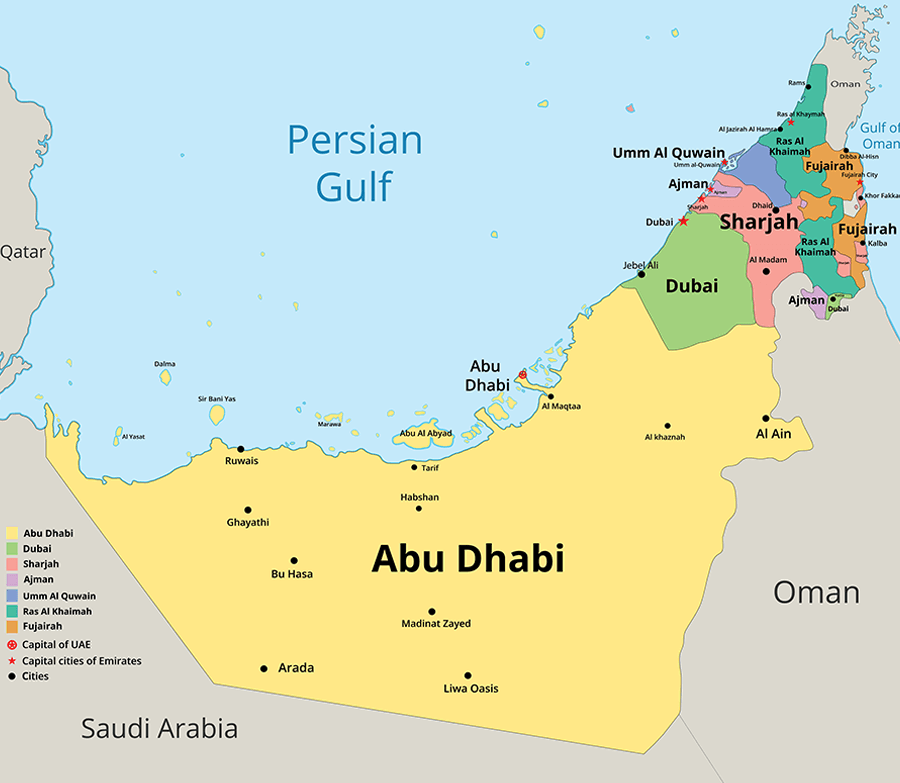
The foundation of the UAE’s remarkable economic success lies in the strategic collaboration and specialized contributions of its seven emirates: Abu Dhabi, Dubai, Sharjah, Ras Al Khaimah, Fujairah, Umm Al Quwain, and Ajman. While often seen as a cohesive national economy, understanding their individual financial identities reveals a sophisticated matrix of wealth generation, investment, and diversification efforts that are central to the nation’s stability and growth.
Unifying for Economic Strength
The formation of the UAE in 1971 was a pivotal moment, uniting disparate entities into a robust federation that pooled resources and ambitions. This unity created a formidable economic bloc, enabling large-scale infrastructure projects, fostering a stable regulatory environment, and presenting a unified front to international investors. The federal government, predominantly funded by Abu Dhabi’s oil wealth, plays a crucial role in redistributing resources and formulating national economic policies that benefit all emirates, ensuring a degree of shared prosperity and opportunity. This cooperative model has been instrumental in creating a conducive environment for both domestic and foreign investment.
Beyond Oil: Diversification Imperatives
While crude oil exports undeniably provided the initial impetus for the UAE’s rapid development, particularly in Abu Dhabi, the nation’s leadership recognized early on the imperative to diversify its economic base. The volatility of global oil prices and the finite nature of fossil fuels spurred aggressive strategies to foster non-oil sectors. Each emirate has, to varying degrees, embraced this diversification mandate, channeling investments into areas such as finance, logistics, tourism, manufacturing, technology, and renewable energy. This strategic shift is not merely about sustainability; it’s about building multi-faceted economies resilient to global commodity shocks, creating high-value jobs, and securing long-term financial stability for generations.
Strategic Financial Governance
The UAE’s economic success is also underpinned by a commitment to sound financial governance, transparent regulatory frameworks, and investor-friendly policies. The Central Bank of the UAE oversees monetary policy, banking supervision, and financial stability across the federation, ensuring a robust and secure financial system. Furthermore, each emirate maintains its own economic development departments and free zones, offering distinct incentives, tax benefits, and business frameworks designed to attract specific types of investment and industries. This dual-layered approach to governance – federal oversight combined with emirate-specific incentives – creates a dynamic and competitive environment that has proven highly attractive to global businesses and investors seeking operational efficiency and growth opportunities.
Abu Dhabi: The Capital of Capital and Diversification
Abu Dhabi, the largest emirate by land area and the capital of the UAE, stands as the economic bedrock of the federation. Its immense hydrocarbon reserves have historically been the primary driver of its wealth, but its proactive diversification strategy has positioned it as a global capital for strategic investments and future-forward industries.
Sovereign Wealth and Strategic Investments
At the heart of Abu Dhabi’s financial prowess lies its formidable sovereign wealth funds, notably the Abu Dhabi Investment Authority (ADIA) and Mubadala Investment Company. These entities manage vast portfolios of global assets, ranging from equities and fixed income to real estate, infrastructure, and private equity. Their strategic investments not only generate substantial returns but also play a critical role in directing capital towards sectors aligned with Abu Dhabi’s long-term economic vision, both domestically and internationally. This sophisticated approach to capital deployment underpins the emirate’s financial stability and global influence.
Energy Sector Dominance and Transition
Abu Dhabi holds the vast majority of the UAE’s oil and natural gas reserves, making its energy sector a cornerstone of both the emirate’s and the nation’s economy. The Abu Dhabi National Oil Company (ADNOC) is a major global player, investing heavily in upstream and downstream operations, and increasingly, in digital transformation and AI to enhance efficiency. However, in line with national diversification efforts, Abu Dhabi is also a leader in energy transition. It has made significant investments in renewable energy projects, particularly solar, and is home to Masdar, a global leader in clean energy and sustainable urban development, showcasing a clear financial commitment to a post-hydrocarbon future.
Developing Non-Oil Economic Verticals
Recognizing the need to future-proof its economy, Abu Dhabi has aggressively pursued the development of non-oil sectors. This includes significant investments in advanced manufacturing, particularly in aerospace and defense through entities like Tawazun Council. Healthcare is another priority, with world-class medical facilities and research initiatives attracting both patients and medical professionals. Furthermore, the emirate is building a formidable financial services sector, exemplified by the Abu Dhabi Global Market (ADGM), an international financial free zone with an independent regulator, common law framework, and tax incentives designed to attract global financial institutions and FinTech innovators.
Dubai: The Global Business and Lifestyle Hub
Dubai, arguably the most internationally recognized emirate, has masterfully leveraged its strategic geographical location and visionary leadership to transform itself into a global nexus for trade, tourism, logistics, and innovation. Its economic model is a testament to audacious ambition and strategic planning, making it a magnet for foreign investment and talent.

Trade, Tourism, and Logistics Mastery
Dubai’s economic engine is powered by its exceptional capabilities in trade, tourism, and logistics. Jebel Ali Port, one of the world’s busiest ports, coupled with Dubai International Airport (DXB) and Al Maktoum International Airport (DWC), forms a sophisticated multimodal logistics hub connecting East and West. This infrastructure facilitates immense volumes of goods and passengers, generating substantial revenue. The emirate’s tourism sector, driven by iconic landmarks, world-class hospitality, and major events like Expo 2020 Dubai, consistently attracts millions of visitors, contributing significantly to its GDP and fostering a vibrant service economy.
Financial Services and Free Zones
Dubai has meticulously cultivated its financial services sector, with the Dubai International Financial Centre (DIFC) serving as a leading financial hub in the Middle East, Africa, and South Asia (MEASA) region. DIFC offers a robust legal and regulatory framework, including an independent judicial system based on common law, attracting international banks, asset managers, and FinTech companies. Beyond DIFC, Dubai operates numerous specialized free zones (e.g., Dubai Internet City, Dubai Media City, Dubai Healthcare City), each offering 100% foreign ownership, tax exemptions, and streamlined business setup processes, making the emirate an unparalleled destination for businesses seeking to operate regionally.
Real Estate and Innovation Ecosystems
The real estate market in Dubai is a significant economic driver, known for its ambitious projects and luxury developments. While susceptible to market fluctuations, it attracts substantial foreign investment and underpins a large construction and related services sector. Crucially, Dubai is also heavily investing in building innovation ecosystems. Initiatives like Dubai Future Foundation, AREA 2071, and Dubai Silicon Oasis foster entrepreneurship, research and development, and the adoption of emerging technologies such as AI, blockchain, and smart city solutions. These efforts are aimed at positioning Dubai as a future-proof, knowledge-based economy.
The Northern Emirates: Emerging Economic Frontiers
While Abu Dhabi and Dubai often dominate headlines, the Northern Emirates – Sharjah, Ras Al Khaimah, Fujairah, Umm Al Quwain, and Ajman – are integral to the UAE’s economic fabric, each developing distinct financial profiles and attracting specialized investments. They offer diverse opportunities, often at a lower operational cost, and contribute significantly to the nation’s non-oil GDP.
Sharjah: Cultural Capital with Industrial Prowess
Sharjah, known as the cultural capital of the UAE, boasts a diverse economy with a strong focus on manufacturing, logistics, and education. It has a well-developed industrial base, particularly in light manufacturing, petrochemicals, and food processing, supported by free zones like Sharjah Airport International Free Zone (SAIF Zone) and Hamriyah Free Zone. The emirate is also a significant player in trade and education, hosting numerous universities and research institutions, which contribute to a skilled workforce and a knowledge-based economy. Its strategic location bordering Dubai provides a cost-effective alternative for businesses.
Ras Al Khaimah: Industrial Growth and Tourism Potential
Ras Al Khaimah (RAK) has emerged as an industrial hub, particularly in manufacturing, cement, and ceramics, with companies like RAK Ceramics having a global footprint. The RAK Free Trade Zone and RAK Economic Zone (RAKEZ) are popular choices for SMEs and industrial ventures, offering competitive business setup costs and excellent connectivity. Beyond industry, RAK is investing heavily in tourism, leveraging its natural landscapes, mountains, and beaches to attract visitors, with ambitious projects like Jebel Jais driving adventure tourism and diversifying its revenue streams.
Fujairah: Maritime Gateway and Energy Logistics
Fujairah, uniquely located on the East Coast outside the Strait of Hormuz, holds significant strategic importance as a maritime and energy logistics hub. It boasts one of the world’s largest bunkering ports and is a critical point for crude oil pipelines, storage, and refining operations. Its port facilities handle diverse cargo, facilitating trade across the Indian Ocean and beyond. Fujairah is investing in expanding its port capabilities and developing related industries, positioning itself as a vital component of global energy supply chains and a growing center for maritime services.
Umm Al Quwain & Ajman: Niche Markets and Growth Opportunities
Umm Al Quwain (UAQ) and Ajman are the smallest emirates by area but offer unique investment propositions. Ajman, with its Ajman Free Zone, focuses on light industry, trade, and services, providing an attractive environment for small and medium-sized enterprises (SMEs) due to its cost-effectiveness and proximity to Dubai. UAQ, on the other hand, is developing its tourism and marine industries, alongside a focus on specific light manufacturing and trade. Both emirates contribute to the UAE’s overall economic diversity by cultivating niche markets and providing alternative gateways for investment, often at a more accessible entry point for new businesses.
Investment Landscapes and Future Financial Outlook
The collective financial landscape of the UAE’s emirates presents a compelling case for global investors, offering stability, growth potential, and strategic advantages across a multitude of sectors. The ongoing evolution of their economies signals a proactive approach to securing future prosperity.
Attracting Foreign Direct Investment (FDI)
The UAE consistently ranks high globally for attracting Foreign Direct Investment (FDI), a testament to its open economy, favorable business environment, and strategic location. Each emirate plays a role, offering specific incentives through its free zones, facilitating ease of doing business, and providing access to a consumer market of over 2 billion people spanning the MEASA region. Policies allowing 100% foreign ownership in many sectors, robust intellectual property protections, and a commitment to repatriation of capital and profits significantly enhance the country’s appeal to international investors.
Regulatory Frameworks and Investor Protection
A cornerstone of the UAE’s financial stability and investor confidence is its sophisticated regulatory framework. Federal laws, coupled with emirate-specific regulations, ensure a transparent and predictable legal environment. The Central Bank, Securities and Commodities Authority (SCA), and independent regulators within financial free zones (like DFSA for DIFC and FSRA for ADGM) uphold high standards of corporate governance, financial reporting, and investor protection. This commitment to rule of law and regulatory clarity minimizes risks and fosters a secure ecosystem for capital deployment.
Digital Economy and Sustainable Finance Initiatives
The UAE is at the forefront of embracing the digital economy, with massive investments in smart city initiatives, AI, blockchain, and FinTech. Both Abu Dhabi and Dubai are actively developing digital payment systems, regulatory sandboxes for FinTech startups, and leveraging technology to enhance public services and business efficiency. Concurrently, there is a strong push towards sustainable finance, with green bonds, ESG investing frameworks, and an emphasis on financing renewable energy and sustainable infrastructure projects, aligning financial growth with environmental responsibility.
The Road Ahead: Global Economic Integration
The financial future of the UAE’s emirates is geared towards deeper global economic integration. Through strategic partnerships, free trade agreements, and continued investment in world-class infrastructure, the UAE aims to solidify its position as a vital hub for global commerce, finance, and innovation. The individual strengths of each emirate, from Abu Dhabi’s capital depth to Dubai’s global connectivity and the Northern Emirates’ niche specializations, collectively form a diversified, resilient, and forward-looking economy. Understanding “what are the emirates in UAE” is fundamentally about recognizing these distinct yet interconnected financial narratives that underpin one of the world’s most dynamic economic success stories.
aViewFromTheCave is a participant in the Amazon Services LLC Associates Program, an affiliate advertising program designed to provide a means for sites to earn advertising fees by advertising and linking to Amazon.com. Amazon, the Amazon logo, AmazonSupply, and the AmazonSupply logo are trademarks of Amazon.com, Inc. or its affiliates. As an Amazon Associate we earn affiliate commissions from qualifying purchases.