
In an era defined by rapid technological advancements and ever-shifting market demands, the traditional, linear approach to project management often falls short. Enter Agile methodology – a revolutionary approach that has transformed how software is developed, products are built, and even how businesses operate. More than just a set of practices, Agile is a mindset, a philosophy rooted in iterative development, flexibility, and relentless customer focus. It emerged as a direct response to the shortcomings of “heavyweight” waterfall methodologies, which often led to lengthy development cycles, missed requirements, and products that no longer met market needs upon release.
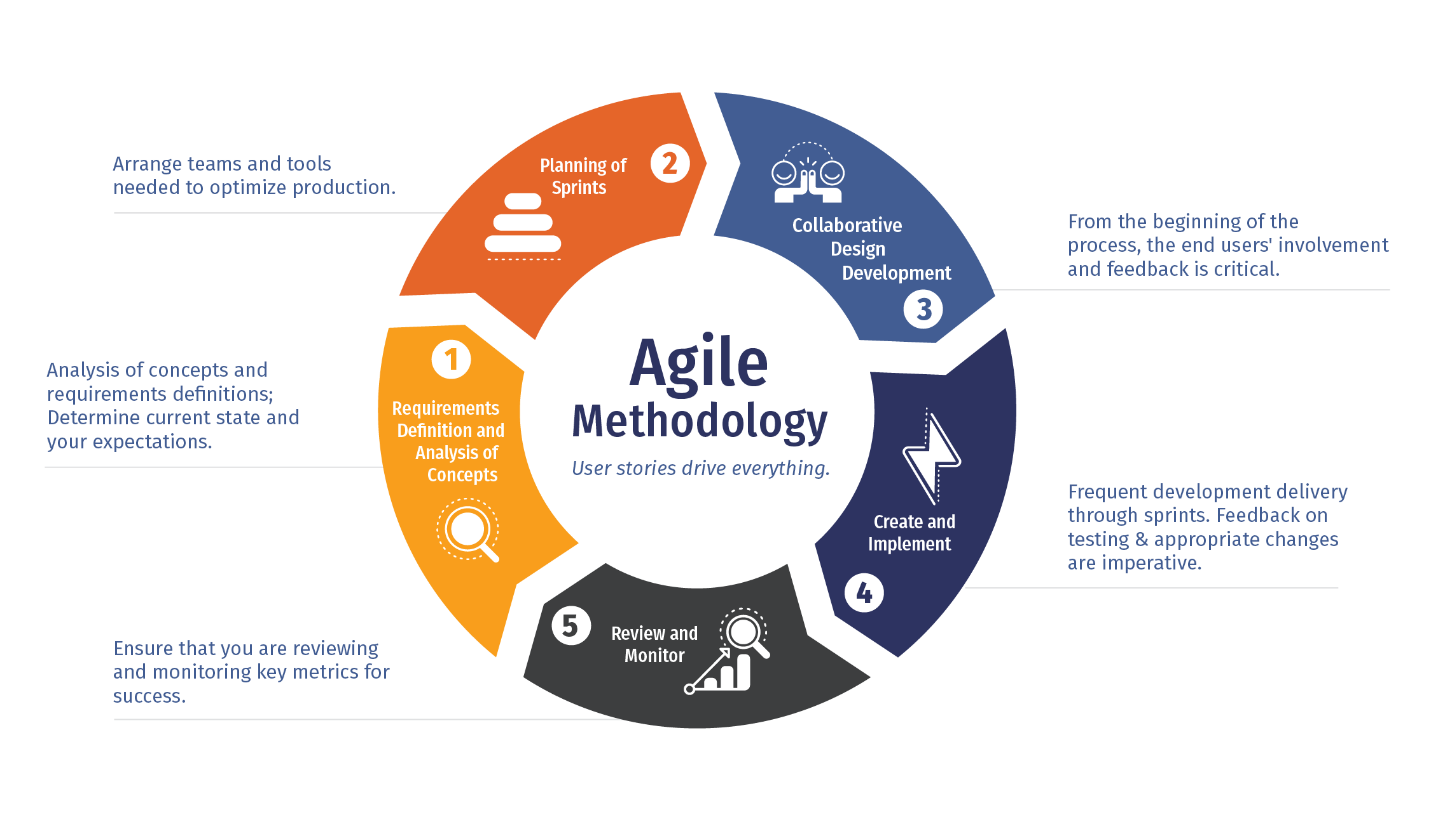
At its core, Agile champions adaptability over rigid planning, collaboration over isolated work, and delivering tangible value frequently over delayed, comprehensive releases. For anyone involved in technology – from developers and product managers to C-suite executives – understanding Agile is no longer optional; it’s fundamental to navigating the complexities of modern innovation and staying competitive in the digital landscape. This article will delve into the essence of Agile, exploring its foundational principles, popular frameworks, profound benefits, and the challenges it addresses, ultimately demonstrating why it has become the gold standard in tech and beyond.
The Core Principles of Agile: A Paradigm Shift in Software Development
The genesis of Agile methodology can be traced back to 2001 when a group of seventeen independent-minded software practitioners gathered in Snowbird, Utah. Frustrated with the bureaucratic and rigid nature of existing software development processes, they sought a more lightweight, human-centric alternative. Their collaboration culminated in the publication of the “Manifesto for Agile Software Development,” a concise yet powerful document that laid the groundwork for a new way of working.
The Agile Manifesto: Founding Ideals
The Agile Manifesto isn’t a prescriptive rulebook but a set of guiding values that prioritize human interaction and responsiveness over strict adherence to processes. It states:
-
Individuals and interactions over processes and tools: While processes and tools are necessary, Agile emphasizes the importance of skilled individuals communicating effectively and collaborating to solve problems. Human creativity and interaction are seen as the primary drivers of value.
-
Working software over comprehensive documentation: The ultimate goal of software development is to deliver functional software that provides value. While documentation has its place, Agile prioritizes delivering tangible, working increments over exhaustive, often outdated, documentation.
-
Customer collaboration over contract negotiation: Instead of rigid contracts and requirements defined upfront, Agile advocates for continuous collaboration with the customer throughout the development lifecycle. This ensures that the product evolves in line with genuine user needs and market feedback.
-
Responding to change over following a plan: In a dynamic environment, requirements are bound to change. Agile embraces this reality, valuing the ability to adapt to new information and changing priorities over strict adherence to an initial, often outdated, plan. This flexibility is key to delivering relevant and impactful solutions.
These four values are supported by twelve more detailed principles that elaborate on concepts such as continuous delivery, self-organizing teams, sustainable pace, and technical excellence. Together, they articulate a philosophy that champions transparency, continuous improvement, and customer satisfaction.
Iterative and Incremental Development
A cornerstone of Agile methodology is its embrace of iterative and incremental development. Unlike the “big-bang” approach of waterfall, where an entire project is planned, designed, built, and tested sequentially before a single release, Agile breaks down projects into smaller, manageable chunks called iterations or sprints.
-
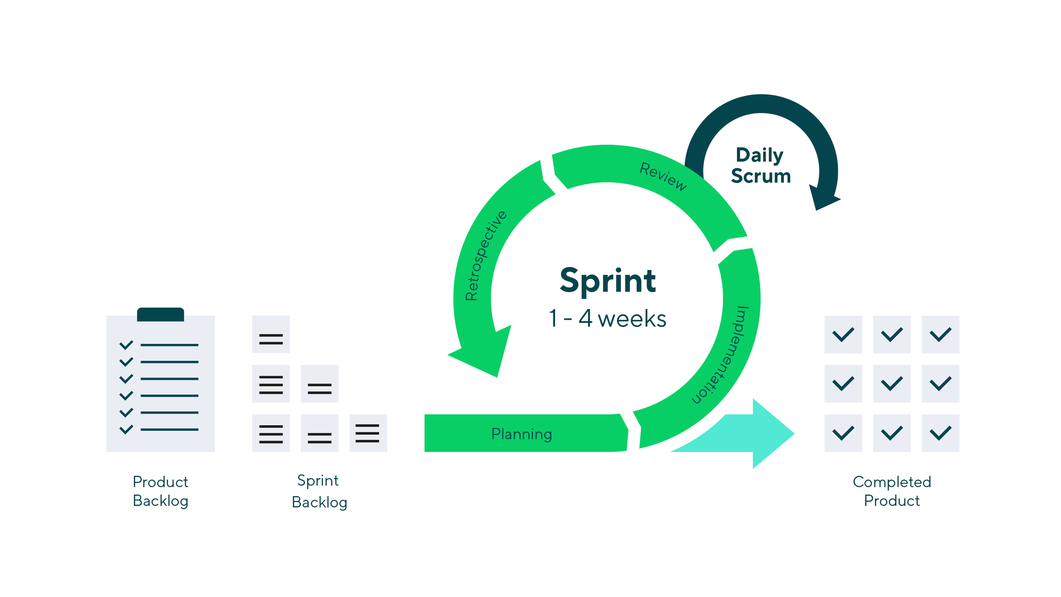
Short Cycles (Sprints/Iterations): Typically lasting from one to four weeks, each sprint is a mini-project in itself. Within this short timeframe, a cross-functional team works to deliver a potentially shippable increment of software. This short feedback loop allows for frequent inspection and adaptation.
-
Continuous Delivery of Working Software: At the end of each sprint, the goal is to have a working, tested piece of software that adds demonstrable value. This continuous delivery means stakeholders can see progress regularly, provide feedback, and ensure the product is evolving in the right direction.
-
Feedback Loops: The iterative nature inherently builds in multiple feedback loops. Customers and stakeholders regularly review the increment, providing insights that can be incorporated into subsequent sprints. This minimizes the risk of building the wrong product and ensures alignment with evolving market needs. This continuous feedback is vital for refining the product and ensuring it meets user expectations.
Key Agile Frameworks and Practices
While the Agile Manifesto provides the philosophical foundation, various frameworks and practices have emerged to provide concrete ways of implementing Agile principles in real-world projects. These frameworks offer structures, roles, and ceremonies that guide teams through the iterative development process.
Scrum: The Most Popular Agile Framework
Scrum is arguably the most widely adopted Agile framework, renowned for its simplicity, effectiveness, and ability to foster self-organizing teams. It provides a lightweight framework for developing and sustaining complex products, emphasizing empirically based decision-making.
-
Roles: Scrum defines three core roles:
-
Product Owner: Responsible for maximizing the value of the product resulting from the work of the Development Team. They manage the Product Backlog, which is an ordered list of all known product requirements and features.
-
Scrum Master: A servant-leader for the Scrum Team, responsible for ensuring Scrum is understood and enacted. They facilitate Scrum events, coach the team, and remove impediments.
-
Development Team: A self-organizing and cross-functional group of professionals who do the work of delivering a potentially shippable increment. They decide how to best accomplish the work.
-
-
Events: Scrum structures work around several time-boxed events:
-
Sprint Planning: The team plans the work to be performed in the upcoming sprint.
-
Daily Scrum: A short, daily meeting for the Development Team to synchronize activities and create a plan for the next 24 hours.
-
Sprint Review: Held at the end of the sprint to inspect the increment and adapt the Product Backlog if needed, involving stakeholders.
-
Sprint Retrospective: The team inspects how the last sprint went with regard to people, relationships, process, and tools, identifying improvements for the next sprint.
-
-
Artifacts: Scrum uses three key artifacts to manage work:
-
Product Backlog: An ordered list of everything that might be needed in the product.
-
Sprint Backlog: The set of Product Backlog items selected for the sprint, plus the plan for delivering them.
-
Increment: The sum of all the Product Backlog items completed during a sprint and the value of the increments of all previous sprints.
-
Kanban: Visualizing Workflow and Limiting Work in Progress
Kanban, originating from Toyota’s production system, is another influential Agile framework. Unlike Scrum’s time-boxed iterations, Kanban is a continuous flow system focused on visualizing work, limiting work-in-progress (WIP), and maximizing efficiency.
-
Kanban Boards: Work items are represented visually on a Kanban board, typically divided into columns such as “To Do,” “In Progress,” and “Done.” This provides instant transparency on the status of each item.
-
WIP Limits: A critical aspect of Kanban is setting limits on the number of items that can be in any “In Progress” column at any given time. This helps prevent bottlenecks, encourages completion over starting new tasks, and improves focus.
-
Flow Optimization: Kanban aims to optimize the flow of work from start to finish. By identifying and addressing bottlenecks, teams can reduce lead time and deliver value more consistently. Kanban is highly adaptable and can be applied to various workflows beyond software development.
Other Agile Approaches (Brief Mention)
While Scrum and Kanban are dominant, other Agile methodologies and frameworks contribute to the broader Agile ecosystem. Extreme Programming (XP), for instance, emphasizes engineering best practices like pair programming, test-driven development, and continuous integration. Lean Software Development focuses on eliminating waste and maximizing value. For larger organizations, Scaled Agile Framework (SAFe) provides a comprehensive approach to applying Lean-Agile principles across multiple teams and portfolios, addressing the complexities of enterprise-level adoption. Each framework offers a unique lens through which to apply Agile principles, tailored to different organizational contexts and project needs.
Benefits of Adopting Agile in Technology Projects
The widespread adoption of Agile methodology in the tech sector is not merely a trend; it’s a testament to its profound benefits in enhancing project success, product quality, and organizational efficiency. Agile addresses many of the common pain points associated with traditional development, leading to more resilient and effective teams.
Enhanced Adaptability and Flexibility
One of Agile’s most compelling advantages is its inherent ability to adapt to change. In the fast-paced tech world, market conditions, user expectations, and technological landscapes can shift rapidly.
-
Responding to Changing Requirements Quickly: By working in short iterations and maintaining continuous feedback loops, Agile teams can quickly incorporate new requirements or pivot direction based on new information. This contrasts sharply with waterfall, where changes late in the cycle are costly and disruptive.
-
Reduced Risk of Project Failure: By delivering small, testable increments frequently, potential issues are identified and addressed early. This minimizes the risk of investing significant time and resources into a product that ultimately fails to meet market needs or technical specifications. Early course correction saves time, money, and effort.
Improved Product Quality and Customer Satisfaction
Agile places the customer at the center of the development process, leading to products that are more aligned with their needs and expectations.
-
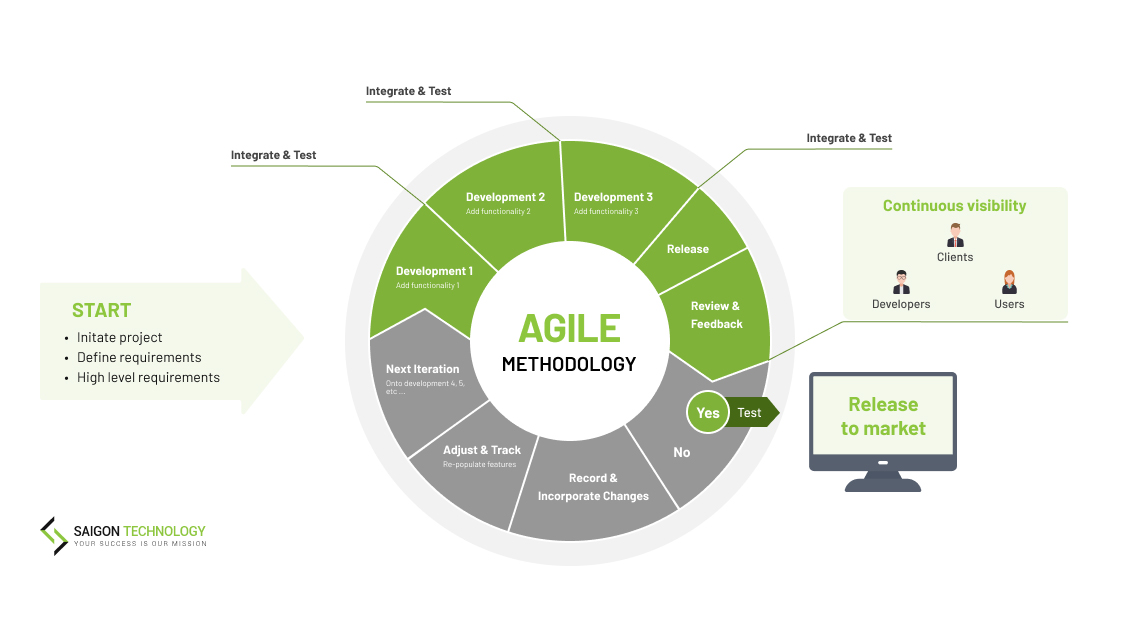
Continuous Feedback Integration: Regular interactions with stakeholders and end-users ensure that feedback is gathered and integrated throughout the development cycle. This iterative refinement process means the product continuously evolves to better serve its intended audience.
-
Early and Frequent Delivery of Value: Instead of a long wait for a final product, Agile teams deliver working software increments frequently. This not only allows customers to see tangible progress but also enables them to start benefiting from new features sooner, leading to higher satisfaction and quicker return on investment.
Greater Transparency and Collaboration
Agile fosters an environment of openness, trust, and shared responsibility, both within the development team and with external stakeholders.
-
Cross-Functional Teams: Agile teams are typically cross-functional, meaning they possess all the skills necessary to complete a project. This reduces dependencies on external departments and promotes direct communication and problem-solving within the team.
-
Stakeholder Involvement: Through events like Sprint Reviews, stakeholders are actively involved in the development process, seeing progress firsthand and having their input directly shape the product. This shared understanding and ownership lead to better outcomes.
-
Visible Progress: Tools like Kanban boards and burndown charts provide clear, real-time visibility into project status and team progress, enhancing accountability and allowing for proactive adjustments.
Faster Time to Market
In competitive industries, the speed at which a product can go from idea to launch can be a critical differentiator. Agile excels in this regard.
-
Reduced Development Cycles: By breaking down large projects into smaller, manageable sprints, Agile significantly reduces the overall time required to deliver valuable features.
-
Ability to Release Features Incrementally: Rather than waiting for a complete product, Agile allows organizations to release core functionalities early and iterate on them based on user feedback. This “minimum viable product” (MVP) approach gets solutions to market faster, captures early adopters, and provides a competitive edge. The ability to quickly respond to market shifts with new features or adjustments is invaluable.
Challenges and Misconceptions in Agile Implementation
Despite its numerous benefits, implementing Agile methodology is not without its challenges. It requires a fundamental shift in mindset and culture, and misconceptions about its nature can hinder successful adoption. Organizations that fail to address these aspects often struggle to reap the full benefits of Agile.
Cultural Shift and Mindset Change
Perhaps the biggest hurdle in adopting Agile is the cultural transformation it demands. It’s not just about adopting new tools or ceremonies; it’s about changing how people think and interact.
-
Resistance to Change: Employees accustomed to traditional hierarchies and processes may resist the empowerment and self-organization inherent in Agile teams. Leaders might struggle with relinquishing control, while team members might find the increased responsibility daunting.
-
Need for Trust and Empowerment: Agile thrives on trust – trust between team members, trust from management, and trust in the process. This requires fostering an environment where teams feel empowered to make decisions, experiment, and learn from failures without fear of reprisal. Without this foundation, the spirit of Agile can be lost.
Scaling Agile for Larger Organizations
While Agile frameworks like Scrum work exceptionally well for small to medium-sized teams, applying Agile principles across an entire large enterprise presents unique complexities.
-
Complexity with Multiple Teams and Dependencies: When dozens or hundreds of teams need to coordinate their work on a large product or portfolio, managing interdependencies, aligning priorities, and maintaining a coherent product vision can become incredibly challenging.
-
Frameworks like SAFe, LeSS: To address this, various scaling frameworks have emerged, such as the Scaled Agile Framework (SAFe), Large-Scale Scrum (LeSS), and Disciplined Agile (DA). These frameworks provide structures and guidance for coordinating multiple Agile teams, but their implementation can be complex, requiring significant organizational commitment and expertise. The challenge lies in maintaining agility while ensuring alignment across the enterprise.
Misinterpreting Agile as a Lack of Planning
A common and damaging misconception is that Agile means “no planning” or “winging it.” This couldn’t be further from the truth.
-
Agile Emphasizes Adaptive Planning, Not No Planning: Agile doesn’t eliminate planning; it makes planning continuous and adaptive. Instead of a single, upfront, comprehensive plan, Agile involves iterative planning at multiple levels (release planning, sprint planning, daily planning). Plans are frequently reviewed and adjusted based on new information and feedback.
-
Importance of Vision and Strategy: Agile teams operate within a clear product vision and strategic goals. While the tactical execution is flexible, the overarching direction remains consistent. Without a strong vision, Agile can devolve into aimless iterations, failing to deliver strategic value. The focus shifts from predicting the future to adapting to it effectively, which still requires foresight and strategic direction.
The Future of Agile: Beyond Software
What began as a movement to improve software development has evolved into a powerful management philosophy with far-reaching implications. Agile principles are no longer confined to the tech department; they are increasingly being adopted across various industries and functions, driving broader organizational change.
Agile’s Expansion into Non-Software Domains
The success of Agile in technology has demonstrated its universal applicability, prompting its adoption in sectors far removed from code.
-
Marketing, HR, R&D, Operations: Teams in marketing use Agile to run campaigns and iterate on content strategy. HR departments leverage Agile to improve recruitment processes and employee experience initiatives. R&D teams use it to accelerate product innovation, and operations teams employ it to optimize workflows and service delivery. The underlying principles of iterative work, collaboration, and rapid feedback loops prove valuable in any domain dealing with complex, uncertain projects.
-
General Project Management: Increasingly, Agile is seen as a superior approach to general project management, offering a flexible alternative to traditional methodologies for a wide array of projects, from event planning to strategic initiatives. The focus on delivering value incrementally and adapting to changing requirements is universally beneficial.
Integration with DevOps and Digital Transformation
The synergy between Agile and other modern tech paradigms, particularly DevOps, is accelerating digital transformation initiatives across industries.
-
Continuous Integration/Delivery (CI/CD): Agile’s focus on frequent, small releases perfectly complements DevOps practices like Continuous Integration (CI) and Continuous Delivery/Deployment (CD). Together, they create a pipeline where code changes are automatically built, tested, and deployed, dramatically shortening the lead time from development to production. This integration allows organizations to release new features and updates with unprecedented speed and reliability.
-
Holistic Approach to Value Delivery: When Agile development teams work in conjunction with DevOps practices, the entire software delivery lifecycle becomes more efficient, reliable, and responsive. This holistic approach is crucial for organizations undergoing digital transformation, as it enables them to rapidly innovate, experiment, and deliver value to customers in a continuous, seamless manner, breaking down silos between development and operations.
Conclusion
Agile methodology has undoubtedly revolutionized the technology landscape, moving software development from a rigid, sequential process to a dynamic, collaborative, and customer-centric endeavor. Rooted in its simple yet profound manifesto, Agile, through frameworks like Scrum and Kanban, empowers teams to deliver high-quality, relevant products faster and with greater adaptability. Its benefits—from enhanced flexibility and improved product quality to faster time to market and greater transparency—are undeniable and have made it an indispensable approach for any organization striving for innovation and efficiency in the digital age.
While challenges like cultural shifts and scaling complexities exist, the ongoing evolution of Agile, coupled with its expansion beyond software into diverse business functions and its synergy with movements like DevOps, underscores its enduring relevance. Agile is more than a methodology; it’s a strategic imperative for navigating uncertainty, fostering continuous improvement, and consistently delivering value in an increasingly dynamic and competitive world. Understanding and embracing Agile is not just about staying current; it’s about building a future-proof organization capable of thriving on change.
aViewFromTheCave is a participant in the Amazon Services LLC Associates Program, an affiliate advertising program designed to provide a means for sites to earn advertising fees by advertising and linking to Amazon.com. Amazon, the Amazon logo, AmazonSupply, and the AmazonSupply logo are trademarks of Amazon.com, Inc. or its affiliates. As an Amazon Associate we earn affiliate commissions from qualifying purchases.