
The seemingly simple query, “what time now in CST,” belies a complex, intricate web of technological advancements that ensure we receive an accurate, instantaneous answer. In an increasingly globalized and digital world, precise timekeeping is not merely a convenience but a critical foundation for everything from financial transactions and data synchronization to cybersecurity and artificial intelligence. This article delves into the technological marvels that underpin our ability to effortlessly ascertain the time in any corner of the globe, focusing on how these innovations shape our digital landscape and enable seamless global interaction.

The Digital Backbone of Accurate Time: From Atomic Clocks to NTP
At the heart of every device that tells you the time, from your smartphone to a complex server, lies a sophisticated infrastructure designed for unparalleled accuracy. The journey of time information, from its absolute source to your screen, is a testament to persistent technological innovation.
The Precision of Atomic Clocks: The Foundation
The ultimate arbiters of time are atomic clocks. Unlike mechanical or quartz clocks, which rely on macroscopic oscillations, atomic clocks measure time based on the extremely precise and consistent resonant frequencies of atoms, typically cesium or rubidium. These clocks are incredibly accurate, losing or gaining less than a second over millions of years. National metrology institutes around the world, like the National Institute of Standards and Technology (NIST) in the U.S., maintain highly stable atomic clock ensembles that collectively define Coordinated Universal Time (UTC), the world’s primary time standard. These ground-based atomic clocks are complemented by satellite-based atomic clocks, crucial for global positioning systems (GPS) and other satellite navigation systems, which require nanosecond-level precision for accurate location data. The unyielding stability of these foundational time sources is what gives all subsequent digital timekeeping its inherent reliability. Without this initial, hyper-accurate reference, the digital world would quickly descend into chronological chaos, rendering accurate time queries impossible.
Network Time Protocol (NTP): The Internet’s Timekeeper
While atomic clocks set the standard, the Network Time Protocol (NTP) is the workhorse that disseminates this precise time across the internet to billions of devices. Developed by David L. Mills at the University of Delaware, NTP is an internet protocol used to synchronize the clocks of computers over a data network. It operates on a hierarchical system of “strata.” Stratum 0 refers to the atomic clocks themselves. Stratum 1 servers are directly connected to these atomic clocks. Stratum 2 servers synchronize with Stratum 1 servers, and so on, down to your personal computer or smartphone, which might synchronize with a Stratum 3 or 4 server.
NTP employs sophisticated algorithms to account for network latency and propagation delays, ensuring that the time received by your device is as accurate as possible, often within milliseconds of UTC. It continuously adjusts your device’s clock to compensate for drift, ensuring that whether you’re asking “what time now in CST” or processing a real-time transaction, the temporal data is consistent and correct. The protocol is robust, resilient, and ubiquitous, silently working in the background of virtually every internet-connected device, providing the unseen synchronicity that underpins our digital lives.
How Your Devices Stay Synchronized: A Silent, Constant Process
Your personal devices—smartphones, laptops, smartwatches—are constantly, almost imperceptibly, checking and adjusting their internal clocks. When you enable “automatic time zone” or “set time automatically” in your device settings, you’re leveraging this NTP infrastructure. Your device periodically queries an NTP server, compares its local clock’s time with the server’s authoritative time, and makes tiny adjustments to correct any discrepancies. These adjustments are often so small and frequent that you never notice them, yet they are vital.
For example, when you travel from Eastern Standard Time (EST) to Central Standard Time (CST), your smartphone, if set to automatic time, uses location services and network information to determine your new geographical position and corresponding time zone. It then adjusts its displayed time accordingly, often instantaneously. This seamless transition is not magic; it’s the result of your device’s operating system interacting intelligently with network services, relying on accurate time data delivered by NTP. This silent, constant process ensures that your digital world remains perfectly in sync, no matter where you are or what device you are using, making queries like “what time now in CST” consistently reliable.
Navigating Time Zones in a Connected World: Software Solutions and User Experience
The concept of time zones, while seemingly straightforward, presents unique challenges in a globally connected digital environment. Software engineers and user experience (UX) designers constantly work to simplify the complexity of geographical time differences, making time information intuitive and accessible.
The Challenge of Geographic Time Differences: CST and Beyond
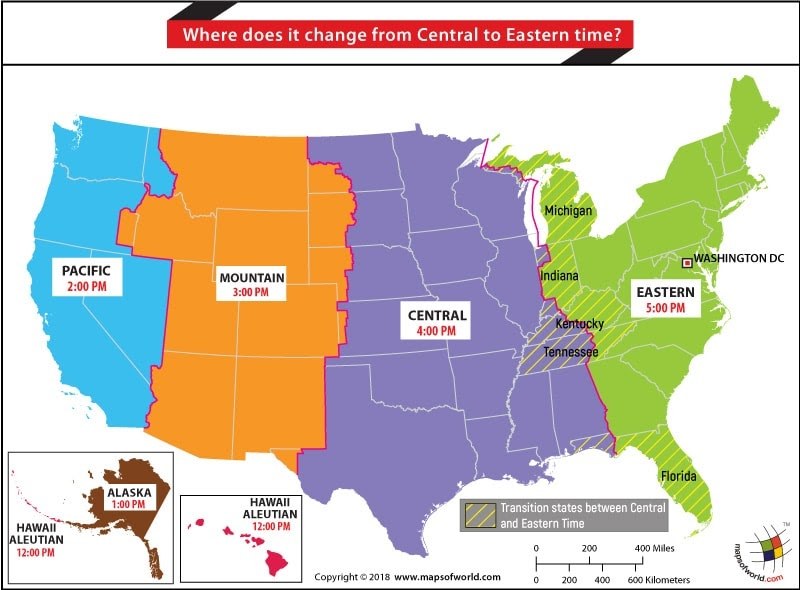
The Earth’s rotation and the need for standardized local time across broad regions led to the adoption of time zones. Central Standard Time (CST), for instance, covers a vast area primarily in North America, encompassing states like Illinois, Texas, and parts of Canada and Mexico. Its offset from UTC is -6 hours (or -5 hours during Central Daylight Time, CDT). The challenge for technology is not just displaying the current time, but correctly accounting for these offsets, daylight saving transitions, and the very real impact these differences have on human interaction and automated systems.
For software developers, handling time zones correctly is notoriously difficult. Issues like “timezone drift,” misinterpreting UTC vs. local time, or incorrectly applying daylight saving rules can lead to significant errors, especially in applications dealing with scheduling, financial data, or logging. Robust software must internalize all time as UTC and only convert to a local time zone for display to the user, ensuring consistency regardless of the user’s location or the server’s locale. This meticulous approach is what prevents critical bugs and ensures that a scheduled meeting time in CST is correctly interpreted by a participant in Pacific Standard Time (PST).
Operating Systems and Applications: Seamless Time Zone Management
Modern operating systems (OS) like Windows, macOS, Android, and iOS are engineered with sophisticated time zone management capabilities. They incorporate comprehensive databases of world time zones, including their offsets from UTC and historical daylight saving rules. This database is regularly updated, sometimes through OS updates, to reflect changes in time zone regulations by various governments. When you select a time zone manually or allow your device to detect it automatically, the OS uses this internal knowledge to correctly adjust and display the time.
Beyond the OS, applications leverage these capabilities to provide time-sensitive features. Calendar apps automatically adjust meeting times to your local zone. Communication platforms timestamp messages accurately, regardless of sender or receiver location. Development frameworks offer powerful libraries (e.g., Joda-Time or java.time in Java, datetime in Python) that abstract away much of the complexity, allowing developers to handle time zone conversions with greater accuracy and less error. These integrated software solutions make it possible for users to effortlessly interact across time zones, streamlining global collaboration and personal organization.
User-Centric Time Tools: From Widgets to World Clocks
The evolution of technology has moved beyond just internal synchronization to creating highly user-friendly interfaces for time zone management. The query “what time now in CST” is often met with visual and interactive tools. On smartphones, dedicated world clock apps allow users to add multiple cities, instantly displaying their current times relative to the user’s local time. Desktop operating systems offer widgets or taskbar clocks that can show additional time zones.
Smart assistants and search engines, upon hearing or reading such a query, don’t just provide a number; they often contextualize it, perhaps showing the difference from the user’s current time or even offering to set a reminder in that specific time zone. This user-centric design reflects an understanding that time zone information is not just data, but a tool for planning, connecting, and managing global interactions. The design goal is to minimize cognitive load, making complex temporal information immediately digestible and actionable for the end-user.
AI, Smart Assistants, and the Future of Time Queries
The seemingly mundane task of asking for the time has been revolutionized by advancements in artificial intelligence and the proliferation of smart assistants. These technologies transform a simple query into an intelligent interaction, anticipating needs and offering contextual understanding.
Natural Language Processing: Understanding “What Time Now in CST”
When you ask a smart assistant like Siri, Google Assistant, or Alexa, “what time now in CST,” you’re engaging with sophisticated Natural Language Processing (NLP) algorithms. NLP allows these systems to understand human language as it’s spoken or typed, interpreting intent and extracting key entities. In this case, the system must identify “what time now” as a request for current time, and “CST” as a specific time zone identifier.
The process involves several layers:
-
Speech-to-Text Conversion: If spoken, your query is first converted into text.
-
Tokenization and Parsing: The text is broken down into words (tokens), and its grammatical structure is analyzed.
-
Entity Recognition: The system identifies “CST” as a time zone entity and “time now” as a time-related query.
-
Intent Recognition: The overall goal of the query (i.e., to retrieve current time in a specific zone) is determined.
-
Information Retrieval: The system then queries its internal time database, which is synchronized via NTP, to fetch the precise current time in the identified time zone.
-
Response Generation: Finally, the answer is formulated and delivered in a natural-sounding voice or as a clear text display.
This seamless interaction, which takes mere milliseconds, highlights the power of AI in making information retrieval intuitive and accessible to everyone.
Predictive Time Services: Anticipating Your Needs
Beyond simply answering direct questions, AI is moving towards predictive and proactive time services. Imagine your smart calendar, noticing you have a meeting scheduled with a colleague in CST, automatically displaying their local time alongside your own, without you having to ask. Or a travel app suggesting the best time to call your hotel based on their local time zone and your typical communication habits.
AI-driven systems can analyze your patterns, location, and upcoming events to anticipate your time zone needs. They can learn which contacts are in which time zones and prioritize showing you relevant time differences. This predictive capability reduces friction and enhances productivity, making global coordination even smoother. The goal is to move from reactive information provision to proactive assistance, where the technology anticipates your needs before you even formulate the question.
The Evolving Interface: Voice, Gestures, and Beyond
The interface for accessing time information is continually evolving. While voice commands via smart assistants are now commonplace, future interfaces could integrate gestures, augmented reality (AR), and even brain-computer interfaces (BCI). Imagine pointing at a location on a virtual globe in an AR environment and instantly seeing the local time, or having your smart glasses display the current time in CST next to a colleague’s video feed.
The underlying technology for accurate timekeeping remains essential, but the methods by which we interact with this information are becoming increasingly immersive and intuitive. The humble question “what time now in CST” could, in the future, be answered through a glance, a thought, or an environmental cue, making time information an even more integrated and natural part of our digital experience.
The Critical Role of Time in Cybersecurity and Data Integrity
While often overlooked, accurate time synchronization is not just about convenience; it is a foundational element for digital security and maintaining the integrity of data across complex systems. A discrepancy in time, even a small one, can have catastrophic consequences for security, auditing, and legal compliance.
Timestamping and Forensic Analysis: Tracing Digital Footprints
Every significant event in a digital system—a login, a file modification, a network connection, a financial transaction—is typically recorded with a timestamp. These timestamps are crucial for creating an immutable audit trail, essential for accountability, debugging, and, most importantly, cybersecurity forensics. If an organization suspects a breach, forensic investigators rely heavily on accurate, synchronized timestamps across all affected systems to reconstruct the sequence of events.
Imagine trying to determine if an unauthorized access occurred if the logs from the firewall, the server, and the intrusion detection system all show different times for the same event. It would be impossible to correlate actions, identify the attacker’s timeline, or pinpoint the vulnerability. Precise NTP synchronization ensures that all system logs are aligned to UTC, providing a consistent “ground truth” that allows investigators to accurately trace digital footprints and understand the progression of an attack. Without this temporal consistency, cybersecurity efforts would be severely hampered.
Secure Transactions and Authentication: The Time Component
Many secure protocols and authentication mechanisms rely on accurate time. For instance, Kerberos, a widely used network authentication protocol, utilizes time stamps to prevent “replay attacks,” where an attacker might try to reuse old authentication tickets. If the client and server clocks are not synchronized within a small tolerance, authentication can fail, or worse, be compromised. Similarly, many multi-factor authentication (MFA) systems that generate time-based one-time passwords (TOTP) depend on the user’s device clock being closely synchronized with the authentication server. Even a slight drift can render the generated code invalid, preventing access.
Financial transactions are another domain where time is paramount. High-frequency trading, for example, operates on a millisecond scale, where the precise timestamp of a buy or sell order can have massive implications. Regulatory bodies require strict time synchronization for all trading systems to ensure fair play and accurate record-keeping. The integrity of these systems hinges on an underlying infrastructure that provides consistent, accurate time references.
Mitigating Attacks: Time Sync as a Security Measure
Beyond enabling security protocols, time synchronization itself can be a security measure. Discrepancies in time across a network can be indicators of tampering or an attack. For example, an attacker might try to manipulate system clocks to hide their activities in logs or to bypass time-sensitive security controls. Robust NTP implementations include authentication mechanisms that ensure time updates come from trusted sources, preventing malicious clock tampering.
Furthermore, anomalies in time synchronization can alert administrators to potential issues. If a server suddenly loses its NTP sync or reports a significantly different time, it could indicate a network problem, a misconfiguration, or even a targeted attack. Monitoring time synchronization status is therefore an important part of any comprehensive digital security strategy, reinforcing that the seemingly simple act of knowing “what time now in CST” is deeply intertwined with the robust protection of our digital assets.
Beyond the Clock: Emerging Technologies in Timekeeping
The quest for ever-greater precision and new applications of timekeeping technology continues unabated. From fundamental physics to distributed computing, the boundaries of temporal measurement and utilization are constantly being pushed, promising even more transformative capabilities.
Quantum Clocks and the Next Frontier of Precision
While atomic clocks are incredibly accurate, the next generation of timekeeping, quantum clocks, promises even more astounding precision. These clocks, often based on optical frequencies (like strontium or ytterbium atoms), operate at much higher frequencies than microwave atomic clocks, leading to a finer “tick” and thus greater accuracy. Current experimental quantum clocks have demonstrated stability so high that they would lose only one second over billions of years, far surpassing current atomic clock standards.
The implications of such extreme precision are vast. They could enable the development of next-generation GPS systems with centimeter-level accuracy, vastly improve astronomical observations by enhancing the sensitivity of radio telescopes, and even facilitate new fundamental physics research by detecting minute changes in gravity or dark matter. For the everyday user, this could eventually translate into even more robust and accurate time synchronization for all digital devices, making errors in “what time now in CST” virtually impossible.
Distributed Ledger Technology (DLT) and Immutable Timestamps
Distributed Ledger Technologies (DLTs) like blockchain are introducing new paradigms for secure and immutable record-keeping, with timestamps playing a crucial role. In a blockchain, each block of transactions is cryptographically linked to the previous one and includes a timestamp. This timestamp is not merely for human readability but is a critical component of the consensus mechanism and the immutability of the ledger. While not a source of time itself, DLTs rely on accurate time synchronization across their distributed network to prevent manipulation and ensure the chronological order of transactions.
The concept of a “trusted timestamp” on a blockchain means that once an event is recorded with its timestamp, it becomes incredibly difficult to alter retroactively. This has profound implications for digital evidence, intellectual property, supply chain provenance, and legal contracts, where proof of an event occurring at a specific point in time is paramount. DLTs don’t tell time, but they leverage highly accurate, synchronized time to create an unparalleled system of verifiable chronological truth, enhancing the integrity and trustworthiness of digital records on a global scale.

The Hyper-Personalized Time Experience
Looking ahead, the evolution of timekeeping technology will likely lead to even more personalized and context-aware time experiences. Beyond knowing “what time now in CST,” future systems might infer why you’re asking and provide tailored information. For instance, if your calendar indicates a call with someone in CST, your device might not only tell you the time but also suggest optimal calling hours based on their typical work schedule, factoring in their local time zone.
Wearable tech and embedded sensors could contribute to a “temporal awareness” layer in our digital lives, constantly displaying relevant time zone information for contacts or events, seamlessly integrated into our environment. The goal is to move beyond simple clock faces to a truly intelligent temporal assistant, where the technology proactively manages and presents time information in a way that is most relevant and useful to the individual, making the complexities of global time differences disappear into the background of an intuitive digital experience.
The simple question “what time now in CST” is a portal to understanding a vast and intricate technological ecosystem. From the quantum realm of atomic clocks to the everyday utility of smart assistants, the pursuit of accurate and accessible time information continues to drive innovation, shaping our digital world and enabling an ever more connected and synchronized future.
aViewFromTheCave is a participant in the Amazon Services LLC Associates Program, an affiliate advertising program designed to provide a means for sites to earn advertising fees by advertising and linking to Amazon.com. Amazon, the Amazon logo, AmazonSupply, and the AmazonSupply logo are trademarks of Amazon.com, Inc. or its affiliates. As an Amazon Associate we earn affiliate commissions from qualifying purchases.