
In an age defined by instant gratification and ubiquitous digital connectivity, the seemingly simple question, “What time does Green Bay Packers play Sunday?” transcends a mere inquiry about a sporting event. It represents a microcosm of how advanced technology has fundamentally reshaped our interaction with information, entertainment, and even our most cherished pastimes. For millions of sports fans globally, pinpointing game times for their favorite teams, especially for iconic franchises like the Green Bay Packers, is no longer a laborious task involving newspaper schedules or channel surfing. Instead, it’s a seamless, often subconscious interaction with a sophisticated technological ecosystem designed for immediate, accurate, and personalized delivery.
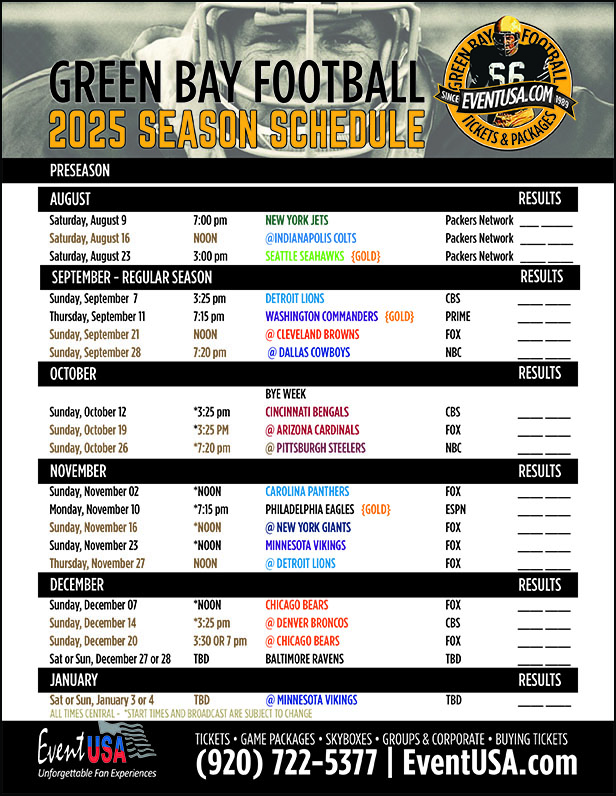
The journey from a fan’s query to a precise answer involves a complex interplay of artificial intelligence, robust data aggregation, intuitive user interfaces, and an ever-evolving landscape of digital platforms. This article will delve into the technological underpinnings that empower us to obtain real-time sports information with unprecedented ease, using the perennial query about the Packers’ Sunday game as our guiding example. We’ll explore the digital revolution in sports information access, the comprehensive platforms that deliver it, the unseen data infrastructure, and cast an eye towards the future of fan engagement through emerging technologies.
The Digital Revolution of Sports Information Access
Gone are the days when knowing the exact schedule for a professional sports league required either a subscription to a physical sports periodical, a diligent check of local television listings, or tuning into sports radio. The advent of the internet and subsequent digital innovations has ushered in an era where sports information is dynamic, omnipresent, and tailored to individual preferences. The shift from static print to real-time, interactive digital content represents one of the most significant transformations in how fans connect with their teams.
From Print Schedules to Real-time Updates
Historically, a fan eager to know “what time does Green Bay Packers play Sunday” would consult a print newspaper’s sports section, a physical TV guide, or wait for a broadcast announcement. These methods were inherently static; once printed, the information could not be updated in real-time if a game time changed due to weather, broadcasting shifts, or other unforeseen circumstances. A late-breaking schedule adjustment meant a fan might miss the beginning of a crucial game, or worse, miss it entirely.
Today, the digital landscape provides an antithesis to this static model. Information regarding game times, broadcast channels, and even potential delays is updated dynamically across a multitude of platforms. This real-time capability is powered by sophisticated content management systems and data feeds that continuously ingest and disseminate the latest official schedule information. A schedule change for the Packers’ Sunday game, perhaps due to a prime-time slot flex, would be reflected almost instantaneously across all digital touchpoints, ensuring fans are always armed with the most current data. This immediate dissemination of information is not merely convenient; it’s critical for maintaining fan engagement and reducing frustration.
The Role of Search Engines and AI
For many, the first port of call for queries like “what time does Green Bay Packers play Sunday” is a search engine. Google, Bing, and other search platforms have become extraordinarily adept at parsing natural language queries and delivering highly relevant, immediate answers. This capability is largely due to advanced algorithms and artificial intelligence (AI). When a user types or speaks such a query, the AI-powered search engine doesn’t just look for keywords; it attempts to understand the user’s intent. It recognizes that “Green Bay Packers” is a sports team, “Sunday” refers to a specific day, and “what time” seeks a schedule detail.
The AI then rapidly sifts through vast repositories of structured data, often leveraging knowledge graphs and official sports data APIs (Application Programming Interfaces). It identifies authoritative sources – the NFL’s official website, major sports news outlets, reputable broadcasting partners – to extract the precise game time. The answer is often presented directly in a “featured snippet” or a rich result card at the top of the search results page, negating the need for the user to click through to another website. This direct answer, fueled by AI’s ability to interpret and contextualize, epitomizes the efficiency of modern information retrieval. Furthermore, AI helps personalize these results, learning from a user’s past search history and location to potentially offer local broadcast details or preferred viewing options.
Personalized Alerts and Notifications
Beyond passive search, technology offers proactive solutions to keep fans informed. Sports apps and digital platforms leverage user preferences to deliver personalized alerts and notifications. A fan can specify “Green Bay Packers” as their favorite team within an app like the official NFL app, ESPN, or even Google’s own sports integrations. This preference then triggers a cascade of automated services.
As Sunday approaches, the fan might receive a push notification reminding them of the game time, the channel, and potentially even pre-game analysis. If there’s a last-minute schedule change, another alert would promptly inform them. This level of personalized, proactive communication ensures that even the most forgetful or busiest fan never misses the kickoff. The underlying technology involves sophisticated database management, user profiling, and robust notification services that can handle millions of concurrent alerts, all designed to enhance the fan experience and deepen engagement.
The Ecosystem of Sports Apps and Streaming Platforms
While search engines provide quick answers, a rich ecosystem of dedicated sports applications and streaming platforms offers a more immersive and comprehensive experience for fans. These platforms consolidate information, provide live content, and integrate various fan-centric features, making them indispensable for anyone following the Packers or any other professional sports team.
Comprehensive Sports Hubs
Dedicated sports apps like the official NFL app, ESPN, CBS Sports, Bleacher Report, and Yahoo Sports serve as all-in-one hubs for fans. When searching for “what time does Green Bay Packers play Sunday,” these apps not only provide the kickoff time but also offer a wealth of complementary information. This includes detailed team rosters, injury reports, historical data, betting odds, fantasy football implications, and expert analysis. Many also integrate live score updates, play-by-play commentary, and post-game highlights.
The technological sophistication here lies in their ability to aggregate massive amounts of diverse data from multiple sources (official league data, news wire services, statistical providers) and present it in a user-friendly, intuitive interface. These apps employ robust backend infrastructure, real-time data streaming technologies, and efficient caching mechanisms to ensure that every stat and score update is delivered instantly and reliably to millions of users simultaneously. Furthermore, these platforms often allow for deep personalization, enabling users to customize their news feeds, notification preferences, and even the appearance of the interface to focus entirely on teams like the Green Bay Packers.
Streaming Services and Game Day Logistics
The evolution of television broadcasting into digital streaming has profoundly impacted how fans consume live sports. Services like YouTube TV, Hulu + Live TV, fuboTV, Sling TV, Peacock, Paramount+, and Amazon Prime Video have become primary avenues for watching live NFL games. For a fan wanting to watch the Green Bay Packers on Sunday, these platforms seamlessly integrate schedule information with live broadcast capabilities.
When a user searches for the Packers’ game time within one of these services, they’re often presented not just with the time, but also a direct link to the live stream if the game is scheduled to be broadcast on one of the channels included in their subscription. This requires complex licensing agreements, sophisticated geo-location technology (to enforce regional blackouts and broadcast rights), and robust content delivery networks (CDNs) capable of streaming high-definition video to millions of concurrent viewers without buffering. These platforms also leverage AI for personalized recommendations, suggesting upcoming Packers games or related content based on viewing history. The technological challenge of delivering a flawless, lag-free live sports experience on a Sunday afternoon to a global audience is immense, relying on massive scalable cloud infrastructure and intricate network architecture.
Fantasy Sports Integration
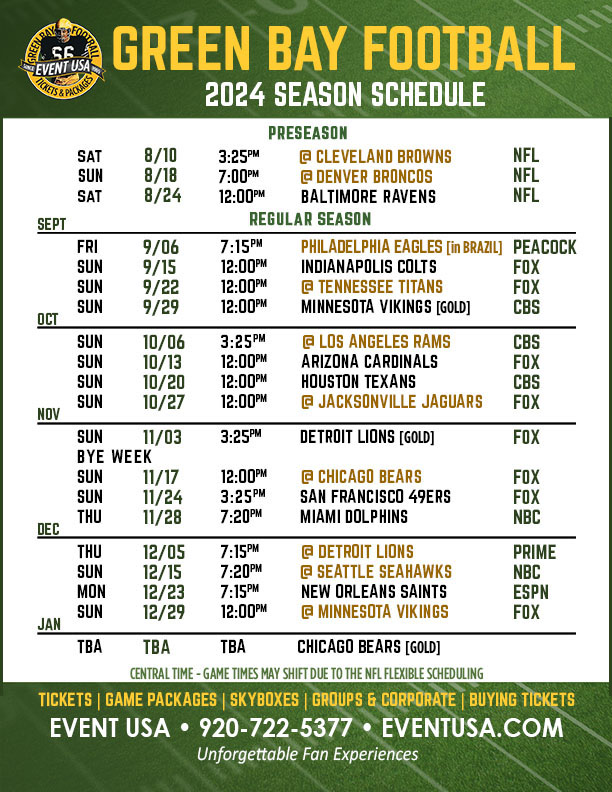
Fantasy sports platforms, such as NFL Fantasy, ESPN Fantasy, and Yahoo Fantasy, represent another layer of technological integration for sports fans. For fantasy players, knowing “what time does Green Bay Packers play Sunday” is critical for setting lineups, monitoring player performance, and engaging with their leagues. These platforms directly consume official league schedules and real-time game data.
The technology behind fantasy sports platforms involves complex database management for player statistics, algorithm-driven scoring systems, and real-time updates for game status, injuries, and individual player performance. When a Packers game kicks off, every catch, run, and tackle by a Green Bay player is instantly translated into fantasy points, which are then reflected in millions of individual fantasy team scores across the platform. This real-time data processing and dissemination are essential for the integrity and excitement of fantasy sports, turning basic schedule information into a dynamic, interactive gaming experience.
Data Aggregation and Delivery: The Unsung Heroes
Behind every instant answer and seamless live stream lies a vast, intricate network of data aggregation and delivery mechanisms. These are the unsung heroes of modern sports technology, ensuring that information regarding a Green Bay Packers Sunday game is accurate, timely, and universally accessible.
Behind the Scenes: Data APIs and Feeds
The foundation of all real-time sports information is built upon data APIs (Application Programming Interfaces) and sophisticated data feeds. Official sports leagues, like the NFL, operate as primary sources, providing schedule information, scores, statistics, and player data through secure APIs to authorized partners. Additionally, specialized sports data providers such as Stats Perform, Sportradar, and Gracenote aggregate this official data, enrich it with their own analytics, and then license it out to various media companies, app developers, and fantasy sports platforms.
These APIs act as digital bridges, allowing different software applications to communicate and exchange data efficiently. When a new Packers game time is set or adjusted, this change is entered into a central database, which then pushes the update through these APIs. Any app or website subscribed to that data feed instantly receives the new information and updates its display accordingly. This programmatic approach ensures consistency and accuracy across the diverse digital landscape.
The Importance of Accuracy and Redundancy
Given the passion and financial stakes involved in professional sports, accuracy is paramount. An incorrect game time for a Green Bay Packers game could lead to widespread fan frustration, missed viewing opportunities, and even impacts on sports betting markets. To combat this, data aggregation systems are built with multiple layers of redundancy and verification.
Often, multiple independent data sources are cross-referenced to confirm information. Automated systems constantly monitor these feeds for discrepancies, and human operators are on standby to manually verify critical updates, especially for last-minute changes or unforeseen circumstances. This robust verification process, combined with highly resilient cloud infrastructure and disaster recovery protocols, ensures that even if one data pipeline fails, others can seamlessly take over, maintaining an uninterrupted flow of precise information to fans worldwide.
Predictive Analytics and Schedule Optimization
Beyond simply delivering current schedules, advanced data analytics and machine learning are being employed to optimize and predict aspects of sports scheduling. While not directly answering “what time does Green Bay Packers play Sunday,” these technologies influence why the Packers might play at a certain time. Broadcasters use predictive models to determine optimal viewership windows, taking into account opponent popularity, regional demographics, and even potential weather impacts.
Machine learning algorithms analyze historical viewership data, social media sentiment, and demographic information to help leagues and broadcasters make informed decisions about game placement, maximizing audience engagement and advertising revenue. This means that the technology isn’t just delivering information; it’s actively shaping the very schedules it then communicates.
The Future of Sports Information: AI, AR, and Beyond
The technological evolution of sports information is far from over. Emerging technologies like advanced AI, augmented reality (AR), and sophisticated predictive models are poised to further revolutionize how fans experience and interact with their favorite sports, making the query “what time does Green Bay Packers play Sunday” an even more seamlessly integrated part of their digital lives.
Conversational AI and Voice Assistants
Voice assistants like Siri, Alexa, and Google Assistant have already made significant inroads into how we access information. Asking “What time do the Packers play Sunday?” aloud to a smart speaker or smartphone is a common interaction today. The underlying conversational AI technology has improved dramatically, understanding nuanced language, handling follow-up questions, and integrating with other smart home devices or personal calendars.
In the future, these assistants will become even more proactive and context-aware. Imagine an AI noticing your Green Bay Packers calendar entry and, on Saturday evening, proactively asking if you’d like a reminder about Sunday’s game, suggesting the best streaming service based on your subscriptions, or even integrating with smart TVs to automatically switch to the correct channel at kickoff. This predictive and assistive capability will make obtaining game information virtually effortless.
Augmented Reality (AR) in Fan Engagement
Augmented Reality (AR) holds immense potential for transforming the fan experience, both in-stadium and at home. While not directly tied to simply knowing the game time, AR could provide visually rich and interactive ways to experience the schedule. Imagine pointing your phone at a physical Green Bay Packers jersey, and an AR overlay appears displaying the upcoming Sunday game time, opponent, and key player stats floating around the logo.
At home, AR could allow fans to project holographic schedules onto their living room walls, with dynamic countdowns to kickoff. During a game, AR could overlay real-time stats, player tracking, and even fantasy points directly onto a live broadcast or even into your living room space, creating a more immersive and interactive viewing environment. The data that powers these AR experiences, including game schedules, would be fed through the same robust API infrastructure already in place.
Hyper-Personalization and Predictive Experiences
The trend towards hyper-personalization, driven by increasingly sophisticated AI and machine learning, will continue to evolve. Future sports information systems won’t just respond to explicit queries; they will anticipate needs. Based on your viewing habits, fantasy team players, social media interactions, and even your mood (gleaned from other digital interactions), AI could proactively suggest optimal viewing times, alert you to potential game-day traffic if you’re attending, or recommend related content before you even think to ask.
For a Green Bay Packers fan, this could mean an intelligent agent learning their preferred pre-game show, sending a notification precisely when it starts, and ensuring their smart TV is ready. If a key Packers player is injured, the system might automatically update your fantasy lineup or suggest alternative viewing options if the game is suddenly less appealing. This proactive, intelligent system moves beyond simply answering questions to anticipating and fulfilling desires, making the fan experience truly seamless and deeply integrated into their digital lives.
Conclusion
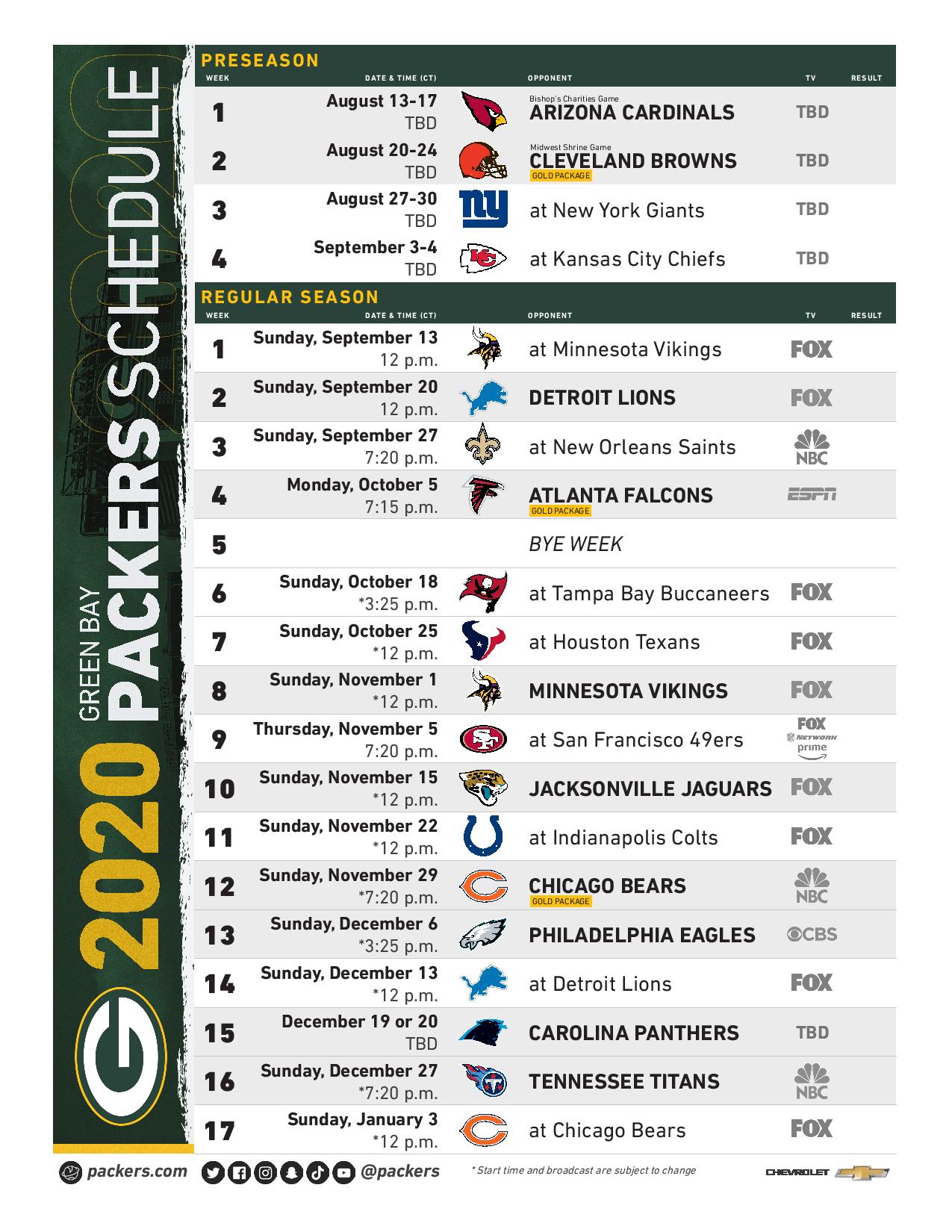
The simple query, “What time does Green Bay Packers play Sunday?”, serves as a powerful testament to the intricate and sophisticated technological infrastructure that underpins modern sports consumption. From the instantaneous results provided by AI-powered search engines to the comprehensive features of dedicated sports apps and the seamless delivery of live content via streaming services, technology has utterly transformed how fans access, engage with, and experience their favorite teams. The silent operations of data APIs, the rigorous pursuit of accuracy through redundancy, and the innovative applications of conversational AI and augmented reality all contribute to an ever-richer, more personalized, and profoundly engaging connection between fans and the games they love. As technology continues its relentless march forward, the future promises even more intuitive, predictive, and immersive ways for every Green Bay Packers fan – and indeed every sports enthusiast – to stay connected to the heart of the action.
aViewFromTheCave is a participant in the Amazon Services LLC Associates Program, an affiliate advertising program designed to provide a means for sites to earn advertising fees by advertising and linking to Amazon.com. Amazon, the Amazon logo, AmazonSupply, and the AmazonSupply logo are trademarks of Amazon.com, Inc. or its affiliates. As an Amazon Associate we earn affiliate commissions from qualifying purchases.