
In an increasingly interconnected world, the seemingly simple question, “What is the time in Indian?” transcends mere curiosity. It’s a fundamental query that underscores the complexity and necessity of bridging temporal gaps in our global digital ecosystem. For individuals communicating across continents, for businesses operating 24/7, and for the vast network of digital services that underpin modern life, understanding and managing time differences, particularly with a significant global player like India, is paramount. This article delves into how technology serves as the indispensable architect of global time management, enabling seamless collaboration, fostering digital innovation, and ensuring operational efficiency across diverse time zones, with a particular focus on India’s unique position.
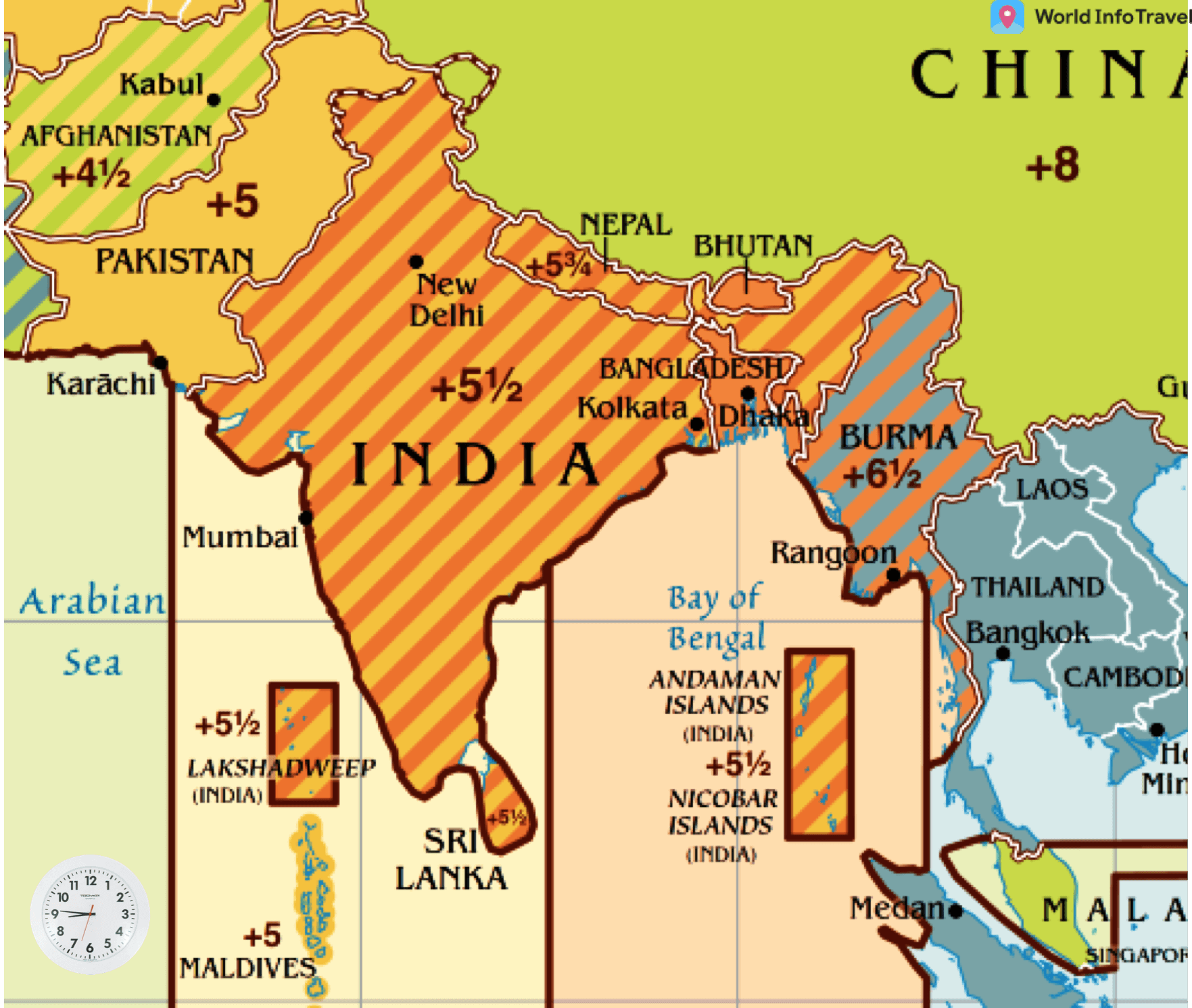
The Uniqueness of Indian Standard Time (IST) in a Global Context
India, a nation of over 1.4 billion people, a burgeoning digital economy, and a pivotal hub for technology services, operates under a single time zone: Indian Standard Time (IST). Its specific offset from Coordinated Universal Time (UTC) presents both a unifying factor domestically and a distinct characteristic in international interactions.
Defining IST and Its Significance
Indian Standard Time is observed throughout India, with an offset of UTC+5:30. This means that IST is five and a half hours ahead of UTC. Unlike many large countries that span multiple longitudes and consequently adopt several time zones (e.g., the United States, Russia, Canada), India maintains a single standard. This uniformity simplifies domestic logistics, communication, and national coordination, avoiding the complexities that multiple internal time zones can introduce within a single nation-state. Historically, this decision was made to foster national unity and administrative ease. The half-hour offset, rather than a full hour, originated from its geographical position and an attempt to average the sun’s position across the country’s longitudinal spread, with the meridian passing through Mirzapur, Uttar Pradesh, serving as the central reference point.
Challenges Posed by Non-Standard Offsets
While a single time zone offers internal coherence, IST’s non-standard half-hour offset can introduce a layer of complexity in international scheduling and automated systems. Most global time zones operate on full-hour offsets (e.g., UTC+1, UTC-5). The +5:30 difference means that direct, quick mental calculations for global partners can sometimes be tricky. For instance, if it’s 9 AM in New York (EDT, UTC-4), it’s 6:30 PM in India. This half-hour difference, while minor, requires specific attention in meeting invites, flight schedules, and synchronous digital communications, leading to a higher potential for small errors or misunderstandings if not meticulously managed. Technology, therefore, becomes not just a convenience but a necessity to accurately translate these temporal differences into actionable schedules.
Technology as the Global Time Bridge: Tools and Solutions
The digital age has fundamentally reshaped how we perceive and interact with time across borders. What was once a logistical headache requiring manual calculations or a quick phone call is now often an automated, seamless experience thanks to an array of technological tools and platforms.
Smart Devices and Operating Systems
At the forefront of time zone management are our personal smart devices and their underlying operating systems. Modern smartphones, tablets, and computers automatically detect and adjust to local time zones based on network information or GPS. Beyond local time, these devices invariably include “world clock” features, allowing users to track the current time in multiple cities globally, including those observing IST. This instant access to accurate time information is powered by sophisticated back-end systems. Crucially, the Network Time Protocol (NTP) plays a silent yet vital role, ensuring that all connected devices synchronize their clocks with highly accurate time servers. This synchronization is critical not just for displaying the correct time, but for the integrity of digital transactions, data logging, and cybersecurity. Without NTP, discrepancies between system clocks could lead to authentication failures, data corruption, and security vulnerabilities, especially in geographically dispersed systems.
Collaboration Software and Scheduling Platforms
The rise of global remote work and international teams has been heavily facilitated by collaboration software designed to handle time zone complexities. Video conferencing tools like Zoom, Microsoft Teams, and Google Meet often display the local time for each participant, making it easier to gauge suitable meeting slots. Calendar applications such as Google Calendar, Outlook Calendar, and Apple Calendar feature robust time zone support, allowing users to create events in specific time zones and then view them in their own local time, or convert them for others. More advanced meeting schedulers like Calendly, Doodle Poll, and When2meet take this a step further, enabling users to propose available slots, and participants to select times that work for them, with the platform automatically handling the time zone conversions. This eliminates the back-and-forth email chains that once characterized cross-continental meeting arrangements, streamlining productivity for global teams, many of whom have significant representation in India.
Dedicated Time Zone Converters and Apps
Beyond integrated solutions, a plethora of dedicated online tools and mobile applications exist solely to simplify time zone conversions. Websites like TimeandDate.com, WorldTimeBuddy, and Every Time Zone offer intuitive interfaces where users can input multiple locations and instantly see the corresponding times. Many of these tools also include features like “meeting planners,” which allow users to identify optimal overlap hours when multiple team members across different time zones are available. Mobile apps provide similar functionality on the go, often with widgets for quick glances at preferred time zones. These specialized tools become indispensable for project managers, event organizers, and anyone frequently engaging with partners or clients in different parts of the world, especially those navigating IST’s unique half-hour offset. They abstract away the computational burden, allowing users to focus on the content of their communication rather than the mechanics of scheduling.
India’s Role in the Global Digital Economy: Time Zone Implications

India’s status as a global technology powerhouse is intrinsically linked to its unique time zone and the innovative ways its digital workforce leverages temporal differences to its advantage.
The “Always On” Advantage (and Challenge) for Indian Tech
The UTC+5:30 offset positions India uniquely to support global operations. When business hours are ending in the US (e.g., Eastern Time, UTC-4/5), India is already well into its afternoon or evening. Conversely, as Europe (e.g., Central European Time, UTC+1/2) wakes up, Indian teams are completing their initial tasks. This temporal alignment allows Indian tech companies, BPOs, and IT service providers to offer an “always on” advantage. Development, customer support, and IT infrastructure management can operate in a follow-the-sun model, where tasks are handed off seamlessly between teams in different geographies. A project started in the US can be worked on by Indian teams during their day, and progress can be reviewed by US teams the next morning. This continuous workflow significantly accelerates project delivery and improves global service uptime. However, this also presents a challenge: Indian teams often need to adjust their schedules to accommodate early morning or late-night calls with Western counterparts, highlighting the need for flexible work arrangements and robust technological support for asynchronous communication.
Remote Work and Global Talent Pools
India has long been a major hub for remote talent, particularly in software development, IT services, and back-office operations. The pandemic further accelerated this trend, embedding remote work as a norm and expanding India’s reach in the global talent pool. Technology has been the bedrock of this expansion, enabling effective collaboration despite geographical and temporal distances. Project management software (Jira, Asana, Trello), version control systems (Git), communication platforms (Slack, Microsoft Teams), and virtual desktop infrastructure (VDI) allow Indian professionals to integrate seamlessly into global teams. These tools not only facilitate task management and code sharing but also include features like status updates, asynchronous messaging, and integrated video calls with time zone awareness, helping bridge communication gaps and maintain team cohesion. The strategic use of technology means that physical proximity to a client or team is less critical than ever, allowing companies worldwide to tap into India’s vast pool of skilled workers.
Digital Security and Data Synchronization Across Borders
Precise time synchronization is not merely a convenience; it’s a critical component of digital security and data integrity in globally distributed systems. For instance, in cybersecurity, accurate timestamps are essential for logging events, auditing activities, and tracing the sequence of attacks across networks. If system clocks are out of sync, correlating security events from different servers in different time zones becomes incredibly difficult, potentially hindering incident response. Similarly, in distributed databases and cloud environments that span multiple regions, including those in India, consistent timekeeping is vital for maintaining data consistency, managing transactions, and ensuring data replication occurs without conflicts. Technologies like NTP ensure that all servers and network devices maintain highly accurate time, providing a reliable temporal backbone for secure and consistent global digital operations. Challenges arise when systems operate across varying time zones, requiring careful configuration and monitoring to prevent temporal discrepancies from compromising data integrity or security protocols.
Best Practices for Navigating Time Differences in the Digital Realm
Mastering global time management in the digital age requires more than just tools; it demands intentional strategies and a cultural shift towards temporal awareness.
Establishing Clear Communication Protocols
One of the simplest yet most effective practices is to establish clear communication protocols for time. Always specify the time zone when scheduling meetings or setting deadlines (e.g., “10 AM IST,” “2 PM ET,” or “14:00 UTC”). Utilizing standardized scheduling tools that automatically convert times for participants is also crucial. Furthermore, encouraging the use of “overlap hours” – designated periods when team members across critical time zones are available for synchronous meetings – can maximize productivity. For instance, a US-based team might schedule core meetings with their Indian counterparts during the Indian late afternoon/evening, which corresponds to the US morning.
Fostering a Culture of Temporal Awareness
Beyond tools, an empathetic and aware organizational culture significantly eases the challenges of time differences. This involves educating team members about the time zones of their global colleagues and fostering an understanding of the impact of working non-standard hours. Encouraging asynchronous communication (e.g., detailed emails, project management comments, pre-recorded video updates) for non-urgent matters can reduce the pressure of immediate responses and allows team members to work during their most productive hours. Prioritizing clear, concise written communication ensures that information is accessible and understood regardless of when it’s consumed, minimizing confusion stemming from delayed real-time interactions.
Leveraging Automation and AI
The future of global time management will increasingly rely on automation and artificial intelligence. AI-powered scheduling assistants can learn preferences and availability, proactively suggesting optimal meeting times across complex time zone matrices. Automated alerts can notify individuals of important deadlines or upcoming meetings in their local time, reducing the chance of missed appointments. Predictive analytics could even help optimize team workflows by identifying peak collaboration hours or suggesting the best times for task handoffs based on historical data and time zone overlaps. As these technologies mature, they promise to further simplify the complexities of global time management, making the question “what’s the time in Indian” even easier to answer and integrate into seamless global operations.

Conclusion
The question “What is the time in Indian?” is a microcosm of our globally integrated digital landscape. It underscores the constant need to bridge geographical and temporal distances for effective communication, collaboration, and commerce. India’s unique time zone, IST, is a critical component of its strategic position in the global digital economy. Far from being a mere logistical hurdle, it has become a defining characteristic that, when managed effectively with technology, enables continuous workflows and 24/7 global support. From smart devices and sophisticated scheduling platforms to dedicated time zone converters, technology has built the indispensable bridges that allow individuals and businesses worldwide to navigate temporal differences with unprecedented ease. As we continue to embrace remote work, global talent, and digital services, the ongoing innovation in time management tools and the adoption of best practices will further dissolve temporal barriers, fostering an even more connected and efficient global digital ecosystem, making the concept of “time in Indian” an integral, and easily managed, part of our shared digital future.
aViewFromTheCave is a participant in the Amazon Services LLC Associates Program, an affiliate advertising program designed to provide a means for sites to earn advertising fees by advertising and linking to Amazon.com. Amazon, the Amazon logo, AmazonSupply, and the AmazonSupply logo are trademarks of Amazon.com, Inc. or its affiliates. As an Amazon Associate we earn affiliate commissions from qualifying purchases.