
In the modern global landscape, “strength” is no longer measured solely by the reach of an empire’s borders or the quantity of its armaments. In an era defined by globalized trade, supply chain integration, and the digitalization of currency, the definition of a superpower has shifted decisively toward economic resilience, financial hegemony, and capital liquidity. When we ask what the strongest country is, we are fundamentally asking which nation possesses the most robust financial infrastructure, the most stable sovereign credit, and the greatest capacity to influence global monetary policy.
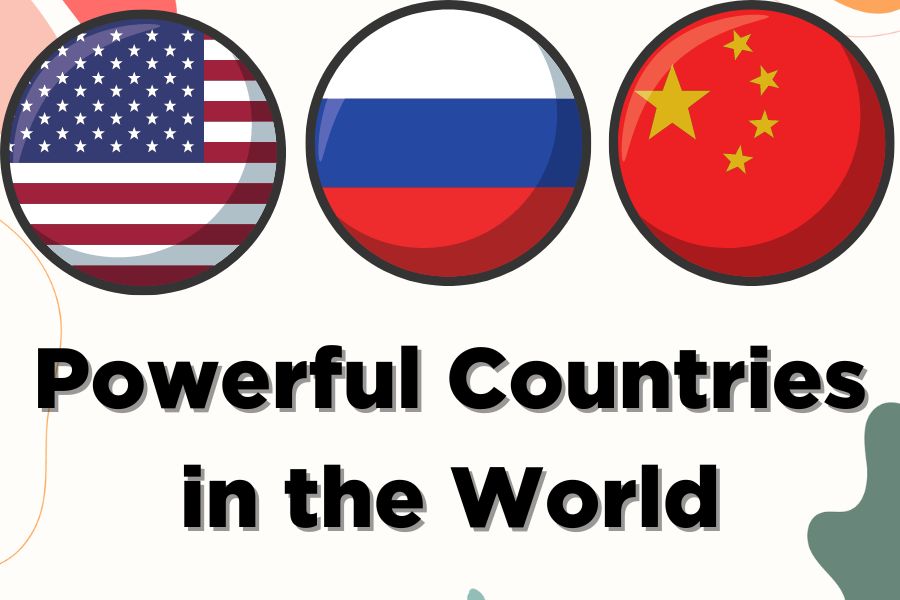
The Pillars of Economic Hegemony
To determine the strongest country from a financial perspective, we must evaluate the structural components that uphold national wealth. Economic strength is not merely about having the highest Gross Domestic Product (GDP); it is about the quality, sustainability, and global utility of that wealth.
Sovereign Credit and Financial Trust
The true measure of a country’s financial strength lies in its credit rating. Nations like the United States, Switzerland, and Norway operate at the top tiers of international credit ratings, meaning they can borrow money at the lowest interest rates. This is not a coincidence; it is a reflection of institutional stability. Investors view these countries as “safe havens.” When global markets become volatile, capital flows into these currencies and sovereign bonds. This ability to attract global capital during times of crisis is the ultimate marker of financial dominance.
Currency as a Global Tool
The strength of a country is also tied to the global demand for its currency. The U.S. Dollar (USD) remains the world’s primary reserve currency. Because global oil, precious metals, and vast swaths of international trade are denominated in USD, the United States possesses a unique financial lever: the ability to influence global liquidity. A country whose currency is the bedrock of international trade and central bank reserves inherently possesses the most significant economic leverage on the planet.
The Role of Capital Markets and Innovation Funding
A country’s economic muscle is amplified by the depth and maturity of its capital markets. If a country possesses wealth but lacks a mechanism for that wealth to be invested, multiplied, and deployed, that wealth stagnates.
Deep Liquid Markets
The United States stands as the global leader in capital markets. The New York Stock Exchange and the NASDAQ represent the largest concentration of investable capital in history. This creates a feedback loop: businesses flock to where the capital is, which attracts talent, which in turn fosters innovation. A nation’s strength is determined by its ability to provide a frictionless environment where capital can move from savers to entrepreneurs. Countries with highly efficient stock exchanges and transparent banking systems attract the world’s most ambitious companies, fueling the tax base and job growth that maintain long-term financial dominance.
Institutional Stability and Property Rights
Economic strength is impossible without the rule of law. Financial capital is cowardly; it flees regions where property rights are ambiguous or where contracts are not enforced. The “strongest” countries are those that maintain a legal framework where an investment made today is protected by a consistent judicial system tomorrow. This predictability is what allows complex financial derivatives, multi-national corporate structures, and long-term pension funds to thrive. Without this institutional bedrock, even a country with vast natural resources will struggle to translate those resources into sustained economic power.
Diversification and Strategic Financial Assets

A strong country must ensure it is not overly reliant on a single sector. Economic resilience is the hallmark of the most powerful nations.
Natural Resources vs. Human Capital
While some nations rely heavily on the export of natural resources—oil, gas, or rare earth minerals—the most resilient countries have transitioned to knowledge-based economies. Human capital, education, and research and development (R&D) are the modern drivers of GDP. By investing in high-margin sectors like biotechnology, fintech, and renewable energy infrastructure, a country insulates itself from commodity price volatility. The strongest nations are those that export high-value services rather than just raw materials.
The Sovereign Wealth Strategy
Some of the most financially potent nations are those that have mastered the art of sovereign wealth management. Countries like Norway or Singapore demonstrate that strength comes from saving and investing today’s windfalls for tomorrow’s growth. By building massive sovereign wealth funds, these countries exert significant influence over global markets, owning stakes in foreign corporations and real estate. This ability to project financial power across borders—without the need for physical military projection—is the hallmark of a mature financial superpower.
Assessing the Competitive Landscape
When comparing the world’s leading economies, we see a distinct hierarchy based on financial integration and growth potential.
The Dominance of the U.S. Economy
The United States remains the benchmark for economic strength. Despite debates regarding national debt, the U.S. maintains the most diverse economy, the highest level of R&D spending, and the most dominant currency. The sheer scale of the American consumer market, combined with its leadership in the tech sector, creates an ecosystem that is difficult for any other nation to displace in the short term. Its financial strength is reinforced by the transparency of its regulatory bodies and the relative ease of doing business.
The Rise of Alternative Financial Powerhouses
While the U.S. holds the top spot, other nations have achieved immense strength through hyper-specialization.
- Switzerland: Maintains strength through a unique combination of extreme monetary stability, a world-class banking sector, and a focus on high-value-added manufacturing (pharmaceuticals and precision instruments).
- Singapore: Has transformed itself into a financial hub for Asia, leveraging geographic location, a pro-business tax environment, and advanced digitalization to act as the primary clearinghouse for capital moving through the Pacific.
- China: Represents a different model of strength, driven by massive state-led investment, infrastructure expansion, and a rapidly growing domestic consumption base. While its financial markets are more centralized and state-controlled, the scale of its manufacturing and export capability gives it significant influence over global supply chains and currency valuation.
The Future of Financial Strength
As we look toward the next several decades, the definition of the “strongest” country will likely evolve alongside technology.
Digital Assets and Central Bank Innovation
The emergence of Central Bank Digital Currencies (CBDCs) and the broader digitalization of finance will redefine international settlements. The country that establishes the most secure, efficient, and widely adopted digital payment infrastructure will likely gain a massive competitive advantage. If a nation can make its currency easier to move, safer to store, and more useful in digital transactions, it will solidify its position as a global financial leader.

Sustainable Finance and ESG Leadership
Finally, the “green transition” is becoming a critical metric of financial strength. Nations that lead in developing the technology for sustainable energy will effectively control the next generation of infrastructure. Because the cost of capital is increasingly tied to Environmental, Social, and Governance (ESG) criteria, countries that successfully transition their economies toward sustainability will find it cheaper and easier to borrow, invest, and grow.
Ultimately, the strongest country is the one that successfully balances the agility of its private markets with the stability of its legal and monetary institutions. It is the nation that can convince the rest of the world that its currency, its debt, and its corporate assets are the safest and most profitable places to store wealth. Financial dominance is not a static state; it is a continuous achievement of trust, innovation, and institutional integrity. As power shifts toward digital liquidity and sustainable growth, the strongest countries will continue to be those that demonstrate the highest level of competence in managing the complex, interconnected engine of global capital.
aViewFromTheCave is a participant in the Amazon Services LLC Associates Program, an affiliate advertising program designed to provide a means for sites to earn advertising fees by advertising and linking to Amazon.com. Amazon, the Amazon logo, AmazonSupply, and the AmazonSupply logo are trademarks of Amazon.com, Inc. or its affiliates. As an Amazon Associate we earn affiliate commissions from qualifying purchases.