
Minecraft, a cultural phenomenon that transcended its origins as an indie game, continuously reinvents itself through a rigorous schedule of updates. Far from being a static entity, its persistent evolution is a core pillar of its enduring appeal, captivating millions of players worldwide across various platforms. Understanding “what is the new Minecraft version” is more than just knowing a patch number; it’s about delving into the intricate process of software development, community engagement, and the technological advancements that keep this blocky universe fresh and vibrant. Each major update introduces not just new content, but often technical overhauls, gameplay refinements, and sometimes even philosophical shifts in the game’s direction, solidifying its place as a quintessential example of a living, breathing software project. This article will dissect the latest iterations of Minecraft, examining their features, technical underpinnings, and the broader implications for both players and the gaming industry at large.
The Evolution of Minecraft: A Legacy of Innovation
Minecraft’s journey from a niche indie project to a global entertainment juggernaut is a testament to its innovative design and its developers’ commitment to continuous improvement. What started as a simple sandbox game with rudimentary graphics has blossomed into a complex ecosystem, constantly pushing boundaries in procedural generation, player creativity, and community-driven content.
From Indie Phenomenon to Global Behemoth
Launched to the public in various alpha and beta stages starting in 2009, Minecraft quickly captivated players with its unparalleled freedom to build, explore, and survive in an infinitely generated world. Its unique blend of simplicity and depth allowed players of all ages to engage, fostering a creative community unlike any other. The official release in 2011 marked the beginning of a relentless update cycle, with Mojang Studios (and later Microsoft, after its acquisition in 2014) consistently introducing new blocks, biomes, mobs, and gameplay mechanics. This iterative development model ensured the game never grew stale, attracting new players while retaining its veteran base. The transition from a small development team to a massive studio environment brought increased resources, allowing for more ambitious updates and a broader reach across platforms, solidifying its status as one of the best-selling video games of all time.
The Philosophy Behind Iterative Development
Mojang’s approach to updating Minecraft is deeply rooted in community feedback and a desire to enhance the core experience without fundamentally altering what makes the game special. Unlike many live-service games that might introduce radical changes or monetization schemes, Minecraft’s updates are often themed, focusing on specific aspects of the game world (e.g., caves, oceans, the Nether). This thematic approach ensures cohesion and allows developers to thoroughly explore new concepts. The development process typically involves several stages: initial concepting, snapshot releases for Java Edition (early playable versions for public testing), beta builds for Bedrock Edition, and extensive bug fixing based on community reports. This transparent and community-inclusive development philosophy not only builds anticipation but also empowers players to contribute to the game’s direction, making them feel like active participants in its ongoing evolution. This collaborative model is a cornerstone of Minecraft’s sustained technological and creative relevance.
Unpacking the Latest Major Update: The “Trails & Tales” Update (1.20) and Anticipating “Tricky Trials” (1.21)
While the question “what is the new Minecraft version” is always topical, as of late 2023 and early 2024, the “Trails & Tales” update (version 1.20) stands as the most recent major stable release, with “Tricky Trials” (version 1.21) actively in development via snapshots and previews. Both represent significant advancements in the game’s content and underlying technology.
Key Features and Gameplay Additions
The “Trails & Tales” update (1.20), released in June 2023, focused heavily on self-expression, storytelling, and exploration. It introduced several groundbreaking features:
-
Archeology: A new gameplay mechanic allowing players to unearth ancient artifacts from “suspicious sand” and “suspicious gravel” blocks found in various biomes, using a new brush tool. This added a layer of historical discovery and puzzle-solving.
-
Sniffers: A new ancient mob resurrected through archeology, capable of sniffing out unique decorative seeds for Torchflower and Pitcher Plants, enhancing the game’s flora.
-
Cherry Blossom Biome: A visually stunning new biome characterized by vibrant pink trees, offering new wood types and a unique aesthetic, quickly becoming a community favorite.
-
Camels: Rideable mobs found in desert villages, capable of carrying two players, adding a new dimension to desert exploration.
-
Customizable Armor Trims: A highly anticipated feature allowing players to personalize their armor with unique patterns found in various structures, using a smithing template and mineral resources. This greatly expanded options for personal branding within the game.
-
Chiseled Bookshelves: Functional storage for books, including enchanted books, that can also interact with Redstone, opening new possibilities for automated libraries and hidden entrances.
-
Bamboo Wood Sets: Expanding the utility of bamboo, players can now craft full sets of bamboo wood blocks, including rafts, which are unique boat variants.
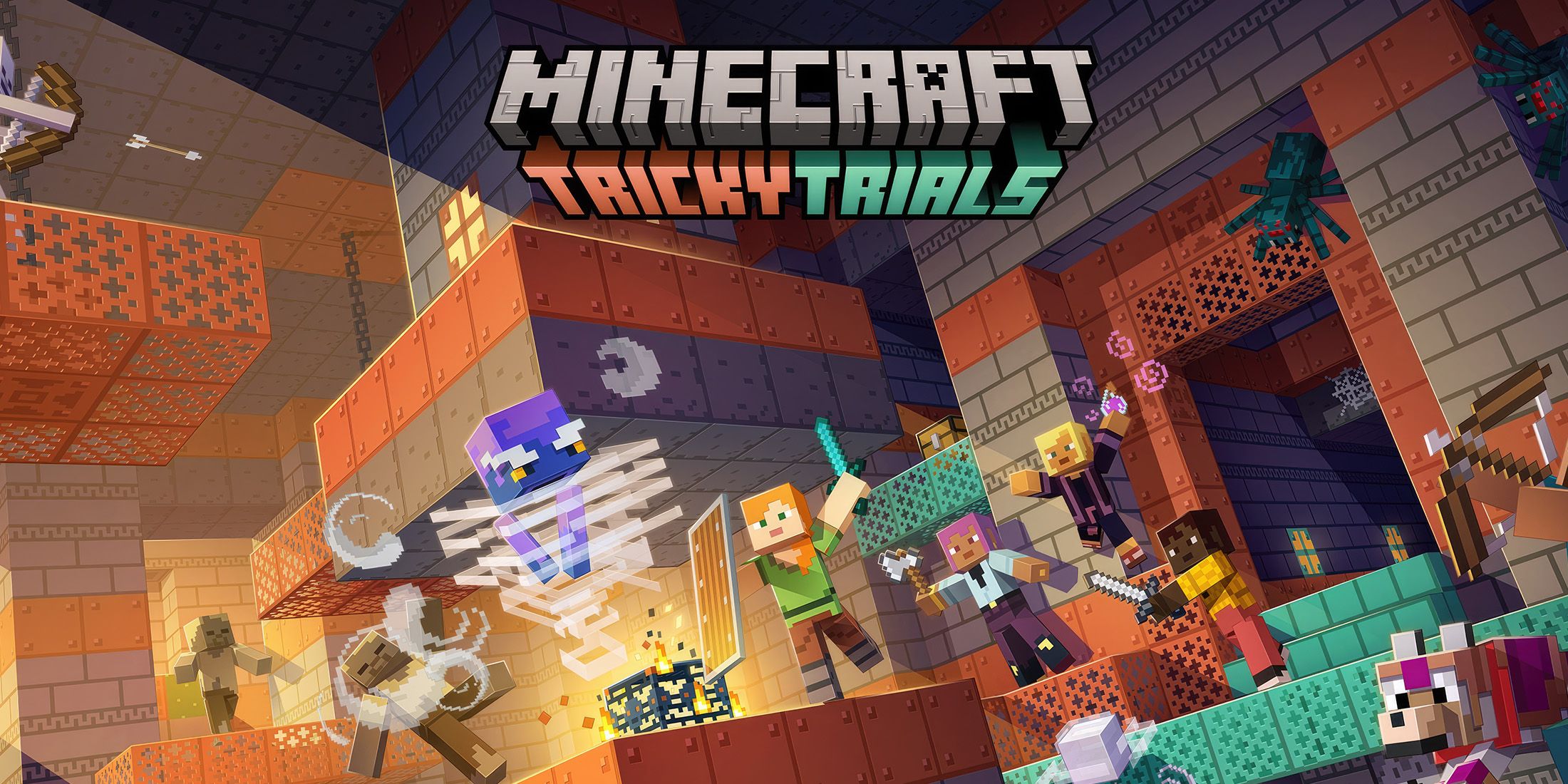
Looking ahead, “Tricky Trials” (1.21), currently in snapshots, promises to introduce new challenges and mechanical depth. Early previews showcase:
-
Trial Chambers: Procedurally generated combat challenges with unique traps and mob spawners that reward players based on performance.
-
Breeze: A new hostile mob found in Trial Chambers, known for its wind-based attacks and unique combat mechanics.
-
Mace: A powerful new weapon with unique slam attack mechanics.
-
Crafter: A new Redstone component that automates crafting, a significant quality-of-life and automation improvement.
Technical Enhancements and Performance Optimizations
Beyond new content, each Minecraft update typically brings a raft of technical improvements. For 1.20, optimizations included continued refinement of rendering pipelines, particularly for newer hardware, and numerous bug fixes across both Java and Bedrock editions to improve stability and performance. The introduction of new block types and generation algorithms often requires careful optimization to prevent performance bottlenecks, especially in a game with such vast worlds.
For Bedrock Edition, the updates consistently focus on improving cross-platform compatibility and performance across a wider range of devices, from mobile phones to high-end PCs and consoles. This involves tweaking memory management, improving frame rates, and ensuring a smoother experience regardless of the player’s chosen hardware. The ongoing development of features for 1.21, such as the complex logic for Trial Chambers and the Crafter, necessitates robust back-end engineering to ensure these additions are stable and performant, particularly when interacting with other game systems or large-scale Redstone contraptions. Mojang continuously works on their rendering engine and core game logic to support increasingly complex features without compromising the game’s accessibility or performance.
Community Impact and Reception
The “Trails & Tales” update received a generally positive reception, particularly for the archeology system and the visual appeal of the cherry blossom biome. Armor trims also quickly became a beloved feature, fostering a new layer of player identity and creativity. The slower development cycle for 1.20, driven by a focus on quality and player feedback, was also appreciated by a community that values well-polished additions.
The ongoing snapshots for “Tricky Trials” are generating significant excitement within the technical and survival communities, particularly for the automated crafting block and the new combat challenges. Players are already theory-crafting elaborate Redstone contraptions and discussing optimal strategies for the Trial Chambers. These updates invariably spark new trends on content platforms like YouTube and Twitch, with creators producing tutorials, challenge runs, and showcases of innovative builds. The continuous injection of new features ensures a steady stream of fresh content for both players and content creators, reinforcing Minecraft’s place at the forefront of digital entertainment.
Beyond the Core Game: Exploring Modding and Ecosystem Enhancements
Minecraft’s official updates are just one facet of its sprawling technological ecosystem. The game’s design inherently supports and encourages external innovation, leading to a vibrant world of user-generated content, modifications, and server infrastructure that continually evolves in tandem with the official releases.
The Enduring Power of the Modding Community
The modding community for Minecraft is perhaps its most significant technological strength outside of Mojang itself. For Java Edition, the ability to modify the game’s code has given rise to countless fan-made expansions, ranging from simple quality-of-life tweaks to massive content overhauls like industrial engineering systems, magic spells, or entirely new dimensions. New official updates present both opportunities and challenges for mod developers. While major updates often introduce new APIs and game mechanics that modders can leverage, they also frequently break compatibility with existing mods, requiring developers to update their creations. This creates a fascinating dance between official development and community innovation, where modders are constantly adapting, extending, and sometimes even pre-empting official features. The advent of mod loaders like Fabric and Forge, which abstract away much of the technical complexity, has further democratized modding, ensuring a continuous influx of creative software extensions that keep the game endlessly replayable.
Marketplace and Official Add-ons
For Bedrock Edition, Mojang offers a curated “Minecraft Marketplace” where creators can sell officially sanctioned add-ons, texture packs, skins, and adventure maps. This ecosystem provides a more controlled but highly accessible way for players to customize their experience across all Bedrock-compatible devices. Updates to the core game necessitate corresponding updates for Marketplace content, ensuring compatibility and allowing creators to integrate new blocks, items, and features into their offerings. This system provides a platform for developers to monetize their creations while guaranteeing a certain level of quality and security for players. It’s a powerful example of a platform holder supporting a creator economy within its software, providing tools and infrastructure for external developers.
Server Infrastructure and Multiplayer Experience
Multiplayer has always been a cornerstone of the Minecraft experience, and official updates significantly impact the vast network of community-run servers. Server software (like Spigot, PaperMC, or Fabric-based servers) must be updated to support the new game version, often requiring plugin developers to update their own creations. This intricate dependency chain means that a new Minecraft version ripples through a complex ecosystem of server administrators, plugin developers, and hosting providers. Technical features like improved network code, new command syntax, or changes to game mechanics directly influence how servers are managed, optimized, and secured. The ongoing efforts by Mojang to enhance cross-platform play for Bedrock Edition also push the boundaries of network engineering, ensuring a stable and low-latency experience for players connecting from diverse devices and locations, further solidifying Minecraft’s role as a leader in real-time, persistent multiplayer environments.
The Future of Minecraft: Anticipating What’s Next
Predicting the future of Minecraft is always an exciting endeavor, given Mojang’s commitment to long-term development and its responsiveness to its community. The continuous flow of updates is not just about adding new things but about sustaining a technological marvel that adapts and expands with its player base.
Hints from Snapshots and Beta Versions
The most direct clues about future content come from the snapshot releases for Java Edition and the beta/preview versions for Bedrock Edition. These early builds allow players to test upcoming features, identify bugs, and provide feedback that directly influences the final release. This open development process is a cornerstone of Mojang’s strategy, allowing them to gauge player interest, iterate on designs, and refine mechanics before a broad rollout. For example, many features from the “Tricky Trials” update (1.21) were showcased and tested in these preliminary versions months before their planned stable release. Monitoring these snapshots is a ritual for many dedicated players and content creators, providing a window into the technological advancements and creative directions Mojang is exploring.
Community Wishlists and Developer Insights
Mojang maintains a close relationship with its community, often conducting polls (like the annual Mob Vote) and actively monitoring forums and social media for player suggestions. Features like archeology or armor trims were long-standing community requests that eventually found their way into the game. Developers also frequently participate in interviews and presentations, offering glimpses into their long-term vision. While they rarely reveal explicit roadmaps, these insights often hint at areas of focus—whether it’s further expanding exploration, enhancing combat, or deepening the game’s automation capabilities. The challenge lies in balancing the community’s diverse desires with the game’s core identity and technical feasibility, ensuring that new features contribute meaningfully to the overall experience without alienating existing players.
Sustaining Innovation in a Sandbox Game
Minecraft’s biggest long-term challenge is how to continuously innovate within a sandbox game that, by its very nature, empowers players to create their own content. Mojang’s strategy appears to be multi-faceted:
-
Expanding Core Biomes and Dimensions: Continuously enriching the Overworld, Nether, and End with new blocks, mobs, and structures.
-
Introducing New Mechanics: Adding entirely new gameplay systems, such as archeology, Redstone automation, or advanced combat, that open up new avenues for player engagement.
-
Enhancing Creative Tools: Providing more options for builders and map creators, like the expanded customization features.
-
Improving Technical Foundations: Ongoing efforts to optimize performance, enhance rendering, and refine the game engine ensure it can support increasingly complex future additions.
This sustained commitment to both content and technical refinement is crucial for keeping Minecraft relevant for years to come. It ensures that the “new Minecraft version” will always offer something genuinely fresh and engaging, maintaining its position not just as a game, but as a dynamic technological platform for creativity and exploration.
The Broader Technological Implications of Minecraft’s Evolution
Minecraft’s continuous evolution extends beyond its own blocky boundaries, offering profound insights and influencing broader technological trends, particularly within the realms of game development, digital education, and cross-platform interoperability.
Game Development Paradigms
Minecraft stands as a prime example of successful “live service” game development, albeit one that predates and often defies many of the genre’s common pitfalls. Its model of frequent, substantial, and often free content updates, coupled with a deep respect for community feedback, showcases an alternative to aggressive monetization and forced engagement. This approach influences how other developers think about long-term game support and community building. Furthermore, its continuous push for procedural generation and infinite world design has solidified these techniques as viable and desirable in modern game engines, inspiring a new generation of sandbox and open-world titles. The modular nature of its updates and its commitment to back-compatibility (within reason for Java Edition) also serve as case studies in managing large-scale, evolving software projects.
Educational and Creative Platforms
Beyond entertainment, Minecraft has cemented its role as a powerful educational and creative platform. Each new version, with its added blocks, Redstone components, or unique physical properties, expands its utility as a digital laboratory. For instance, the introduction of the Crafter in 1.21 significantly enhances the game’s Redstone capabilities, allowing for more complex automation and logical circuits, which in turn can be used to teach programming concepts, engineering principles, and problem-solving. Educators and institutions leverage “Minecraft: Education Edition” to teach subjects ranging from history and coding to environmental science and architecture. The game’s consistent updates, therefore, aren’t just for fun; they are expanding the toolset available for digital learning and creative expression, demonstrating the potential of gaming software as a versatile learning medium.
Cross-Platform Play and Interoperability
Minecraft’s “Bedrock Edition” is a vanguard in the pursuit of seamless cross-platform play. The technical challenge of maintaining a consistent and performant experience across mobile, console, and PC environments is immense. Mojang’s continuous efforts in this area, including optimizing rendering, networking, and user interfaces for diverse hardware, contribute significantly to the broader industry’s understanding of interoperability. Each update refines their approach to cloud saves, online multiplayer stability, and content synchronization across different ecosystems. This commitment to breaking down platform barriers not only expands Minecraft’s player base but also pushes the technical envelope for how complex, real-time interactive software can operate ubiquitously, setting a precedent for future gaming and application development. The question of “what is the new Minecraft version” is thus intrinsically linked to the cutting edge of digital entertainment and software engineering.
aViewFromTheCave is a participant in the Amazon Services LLC Associates Program, an affiliate advertising program designed to provide a means for sites to earn advertising fees by advertising and linking to Amazon.com. Amazon, the Amazon logo, AmazonSupply, and the AmazonSupply logo are trademarks of Amazon.com, Inc. or its affiliates. As an Amazon Associate we earn affiliate commissions from qualifying purchases.