
Ukraine, often recognized for its vast agricultural lands and strategic geopolitical position, also possesses an often-overlooked but immensely valuable asset: prodigious mineral wealth. In the context of the ongoing conflict and the anticipated post-war reconstruction, the concept of “mineral deals” with Ukraine has garnered significant attention from international investors, governments, and corporations. These are not merely transactions but complex financial and strategic arrangements that promise to reshape Ukraine’s economic future and influence global supply chains for critical raw materials. Understanding these deals requires a deep dive into Ukraine’s geological endowments, the global demand for these resources, and the intricate financial, political, and operational challenges and opportunities they present.

Ukraine’s Untapped Mineral Riches: A Strategic Economic Foundation
Ukraine’s subsurface holds an extraordinary array of minerals, many of which are designated as critical by the European Union and the United States, essential for green energy transitions, high-tech industries, and defense. This mineral endowment presents a monumental opportunity for the nation’s economic recovery and long-term prosperity, provided it can be harnessed effectively through strategic investments and robust financial frameworks.
Overview of Ukraine’s Mineral Reserves
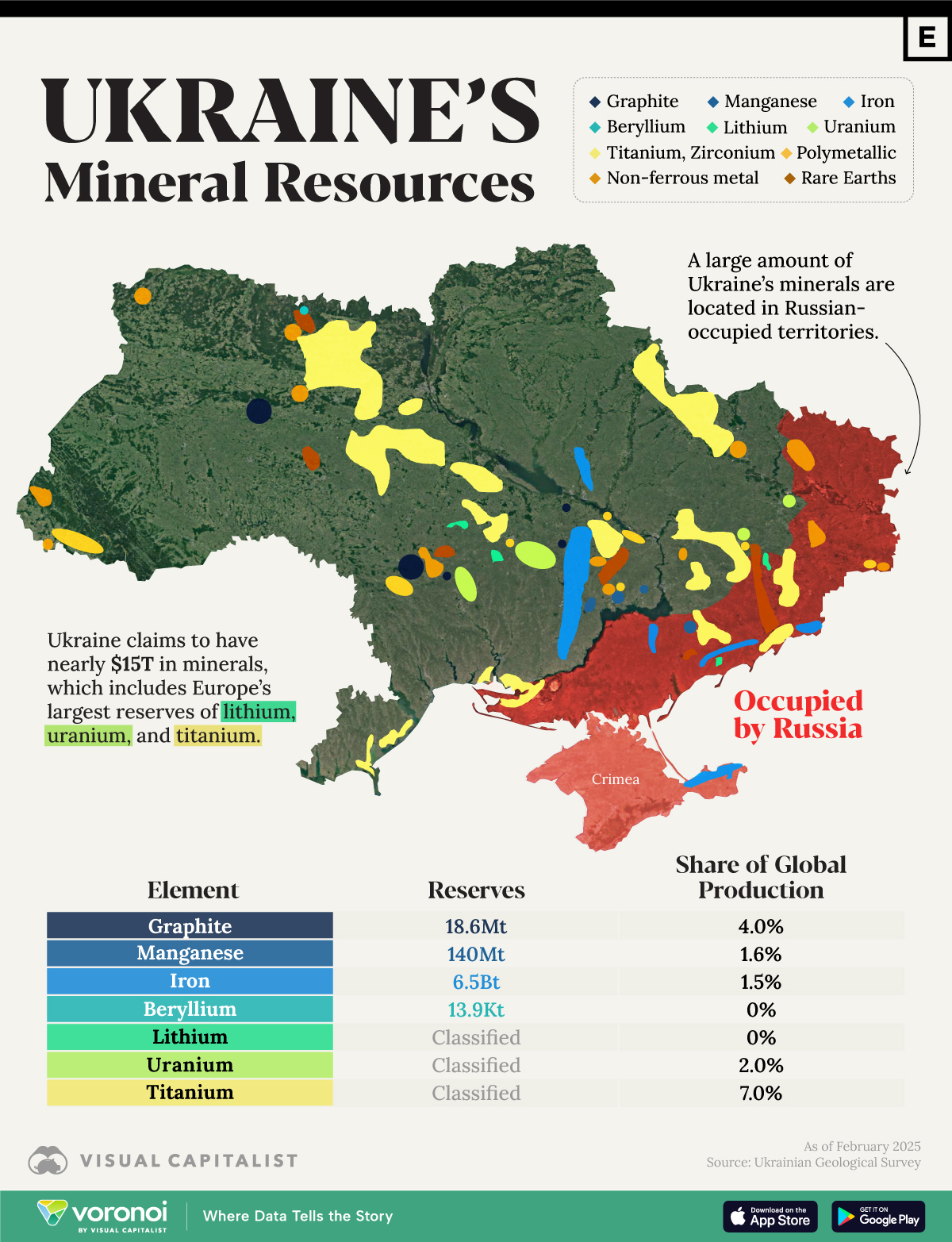
Geologically, Ukraine is a treasure trove. It boasts some of the world’s largest proven reserves of iron ore, critical for steel production, with significant deposits located primarily in the Kryvyi Rih basin. Beyond traditional industrial minerals, Ukraine also possesses substantial quantities of graphite, a key component in electric vehicle (EV) batteries and nuclear reactors, with estimated reserves placing it among the top global holders. Lithium, another indispensable element for modern battery technology, has been discovered in significant quantities, particularly in the Donetsk and Kirovohrad regions. Titanium, vital for aerospace, defense, and medical applications, is abundant, as are deposits of manganese, nickel, and cobalt. Even rarer elements like zirconium and beryllium are present. Perhaps most strategically significant are its uranium reserves, making Ukraine one of the largest holders globally, pivotal for nuclear energy production. The sheer diversity and volume of these minerals make Ukraine a potentially dominant player in several critical raw material markets.
Geopolitical Significance of These Resources
The strategic importance of Ukraine’s mineral wealth extends far beyond its borders. In an era marked by geopolitical competition and a global race for critical minerals, control over and access to these resources are paramount. For the European Union, which is heavily reliant on imports for many critical minerals, Ukraine represents a potential domestic source that could significantly enhance its supply chain resilience and reduce dependence on often-unstable third-country suppliers, particularly China and Russia. For the United States and other Western allies, securing these resources aligns with broader efforts to diversify supply chains and counter the influence of adversarial nations in the critical minerals sector. The very existence of these resources adds a layer of complexity to the geopolitical conflict, as control over them grants immense economic and strategic leverage.
Economic Potential for Ukraine’s Post-War Reconstruction
For Ukraine itself, leveraging its mineral assets through well-structured deals is not just an opportunity; it’s an imperative for post-war reconstruction and long-term economic stability. The capital inflows from mineral exploitation—whether through direct foreign investment, joint ventures, or production sharing agreements—could provide a substantial portion of the estimated hundreds of billions of dollars needed to rebuild infrastructure, housing, and industries. Beyond direct revenue, the development of a modern mining sector would create high-paying jobs, stimulate related industries (e.g., processing, manufacturing, logistics), and foster technological transfer. The challenge lies in ensuring that these deals are structured transparently and equitably, maximizing benefit for the Ukrainian people while attracting the necessary foreign expertise and capital in a high-risk environment.
The Lure of Foreign Investment: Driving Forces Behind Mineral Deals
The global economic landscape provides powerful incentives for international players to pursue mineral deals in Ukraine. A confluence of surging demand for critical minerals and the strategic imperative to diversify supply chains is making even high-risk investments in Ukraine appear attractive.
Demand for Critical Minerals in the Global Economy
The transition to a global green economy is creating unprecedented demand for minerals like lithium, cobalt, nickel, and graphite—all found in Ukraine. The proliferation of electric vehicles (EVs), the expansion of renewable energy infrastructure (wind turbines, solar panels), and advancements in digital technologies (smartphones, AI hardware) are driving this surge. Simultaneously, traditional industries like steelmaking continue to rely heavily on iron ore. Defense industries, too, require a steady supply of titanium, rare earths, and other specialized metals. Ukraine’s reserves are not just large; they are, in many cases, of high quality, making them particularly appealing to industries grappling with supply shortages and price volatility. Investors see Ukraine as a potentially vital node in future global supply chains, offering long-term stability in resource access that few other regions can match.
Investment Incentives and Challenges
Despite the immense potential, investing in Ukraine’s mineral sector during or immediately after a conflict presents a unique set of challenges. The primary obstacle is, unequivocally, security risk. The ongoing war introduces an unparalleled level of uncertainty regarding operational safety, asset protection, and logistical continuity. Beyond physical risks, challenges include navigating a potentially complex and evolving regulatory environment, managing corruption risks, and establishing robust governance frameworks.
However, the incentives for early movers are substantial. The Ukrainian government, recognizing the urgency of reconstruction and economic revival, is expected to offer attractive investment terms, including tax breaks, streamlined licensing processes, and possibly state guarantees or international risk insurance mechanisms. Furthermore, the strategic imperative for Western allies to support Ukraine’s economic recovery and integrate it more deeply into democratic supply chains provides a strong political impetus for investment, potentially backed by multilateral financial institutions. Companies that commit early may also gain a first-mover advantage, securing prime concessions and building strong relationships with the host government.
Key Players and Potential Partners
The landscape of potential investors in Ukraine’s mineral sector is diverse. Major multinational mining corporations, particularly those with expertise in critical mineral extraction and processing, are obvious candidates. Automotive giants and battery manufacturers, seeking to secure their raw material supply chains, could also engage directly or through joint ventures. Beyond private corporations, national governments and state-backed entities, especially from the EU and US, are likely to play a facilitative role, potentially offering political risk insurance, financing support, or direct equity investments through development banks. Bilateral agreements between Ukraine and countries like Germany, Poland, or the United States, focused on strategic mineral partnerships, could also pave the way for private sector involvement, leveraging diplomatic and financial backing.
Navigating the Complexities of Mineral Deals
Mineral deals, especially in a post-conflict zone, are inherently complex, requiring sophisticated financial engineering, meticulous risk management, and a deep understanding of legal and geopolitical landscapes. Their success hinges on balancing the interests of investors with the sovereign rights and economic needs of Ukraine.
Financial Structures and Valuation
The financial architecture of mineral deals in Ukraine will likely vary based on the specific mineral, the size of the project, and the involved parties. Common structures include:
-
Joint Ventures (JVs): Partnerships between foreign investors and Ukrainian state-owned enterprises or private companies, sharing equity, risks, and profits. This allows for risk diversification and leverages local knowledge.
-
Concession Agreements: Granting exclusive rights to an investor to explore, develop, and extract minerals from a specific area for a defined period, in exchange for royalties and taxes.
-
Production Sharing Agreements (PSAs): A common model in the oil and gas sector, where the foreign investor funds and operates the project, and the resulting production (or its value) is shared with the host government after cost recovery.
-
Direct Equity Investments: Foreign entities acquiring stakes in existing Ukrainian mining operations or establishing wholly-owned subsidiaries, though this carries higher individual risk.
Valuing mineral assets in a conflict-affected region is particularly challenging. It involves complex geological assessments, market price forecasts for commodities, capital expenditure estimations, and the application of significant risk premiums to discount future cash flows. Accurate valuation is crucial to ensure fair terms for Ukraine and a viable return for investors.
Risk Assessment and Mitigation
The array of risks associated with mineral deals in Ukraine is substantial. Beyond direct war-related damages and operational disruptions, there are:
-
Political Risks: Changes in government policy, nationalization threats, or permit revocations.
-
Regulatory Risks: Unpredictable changes in environmental, labor, or tax laws.
-
Corruption Risks: The historical perception of corruption in Ukraine necessitates robust anti-corruption measures and transparency clauses.
-
Market Volatility: Commodity prices can fluctuate wildly, impacting profitability.
-
Environmental Risks: Potential for environmental damage, requiring adherence to international best practices and robust remediation plans.
Mitigation strategies include political risk insurance (potentially backed by international financial institutions or Western governments), comprehensive legal frameworks with international arbitration clauses, phased investment approaches, and strong community engagement plans. Building trust and a stable regulatory environment will be critical to de-risking these investments over the long term.
Due Diligence and Transparency Requirements
Thorough due diligence is paramount for both parties. Investors must conduct extensive technical, legal, environmental, and financial assessments of potential projects. This includes verifying mineral reserves, assessing existing infrastructure, scrutinizing land titles, and evaluating environmental liabilities. For Ukraine, it means vetting investors’ financial capacity, technical expertise, and commitment to ethical practices. Transparency is crucial to prevent corruption and ensure public trust. This includes publicly available contract terms, environmental impact assessments, and revenue reporting, adhering to international standards such as the Extractive Industries Transparency Initiative (EITI). Such transparency not only deters illicit activities but also builds confidence among international investors and fosters better governance.
Economic Implications for Ukraine and Global Markets
The successful execution of mineral deals has profound implications, not just for Ukraine’s balance sheet but for global commodity markets and resource security. These deals represent a potential paradigm shift in Ukraine’s economic model and its role on the world stage.
Revenue Generation and Budgetary Impact
The most immediate and tangible benefit for Ukraine would be substantial revenue generation through royalties, taxes, and potentially equity participation in mining projects. These funds are desperately needed to replenish state coffers, finance reconstruction efforts, stabilize the national currency, and fund essential public services. A robust mining sector could significantly reduce Ukraine’s reliance on foreign aid and loans, providing a sustainable, domestic source of income for generations. The influx of foreign currency from export earnings would also strengthen its balance of payments.
Job Creation and Local Economic Development
Beyond direct revenues, mineral deals promise significant job creation, both directly in mining and indirectly in related industries. Modern mining operations require skilled labor across a spectrum of disciplines, from geology and engineering to logistics and administration. The development of processing facilities, rather than merely exporting raw materials, would create even more value-added jobs. This economic activity would spur local development in mining regions, leading to improved infrastructure, housing, and social services, fostering a broader recovery that extends beyond major urban centers. Training and capacity-building programs would also be essential to equip the local workforce with the necessary skills.
Impact on Global Supply Chains and Resource Security
For global markets, Ukraine’s emergence as a significant supplier of critical minerals could fundamentally alter existing supply chains. It offers a vital diversification option for nations currently heavily reliant on a few, often politically sensitive, sources. Increased supply from Ukraine could help stabilize prices, reduce geopolitical leverage of current dominant suppliers, and accelerate the global transition to green energy technologies by ensuring a more secure and accessible raw material base. This shift would bolster the resource security of partner nations and contribute to a more resilient global economy.
Potential for Resource Nationalism vs. Open Markets
As Ukraine’s mineral wealth becomes more accessible, there will inevitably be a tension between the desire for resource nationalism (where the state maximizes control and benefits from its resources, potentially through state-owned enterprises or restrictive policies) and the need for open markets to attract foreign investment. While some degree of state control is understandable and often necessary, an overly restrictive or unpredictable policy environment could deter the very investors Ukraine needs. A balanced approach that combines transparent regulatory frameworks, competitive investment incentives, and a commitment to market principles will be crucial. Ukraine’s ability to navigate this delicate balance will determine the long-term success of its mineral strategy.
The Road Ahead: Challenges and Opportunities
The path forward for mineral deals in Ukraine is fraught with challenges but also illuminated by immense opportunities. The strategic decisions made now will shape Ukraine’s economic destiny and its role in the global economy for decades to come.
Post-War Recovery and Investment Climate
The single most critical factor influencing mineral deals will be the trajectory of Ukraine’s post-war recovery. A stable political environment, robust legal protections for investors, and a commitment to fighting corruption are prerequisites for attracting significant, long-term capital. International support, including financial aid and security guarantees, will be vital in de-risking the investment climate. Rebuilding essential infrastructure—roads, railways, power grids—will also be necessary to support mining operations and facilitate exports. Ukraine’s ability to project stability and security will be paramount in converting potential into actual investment.
Sustainable Mining Practices and Environmental Concerns
As Ukraine seeks to develop its mineral wealth, it must do so responsibly. Adopting modern, sustainable mining practices aligned with international environmental, social, and governance (ESG) standards will be crucial. This includes minimizing environmental impact, rehabilitating mined lands, ensuring worker safety, and engaging transparently with local communities. Investors, particularly those from Western nations, are increasingly sensitive to ESG criteria, and adherence to these principles will not only attract responsible capital but also protect Ukraine’s natural heritage and foster long-term community support for mining projects.
Ensuring Equitable Distribution of Benefits
To prevent resource curses and ensure popular support, Ukraine must establish mechanisms for the equitable distribution of benefits from mineral extraction. This includes transparent revenue management, earmarking funds for local development projects, and ensuring that indigenous communities or those directly affected by mining activities receive fair compensation and opportunities. Creating a national wealth fund, similar to those in Norway or Chile, could be one mechanism to manage mineral revenues for the benefit of future generations, shielding them from political short-termism and commodity price volatility.

Strategic Importance in a Shifting World Order
Ultimately, Ukraine’s mineral deals are more than just economic transactions; they are strategic maneuvers in a shifting world order. By integrating its critical mineral resources into Western supply chains, Ukraine can solidify its geopolitical alignment, enhance its security, and contribute to the collective economic resilience of democratic nations. These deals represent a profound opportunity for Ukraine to leverage its natural endowments to rebuild, thrive, and become a vital player in the global economy, moving beyond its historical role to one of a critical resource provider for the world’s green and technological future. The careful and strategic structuring of these deals will be pivotal to realizing this vision.
aViewFromTheCave is a participant in the Amazon Services LLC Associates Program, an affiliate advertising program designed to provide a means for sites to earn advertising fees by advertising and linking to Amazon.com. Amazon, the Amazon logo, AmazonSupply, and the AmazonSupply logo are trademarks of Amazon.com, Inc. or its affiliates. As an Amazon Associate we earn affiliate commissions from qualifying purchases.