
In an era defined by rapid technological advancement, from artificial intelligence to space exploration, it’s easy to overlook the foundational scientific inquiries that often underpin these innovations. Yet, at the very heart of understanding our universe lies the pursuit of its most basic constituents – a quest that heavily relies on, and in turn drives, cutting-edge technology. Among these fundamental inquiries, the question “What is a quark particle?” stands out as a pivotal exploration into the very essence of matter. Far from being an abstract scientific curiosity, the study of quarks is a high-tech endeavor, pushing the boundaries of engineering, computational power, and experimental design.

Quarks are not merely theoretical constructs; they are the bedrock particles that make up protons and neutrons, which in turn form the nuclei of all atoms. Understanding quarks is key to grasping the strong nuclear force, the most powerful fundamental force in nature, and unlocking deeper insights into the universe’s origins and ultimate fate. This article delves into the nature of quark particles, emphasizing the indispensable role of technology in their discovery, study, and the theoretical frameworks that describe them.
The Microscopic Universe: Introducing Quarks
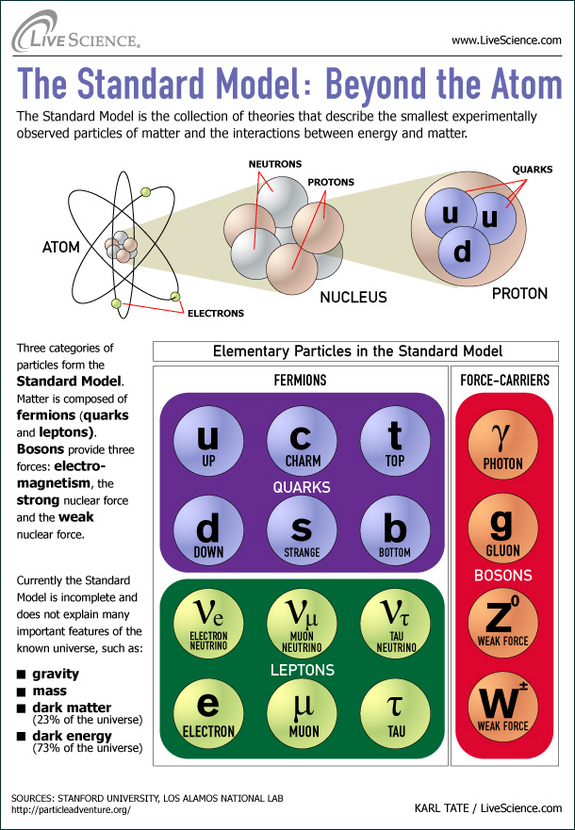
Before the 1960s, protons and neutrons were considered elementary particles. However, groundbreaking experiments and theoretical work began to suggest a deeper layer of substructure. The concept of quarks, first proposed independently by Murray Gell-Mann and George Zweig in 1964, revolutionized particle physics, positing that protons and neutrons, along with other hadrons, are not fundamental but are instead composed of even smaller, more elementary particles.
Beyond Protons and Neutrons: A Deeper Dive
Imagine trying to understand how a complex machine works by only observing its large, external components. Particle physicists faced a similar challenge with protons and neutrons. While these particles were well-understood in terms of their mass and charge, their internal dynamics and interactions suggested a more intricate structure. Quarks are the answer to this complexity. A proton, for instance, is made of two “up” quarks and one “down” quark, while a neutron consists of one “up” quark and two “down” quarks. These quarks are held together by the strong nuclear force, mediated by particles called gluons. This revolutionary idea, initially met with skepticism, has since been overwhelmingly confirmed by a myriad of high-energy scattering experiments, which are themselves marvels of modern technology.
The Six Flavors and Three Colors: Categorizing Quarks
Quarks are not all the same; they come in six distinct “flavors”: up, down, charm, strange, top, and bottom. Each flavor also possesses an antimatter counterpart. The “up” and “down” quarks are the lightest and most common, forming the protons and neutrons of everyday matter. The heavier quarks (charm, strange, top, bottom) are created in high-energy collisions, typically in particle accelerators, and quickly decay into lighter quarks.
Beyond flavor, quarks also possess a property whimsically dubbed “color charge” – red, green, or blue. This is not color in the visual sense but an abstract charge analogous to electric charge. The strong nuclear force acts only on color-charged particles. An important principle of quantum chromodynamics (QCD), the theory describing the strong force, is that all observable particles (hadrons) must be “color-neutral” or “white.” This means quarks are never found in isolation; they are always confined within hadrons, forming combinations that cancel out their color charges. This phenomenon, known as “color confinement,” is a cornerstone of our understanding of matter and a significant challenge for experimental verification, again, necessitating advanced technological approaches.
Technology as the Eye: Probing the Subatomic Realm
The existence and properties of quarks cannot be directly observed; they are far too small and too tightly bound within hadrons. Our understanding of these elusive particles is entirely reliant on sophisticated technological instruments that allow us to indirectly “see” and measure their effects. These tools are at the forefront of engineering and computational science, embodying humanity’s relentless drive to peer into the universe’s most fundamental workings.
Particle Accelerators: Our Giant Microscopes
The primary instruments for studying quarks are particle accelerators, such as the Large Hadron Collider (LHC) at CERN. These colossal machines accelerate beams of particles (like protons) to nearly the speed of light and then smash them together. The immense energies generated in these collisions are so powerful that they can briefly break open the hadrons, releasing a shower of new particles, including heavier quarks and their anti-quarks, which quickly decay.
Particle accelerators are monumental feats of engineering, requiring:
-
Superconducting Magnets: To bend and focus particle beams, these magnets operate at cryogenic temperatures, demanding advanced cryogenics and materials science.
-
Ultra-High Vacuum Systems: To prevent collisions with air molecules, the beam pipes maintain vacuums colder and emptier than outer space, requiring sophisticated vacuum technology.
-
Precise Radiofrequency Cavities: To accelerate particles, these cavities deliver precisely timed electromagnetic pulses, pushing the boundaries of RF engineering.
-
Power Grids: The energy consumption of these facilities is on par with small cities, necessitating advanced energy management systems.
These “giant microscopes” allow physicists to probe scales far smaller than any optical microscope could ever hope to reach, revealing the dynamic dance of quarks and gluons.
Sophisticated Detectors: Capturing Fleeting Evidence
When particles collide inside an accelerator, the resulting debris flies off in all directions. To make sense of this chaos, scientists rely on incredibly complex detectors surrounding the collision points. These detectors are essentially multi-layered, highly sensitive digital cameras designed to track the trajectories, energy, and identity of every particle produced.
Modern particle detectors feature:
-
Silicon Tracking Devices: Providing micron-level precision to reconstruct particle paths.
-
Calorimeters: Measuring the energy of particles as they are absorbed.
-
Muon Chambers: Identifying muons, which can penetrate thick shielding.
-
Fast Electronics and Data Acquisition Systems: Processing petabytes of data per second, operating at femtosecond timescales.
The development and operation of these detectors push the frontiers of sensor technology, analog and digital electronics, real-time data processing, and massive data storage solutions. Without these technological marvels, the fleeting signatures of quarks would remain forever invisible.
Computational Physics: Simulating the Unseen

Analyzing the vast amounts of data generated by particle accelerators and detectors requires unprecedented computational power. Physicists use advanced algorithms and supercomputers to reconstruct collision events, identify particle signatures, and compare experimental results with theoretical predictions.
Computational physics plays several critical roles:
-
Event Reconstruction: Turning raw detector signals into meaningful particle tracks and energies.
-
Monte Carlo Simulations: Generating theoretical predictions by simulating millions of particle interactions based on the Standard Model, allowing for direct comparison with experimental data.
-
Lattice QCD Calculations: Solving the complex equations of Quantum Chromodynamics on a discretized spacetime lattice, providing non-perturbative calculations of quark and gluon interactions, which are otherwise intractable. These calculations demand some of the world’s most powerful supercomputers and specialized hardware.
-
Data Mining and Machine Learning: Employing advanced statistical techniques and AI algorithms to sift through massive datasets, identify subtle patterns, and extract significant discoveries from background noise.
The study of quarks is as much an exercise in big data analytics and high-performance computing as it is in experimental design.
Quarks and the Standard Model: A Technological Blueprint
The collective understanding of fundamental particles and forces, including quarks, is encapsulated in the Standard Model of Particle Physics. This comprehensive theory is arguably one of humanity’s greatest intellectual achievements, and its validation and refinement are utterly dependent on technological innovation.
Validating Theories with Experimental Data
The Standard Model is a highly predictive theory. It accurately describes the electromagnetic, weak, and strong forces and classifies all known elementary particles. The precision with which experimental results from accelerators like the LHC match the Standard Model’s predictions is a testament to both the theory’s robustness and the incredible precision of modern experimental technology. Every new measurement of a quark’s mass, charge, or interaction cross-section, every confirmation of a decay process, adds another layer of validation to this theoretical framework. Discrepancies, no matter how small, drive the development of new experimental techniques and theoretical models, continuously pushing the boundaries of technological capabilities.
Quantum Chromodynamics (QCD) and its Technological Implications
Quantum Chromodynamics (QCD) is the specific part of the Standard Model that describes the strong interaction between quarks and gluons. It is a highly complex non-abelian gauge theory. Understanding QCD has driven significant advancements in computational physics, particularly in the realm of lattice QCD, which uses discrete spacetime grids to simulate quark interactions. The development of specialized processors and algorithms for these calculations has found applications in other areas of scientific computing. Furthermore, the principles underlying quantum field theories like QCD are foundational to developing future quantum technologies, from quantum computing architectures to advanced materials design, where understanding subatomic interactions is paramount.
The Quest for New Physics: Beyond the Standard Model
While incredibly successful, the Standard Model is not a complete theory of everything. It doesn’t incorporate gravity, nor does it explain phenomena like dark matter, dark energy, or the existence of neutrino masses. The search for “new physics” beyond the Standard Model is one of the most exciting frontiers in science, and it is entirely reliant on the next generation of technological innovation.
Experiments designed to look for these new phenomena often involve pushing current accelerator and detector technologies to their absolute limits, or even inventing entirely new ones. The pursuit of exotic particles that could explain dark matter, for instance, requires detectors of unparalleled sensitivity and background rejection, often operating in deep underground laboratories shielded from cosmic rays – another triumph of specialized engineering and material science.
The Future of Fundamental Physics: Technological Horizons
The journey to understand quark particles is far from over. Each discovery opens new questions, driving the need for even more powerful and precise technological tools. The synergy between fundamental physics research and technological development is a continuous loop, with each advancing the other.
Next-Generation Accelerators and Detectors
Future particle accelerators are envisioned to be even larger and more energetic than the LHC, or they might employ entirely new acceleration mechanisms, such as plasma wakefield acceleration, to achieve higher energies in more compact facilities. These concepts demand breakthroughs in materials science, high-power lasers, and precision engineering. Similarly, next-generation detectors will push limits on resolution, speed, and radiation hardness, requiring innovative sensor designs and advanced microelectronics. The technological spin-offs from these developments, though often unforeseen, historically find their way into medical imaging, industrial applications, and broader scientific research.
Advancements in Quantum Technologies
The study of quarks and the strong force is deeply intertwined with quantum mechanics. As our understanding of quantum phenomena improves through experiments designed to probe the subatomic world, it fuels the development of quantum technologies. Quantum computing, quantum cryptography, and quantum sensing all rely on manipulating matter at its most fundamental level, drawing inspiration and insights from particle physics. The principles of quantum field theory, validated by quark experiments, are essential for designing and optimizing these revolutionary technologies.
Impact on Materials Science and Other Disciplines
Understanding the fundamental interactions between quarks and gluons provides insights that can indirectly influence various technological fields. For instance, the forces governing quarks are also at play in the dense matter found in neutron stars, informing astrophysics. More broadly, the advanced computational and data analysis techniques developed for particle physics find direct applications in diverse areas, from medical diagnostics (e.g., PET scans, proton therapy originating from accelerator technology) to financial modeling. The extreme conditions and precise measurements required for quark research force continuous innovation, creating a rich ecosystem of technological advancements that benefit society at large.
In conclusion, a quark particle is not just a theoretical concept; it is a tangible piece of the universe’s ultimate puzzle, revealed and understood through an incredible orchestration of human ingenuity and technological prowess. The quest to decipher the nature of quarks exemplifies how fundamental scientific inquiry, particularly within the realm of “Tech,” serves as a powerful engine for innovation, pushing the boundaries of engineering, computation, and experimental science, ultimately enriching our understanding of the universe and our place within it.
aViewFromTheCave is a participant in the Amazon Services LLC Associates Program, an affiliate advertising program designed to provide a means for sites to earn advertising fees by advertising and linking to Amazon.com. Amazon, the Amazon logo, AmazonSupply, and the AmazonSupply logo are trademarks of Amazon.com, Inc. or its affiliates. As an Amazon Associate we earn affiliate commissions from qualifying purchases.