
Perestroika, a term that translates from Russian as “restructuring,” represents one of the most significant, ambitious, and ultimately complex economic and political reform movements of the 20th century. Initiated by Soviet President Mikhail Gorbachev in the mid-1980s, its primary aim was to revitalize a stagnating Soviet Union, particularly its ailing economy, and steer it towards a more dynamic and prosperous future. For those interested in the grand sweep of economic history, the mechanics of transitioning command economies, or the profound impact of state policy on business and individual finance, understanding Perestroika offers invaluable insights into the intricacies of economic transformation. It was a bold attempt to inject market logic and enterprise autonomy into a centrally planned system, a move with monumental implications for finance, investment, and the very concept of economic value within the Soviet sphere and, by extension, the global economy.

The Economic Stalemate Pre-Perestroika: A System Under Strain
Before Perestroika, the Soviet Union operated under a rigid, centrally planned economic model that had delivered industrialization in earlier decades but was increasingly showing signs of severe strain by the 1970s and early 1980s. This period, often referred to as the “Era of Stagnation,” was characterized by widespread inefficiencies, technological backwardness, and a growing disconnect between state production targets and actual consumer needs. For a nation that aimed to compete economically with the West, its existing financial and production mechanisms were proving woefully inadequate.
Central Planning’s Limitations: Resource Misallocation and Inefficiency
The cornerstone of the Soviet economic system was central planning, where virtually all economic decisions—what to produce, how much, and for whom—were made by state planners in Moscow. While theoretically capable of large-scale resource mobilization, in practice, this led to chronic resource misallocation. Factories often produced goods based on quantitative targets rather than quality or demand, resulting in vast amounts of unusable or unwanted inventory. Investment decisions were politically driven, frequently favoring heavy industry and military spending over consumer goods or infrastructure improvements that could boost overall economic efficiency.
From a financial perspective, enterprises operated under soft budget constraints, meaning they were rarely allowed to fail, regardless of their profitability or efficiency. State subsidies masked true costs, making it impossible to accurately assess economic performance or incentivize productivity. This lack of a genuine profit motive or competition stifled innovation and led to a pervasive culture of inefficiency. Managers had little incentive to invest in new technologies, reduce waste, or respond to market signals, primarily because there was no “market” in the conventional sense. The financial flows within this system were largely administrative transfers rather than market-driven capital allocations.
Stagnation and the Need for Financial Reform
By the 1980s, the economic stagnation was undeniable. Growth rates had plummeted, technological gaps with the West were widening, and the standard of living, while stable for many, was visibly lower than in developed market economies. Shortages of basic consumer goods were common, leading to long queues and a thriving black market, which essentially operated as an unregulated parallel economy driven by genuine supply and demand.
Gorbachev recognized that the existing system was unsustainable. The need for financial reform was paramount. Without mechanisms to accurately price goods, allocate capital efficiently, incentivize productivity, and manage state debt (which was growing due to declining oil prices and increased military spending), the Soviet economy faced an existential crisis. Perestroika was conceived as the answer: a radical overhaul designed to unleash economic potential by introducing elements of market finance and entrepreneurship, albeit within a socialist framework that ultimately proved challenging to maintain.
Perestroika’s Economic Pillars: A Shift Towards Market Principles
Perestroika’s economic agenda was a bold attempt to marry socialist ideals with market efficiency. It sought to dismantle some of the most rigid aspects of central planning and introduce financial and operational autonomy that had been absent for decades. This shift represented a monumental conceptual and practical challenge for the Soviet system and its economy.
Introducing Elements of Capitalism: Enterprise Autonomy and Profit Motive
A core tenet of Perestroika was the Law on State Enterprise (1987), which aimed to grant greater autonomy to state-owned enterprises. No longer solely dictated by central plans, enterprises were encouraged to be self-financing and self-accounting (khozraschet). This meant they were expected to cover their expenses from their revenues and, crucially, generate a profit. The concept of profit, long downplayed or viewed with suspicion in Soviet ideology, was now being embraced as a motivator for efficiency and productivity.
Enterprises were given the right to independently determine production levels for some goods (beyond state orders), set prices for a portion of their output, and retain a share of their profits for reinvestment or employee bonuses. This shift was revolutionary, as it introduced rudimentary market mechanisms and financial incentives directly into the heart of the state-controlled economy, giving managers and workers a direct stake in their enterprise’s financial success. It was an initial, tentative step towards understanding business finance in a more Western sense, where profitability dictates survival and growth.
Reforming State Finance and Investment
Perestroika also sought to reform the broader state financial system. Efforts were made to reduce the immense state subsidies that propped up unprofitable enterprises, aiming to harden budget constraints and encourage financial discipline. The idea was to channel state investment more effectively, moving away from purely political allocations towards projects with a clearer economic return.
Moreover, the reforms recognized the need for a more sophisticated banking system beyond the monolithic Gosbank. Proposals were made for the creation of commercial banks, which could facilitate credit allocation based on market principles rather than administrative directives. While these reforms were often piecemeal and faced significant resistance, they laid the groundwork for a financial infrastructure more akin to a market economy, essential for supporting entrepreneurship and investment.
Foreign Investment and International Economic Integration
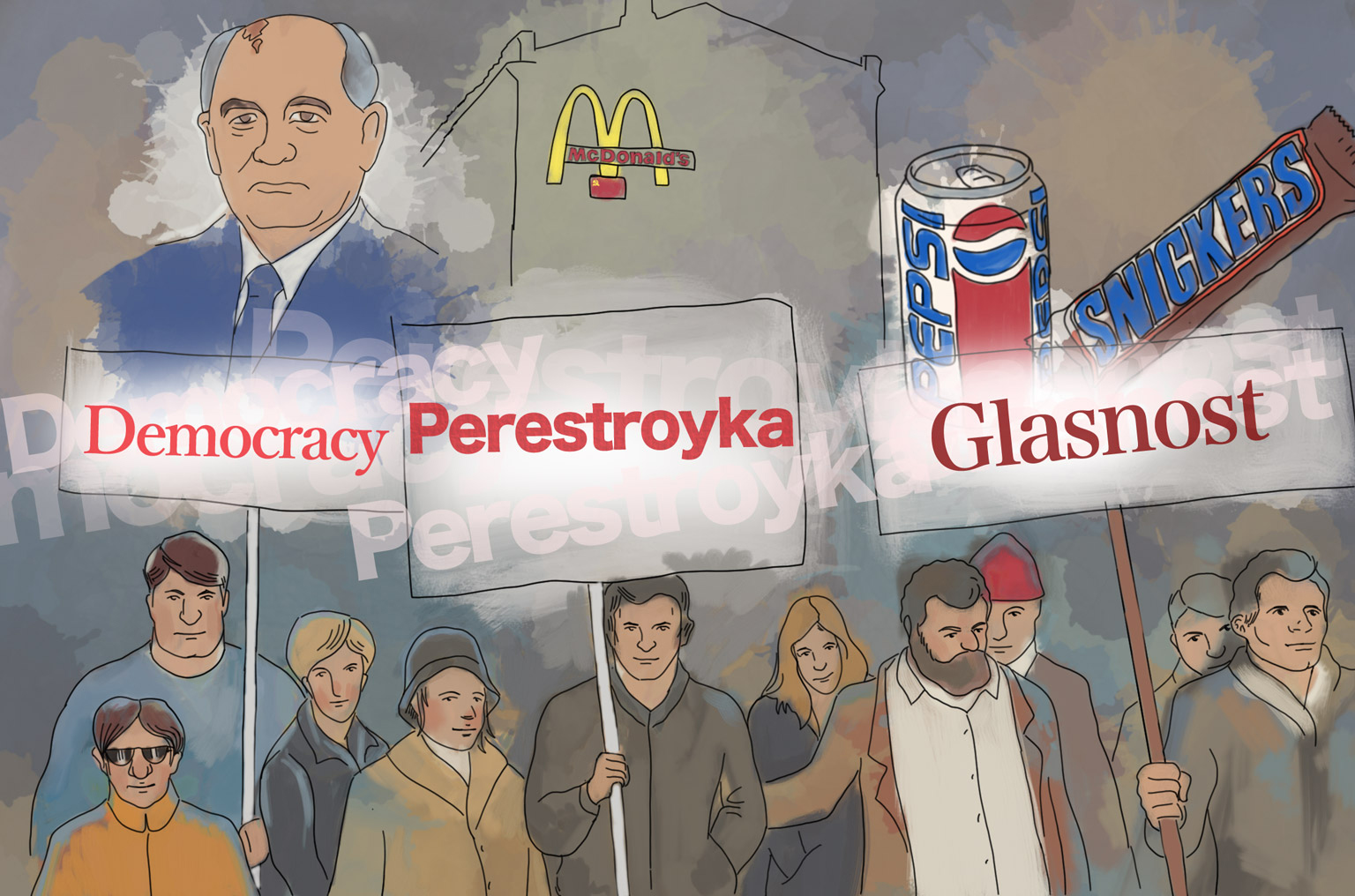
A critical component of Perestroika’s economic strategy was opening the Soviet economy to foreign investment. The Law on Joint Ventures (1987) allowed foreign companies to form partnerships with Soviet enterprises, bringing in much-needed capital, technology, and management expertise. This was a radical departure from the Soviet Union’s historical insularity and represented a recognition that external financial flows and integration into the global economy were essential for modernization.
These joint ventures introduced new business models, financial reporting standards, and management practices that were alien to the Soviet system. They also exposed Soviet enterprises to international competition and market demands, pushing them towards greater efficiency and quality. This influx of foreign capital, though limited in its early stages, was a crucial step towards understanding how global finance and direct foreign investment could contribute to domestic economic development and integrate the Soviet Union into the broader international financial system.
The Financial and Social Fallout of Economic Restructuring
While ambitious, Perestroika’s economic reforms faced immense challenges and produced unforeseen, and often painful, consequences. The transition from a command economy to even a partially market-oriented one proved far more complex than anticipated, leading to significant financial instability and social upheaval.
Inflation and Currency Instability
One of the most immediate and disruptive consequences of Perestroika was rampant inflation and currency instability. As enterprises gained more autonomy and pricing controls were loosened, prices for goods began to rise, often rapidly, while wages struggled to keep pace. The state’s inability to control monetary supply, coupled with a surge in demand (due to previously suppressed consumer needs and the accumulation of savings), created a classic inflationary spiral. The Soviet ruble, already non-convertible and artificially valued, lost much of its purchasing power, eroding the savings of ordinary citizens. This financial instability created widespread economic uncertainty and fueled public discontent, highlighting the critical importance of robust monetary policy and a stable currency during economic transitions.
Emergence of Private Business and Entrepreneurship (and Challenges)
Perestroika also encouraged the creation of cooperatives and small private businesses, marking the re-emergence of entrepreneurship in the Soviet Union. This was a pivotal moment for individual initiative and the concept of “online income” or “side hustles,” albeit in a nascent, pre-digital form. People started small ventures, from catering to repair services, filling gaps left by the inefficient state sector. This unleashed a wave of entrepreneurial energy, demonstrating a latent capacity for market-driven economic activity.
However, these new businesses operated in a highly challenging environment. They faced regulatory hurdles, a lack of access to capital (as the banking system was still primitive), and often operated in a legal grey area. Furthermore, the chaotic transition period led to the rise of organized crime (“mafia”) that often preyed on these emerging private enterprises, demanding protection money and stifling legitimate business growth. The development of a clear legal and financial framework to support and protect these businesses was slow, hindering their full potential.
Privatization and Asset Redistribution
Towards the later stages of Perestroika and in its immediate aftermath, large-scale privatization of state assets began. This process, intended to transfer state ownership to private hands and create a genuine market for capital, was fraught with difficulties. Without robust legal frameworks, transparent valuation methods, and an established financial market, much of the privatization process led to rapid asset redistribution, often benefiting insiders or those with political connections. This resulted in the creation of a new class of wealthy individuals (oligarchs) and exacerbated wealth inequality, generating deep public resentment. The ethical and financial complexities of liquidating state assets and creating private property rights within a society unaccustomed to such concepts became a contentious legacy, deeply impacting the structure of future business finance and ownership in post-Soviet states.
Lessons in Economic Transformation and Business Finance
The Perestroika era, despite its ultimate failure to preserve the Soviet Union, offers invaluable lessons for economists, policymakers, and business leaders contemplating large-scale economic transformation or operating within transitioning markets. It underscored the profound interconnectedness of political stability, economic policy, and financial health.
The Complexities of Transitioning Economic Systems
Perestroika vividly illustrated that transitioning from a command economy to a market economy is not merely a matter of introducing a few market mechanisms. It requires a fundamental shift in legal frameworks, property rights, financial institutions, and cultural norms. The absence of a robust rule of law, clear property definitions, and a developed financial infrastructure (like functioning stock exchanges, commercial banks, and regulatory bodies) meant that well-intentioned reforms could easily lead to chaos and unintended consequences. For business finance, it highlighted that the ability to raise capital, manage risk, and secure investments depends critically on a predictable legal and economic environment.
The Role of Financial Stability in Reform
The inflation, currency instability, and wealth redistribution experienced during Perestroika demonstrate the paramount importance of maintaining financial stability during periods of economic reform. Without a stable currency, predictable inflation, and credible financial institutions, businesses cannot plan, invest, or accurately price goods. Individuals lose trust in the economic system, leading to capital flight or hoarding. Any substantial economic reform, particularly one involving market liberalization, must be accompanied by strong monetary policy and fiscal discipline to prevent financial collapse. This lesson is relevant for any country or business navigating significant economic change, emphasizing that financial tools and stability are not just adjuncts but foundational to successful transitions.
Long-term Impacts on Global Economic Thought
Perestroika and the subsequent collapse of the Soviet Union significantly influenced global economic thought. It reinforced the consensus, particularly in the West, about the superiority of market-based economies and the limitations of central planning. It spurred further academic and policy research into transition economics, examining how best to navigate market liberalization, privatization, and the development of financial markets in post-socialist states.
For the world of business finance, Perestroika’s legacy includes a deeper understanding of emerging markets, the risks and rewards of investing in transitioning economies, and the challenges of integrating disparate economic systems. It provided a real-world, albeit painful, case study in the dynamics of economic reform, demonstrating the immense power of market forces when unleashed, as well as the critical need for careful planning, institutional development, and social cohesion to manage these forces effectively. Understanding Perestroika is not just understanding a historical event; it is understanding a pivotal moment that reshaped the global financial and economic landscape.
aViewFromTheCave is a participant in the Amazon Services LLC Associates Program, an affiliate advertising program designed to provide a means for sites to earn advertising fees by advertising and linking to Amazon.com. Amazon, the Amazon logo, AmazonSupply, and the AmazonSupply logo are trademarks of Amazon.com, Inc. or its affiliates. As an Amazon Associate we earn affiliate commissions from qualifying purchases.