
In an increasingly interconnected world, where instant access to information, services, and communication is not merely a convenience but a fundamental expectation, the underlying infrastructure that powers this connectivity must be robust, resilient, and unfailingly reliable. At the heart of this reliability lies a critical concept: redundancy. In the context of internet routing, redundancy is far more than just having a backup; it’s a meticulously engineered strategy to ensure continuous operation, even when components fail, paths are disrupted, or unforeseen events occur. It is the architectural principle that prevents single points of failure from crippling vast networks and keeping the global digital economy humming.

Without redundancy, a single faulty cable, a power outage at a critical junction, or a misconfigured router could cascade into widespread internet outages, bringing businesses to a halt, isolating communities, and impacting billions of users. This article will delve into the multifaceted meaning of redundancy in internet routing, exploring its mechanisms, benefits, challenges, and its indispensable role in the modern technological landscape.
The Core Concept: Ensuring Uninterrupted Connectivity
At its simplest, redundancy refers to the duplication of critical components or functions of a system with the intent of increasing reliability, usually in the form of a backup or fail-safe. In the highly complex and distributed environment of internet routing, this definition expands to encompass an intricate web of strategies designed to prevent outages and maintain seamless data flow.
Defining Redundancy in IT Infrastructure
In information technology, redundancy means building in extra capacity, alternative paths, or duplicate systems so that if one component fails, another can immediately take over its function without interruption to service. Imagine a road with only one bridge over a river; if that bridge collapses, traffic stops. Now imagine a road with two bridges, or even a ferry service as an alternative. That’s redundancy in action.
For internet routing, this principle applies to everything from individual hardware devices to entire network segments and even geographical locations. The goal is to eliminate “single points of failure” – any part of a system whose failure would stop the entire system from working. Given the global scale and criticality of the internet, the implications of such failures are immense.
Why Redundancy is Paramount for Internet Routing
The internet is not a single entity but a vast network of interconnected networks (Autonomous Systems, or AS). Data packets traverse countless routers, switches, and physical links to reach their destination. The sheer volume and continuous nature of this traffic demand near-perfect uptime. Any disruption can have immediate and far-reaching consequences:
-
Economic Impact: Businesses lose revenue, financial transactions fail, and supply chains are disrupted.
-
Social Impact: Communication breaks down, emergency services are hampered, and access to essential information is lost.
-
Reputational Damage: Service providers face public backlash and loss of customer trust.
-
Security Risks: During outages, systems can become vulnerable, or recovery processes can be exploited.
Therefore, redundancy isn’t merely a “nice-to-have” feature; it’s a fundamental requirement and a cornerstone of reliable internet infrastructure design. It’s about building a network that can self-heal and continue operations despite localized failures.
Mechanisms of Redundancy in Routing
Implementing redundancy in internet routing involves a multi-layered approach, addressing potential failures at various levels of the network stack. From hardware components to network paths and software protocols, redundancy is woven into the very fabric of network design.
Redundant Hardware Components
At the most basic level, redundancy starts with the physical devices themselves.
-
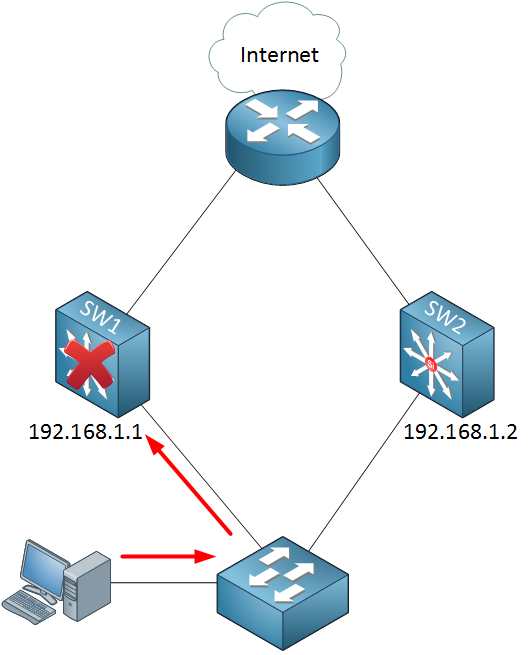
Routers and Switches: Core routers and switches are often deployed in pairs or clusters (e.g., active/standby or active/active configurations). If the primary device fails, the secondary one takes over almost instantaneously. This includes technologies like High Availability (HA) clusters.
-
Power Supplies: Network devices commonly have multiple, hot-swappable power supplies connected to independent power sources (e.g., UPS, generators) to ensure uninterrupted operation even during electrical grid failures.
-
Network Interface Cards (NICs): Servers and critical network appliances often have multiple NICs configured in a team or bond, so if one adapter fails, traffic can seamlessly switch to another.
Redundant Network Paths (Physical & Logical)
Ensuring data can reach its destination even if a physical link or an entire segment of the network goes down is crucial.
-
Multiple ISPs/Upstreams: Organizations, especially those requiring high availability, subscribe to multiple Internet Service Providers (ISPs). If one ISP experiences an outage, traffic can be routed through another. This is often managed using Border Gateway Protocol (BGP) for multi-homing.
-
Diverse Fiber Optic Routes: Physical fiber cables are laid along different geographical paths to avoid single points of failure caused by accidental cuts, natural disasters, or construction mishaps. A critical link might have a primary path and several physically diverse backup paths.
-
Alternate Data Centers/Geographic Redundancy: For mission-critical applications, entire data centers are duplicated in different geographical locations. If one data center goes offline, traffic can be redirected to another, ensuring business continuity.
-
Link Aggregation (LAG)/EtherChannel: Multiple physical network links between two devices (e.g., two switches) are bundled together to form a single logical link. This not only increases bandwidth but also provides redundancy; if one physical link fails, traffic continues over the remaining links.
Redundant Protocols and Software
Beyond hardware and physical links, intelligent protocols and software play a vital role in managing and leveraging redundancy.
-
First-Hop Redundancy Protocols (FHRPs): Protocols like Hot Standby Router Protocol (HSRP), Virtual Router Redundancy Protocol (VRRP), and Gateway Load Balancing Protocol (GLBP) ensure that if the primary router (the “first hop” for devices on a LAN) fails, a backup router immediately takes over its IP address and MAC address, providing transparent failover for connected devices.
-
Dynamic Routing Protocols (OSPF, EIGRP, BGP): These protocols dynamically learn about network topology changes. If a link or router fails, they quickly recalculate optimal paths and reroute traffic around the affected areas, ensuring rapid convergence and minimal downtime. BGP, in particular, is essential for routing traffic between different Autonomous Systems across the global internet, allowing for diverse path selection and automatic failover between ISPs.
-
MPLS Traffic Engineering: Multi-Protocol Label Switching (MPLS) can be used to create explicit, redundant paths through a network, allowing for faster restoration times in case of failures compared to traditional IP routing.
Benefits of Implementing Redundancy
The investment in redundant systems and processes yields significant returns in terms of network reliability, performance, and operational resilience.
Enhanced Reliability and Uptime
The most immediate and obvious benefit is the dramatic increase in network reliability and uptime. By eliminating single points of failure, redundant designs ensure that services remain available even in the face of hardware failures, software glitches, human error, or external disruptions. For businesses, this translates directly to continuous operation, maintained productivity, and uninterrupted customer service. For critical infrastructure, it can mean the difference between seamless functionality and widespread chaos.
Improved Performance and Load Distribution
Redundancy is not solely about failover; it can also be leveraged for performance enhancement. In active-active configurations, redundant components or links can share the load, distributing traffic across multiple paths. This prevents bottlenecks, improves overall network throughput, and ensures a more consistent user experience, especially during peak demand. For instance, link aggregation not only provides redundancy but also increases the effective bandwidth between two devices.
Disaster Recovery and Business Continuity
Beyond simple component failures, redundancy is a cornerstone of comprehensive disaster recovery and business continuity strategies. Geographically redundant data centers, diverse network links, and multi-ISP connectivity mean that even large-scale regional outages (due to natural disasters, power grid failures, or targeted attacks) can be mitigated. Organizations can continue critical operations by failing over to redundant infrastructure located elsewhere, minimizing downtime and data loss.
Scalability and Future-Proofing
Redundant architectures inherently offer better scalability. Adding capacity, upgrading components, or performing maintenance can often be done without taking the entire system offline. New hardware can be introduced as a redundant component, and then the old component can be gracefully decommissioned. This allows networks to grow and evolve with changing demands and technologies without disruptive downtime, making them more future-proof.
Challenges and Considerations for Redundant Routing
While the benefits of redundancy are compelling, its implementation is not without its complexities and challenges. Careful planning and execution are essential to realize its full potential.
Increased Complexity
Designing, implementing, and managing redundant networks is significantly more complex than managing non-redundant ones. It requires a deep understanding of network topology, routing protocols, and failover mechanisms. The more redundant elements there are, the more intricate the configuration and troubleshooting processes become. This complexity demands highly skilled network engineers and robust documentation.
Higher Costs
Duplicating hardware, software licenses, network links, and even entire data centers naturally incurs higher capital expenditures (CapEx) and operational expenditures (OpEx). Organizations must invest in more equipment, potentially higher bandwidth subscriptions, and the specialized personnel required to manage these complex systems. The cost-benefit analysis must be carefully weighed against the criticality of the services being protected.
Potential for Configuration Errors
The increased complexity associated with redundant systems also amplifies the risk of configuration errors. A single misconfiguration in a routing protocol, an incorrect IP address on a backup device, or an oversight in failover settings can inadvertently create a new single point of failure or even cause a complete network outage during a failover attempt. Rigorous testing and change management processes are crucial.
Testing and Validation
A redundant system is only as good as its ability to fail over effectively. Regular and thorough testing of failover scenarios is absolutely critical. This involves simulating component failures, link outages, or even entire site failures to ensure that the redundant systems behave as expected. Without adequate testing, an organization might have a false sense of security, only to discover that their redundancy measures don’t work when truly needed.
Balancing Redundancy with Efficiency
There’s a trade-off between the level of redundancy and the efficiency (cost, complexity, resource utilization) of the network. While critical infrastructure might demand N+M redundancy (multiple backups), not every component or service requires this extreme level. Organizations must perform a risk assessment to determine the appropriate level of redundancy for different parts of their network based on their criticality, potential impact of downtime, and budget constraints.
Real-World Applications and the Future of Redundant Routing
The principles of redundancy are constantly evolving and finding new applications as technology advances and network demands intensify.
Cloud Computing and Hyperscale Networks
Cloud providers like AWS, Azure, and Google Cloud are prime examples of massively redundant networks. Their global infrastructure is built with multiple availability zones and regions, each with independent power, cooling, and networking, ensuring that even entire data center failures do not disrupt services. Load balancers, distributed databases, and sophisticated routing mechanisms dynamically reroute traffic, making these platforms inherently resilient.
5G and IoT Networks
The advent of 5G and the proliferation of IoT devices demand ultra-reliable low-latency communication (URLLC). Redundancy is foundational to meeting these requirements, particularly for critical applications in smart cities, autonomous vehicles, and industrial automation where even milliseconds of downtime can have severe consequences. Network slicing, a feature of 5G, allows for dedicated, redundant network segments for specific critical services.
Software-Defined Networking (SDN) and Network Function Virtualization (NFV)
SDN and NFV are transforming how networks are managed and operated. By decoupling the control plane from the data plane (SDN) and virtualizing network services (NFV), these technologies simplify the deployment and management of redundant network functions. Automated orchestration tools can provision redundant virtual network functions (VNFs) on demand and perform rapid failovers, enhancing agility and resilience.
AI and Machine Learning for Proactive Redundancy Management
The future of redundant routing will increasingly involve Artificial Intelligence and Machine Learning. AI can analyze vast amounts of network telemetry data to predict potential failures before they occur, allowing for proactive maintenance or rerouting. Machine learning algorithms can optimize failover paths, dynamically adjust network capacity, and even automate complex troubleshooting, making redundant networks even more intelligent, efficient, and self-healing.

Conclusion
Redundancy in the context of internet routing is a multifaceted and indispensable engineering discipline that underpins the reliability, performance, and resilience of the entire global internet. It moves beyond simple backups, encompassing redundant hardware, diverse physical and logical paths, and intelligent routing protocols and software. While it introduces complexity and cost, the benefits of enhanced reliability, improved performance, and robust disaster recovery capabilities far outweigh these challenges. As our dependence on constant connectivity grows, and as network technologies continue to evolve, the principles and implementation of redundancy will remain at the forefront of network design, ensuring that the internet continues to serve as the critical backbone for our increasingly digital world.
aViewFromTheCave is a participant in the Amazon Services LLC Associates Program, an affiliate advertising program designed to provide a means for sites to earn advertising fees by advertising and linking to Amazon.com. Amazon, the Amazon logo, AmazonSupply, and the AmazonSupply logo are trademarks of Amazon.com, Inc. or its affiliates. As an Amazon Associate we earn affiliate commissions from qualifying purchases.