
In the intricate world of electrical systems, where currents flow unseen and power is harnessed to fuel our modern lives, understanding the language of wire colors is not merely helpful — it is absolutely critical. For anyone delving into home improvement, professional electrical work, or simply troubleshooting a faulty appliance, deciphering the meaning behind each strand of copper can be the difference between a successful repair and a dangerous mishap. Among the spectrum of hues, the red wire holds a significant and specific set of meanings, primarily signaling “hot” or “live” power in various capacities within alternating current (AC) circuits, and often positive (+) in direct current (DC) systems.
This article will pull back the insulation on the red wire, exploring its diverse roles, its importance in standardized electrical codes, and why recognizing its function is paramount for safety and system integrity. As a cornerstone of the Tech niche, understanding such fundamental components is key to navigating the complex landscape of gadgets, smart homes, and digital security that increasingly rely on well-managed power infrastructure.
The Universal Language of Electrical Wiring
Electricity, by its very nature, is invisible and silent, making it inherently dangerous if mishandled. To mitigate these risks and ensure consistency across installations, electricians, engineers, and regulatory bodies have established a standardized system of wire color coding. This “universal language” allows professionals and informed DIYers to quickly identify the function of each wire within a circuit, even if they didn’t personally install it.
Why Color Codes Matter: Safety and Clarity
The primary driver behind wire color standardization is safety. Without it, every electrical connection would be a guessing game, dramatically increasing the risk of electric shock, short circuits, and electrical fires. Imagine trying to fix a complex device or even a simple light switch without knowing which wire carries power, which is neutral, or which is a ground. It would be an invitation to disaster.
Beyond safety, color codes offer immense practical benefits:
-
Troubleshooting Efficiency: When a circuit malfunctions, a quick visual inspection can often narrow down the problem by identifying the type of conductor involved.
-
System Maintenance: During repairs or upgrades, understanding the existing wiring layout is crucial. Color codes provide an immediate reference.
-
Standardization and Compliance: Electrical codes, such as the National Electrical Code (NEC) in North America, mandate specific color usages. Adherence ensures installations meet safety and performance benchmarks, which is vital for inspections and insurance.
-
Ease of Installation: New installations become more straightforward and less error-prone when workers follow established conventions.
A Spectrum of Significance: Beyond the Red
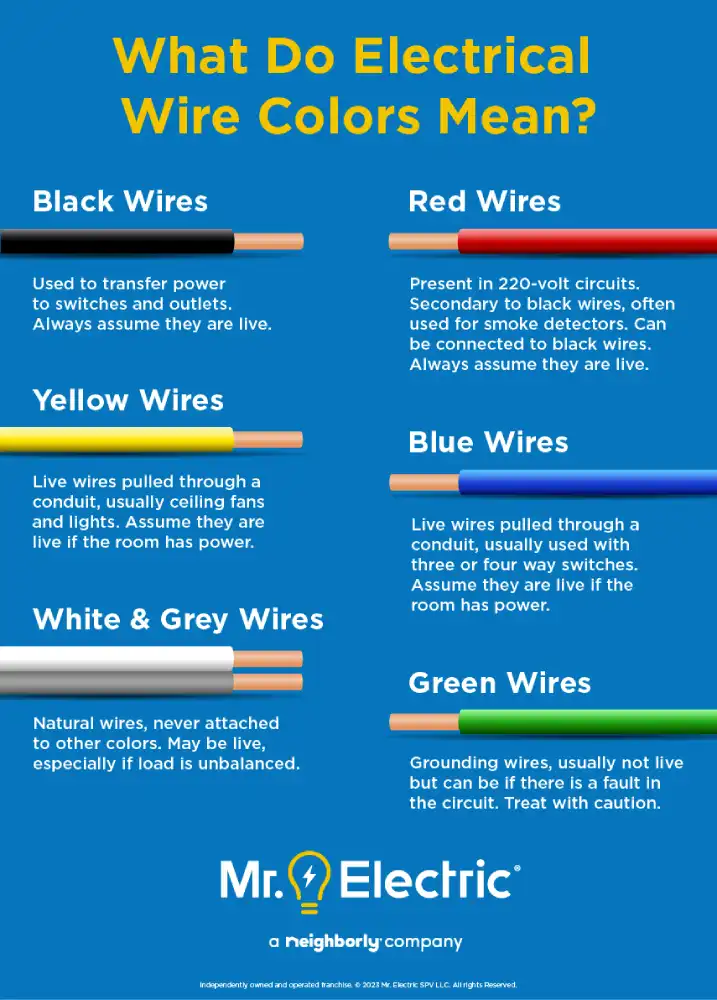
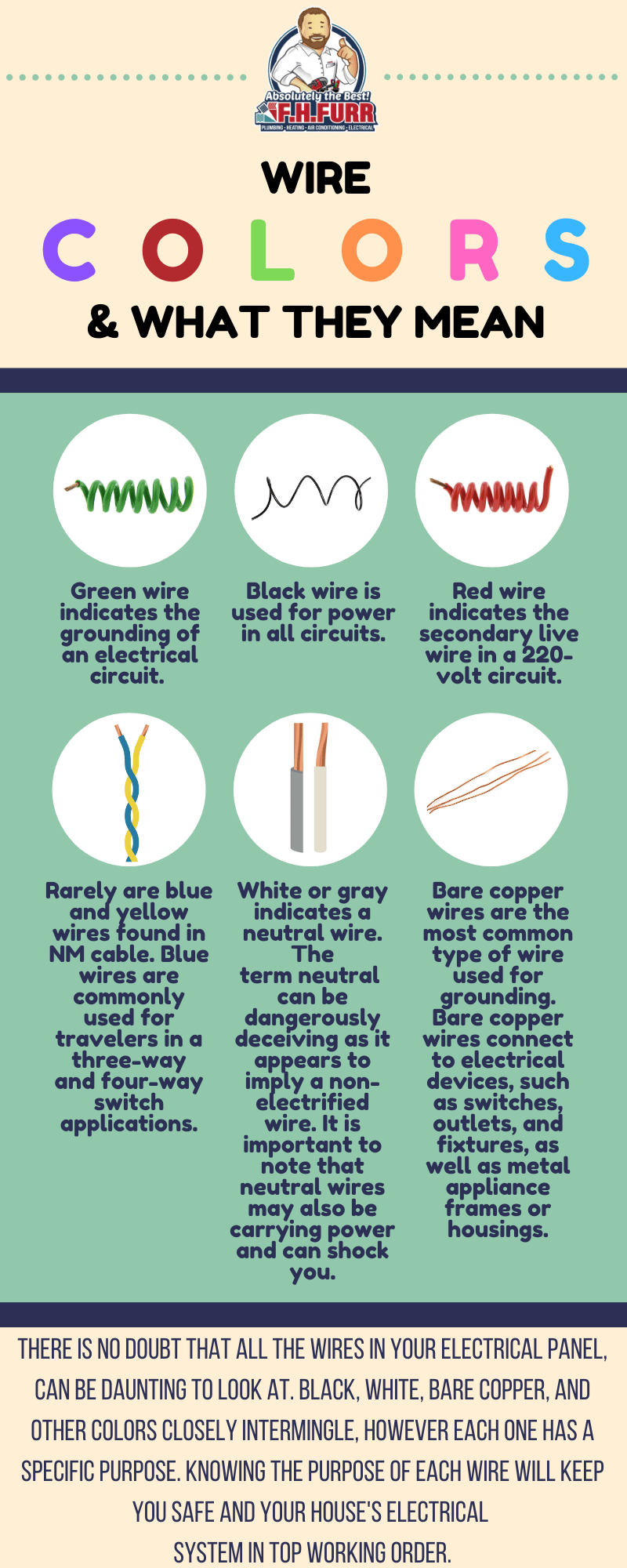
While our focus is on the red wire, it’s helpful to understand its place within the broader palette of electrical wiring. In North American AC residential and commercial wiring, the most common colors and their general meanings are:
-
Black: Always a “hot” or “live” wire, carrying power from the source to the load. It should be treated with extreme caution.
-
White: Typically the “neutral” wire, which completes the circuit by carrying current back to the power source. While usually not carrying voltage relative to ground, it can become energized under fault conditions.
-
Green or Bare Copper: The “ground” or “earth” wire, providing a safe path for fault current to dissipate, preventing shock. It should never carry current under normal operating conditions.
-
Blue, Yellow: Often used as secondary hot wires, switch legs, or for three-phase systems, depending on the specific application and voltage.
Each color plays a distinct role in ensuring the safe and efficient operation of an electrical system. The red wire, however, often signifies a secondary hot conductor, a switch leg, or an interconnection, carrying energized current that demands careful handling.
Decoding the Red Wire: Primary Functions
The red wire, in most conventional AC electrical installations (especially within the 120/240-volt systems common in North America), is almost universally understood to be a “hot” wire. This means it carries current and is energized relative to ground. However, its specific function can vary depending on the circuit design.
Hot or Live Power (Secondary Hot)
Perhaps the most common role for a red wire is as a secondary hot conductor. In multi-wire branch circuits (MWBCs) or 240-volt circuits (like those for ovens, dryers, or air conditioners), you’ll often find a black wire and a red wire, both supplying 120 volts relative to the neutral wire, but 240 volts between themselves.
-
240V Appliances: In circuits designed for higher voltage appliances, the red wire often carries the second 120V leg, working in conjunction with a black wire to deliver a combined 240V.
-
Multi-Wire Branch Circuits (MWBCs): These circuits share a single neutral wire for two separate 120V circuits, each with its own hot wire (typically one black, one red). This allows for efficiency by using fewer wires but requires careful balancing of loads.
Switch Leg Indicator
Another prevalent use for red wires is as a “switch leg” in lighting circuits. When a single cable (like a 14/3 or 12/3 Romex, which contains black, red, white, and a bare ground) runs from a switch box to a light fixture, the red wire is frequently used to carry switched power.
- From Switch to Fixture: The red wire connects the switch to the “hot” terminal of the light fixture, carrying power to the light only when the switch is in the “on” position. The black wire in such a setup might bring constant power to the switch.
Inter-Switch or Traveler Wires
In more complex lighting setups involving 3-way or 4-way switches (which allow a light or outlet to be controlled from multiple locations), red wires often serve as “travelers.”
-
3-Way Switches: In a 3-way switch configuration, two traveler wires (typically red and black) are used to connect the two 3-way switches, carrying power between them to toggle the light on or off, regardless of which switch is operated.
-
4-Way Switches: In systems with three or more control points, 4-way switches are introduced between two 3-way switches. These also utilize traveler wires, often including red, to manage the intricate pathways of current flow.
DC Power Applications
While our discussion largely focuses on AC household wiring, it’s worth noting that in direct current (DC) applications, such as automotive wiring, electronics, or battery systems, the red wire almost universally signifies the positive (+) terminal. This convention helps differentiate it from the negative (-) terminal, which is usually black. This consistency is crucial for preventing reverse polarity, which can damage sensitive electronic components.
Regional Variations and Specific Applications
While the general principles hold, the specific application of red wires can be influenced by regional electrical codes and specialized systems. Understanding these nuances is key to safe and compliant electrical work.
North American Standards (NEC)
In the United States, the National Electrical Code (NEC) is the benchmark for safe electrical installations. The NEC dictates the acceptable uses for various wire colors, including red:
-
Branch Circuits: Red is commonly used for 120-volt “hot” conductors in multi-wire branch circuits (MWBCs) and for the second “hot” leg in 240-volt single-phase circuits.
-
Switch Loops: As mentioned, it’s a standard color for switch legs.
-
Control Wiring: In some commercial or industrial settings, red might be used for control circuits or as part of a three-phase system (often with black and blue).
It’s critical for anyone working with electricity in North America to be familiar with the current NEC guidelines and any local amendments, as codes can evolve.
International Standards (IEC)
Outside of North America, particularly in Europe and many other parts of the world, the International Electrotechnical Commission (IEC) standards dictate different wire color codes. Here, red is generally not used for single-phase “hot” wires in residential wiring. Instead:
-
Live/Phase: Brown is the standard color for live (hot) wires.
-
Neutral: Blue is used for neutral.
-
Protective Earth: Green/yellow striped is for ground.
While red might be found in some specialized applications or older installations in these regions, it’s crucial to understand that its meaning is not universally consistent with North American practices. This highlights the absolute necessity of identifying the local code before beginning any electrical work, especially when dealing with imported equipment or wiring in different countries.
Specialized Systems
Beyond general power distribution, red wires appear in various specialized technological systems:
-
Alarm Systems: In security alarm systems, red often indicates the main power input for control panels and sensors.
-
HVAC Controls: In heating, ventilation, and air conditioning systems, red wires frequently carry 24V AC control power from the transformer to the thermostat and various components.
-
Fire Alarm Systems: In these critical systems, red wires are frequently used for notification appliance circuits (NACs), which power strobes and horns. The distinct color helps differentiate them from standard power circuits.
-
Data and Communication: While less common than in power circuits, red might occasionally be used as an indicator or specific signal line in complex data cabling.
In these specialized contexts, the voltage and current carried by the red wire are typically much lower than in household power circuits, but the principle of signifying a specific energized or control line remains consistent.
Safety Protocols and Best Practices
Given that a red wire almost always indicates an energized conductor, working with it requires extreme caution and adherence to strict safety protocols. Misinterpreting a red wire’s function or failing to take proper precautions can lead to severe injury or fatality.
Always Verify, Never Assume
The golden rule of electrical work is never to assume a wire is dead, even if the switch is off. Always use a reliable voltage tester or multimeter to confirm that a circuit is de-energized before touching any wires.
-
Non-Contact Voltage Testers: These are quick and convenient for a preliminary check.
-
Multimeters: Provide a precise voltage reading and are essential for verifying true absence of voltage.
-
Circuit Breaker: Always turn off the corresponding circuit breaker or remove the fuse before working on a circuit. Lockout/tagout procedures are recommended for professionals.
The Dangers of Misinterpretation
An energized red wire, whether carrying 120V, 240V, or even lower control voltage, poses significant risks:
-
Electric Shock: Contact with a live wire can cause severe burns, cardiac arrest, or other internal injuries.
-
Arc Flashes and Blasts: Short-circuiting a live wire can create an arc flash, which is an explosion of heat and light that can cause catastrophic burns, eye damage, and hearing loss.
-
Electrical Fires: Improper wiring or short circuits can generate intense heat, leading to electrical fires.
-
Equipment Damage: Connecting wires incorrectly can damage appliances, fixtures, or the electrical system itself.
When to Call a Professional
While understanding basic wiring is empowering, knowing your limits is crucial. If a task involves:
-
Complex Circuitry: Anything beyond a simple outlet or switch replacement.
-
New Circuit Installation: Adding new circuits to your breaker panel.
-
Troubleshooting Persistent Issues: Flickering lights, frequently tripped breakers.
-
Old or Damaged Wiring: Especially in older homes where wiring may not meet current codes.
-
High Voltage Appliances: 240V installations.
…it is always best to consult or hire a licensed electrician. Their expertise ensures the job is done safely, correctly, and in compliance with all local codes. Attempting complex electrical work without proper training and tools is an unnecessary risk.
Adhering to Codes
Beyond personal safety, adherence to local and national electrical codes is a legal requirement and an ethical responsibility. These codes are developed based on extensive research and experience to ensure the long-term safety and reliability of electrical installations. Ignoring them can lead to denied insurance claims, fines, and, most importantly, create hazardous conditions for occupants.

Conclusion
The red wire in electrical systems is far more than just a colorful strand; it is a critical indicator of “hot” or “live” power, playing pivotal roles in everything from secondary hot conductors in 240V circuits to switch legs and traveler wires in complex lighting setups. Its consistent use in North American wiring standards provides a vital visual cue, helping to ensure the safety and functionality of countless electrical installations that power our homes, businesses, and the technological tools we rely on daily.
Understanding the specific function of a red wire, recognizing its context within various electrical systems, and meticulously adhering to safety protocols are indispensable skills for anyone interacting with electrical infrastructure. Whether you’re a seasoned professional or a cautious DIY enthusiast, remember that electricity demands respect. Always verify, never assume, and when in doubt, call upon the expertise of a licensed electrician. By unraveling the code of power, we not only enhance our technical understanding but also safeguard lives and property, ensuring the reliable and secure operation of our interconnected world.
aViewFromTheCave is a participant in the Amazon Services LLC Associates Program, an affiliate advertising program designed to provide a means for sites to earn advertising fees by advertising and linking to Amazon.com. Amazon, the Amazon logo, AmazonSupply, and the AmazonSupply logo are trademarks of Amazon.com, Inc. or its affiliates. As an Amazon Associate we earn affiliate commissions from qualifying purchases.