
The sudden silence, the abrupt darkness, the frustration of an appliance gone cold mid-cycle – a tripped circuit breaker is a common household annoyance that most of us have experienced. More than just an inconvenience, however, a circuit breaker’s trip is a critical safety mechanism, a silent guardian designed to protect your home from potentially dangerous electrical overloads and faults. Understanding why these vital components trip is not just about restoring power; it’s about comprehending the intricate dance of electricity in your home and ensuring the safety of your property and loved ones. In this comprehensive guide, we’ll delve into the primary reasons why your circuit breaker might be taking a protective pause, arming you with the knowledge to diagnose, mitigate, and prevent future disruptions.
Understanding Your Home’s Electrical Guardians
Before we explore the common culprits, it’s essential to grasp what a circuit breaker is and how it functions as the first line of defense in your electrical system.
The Role of Circuit Breakers in Electrical Safety
At its core, a circuit breaker is an automatic electrical switch designed to protect an electrical circuit from damage caused by an overcurrent, typically resulting from an overload or short circuit. Its fundamental purpose is to interrupt current flow when a fault is detected, thereby preventing potential hazards like overheating, wire damage, and electrical fires.
Think of your home’s electrical system as a network of roads, with the main electrical panel acting as a central control tower. Each circuit breaker guards a specific “road” or circuit in your home, supplying power to a set of outlets, lights, or appliances. When the traffic (electrical current) on one of these roads becomes too heavy or takes an unintended, dangerous detour, the circuit breaker acts like a traffic cop, shutting down that specific road to prevent a catastrophic accident. Unlike old-fashioned fuses, which blow and need replacement, circuit breakers can be reset, making them a reusable and more convenient safety device.
Signs of a Tripped Breaker
Identifying a tripped breaker is usually straightforward. The most obvious sign is a sudden loss of power to a specific area of your home, or a particular appliance. When you check your electrical panel (often in a basement, garage, or utility closet), you’ll typically find one of the breaker switches in an “OFF” or “TRIPPED” position. A tripped breaker might not always be fully “OFF”; sometimes it rests in an intermediate position between “ON” and “OFF,” often denoted by a red indicator or a slightly offset lever. To reset it, you usually push the switch firmly to the “OFF” position first, and then back to “ON.”
Common Culprits Behind Tripped Breakers
While the symptom is always a loss of power, the underlying causes for a tripped breaker can vary significantly, ranging from minor overloads to serious electrical faults.
Overloaded Circuits: The Most Frequent Offender
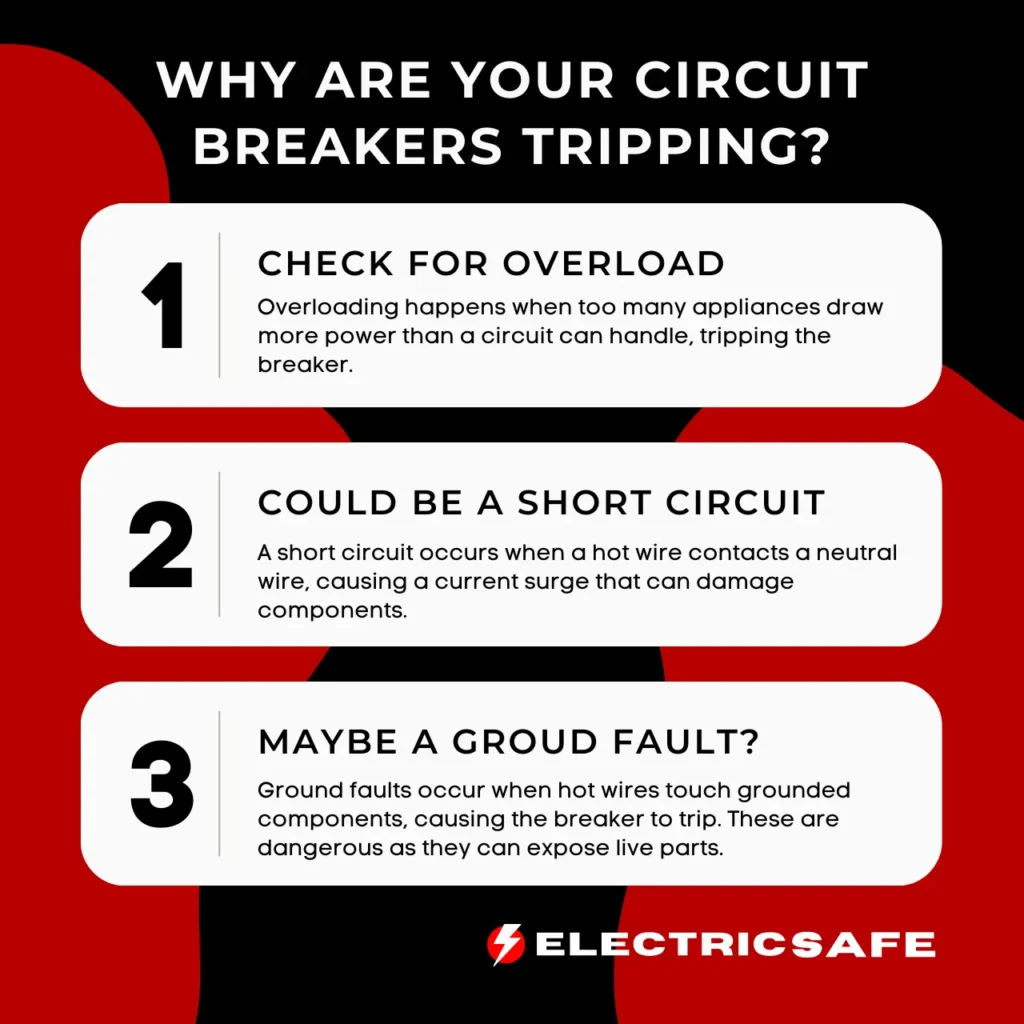
An overloaded circuit is arguably the most common reason for a breaker to trip. This occurs when too many appliances or devices are drawing power from a single circuit simultaneously, exceeding its amperage capacity. Each circuit is designed to handle a specific amount of electrical current, measured in amperes (amps). If the total current demanded by all connected devices surpasses this limit, the wires in the circuit can overheat. The circuit breaker detects this excessive current and trips to prevent the wires from becoming dangerously hot, which could melt insulation or even start a fire.
Examples: Imagine plugging in a powerful space heater, a hair dryer, and a vacuum cleaner all into outlets on the same circuit. Individually, these devices might be fine, but together, their combined power draw easily exceeds the capacity of a typical 15-amp or 20-amp residential circuit, leading to a trip. Kitchens are particularly prone to overloads due to high-wattage appliances like microwaves, toasters, and blenders.
Solutions: The simplest solution is to redistribute your electrical load. Plug high-power appliances into different circuits, or use them one at a time. Consider the placement of items like space heaters, which should ideally be on dedicated circuits if possible.
Short Circuits: A More Serious Threat
A short circuit is a more dangerous condition than an overload. It occurs when electricity deviates from its intended path and finds an unintended, low-resistance route, allowing a massive surge of current to flow almost instantaneously. This surge generates intense heat and can cause significant damage to wiring, appliances, and pose a severe fire hazard.
Causes: Short circuits can result from:
-
Damaged or frayed wiring: Worn insulation exposing bare wires that touch each other.
-
Faulty appliance wiring: Internal wiring within an appliance becoming loose or shorting out.
-
Loose connections: Wires coming loose from an outlet, switch, or light fixture and touching other wires or the metal box.
-
Punctured wires: A nail or screw accidentally piercing a hidden wire during renovation.
Risks: The extreme heat generated by a short circuit can quickly melt wire insulation, ignite surrounding materials, and damage electrical components. If your breaker trips immediately after plugging in an appliance, or if you hear a pop, see a flash, or smell burning, a short circuit is a strong possibility.
Solutions: If you suspect a short circuit, immediately unplug all devices from the affected circuit. Do not attempt to reset the breaker repeatedly without identifying the cause. Visually inspect cords and outlets for any obvious damage. If the problem persists after unplugging everything, or if you cannot identify the source, it’s crucial to call a qualified electrician.
Ground Faults: Protecting Against Electrical Shock
A ground fault is similar to a short circuit but involves the current finding an unintended path to the ground, rather than between two “hot” wires. This often happens when a “hot” wire comes into contact with a grounded object, such as the metal casing of an appliance, a water pipe, or even a human body.
Role of GFCI/AFCI Breakers: To protect against the specific dangers of ground faults and arc faults, specialized breakers are used:
-
Ground Fault Circuit Interrupters (GFCIs): These devices are designed to detect minute differences in current flowing into and out of a circuit. If the outgoing current is even slightly less than the incoming current (indicating current is leaking to the ground), the GFCI trips almost instantly, preventing severe electrical shock. GFCIs are typically found in areas where water is present, such as bathrooms, kitchens, laundry rooms, garages, and outdoors.
-
Arc Fault Circuit Interrupters (AFCIs): These are designed to detect dangerous electrical arcs (sparks) that standard breakers cannot. Arc faults can occur from damaged wire insulation, loose connections, or accidentally pierced wires and are a leading cause of electrical fires. AFCIs provide enhanced protection against these hidden dangers.
Causes: Common causes of ground faults include:
-
Water exposure: An appliance falling into water, or water splashing onto an outlet.
-
Damaged insulation: A “hot” wire touching the metal frame of an appliance.
-
Faulty wiring in wet environments.
Solutions: If a GFCI or AFCI breaker trips, first unplug all devices from that circuit. If the breaker resets, plug devices back in one by one to identify the faulty appliance. If it doesn’t reset, or if there’s no obvious cause, consult an electrician.
Beyond the Basics: Less Common but Important Causes
While overloads and shorts are the most frequent culprits, other issues can also cause a breaker to trip, often indicating a deeper problem with your electrical system.
Faulty Appliances or Devices
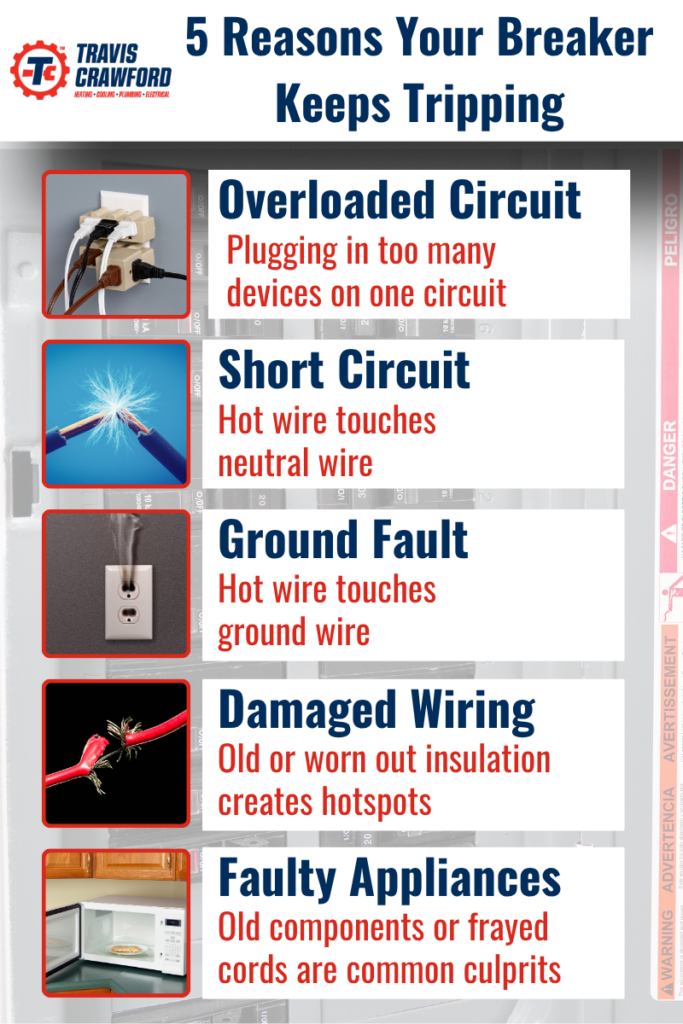
Sometimes, the problem isn’t the circuit itself but one of the devices plugged into it. An appliance with internal wiring damage, a motor nearing the end of its life, or a heating element that is shorting out can cause a breaker to trip. The appliance essentially creates an overload or a short circuit internally.
Testing: If a breaker trips immediately after you turn on a specific appliance, that device is a prime suspect. Unplug it and try resetting the breaker. If the breaker holds, you’ve likely found your faulty appliance. If you can, test the appliance on another circuit (if safe to do so) to confirm.
Arc Faults: The Hidden Danger
As mentioned with AFCI breakers, arc faults are high-temperature electrical discharges that can occur when there’s damaged wiring or loose connections. Unlike a direct short circuit, arc faults might not draw enough current to trip a standard circuit breaker immediately, allowing them to smolder and potentially ignite combustible materials over time.
Risks: Arc faults are particularly insidious because they can happen behind walls or inside junction boxes, undetected until it’s too late. The localized heat generated can easily start a fire.
Solutions: Modern building codes often mandate AFCI protection for most living areas to mitigate this risk. If you have an older home without AFCI breakers and experience unexplained tripping or suspect wiring issues, upgrading your panel with AFCI protection or having an electrical inspection is highly recommended.
Wiring Issues and Ageing Infrastructure
The wiring within your walls is not immortal. Over time, it can degrade, become damaged, or simply become inadequate for modern electrical demands.
-
Loose Connections: Vibrations, temperature changes, or improper installation can cause wire connections to loosen at outlets, switches, light fixtures, or even within the main electrical panel. A loose connection can create resistance, generate heat, and eventually lead to an arc fault or short circuit.
-
Damaged Insulation: Pests (like rodents chewing on wires), nails, screws, or wear and tear can damage wire insulation, exposing bare conductors and creating opportunities for shorts or ground faults.
-
Outdated Wiring Systems: Older homes may have wiring systems (e.g., knob and tube, aluminum wiring) that are not designed to handle the power demands of contemporary electronics and appliances. Such systems are more prone to overheating and tripping, and in some cases, can be serious fire hazards.
What to Do When a Breaker Trips (and When to Call a Pro)
Knowing the potential causes is half the battle; knowing what to do next is just as crucial.
Immediate Action Steps
-
Safety First: If you see sparks, smell burning, or hear unusual noises, prioritize safety. Evacuate if necessary and call emergency services. Do NOT attempt to reset the breaker if you suspect a fire or severe electrical fault.
-
Unplug Devices: If it’s a simple power loss, go to the affected area and unplug all devices, especially high-wattage ones.
-
Locate the Breaker: Go to your electrical panel and identify the tripped breaker. It will be in the “OFF” or “TRIPPED” position.
-
Reset the Breaker: Firmly push the switch to the full “OFF” position, then back to “ON.”
-
Observe: If the breaker holds, plug in devices one by one to identify the culprit. If it trips immediately again, do not force it back “ON.”
Troubleshooting Tips for Homeowners
-
Systematic Unplugging: If the breaker trips and you can reset it, but it trips again after plugging something back in, you’ve found your problem device or circuit section.
-
Check for Visible Damage: Inspect appliance cords for fraying or damage, and look at outlets for burn marks or loose connections.
-
Understand Breaker Types: Familiarize yourself with your panel. Standard breakers protect against overloads and shorts. GFCI and AFCI breakers have a test button; testing them monthly ensures they are functioning correctly.
When Professional Help is Indispensable
While some issues can be resolved by a savvy homeowner, many electrical problems demand the expertise of a licensed electrician. Call a professional if:
-
Frequent Tripping: A breaker trips repeatedly, even after you’ve reduced the load or unplugged devices. This indicates a persistent underlying issue.
-
Burning Smells, Sparks, or Hot Spots: These are serious warning signs of an active electrical fault or fire hazard.
-
Outlets or Switches are Hot to the Touch: This points to overheating, likely due to a loose connection or overloaded circuit.
-
Damaged Wiring or Panel Issues: If you see frayed wires, exposed conductors, or damage within the electrical panel, do not attempt repairs yourself.
-
Lack of Knowledge or Uncertainty: Electricity can be deadly. If you’re unsure about the cause or how to safely address it, always defer to a professional.
-
Repeated GFCI/AFCI Tripping: While GFCIs and AFCIs are designed to trip, if they do so frequently without an obvious cause, it indicates a problematic leak or arc somewhere in the circuit.
Prevention is Key: Maintaining a Safe Electrical System
Proactive measures can significantly reduce the likelihood of a tripped breaker and ensure the long-term safety and efficiency of your electrical system.
Smart Usage Habits
-
Avoid Overloading: Be mindful of how many high-wattage appliances you operate on a single circuit. Distribute loads across different circuits where possible.
-
Regularly Inspect Cords and Outlets: Check for frayed cords, cracked insulation, loose plugs, or discolored outlets. Replace damaged items promptly.
-
Use Surge Protectors Wisely: While surge protectors guard electronics from voltage spikes, they don’t prevent overloads on the circuit itself. Ensure they are rated for the devices you’re plugging in.
-
Unplug Unused Appliances: This not only saves energy but also reduces the overall electrical load.
Regular Electrical Inspections
Just like your car or your HVAC system, your home’s electrical system benefits from periodic professional inspections. A qualified electrician can:
-
Identify outdated or damaged wiring.
-
Check for loose connections in outlets, switches, and the electrical panel.
-
Ensure your breakers are correctly sized for your circuits.
-
Verify the functionality of safety devices like GFCIs and AFCIs.
-
Spot potential fire hazards before they escalate.

Upgrading Your Electrical System
For older homes or properties with increasing power demands, an electrical system upgrade might be necessary. This could involve:
-
Panel Upgrade: Replacing an old fuse box or an undersized breaker panel with a larger capacity unit.
-
Wiring Upgrades: Replacing old, degraded, or unsafe wiring (e.g., knob and tube, aluminum wiring) with modern copper wiring.
-
Adding Dedicated Circuits: Installing separate circuits for high-demand appliances (e.g., EV chargers, large HVAC units, modern kitchens) to prevent overloads on general circuits.
-
Installing GFCI/AFCI Protection: Ensuring that all appropriate circuits have these crucial safety devices.
In conclusion, a tripped circuit breaker is more than a nuisance; it’s a vital alert from your home’s electrical system. By understanding the common causes – from simple overloads to serious short and ground faults, and even the subtle dangers of arc faults – you can more effectively troubleshoot, maintain, and ensure the safety of your home’s electrical infrastructure. When in doubt, or if problems persist, remember that electrical work is best left to licensed professionals, ensuring peace of mind and the continued safe operation of your tech-driven home.
aViewFromTheCave is a participant in the Amazon Services LLC Associates Program, an affiliate advertising program designed to provide a means for sites to earn advertising fees by advertising and linking to Amazon.com. Amazon, the Amazon logo, AmazonSupply, and the AmazonSupply logo are trademarks of Amazon.com, Inc. or its affiliates. As an Amazon Associate we earn affiliate commissions from qualifying purchases.