
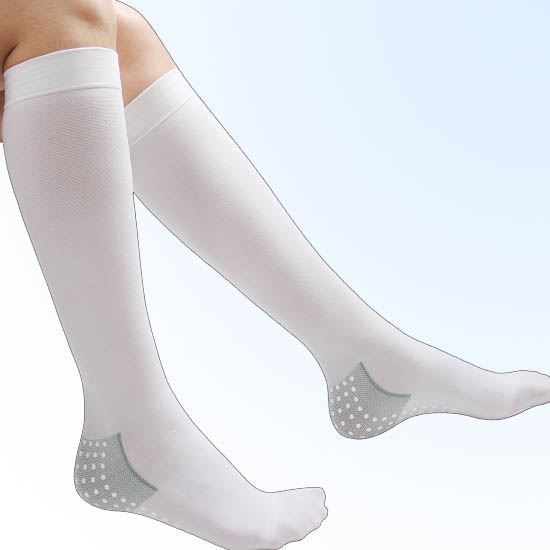
In the landscape of medical interventions, seemingly simple devices often embody profound technological sophistication. Anti-embolism stockings, frequently seen in clinical settings, are a prime example. Far from being mere elastic garments, these stockings represent a carefully engineered solution to a critical medical challenge: the prevention of venous thromboembolism (VTE), which includes deep vein thrombosis (DVT) and pulmonary embolism (PE). Understanding “what are anti-embolism stockings” necessitates a deep dive into the textile engineering, material science, and biomechanical principles that render them effective, firmly placing them within the realm of medical technology. They are a testament to how intelligent design and materials can offer non-invasive, yet powerful, prophylactic protection against life-threatening conditions.

The core technology behind anti-embolism stockings lies in their ability to deliver graduated compression. Unlike conventional compression wear, these stockings are precisely designed to exert the highest pressure at the ankle and gradually decrease pressure further up the leg, towards the thigh. This specific pressure gradient is not arbitrary; it’s a meticulously calculated biomechanical strategy to enhance venous blood flow. By gently compressing the superficial veins and dilating the deeper veins, these stockings facilitate the return of deoxygenated blood to the heart, preventing venous stasis—a primary precursor to clot formation. This engineering feat, integrating flexibility with controlled, differential pressure, is what distinguishes them as a vital piece of medical tech, optimizing circulatory mechanics without impeding arterial flow.
The Engineering Marvel: Precision in Graduated Compression
The effectiveness of anti-embolism stockings hinges entirely on their ability to deliver a precise and consistent graduated compression profile. This isn’t achieved through rudimentary elastic bands but through sophisticated textile engineering and manufacturing processes. The design of these stockings is a complex interplay of fabric construction, fiber selection, and knitting patterns, all calibrated to achieve specific pressure points along the limb.
Precision in Pressure Gradient Design
The principle of graduated compression is rooted in fluid dynamics and human physiology. Veins are low-pressure vessels, and gravity naturally hinders blood flow back to the heart, especially when a patient is immobile. The graduated pressure system counteracts this by creating an artificial pressure differential. Engineers and material scientists work in concert to define the exact pressure values required at different points—typically highest at the ankle (e.g., 18-21 mmHg) and progressively decreasing towards the calf and thigh (e.g., 8-10 mmHg). This pressure differential effectively ‘pushes’ blood upwards, reducing the diameter of distended veins and increasing the velocity of blood flow.
Achieving this gradient consistently across various sizes and leg anatomies is a significant technological challenge. It involves:
-
Computer-Aided Design (CAD): Sophisticated software is used to model the human leg and simulate how different knitting patterns and tension levels will translate into applied pressure. This allows for virtual prototyping and optimization before physical production.
-
Advanced Knitting Machines: Modern anti-embolism stockings are produced on highly specialized circular knitting machines that can precisely control stitch density, yarn tension, and fabric elasticity at different points along the garment. These machines are programmed to create zones of varying compression within a single, seamless piece of fabric.
-
Quality Control and Calibration: Each batch and often individual stocking is subject to rigorous testing using pressure measurement devices to ensure it meets the specified compression profile. This calibration is critical, as deviations can render the stocking ineffective or, worse, potentially harmful by impeding circulation.
Material Science at Play
The performance and comfort of anti-embolism stockings are intrinsically linked to the materials used in their construction. The choice of fibers is a critical aspect of their technological design, balancing elasticity, durability, breathability, and skin compatibility.
-
Elastic Fibers: The backbone of these stockings consists of high-quality elastic fibers, typically spandex (Lycra) or elastane, blended with non-elastic fibers like nylon or polyester. Spandex provides the necessary stretch and recovery properties, ensuring the stocking maintains its compression over time and use. The specific denier and blend ratio of these elastic fibers are carefully selected to provide the desired pressure.
-
Breathability and Moisture Management: Patients often wear these stockings for extended periods, making comfort paramount. Modern designs incorporate moisture-wicking and breathable materials to prevent skin irritation, maceration, and discomfort. Microfibers and advanced knitting techniques create porous structures that allow air circulation while maintaining compression integrity.
-
Durability and Longevity: Given their medical purpose, anti-embolism stockings must withstand repeated washing and wear without losing their therapeutic compression. This requires durable synthetic blends that resist degradation from detergents, body oils, and friction. Research into new polymer composites continues to push the boundaries of durability and elasticity retention.
-
Skin Compatibility and Hypoallergenicity: Materials are often chosen to be hypoallergenic and gentle on sensitive skin, reducing the risk of allergic reactions or irritation, especially for bedridden or immunocompromised patients.
Evolution of Anti-Embolism Stocking Technology
The journey of anti-embolism stockings from basic elastic bandages to the high-tech garments seen today is a testament to continuous innovation in medical textile engineering. This evolution reflects advancements in materials, manufacturing techniques, and a deeper understanding of biomechanics.
From Basic Bandages to Sophisticated Garments
Early forms of compression therapy involved simple elastic bandages wrapped around the legs. While these offered some degree of compression, they were prone to inconsistent pressure, slippage, and often required skilled application. The advent of purpose-designed anti-embolism stockings marked a significant technological leap. The ability to knit a seamless garment with pre-defined, graduated pressure eliminated the variables associated with manual wrapping. This transition brought greater reliability, ease of application, and more consistent therapeutic outcomes. Subsequent innovations focused on improving fiber technology, developing specialized knitting machines, and refining pressure profiles based on clinical research and biomechanical studies.
Manufacturing Innovations
The precision required for anti-embolism stockings has driven significant advancements in textile manufacturing.
-
Computer-Controlled Knitting: Modern manufacturing facilities utilize sophisticated computer-controlled circular knitting machines. These machines can be programmed to produce a vast array of sizes and compression profiles with remarkable consistency. They incorporate sensor feedback systems to monitor yarn tension and stitch density in real-time, correcting for variations and ensuring each stocking meets exact specifications.
-
Automated Sizing and Cutting: Post-knitting, automated systems are often employed for precise cutting, stitching of hems, and quality checks. This reduces human error and increases production efficiency while maintaining high standards.
-
Advanced Finishing Processes: The stockings undergo specialized finishing processes, including heat-setting to stabilize the fibers and prevent shrinkage, and antimicrobial treatments to enhance hygiene and reduce odor for prolonged wear. These processes leverage chemical engineering and materials science to optimize the final product’s properties.
Beyond Standard Design: Advanced Features and Future Tech
While current anti-embolism stockings are highly effective, the field of medical textiles and wearables is constantly pushing boundaries. The next generation of anti-embolism technology is likely to integrate smart features, personalized manufacturing, and digital connectivity, further enhancing their therapeutic efficacy and user experience.
Integrated Sensors and Smart Textiles
The convergence of textiles and electronics is opening new avenues for medical wearables. Future anti-embolism stockings could incorporate:
-
Pressure Sensors: Micro-sensors embedded within the fabric could provide real-time feedback on the actual pressure being applied to the limb. This could alert clinicians or patients if the stocking is too loose, too tight, or if its compression has degraded over time. This data could be wirelessly transmitted to a monitoring device or app.
-
Temperature and Moisture Sensors: Monitoring skin temperature and moisture levels beneath the stocking could help prevent skin breakdown, a common concern for immobile patients. Intelligent fabrics could potentially adapt to regulate temperature or alert caregivers to potential issues.
-
Compliance Monitoring: Small, discreet sensors could track how long the stockings are worn each day, providing valuable data on patient compliance, which is crucial for treatment success.
-
Biofeedback Integration: Integrating biofeedback mechanisms, such as gentle vibrations, could potentially stimulate microcirculation or provide tactile reminders for repositioning, though this remains largely experimental.
Personalized Fit Technology
One size does not truly fit all, even with a range of standard sizes. Personalized fit is a significant area of technological advancement.
-
3D Body Scanning: High-precision 3D body scanners could capture the exact contours and dimensions of a patient’s leg. This digital model would then be used to create a truly custom-fitted stocking.
-
Additive Manufacturing (3D Printing): While not yet fully mature for textiles, advancements in 3D printing of flexible polymers and fibers could eventually allow for the direct creation of custom-compression garments tailored to individual patient anatomy and specific pressure requirements. This would eliminate sizing discrepancies and optimize therapeutic benefit.
-
Digital Design and Fabrication: Sophisticated software platforms could allow clinicians to digitally design a compression profile based on a patient’s medical needs, which then guides automated knitting machines to produce a custom garment.
The Digital Dimension: Managing and Monitoring with Technology
The application of anti-embolism stockings is not solely about the physical garment; it also encompasses the digital tools and systems that support their selection, monitoring, and compliance. Technology here plays a crucial role in optimizing their use within the broader healthcare ecosystem.
Digital Prescription and Sizing Tools
Accurate sizing is paramount for the efficacy of anti-embolism stockings. Incorrect sizing can render them useless or even harmful.
-
Smartphone Apps for Measurement: Emerging smartphone applications utilize camera technology and augmented reality (AR) to guide users in taking precise leg measurements. These apps can then recommend the most appropriate standard size or even prompt for custom orders.
-
Digital Sizing Charts and Databases: Healthcare providers often rely on digital databases that correlate patient measurements with manufacturer sizing charts. These tools streamline the selection process, reduce errors, and ensure that the right stocking is chosen for the right patient.
-
AI-Powered Recommendations: In the future, AI algorithms could analyze patient demographic data, medical history, and specific anatomical measurements to predict the optimal stocking size and compression level, even considering factors like edema or skin fragility.

Remote Monitoring and Compliance Apps
Post-discharge, ensuring continued use of anti-embolism stockings can be a challenge. Technology offers solutions for remote management and improved compliance.
-
Patient Engagement Apps: Dedicated mobile applications could remind patients to wear their stockings, provide instructions for care, and offer educational content about VTE prevention.
-
Wearable Integration: As mentioned earlier, smart stockings with embedded sensors could wirelessly transmit data on wear time to a patient’s smartphone or directly to a clinician’s dashboard. This allows for objective monitoring of compliance, enabling timely interventions if patients are not adhering to the prescribed regimen.
-
Telehealth Integration: Data collected from smart stockings or patient apps could be integrated into telehealth platforms, allowing healthcare providers to remotely monitor patient progress, address concerns, and reinforce the importance of continued VTE prophylaxis. This shifts from reactive care to proactive, tech-enabled prevention.
In conclusion, anti-embolism stockings are a remarkable blend of textile engineering, material science, and biomechanical design. They stand as a testament to how low-tech-appearing devices can embody high-tech principles, providing a crucial defense against venous thromboembolism. As technology continues to evolve, incorporating smart textiles, personalized manufacturing, and digital health tools, these essential garments will undoubtedly become even more sophisticated, offering enhanced efficacy, comfort, and patient engagement in the ongoing battle against preventable blood clots. Their story is one of continuous innovation, firmly rooted in the pursuit of better patient outcomes through intelligent medical technology.
aViewFromTheCave is a participant in the Amazon Services LLC Associates Program, an affiliate advertising program designed to provide a means for sites to earn advertising fees by advertising and linking to Amazon.com. Amazon, the Amazon logo, AmazonSupply, and the AmazonSupply logo are trademarks of Amazon.com, Inc. or its affiliates. As an Amazon Associate we earn affiliate commissions from qualifying purchases.