
The Tesla Cybertruck has been one of the most anticipated and polarizing vehicles of the past decade. Beyond its audacious, futuristic design, its promised utility and performance have been central to the fervent discussions surrounding it. Among its most scrutinized specifications, particularly for a vehicle marketed as a “truck,” is its towing capacity. For many prospective owners, especially those in trades, recreation, or agriculture, the ability to haul significant loads is paramount. The Cybertruck’s entry into the market represents a bold technological statement, aiming to redefine what an electric pickup truck can achieve in terms of raw power and utility.

At its core, the Cybertruck’s towing capability is a testament to the advancements in electric powertrain technology, specifically Tesla’s high-torque electric motors and sophisticated battery management systems. While initial promises often hover around ambitious figures, the reality of a production vehicle involves a careful balance of power, range, durability, and regulatory compliance. Understanding the Cybertruck’s towing capacity isn’t just about quoting a number; it’s about delving into the engineering prowess that makes it possible, the technological trade-offs involved, and its implications for the future of heavy-duty electric vehicles. This exploration will dissect the technical specifications, real-world implications, and the broader technological narrative of the Cybertruck as a leading-edge utility machine.
Unpacking the Cybertruck’s Core Towing Capability
The ability of the Cybertruck to pull significant weight is rooted deeply in its unique engineering and the inherent advantages of electric propulsion. Unlike traditional internal combustion engine (ICE) trucks that rely on complex transmissions to generate peak torque, electric motors deliver instant, prodigious torque from a standstill. This characteristic is a game-changer for towing, offering smooth, effortless acceleration even with heavy loads attached.
The Headline Figures: Dual Motor and Cyberbeast Configurations
When the Cybertruck was first unveiled, a range of towing capacities were projected for different motor configurations: single, dual, and tri-motor. However, as the vehicle moved from concept to production, the focus narrowed. The initially released production models, the All-Wheel Drive (AWD) and the top-tier Cyberbeast, showcase the practical application of this technology.
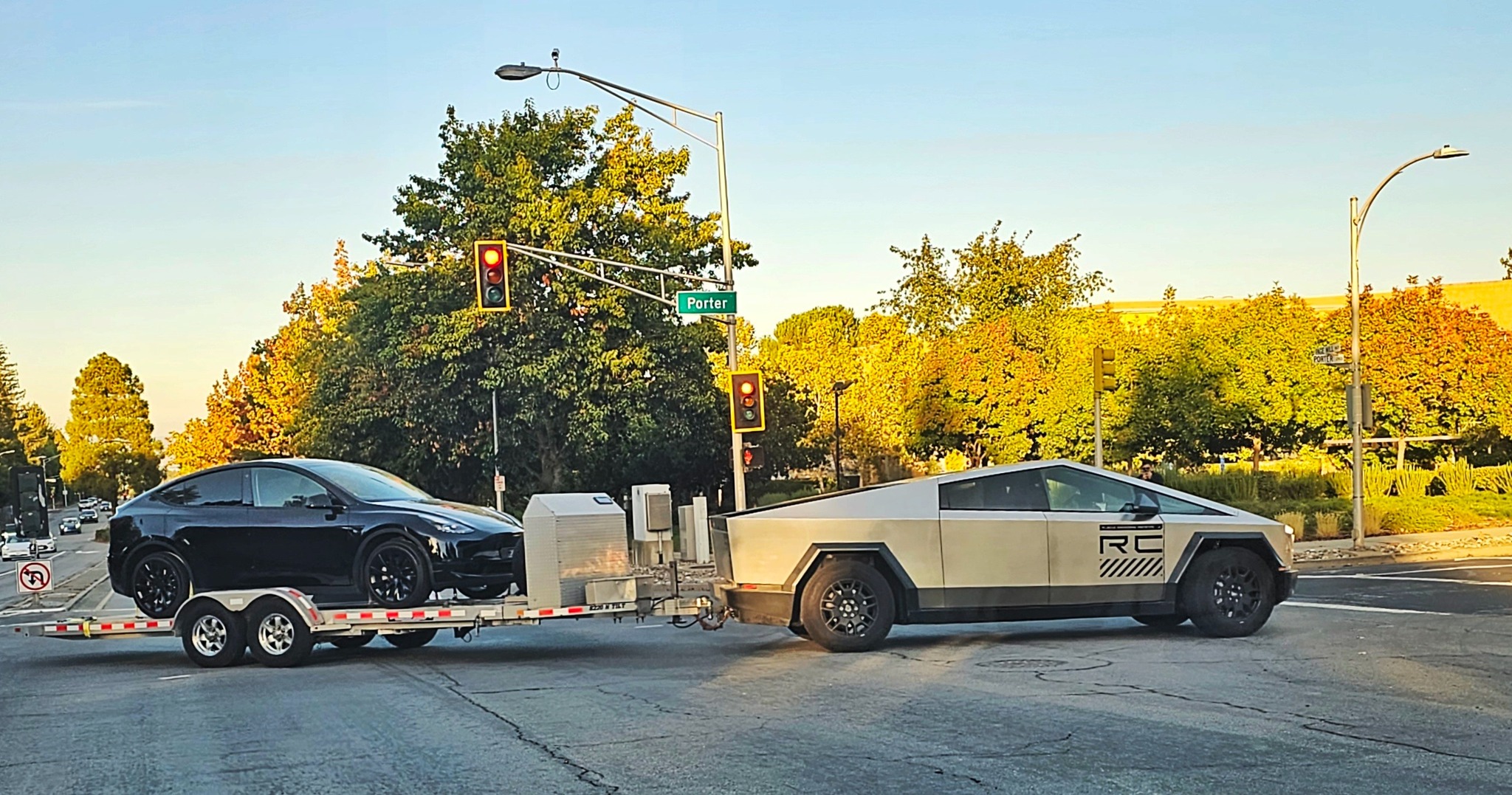
The All-Wheel Drive (AWD) Cybertruck, equipped with a dual-motor setup, is officially rated with a towing capacity of 11,000 lbs (approximately 4,990 kg). This figure places it squarely in contention with many half-ton and even some light-duty three-quarter-ton ICE trucks on the market. It’s a significant capability, allowing it to comfortably tow a wide range of trailers, from large utility trailers and car haulers to many travel trailers and smaller fifth-wheel campers.
The Cyberbeast, the performance-oriented variant featuring a tri-motor configuration, also maintains an 11,000 lbs towing capacity. While it boasts significantly more horsepower and quicker acceleration, Tesla opted to cap the maximum towing capacity at the same figure as the AWD model, likely due to other limiting factors such as chassis design, braking systems, and overall structural integrity designed to maintain a consistent safety margin across the higher-end variants. This consistent rating simplifies consumer expectations and likely reflects the optimal balance of engineering constraints and performance goals for the platform.
Engineering Underpinnings: Why It Can Tow So Much
The Cybertruck’s impressive towing figures are not just arbitrary numbers; they are the result of several foundational technological choices and engineering innovations:
-
Structural Battery Pack and Unibody Exoskeleton: Unlike body-on-frame trucks, the Cybertruck employs a unibody “exoskeleton” design, integrating the battery pack as a structural component. This design creates an exceptionally stiff and strong chassis, which is crucial for handling the stresses of heavy towing. The rigidity ensures that twisting forces from a trailer are managed effectively, contributing to stability and durability.
-
High-Torque Electric Motors: Tesla’s permanent magnet electric motors are renowned for their efficiency and power density. The instantaneous torque delivery characteristic of electric motors is a massive advantage for towing. Unlike gasoline or diesel engines that need to rev up to their power band, electric motors provide maximum torque from 0 RPM, making it incredibly easy to get a heavy load moving and to maintain speed on inclines.
-
Adaptive Air Suspension System: All Cybertruck models come equipped with an advanced adaptive air suspension system offering up to 12 inches of travel and 17 inches of ground clearance in its highest setting. For towing, this system is invaluable. It automatically levels the vehicle when a heavy trailer is attached, ensuring a balanced ride height and optimal weight distribution, which is critical for safety and stability. The ability to adjust ride height also aids in hitching trailers.
-
Integrated Braking System: Effective braking is as important as pulling power when towing. The Cybertruck features robust braking components designed to handle the increased inertia of a heavy trailer. Furthermore, its regenerative braking system, a hallmark of EVs, contributes significantly by recuperating energy during deceleration, reducing wear on traditional brake pads, and providing additional stopping force.
-
Advanced Thermal Management: Towing heavy loads generates significant heat in the motors, battery, and power electronics. Tesla’s sophisticated liquid cooling systems are designed to manage these thermal loads efficiently, ensuring that performance is not degraded during prolonged towing sessions, even in demanding conditions.
These engineering principles converge to create a vehicle that not only promises but delivers formidable towing capabilities, challenging the established norms of what a utility truck can be.
The Nuances and Real-World Implications of Electric Towing
While the raw towing capacity figures are impressive, the experience of towing with an electric vehicle like the Cybertruck introduces a new set of considerations and nuances compared to traditional ICE trucks. These primarily revolve around energy consumption, range management, and software integration.
Range Anxiety and Battery Degradation During Towing
The most significant real-world implication of electric towing is its impact on range. Towing a heavy trailer dramatically increases the aerodynamic drag and the overall weight that the vehicle must move, both of which require substantially more energy. Depending on the size, weight, and aerodynamic profile of the trailer, the Cybertruck’s range can be reduced by 30% to 50% or even more.
-
Increased Energy Consumption: Moving an additional 5,000-10,000 lbs and pushing a large, blunt object through the air demands a lot from the battery. This means more frequent charging stops will be necessary, and trip planning becomes crucial.
-
Charging Infrastructure Challenges: The current charging infrastructure, primarily designed for passenger cars, can present logistical challenges for electric trucks towing large trailers. Finding Supercharger stalls that can accommodate a Cybertruck with a long trailer without requiring disconnection can be difficult, although Tesla has been expanding its “pull-through” Supercharger locations to address this.
-
Battery Cycle Life and Degradation: While occasional heavy towing is unlikely to cause premature degradation, consistently operating the battery under high load conditions and frequent deep discharges/charges could theoretically impact long-term battery health more than normal driving. However, Tesla’s battery management system is highly sophisticated and designed to mitigate such effects.
Software Optimization and Towing-Specific Features
Tesla’s expertise in software and over-the-air (OTA) updates plays a vital role in optimizing the towing experience.
-
“Tow Mode” Activation: The Cybertruck, like other Tesla vehicles with towing capabilities, likely features a dedicated “Tow Mode.” When activated, this mode adjusts various vehicle parameters, including regenerative braking levels, suspension settings, and potentially powertrain mapping, to optimize performance and stability while towing.
-
Trailer Brake Controller Integration: Modern towing often requires an integrated trailer brake controller to synchronize the truck’s brakes with the trailer’s brakes, enhancing safety and control. The Cybertruck features an integrated controller, simplifying setup and ensuring compliant and safe operation with various trailer types.
-
Intelligent Range Prediction: Tesla’s navigation system is known for its accurate range predictions. With “Tow Mode” engaged, the system can potentially use algorithms to estimate range more accurately based on the trailer’s assumed weight and drag, helping drivers plan charging stops effectively. Future updates could even allow for manual input of trailer dimensions and weight for even greater accuracy.
-
Advanced Driver-Assistance Systems (ADAS): While some ADAS features might be limited or disabled while towing for safety reasons, others, like blind-spot monitoring, could be enhanced with trailer awareness to provide a safer towing experience.
Payload vs. Towing Capacity: A Critical Distinction
It’s important to differentiate between towing capacity and payload capacity. Towing capacity refers to the maximum weight a vehicle can pull, while payload capacity is the maximum weight a vehicle can carry in its cab and bed. For the Cybertruck:
-
Payload Capacity: The Cybertruck boasts an impressive 2,500 lbs (approximately 1,134 kg) payload capacity. This is critical because the tongue weight of a trailer (the downward force exerted by the trailer’s hitch on the truck’s hitch receiver) counts towards the truck’s payload.
-
Gross Vehicle Weight Rating (GVWR) and Gross Combined Weight Rating (GCWR): These ratings are the ultimate limits. GVWR is the maximum permissible total weight of the truck itself, including passengers, cargo, and tongue weight. GCWR is the maximum allowable weight of the fully loaded truck and a fully loaded trailer combined. Understanding these limits is crucial for safe and legal towing, as exceeding them can compromise handling, braking, and structural integrity. The Cybertruck’s robust design is engineered to handle these combined stresses within its specified limits.
Cybertruck as a Technological Leap in Utility Vehicles
The Cybertruck is more than just an electric truck; it’s a statement about the future of utility vehicles, pushing boundaries in materials science, manufacturing, and software integration. Its towing capabilities are a core part of this larger technological narrative.
Redefining the Electric Pickup Segment
The Cybertruck’s performance and utility specifications immediately place it at the forefront of the burgeoning electric pickup segment. It challenges conventional notions of truck design and performance, demonstrating that electric powertrains can deliver both extreme power and significant utility.
-
Multifunctional Utility: Beyond towing, the Cybertruck’s versatility is enhanced by features like its 6-foot x 4-foot composite bed with integrated outlets (120V and 240V), providing power for tools and camping equipment. This transforms the truck into a mobile power station, a significant technological advantage for remote work sites or recreational activities.
-
Durability and Longevity: The Ultra-Hard 30X Cold-Rolled Stainless Steel Exoskeleton offers unparalleled resistance to dents, dings, and corrosion, potentially leading to a longer service life and reduced maintenance in harsh environments where trucks are typically subjected to significant wear and tear. This choice of material is a direct technological innovation impacting its utility.
Innovations Beyond Towing: Durability and Versatility
While towing is a primary focus for truck buyers, the Cybertruck’s overall technological package significantly enhances its utility.
-
Steer-by-Wire Technology: The Cybertruck employs a steer-by-wire system, eliminating the mechanical linkage between the steering wheel and the wheels. This allows for variable steering ratios, making the truck highly maneuverable at low speeds (like in tight parking lots or when backing up a trailer) and stable at high speeds. This is a significant leap in automotive control technology for a mass-produced vehicle.
-
Rear-Wheel Steering: Coupled with steer-by-wire, the rear-wheel steering system dramatically improves the Cybertruck’s turning radius, making it feel more like a mid-size SUV than a full-size truck. This is particularly advantageous when navigating tight spaces or positioning a trailer.
-
Onboard Air Compressor: An integrated air compressor is a practical technological addition, allowing owners to inflate tires or even air mattresses, adding to its self-sufficiency and utility for various outdoor or work-related scenarios.
These innovations collectively position the Cybertruck not just as a competitor to existing trucks but as a reimagining of what a utility vehicle can be through advanced technology.
The Future of Electric Towing and the Cybertruck’s Role
The Cybertruck’s market introduction marks a pivotal moment in the evolution of electric vehicles, particularly in the heavy-duty segment. Its successes and challenges will undoubtedly influence future developments in battery technology, charging infrastructure, and vehicle design for hauling.
Advancements in Battery Technology and Charging Infrastructure
The primary limitation for long-distance, heavy-duty electric towing remains battery range and charging speed. The future will see:
-
Higher Energy Density Batteries: Next-generation battery technologies, such as solid-state batteries or improved lithium-ion chemistries (like Tesla’s 4680 cells), will offer more energy in smaller, lighter packages, directly increasing range and potentially towing endurance.
-
Faster Charging Speeds: As charging networks evolve with higher power outputs (e.g., 800V architectures becoming more common), the time spent charging, even with a depleted battery from towing, will decrease significantly, making long-haul electric towing more practical.
-
Dedicated Towing Charging Solutions: The development of more pull-through charging stations specifically designed for trucks with trailers will be crucial for widespread adoption.

What the Cybertruck Represents for Heavy-Duty EV Adoption
The Cybertruck’s robust towing capacity and innovative features are set to accelerate the transition to electric powertrains for commercial and heavy-duty personal use. It demonstrates that electric vehicles can meet and, in some aspects, surpass the capabilities of their ICE counterparts in the demanding truck segment.
-
Pioneering Commercial Fleets: The Cybertruck’s utility features and projected durability make it an attractive option for commercial fleets seeking to electrify their operations, benefiting from lower fuel costs and reduced emissions.
-
Influencing Other Manufacturers: Tesla’s entry with such a distinctive and capable vehicle will undoubtedly push other manufacturers to innovate further in their electric truck offerings, fostering a competitive environment that benefits consumers with more advanced and capable EVs.
In conclusion, the Tesla Cybertruck’s towing capacity of 11,000 lbs is a significant technological achievement that firmly plants it in the realm of serious utility vehicles. It stands as a testament to the power and potential of electric propulsion, backed by a suite of cutting-edge engineering and software innovations. While challenges like range reduction during towing and the evolving charging infrastructure remain, the Cybertruck represents a formidable step forward, redefining expectations for what an electric pickup truck can do and setting a new benchmark for the integration of advanced technology in the heavy-duty vehicle market. Its impact will extend far beyond its unique aesthetic, fundamentally shaping the trajectory of electric utility transport for years to come.
aViewFromTheCave is a participant in the Amazon Services LLC Associates Program, an affiliate advertising program designed to provide a means for sites to earn advertising fees by advertising and linking to Amazon.com. Amazon, the Amazon logo, AmazonSupply, and the AmazonSupply logo are trademarks of Amazon.com, Inc. or its affiliates. As an Amazon Associate we earn affiliate commissions from qualifying purchases.