
In the intricate world of materials science, few categories hold as much critical importance for technological advancement as plastics. Among them, thermosetting plastics stand out as a unique and indispensable class, forming the backbone of countless modern devices, components, and structures that define our digital age. Far from being a mere commodity, understanding thermosetting plastics—their molecular structure, properties, and applications—is fundamental to appreciating the robustness, performance, and innovation embedded within the gadgets, systems, and infrastructure that power our lives. This deep dive explores the essence of thermosetting plastics, positioning them firmly within the “Tech” landscape as foundational enablers of contemporary engineering and design.

The Fundamental Nature of Thermosetting Plastics
At its core, a thermosetting plastic, often shortened to “thermoset,” is a polymer material that undergoes an irreversible chemical change when heated, forming a rigid, cross-linked network structure. This transformation is akin to baking a cake: once cooked, it cannot return to its raw batter state. This irreversible hardening is what defines thermosets and sets them apart from other plastic categories.
Defining Thermosets: A Molecular Perspective
The unique properties of thermosets stem from their molecular architecture. Initially, thermoset resins are typically in a liquid or malleable state, comprising polymer chains that are either short or lightly branched. When subjected to heat, a catalyst, or a curing agent, these chains react with each other to form strong covalent bonds at multiple points. This process, known as “curing” or “cross-linking,” creates a three-dimensional, highly rigid network structure. Imagine a ladder where the rungs (covalent bonds) connect multiple vertical strands (polymer chains). Once these cross-links are formed, the material becomes permanently hardened and cannot be melted or reshaped without degrading its molecular structure. This makes thermosets incredibly stable, especially under conditions where other materials might deform or fail.
Key Distinctions: Thermosets vs. Thermoplastics
To fully grasp the significance of thermosets, it’s essential to understand their counterparts: thermoplastics. The primary difference lies in their behavior when exposed to heat.
-
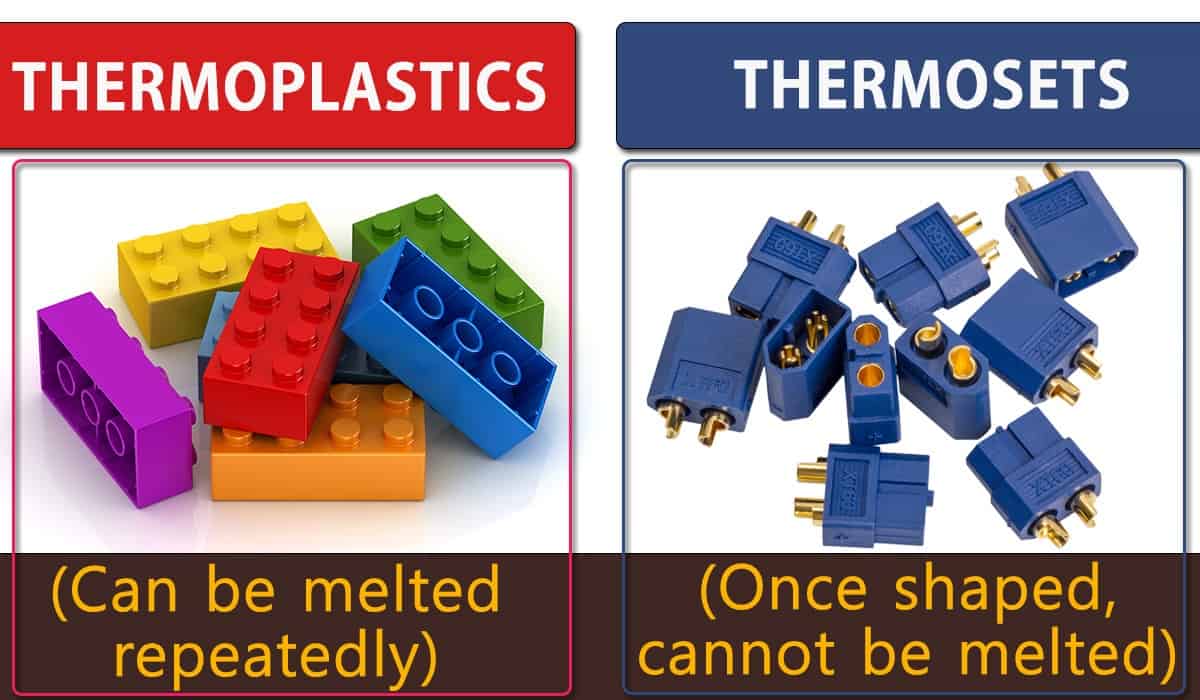
Thermoplastics: These materials soften and melt when heated and solidify when cooled, a process that can be repeated multiple times without significant degradation. Their polymer chains are held together by weaker intermolecular forces, allowing them to slide past each other when heated. This makes them easily recyclable and moldable, ideal for injection molding of consumer goods, packaging, and many common plastics. Examples include polyethylene (PE), polypropylene (PP), and PVC.
-
Thermosets: As discussed, once cured, thermosets become permanently hard and retain their shape even when reheated to very high temperatures. Attempting to reheat them past their degradation point typically results in charring or burning, not melting. This fundamental difference bestows thermosets with superior heat resistance, dimensional stability, and chemical resistance, making them invaluable for high-performance applications where thermoplastics would simply fail.
A Brief History and Evolution
While the widespread application of modern thermosets is a phenomenon of the 20th century, the concept of irreversibly hardened polymers has roots much earlier. Bakelite, invented by Leo Baekeland in 1907, is considered the first synthetic thermosetting plastic. Its excellent electrical insulation properties and heat resistance quickly made it a revolutionary material for electrical components, radio casings, and early consumer goods. Since then, continuous research and development have led to a diverse range of thermoset resins, each tailored with specific properties, significantly expanding their utility beyond simple electrical insulation to sophisticated structural components in aerospace, automotive, and advanced electronics.
Unpacking the Advantages and Limitations for Modern Tech
The unique characteristics of thermosetting plastics lend them to a myriad of demanding applications, particularly within the technology sector. Their blend of strength, resistance, and stability makes them often the material of choice where performance cannot be compromised.
Superior Properties Driving Tech Innovation
Thermosets offer a compelling suite of properties that are crucial for enabling advanced technological solutions:
-
Heat Resistance: Their cross-linked structure prevents melting at elevated temperatures, making them ideal for high-heat environments like engine components, electrical housings, and circuit boards.
-
Chemical Resistance: The robust covalent bonds provide excellent resistance to solvents, acids, and bases, ensuring longevity and reliability in harsh operating conditions.
-
High Strength-to-Weight Ratio: When combined with reinforcing fibers (like carbon or glass fiber), thermosets form composites that boast exceptional strength and stiffness while remaining lightweight, critical for aerospace, automotive, and sporting goods industries.
-
Electrical Insulation: Many thermosets are excellent electrical insulators, preventing current flow and protecting sensitive electronic components from short circuits, a property vital for printed circuit boards (PCBs) and encapsulation materials.
-
Dimensional Stability: Once cured, thermosets exhibit minimal expansion or contraction with temperature fluctuations, maintaining precise dimensions, which is crucial for intricate electronic assemblies and optical components.
-
Creep Resistance: Unlike thermoplastics, thermosets resist deformation under sustained mechanical stress at elevated temperatures, ensuring structural integrity over long periods.
Where Thermosets Shine: Critical Tech Applications
The application landscape for thermosetting plastics is incredibly broad and diverse, impacting nearly every facet of modern technology:
-
Electronics Encapsulation: Thermosets like epoxies are used to encapsulate microchips and other sensitive electronic components, protecting them from moisture, dust, impact, and thermal stresses. This ensures the longevity and reliability of everything from smartphones to industrial control systems.
-
Aerospace Composites: Carbon fiber reinforced polymer (CFRP) composites, often using epoxy or phenolic matrices, are indispensable in aerospace for manufacturing lightweight yet incredibly strong aircraft structures, satellite components, and rocket casings, contributing to fuel efficiency and performance.
-
Automotive Structural Parts: Beyond lightweighting, thermosets are found in engine components, brake pads (phenolics), and body panels, where their heat resistance, stiffness, and chemical inertness are paramount for safety and longevity.
-
Printed Circuit Boards (PCBs): The substrate of nearly all modern electronic devices is typically made from a fiberglass-reinforced epoxy laminate (FR-4). This material provides the necessary electrical insulation, mechanical rigidity, and heat resistance for complex circuits.
-
Specialized Coatings and Adhesives: High-performance epoxy and polyurethane coatings protect surfaces in extreme environments, while thermoset adhesives bond dissimilar materials with exceptional strength, crucial for aerospace, medical devices, and construction.
Overcoming the Challenges: Manufacturing and Recyclability
Despite their unparalleled advantages, thermosets present certain challenges, primarily stemming from their irreversible nature:
-
Manufacturing Complexity: The curing process is often time-sensitive and requires precise control of temperature, pressure, and catalyst ratios. Once cured, errors cannot be undone, leading to potential waste if quality control is not stringent. Advanced molding techniques, such as Reaction Injection Molding (RIM) and Compression Molding, have been developed to manage these complexities.
-
Recyclability Issues: The strong cross-linked structure that gives thermosets their desirable properties also makes them notoriously difficult to recycle. Unlike thermoplastics, they cannot be melted down and reprocessed. Current recycling efforts often involve grinding them into fillers for other materials or energy recovery through incineration. This challenge drives significant research into “reprocessable thermosets” (e.g., vitrimers) and bio-derived options.
-
Repairability: Repairing a damaged thermoset component can be challenging due to its rigid, irreversible nature. However, advancements in self-healing thermosets are beginning to address this limitation, offering the potential for materials that can autonomously repair micro-cracks and damage.
The Diverse World of Thermosetting Materials in Tech
The term “thermoset” encompasses a broad family of polymers, each with distinct chemical compositions and tailored properties that make them suitable for specific technological niches.
Epoxy Resins: The Workhorse of Electronics and Composites
Epoxy resins are arguably the most versatile and widely used class of thermosets in high-tech applications. Known for their exceptional adhesion, electrical insulation, chemical resistance, and mechanical strength, epoxies are integral to:
-
Printed Circuit Boards (PCBs): As the FR-4 laminate, they provide the structural integrity and dielectric properties for circuit routing.
-
Encapsulation: Protecting delicate microelectronics from environmental factors.
-
Adhesives: Forming strong bonds in aerospace (aircraft structures), automotive (composite parts), and even everyday consumer electronics.
-
Composites: As the matrix in carbon fiber and fiberglass composites for aerospace, wind turbine blades, and high-performance sporting goods.
Phenolics: Resilience in High-Stress Environments
Phenolic resins, including the original Bakelite, are prized for their excellent heat resistance, hardness, and dimensional stability, making them ideal for high-temperature and high-wear applications:
-
Automotive: Brake linings, clutch facings, and transmission components due to their friction properties and heat tolerance.
-
Electrical: Switches, sockets, and insulation components where heat and electrical resistance are critical.
-
Refractories: Binders in refractory bricks and other high-temperature industrial applications.
Polyurethanes: Versatility from Foams to Coatings
Polyurethanes (PUs) are unique in their ability to be formulated as both thermosets and thermoplastics, but their thermosetting forms are vital for many tech applications due to their exceptional flexibility, abrasion resistance, and insulating properties:
-
Foams: High-performance insulation in refrigerators, buildings, and automotive parts, as well as comfortable seating and structural core materials.
-
Elastomers: Seals, gaskets, and shock absorbers where resilience and durability are required.
-
Coatings: Durable, corrosion-resistant, and aesthetically pleasing finishes for electronics, automotive exteriors, and industrial equipment.
-
Adhesives and Sealants: Providing strong, flexible bonds and environmental protection in various assemblies.
Polyesters and Vinyl Esters: Reinforcement and Chemical Resistance
These resins are primarily used as matrices in fiberglass reinforced plastics (FRP) due to their good mechanical properties, cost-effectiveness, and chemical resistance:
-
Fiberglass Composites: Boat hulls, automotive body panels, pipes, tanks, and structural elements in construction.
-
Corrosion-Resistant Structures: Used in chemical processing plants for tanks, ducts, and grating due to their ability to withstand aggressive chemicals.
Silicones: High-Performance in Extreme Conditions
Silicone thermosets stand apart with their unique inorganic silicon-oxygen backbone, providing exceptional thermal stability (both high and low temperatures), UV resistance, and electrical insulation properties:
-
Seals and Gaskets: In aerospace, automotive, and electronics where extreme temperatures and harsh environments are common.
-
Medical Devices: Biocompatible and sterilizable components.
-
Thermal Management: Encapsulants and potting compounds for electronics to dissipate heat effectively.
-
LED Encapsulants: Protecting sensitive LED chips while allowing light transmission.
The Future of Thermosets: Sustainable Innovations and Advanced Tech Integration
The trajectory of thermosetting plastics is not static; it is a dynamic field of ongoing research and innovation, driven by demands for greater sustainability, enhanced functionality, and integration into the next generation of technological marvels.
Eco-Friendly Formulations and Bio-Based Thermosets
The environmental impact of traditional petroleum-based plastics is a pressing concern. Future developments in thermosets are increasingly focused on:
-
Bio-Based Resins: Developing thermosets from renewable resources such as plant oils, lignin, and other biomass, reducing reliance on fossil fuels.
-
Degradable Thermosets: Research into materials that can safely break down at the end of their lifecycle, addressing the long-standing recycling challenge.
-
Vitrimers: A revolutionary class of materials that are thermosets in properties but can be reprocessed and recycled like thermoplastics, offering the best of both worlds.
Smart Thermosets: Self-Healing and Sensing Capabilities
The integration of advanced functionalities into thermosets is paving the way for “smart” materials:
-
Self-Healing Polymers: Incorporating microcapsules with healing agents that release upon damage, automatically repairing cracks and extending the lifespan of components.
-
Sensor Integration: Embedding sensors within thermoset matrices to monitor temperature, strain, or chemical exposure, enabling real-time diagnostics and predictive maintenance for critical infrastructure and components.
Advanced Manufacturing Techniques
The evolution of manufacturing processes is crucial for maximizing the potential of thermosets:
-
3D Printing with Thermosets: Additive manufacturing techniques like Stereolithography (SLA) and Digital Light Processing (DLP) are increasingly capable of processing liquid thermoset resins, allowing for the creation of complex geometries and prototypes with excellent material properties.
-
Automated Composite Manufacturing: Robotics and advanced automation are enhancing the precision and efficiency of producing thermoset-based composites, making them more cost-effective for large-scale production in automotive and aerospace.
Impact on Emerging Technologies
Thermosets will continue to be critical enablers for future technological breakthroughs:
-
AI Hardware: As AI processing becomes more powerful and heat-intensive, advanced thermosets will be essential for thermal management and robust packaging of next-generation processors and memory.
-
IoT Devices: The need for durable, compact, and energy-efficient materials in a vast array of interconnected devices will rely heavily on specialized thermosets for encapsulation, housing, and structural components.
-
Next-Gen Vehicles: Beyond electric vehicles, future autonomous and flying vehicles will push the boundaries of lightweighting, structural integrity, and integration of electronics, areas where advanced thermoset composites and encapsulants will be indispensable.
In conclusion, thermosetting plastics are far more than just a class of materials; they are foundational pillars of modern technology. Their unique properties—derived from their irreversible cross-linked molecular structure—provide unparalleled strength, heat resistance, chemical inertness, and electrical insulation. From the intricate circuits in our smartphones to the robust structures of aircraft, thermosets empower innovation and ensure reliability across the technological spectrum. As we look to the future, continuous advancements in sustainable formulations, smart functionalities, and manufacturing techniques will ensure that thermosetting plastics remain at the forefront of engineering and design, pushing the boundaries of what is possible in an increasingly complex and interconnected world.
aViewFromTheCave is a participant in the Amazon Services LLC Associates Program, an affiliate advertising program designed to provide a means for sites to earn advertising fees by advertising and linking to Amazon.com. Amazon, the Amazon logo, AmazonSupply, and the AmazonSupply logo are trademarks of Amazon.com, Inc. or its affiliates. As an Amazon Associate we earn affiliate commissions from qualifying purchases.