
In the modern landscape of international trade and maritime law, the “Letter of Marque” is often viewed as a relic of a bygone era—a dusty parchment from the age of privateers and state-sanctioned piracy. However, to understand the history of business finance and the evolution of international legal frameworks, one must examine the Letter of Marque. It serves as a foundational example of how sovereigns historically outsourced government functions to private entities in exchange for a share of the spoils. Today, while the institution itself is largely dormant, its echoes remain in how we define private-public partnerships, business risk management, and the legal constraints placed on commercial enterprises operating in volatile environments.
The Origins and Economic Mechanism of the Letter of Marque
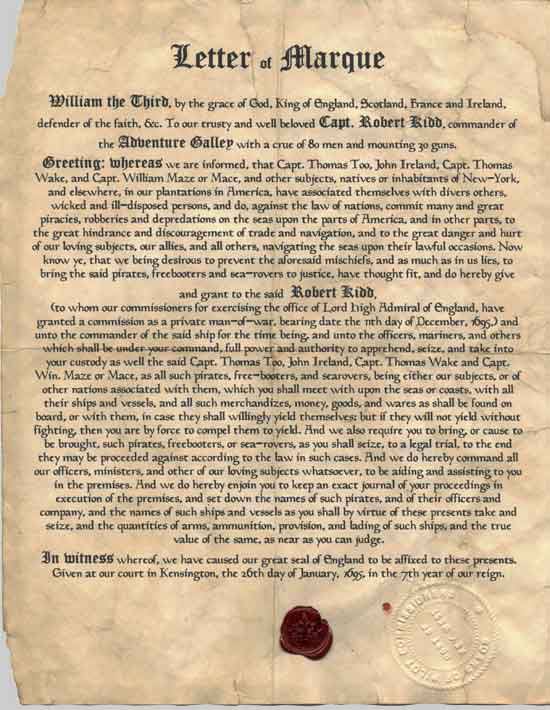
The Letter of Marque and Reprisal was, at its core, a government-issued license that granted a private person the authority to take action against the subjects or vessels of a hostile nation. In the context of business history, it represents one of the earliest forms of “privatization.” Rather than bearing the massive financial burden of maintaining a standing navy, monarchs would issue these letters, effectively outsourcing maritime defense and offensive capabilities to merchant ship owners.
From Private Commerce to State-Sanctioned Risk
The economic appeal for the individual merchant was clear. A merchant ship owner, operating under the protection of a Letter of Marque, was legally permitted to capture enemy merchant vessels and sell the cargo as “prize money.” This transformed a standard shipping business into a hybrid enterprise of trade and paramilitary privateering. The government, in turn, received a percentage of the value of the seized goods—essentially a tax on state-sanctioned raiding. This model illustrates a primitive yet effective way of generating revenue through risk-taking and asset seizure, blurring the lines between private entrepreneurship and the interests of the sovereign state.
Legal Protections and Sovereign Accountability
The “Marque” provided a layer of legal legitimacy that separated a privateer from a common pirate. A pirate acts without state backing and is subject to the summary justice of any nation they encounter. A privateer, however, held a document that afforded them the status of a combatant under international custom. If captured, a privateer could theoretically claim the protections of the laws of war, whereas a pirate was treated as an enemy of all mankind. For the business owner of the 17th or 18th century, this was a crucial legal insurance policy, allowing for the scaling of operations that would otherwise be considered criminal acts of high-seas theft.
Financial Risk and the Evolution of Business Insurance
The venture of outfitting a privateer was a high-stakes financial game, not unlike modern venture capital or speculative trading. Ship owners had to invest heavily in crew, armaments, and supplies before seeing any return on their investment. This necessitated complex financial arrangements that contributed to the birth of modern commercial insurance and investment syndicates.
The Rise of Syndicate Investing
Privateering was rarely a solitary endeavor. Because the risk of losing a vessel—or failing to make a capture—was exceptionally high, investors would pool their capital to fund multiple expeditions. This diversification of assets is a direct precursor to the modern portfolio management style. Investors were essentially hedging their bets: if one ship returned empty-handed, another might capture a merchant vessel laden with sugar, silk, or bullion. This era proved that concentrated risk could be managed through fractional ownership and syndication, a principle that remains the bedrock of modern investment finance.

Liability and the Cost of Doing Business
While the reward potential was immense, the financial downside was equally catastrophic. If a captain overstepped the bounds of the Letter of Marque—for instance, by attacking a vessel of a neutral nation—the ship owner could be held legally and financially liable for damages. This forced a move toward more rigorous oversight and the formalization of contracts between ship owners, investors, and captains. Business owners had to ensure their captains were well-versed in the specific limitations of their license, marking an early iteration of corporate compliance and risk mitigation strategies.
The Decline of Privateering and the Transition to Modern State Finance
By the mid-19th century, the global economic consensus began to shift against the practice of privateering. The Declaration of Paris in 1856 sought to abolish the practice, as nations recognized that the chaos caused by government-sanctioned raiders was ultimately detrimental to the stability of international commerce.
Regulatory Arbitrage and Stability
The transition away from privateers was motivated by the need for predictable trade routes. When commerce became more globalized and integrated, the “wild west” nature of privateering introduced too much volatility into the cost of goods and shipping insurance. Governments realized that a centralized, state-controlled navy was more cost-effective in the long run than the unpredictable and often destructive side effects of privateer activities. This mirrors the modern shift from decentralized or unregulated business practices toward established regulatory frameworks, where stability is prioritized over speculative opportunities for localized profit.
The Lingering Legacy in Modern Private-Public Partnerships
While letters of marque are no longer issued, the concept of a state authorizing private parties to act on its behalf continues in various modern sectors. Today, we see this in the form of government contractors, private military companies (PMCs), and even cybersecurity firms tasked with defensive and offensive cyber operations. While these entities are governed by contemporary law rather than 18th-century licenses, the underlying structure—where the state leverages the efficiency and agility of the private sector to pursue geopolitical or strategic ends—is a direct descendant of the Marque system.
Strategic Lessons for Modern Financial Resilience
Studying the Letter of Marque provides valuable insights into how capital can be deployed in environments of extreme legal and physical uncertainty. It forces a discussion on the role of the state in enabling, regulating, and taxing business activity.
Understanding the Boundaries of Legal Operation
The core failure of many privateering ventures was a lack of adherence to strict jurisdictional rules. Modern businesses operating in international markets or in emerging digital sectors, such as crypto-assets or cross-border tech services, often face similar challenges. The “license to operate” is today defined by regulatory licenses, banking charters, and international compliance standards. Failing to operate within these predefined legal bounds—even when a business model is highly profitable—creates existential risk that no amount of success can offset.
The Role of Regulatory Capture and Change
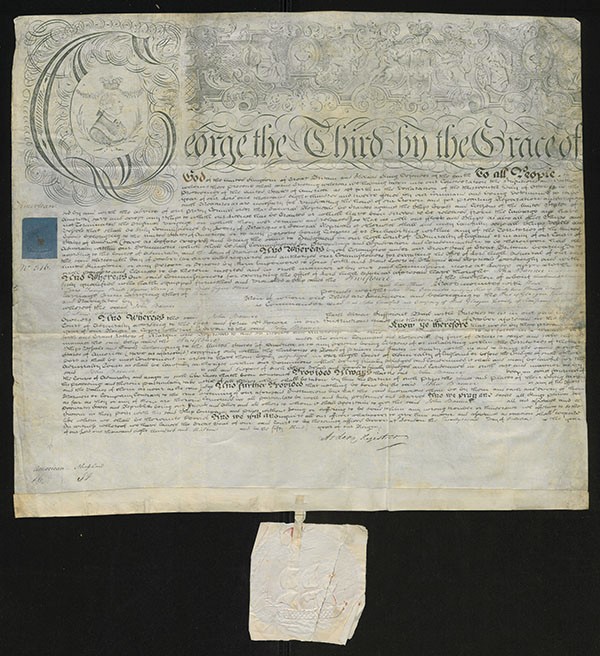
The obsolescence of the Letter of Marque reminds business leaders that industries can be disrupted by shifts in international law and consensus. Just as privateers were forced out of existence by a change in global norms, modern businesses in finance, fintech, and digital media must remain agile. They must be prepared for the reality that the regulatory environment is not static. Successful companies are those that anticipate shifts in the “rules of the game” and position themselves as partners in the new regulatory order rather than adversaries of the inevitable transition.
The Letter of Marque serves as a vital case study in the history of business finance. It highlights the ingenuity of private actors in finding ways to leverage state power for profit, the necessity of risk syndication to manage capital, and the ultimate primacy of legal stability over speculative chaos. For the modern professional, it is a reminder that while the tools of the trade change, the fundamental principles of risk management, regulatory compliance, and the pursuit of strategic advantage remain constant. Understanding the past allows for a clearer view of the legal and financial frameworks that govern our contemporary economy.
aViewFromTheCave is a participant in the Amazon Services LLC Associates Program, an affiliate advertising program designed to provide a means for sites to earn advertising fees by advertising and linking to Amazon.com. Amazon, the Amazon logo, AmazonSupply, and the AmazonSupply logo are trademarks of Amazon.com, Inc. or its affiliates. As an Amazon Associate we earn affiliate commissions from qualifying purchases.