
In the complex hierarchy of corporate leadership, titles like President and Chief Executive Officer (CEO) are often used interchangeably, leading to widespread confusion among employees, investors, and the general public. While both roles signify significant authority and responsibility at the helm of an organization, their distinctions are critical, particularly when viewed through the lens of business finance, strategic oversight, and operational execution. Understanding these differences is not merely an academic exercise; it’s fundamental to comprehending corporate governance, financial accountability, and the strategic direction that drives a company’s market performance and profitability.

This article delves into the nuances separating the President from the CEO, exploring their unique contributions to an organization’s financial health, operational efficiency, and long-term strategic growth within the scope of business finance. We will dissect their individual remits, common overlaps, and how their collaboration or separation impacts a company’s ability to generate revenue, manage assets, and deliver shareholder value.
The CEO: Visionary Leader and Ultimate Financial Steward
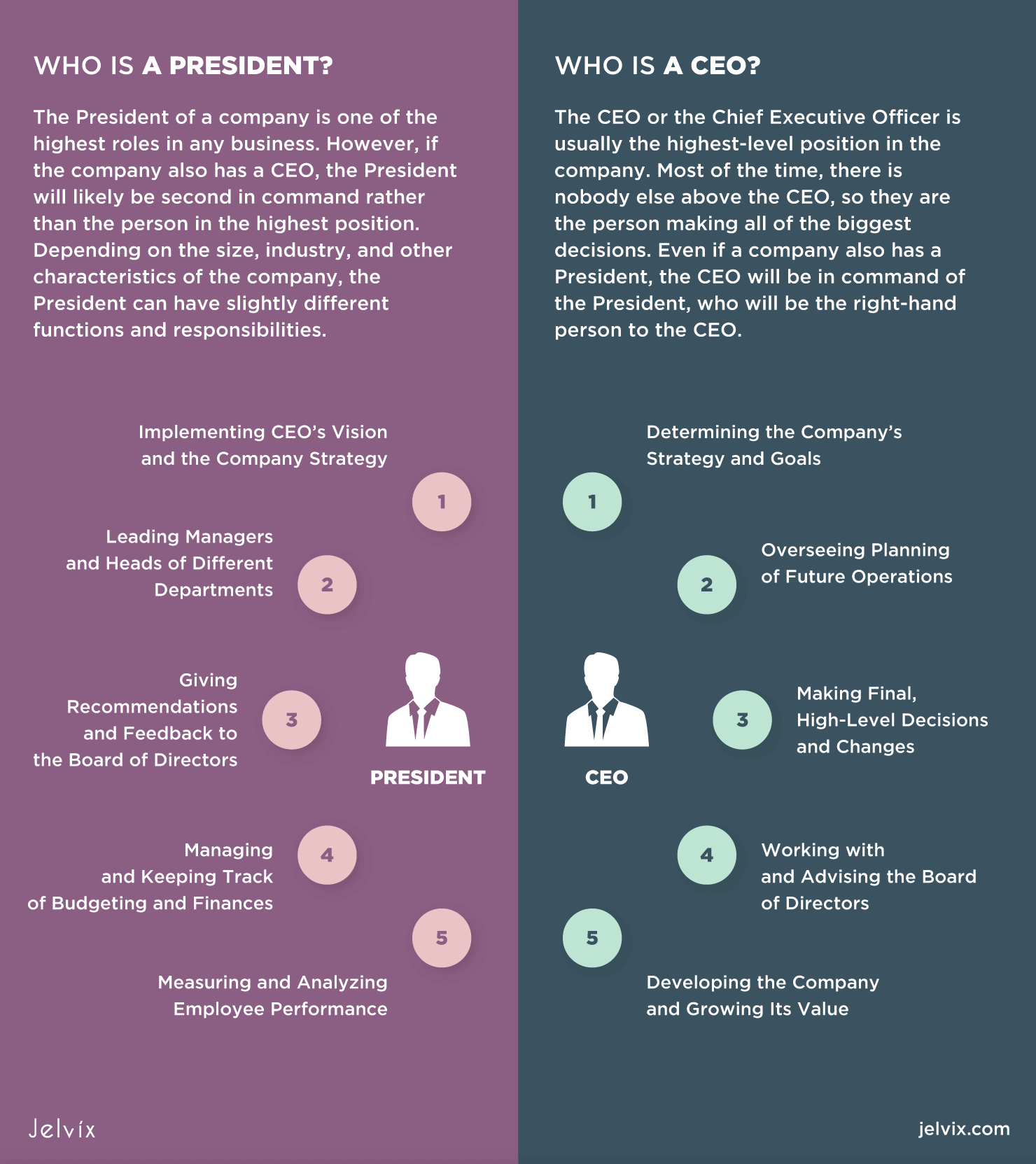
The Chief Executive Officer is arguably the most recognized leadership position in the corporate world, representing the pinnacle of an organization’s executive management structure. The CEO is primarily responsible for the overall strategic direction and financial performance of the company, acting as the primary liaison between the internal operations and the external market, including investors, stakeholders, and the board of directors. Their role is largely outward-facing and forward-looking, focused on shaping the company’s future and ensuring its long-term financial viability.
Strategic Oversight and Shareholder Value
A CEO’s paramount responsibility is to define and articulate the company’s vision and strategy, translating it into actionable financial objectives. This involves making high-level decisions regarding capital allocation, major investments, mergers and acquisitions, and market expansion. Every strategic choice a CEO makes is ultimately aimed at enhancing shareholder value, which is the cornerstone of their financial stewardship. They constantly evaluate market trends, competitive landscapes, and technological shifts to position the company for sustainable growth and profitability.
For instance, a CEO might decide to invest heavily in a new market segment, knowing it requires significant upfront capital but promises substantial returns and market share in the long run. This decision directly impacts the company’s balance sheet, cash flow projections, and investor confidence. They are also tasked with managing the company’s capital structure, determining the optimal mix of debt and equity financing to minimize cost of capital and maximize financial returns. This involves a deep understanding of financial markets and risk assessment. The CEO ensures that the company’s financial reporting is transparent and accurate, providing stakeholders with a clear picture of its performance and prospects.
Executive Management and Operational Excellence
While often not involved in the day-to-day minutiae, the CEO is ultimately accountable for the operational excellence that underpins financial success. They build and lead the executive team, entrusting various functions to their respective heads (CFO, COO, CTO, etc.). Their role here is to ensure that these teams are aligned with the overarching strategic and financial goals. They establish key performance indicators (KPIs) that track financial health, operational efficiency, and progress towards strategic objectives.
For example, if a company is facing declining profit margins, the CEO would challenge the executive team to identify cost-saving measures, streamline operations, or innovate revenue streams. They might initiate a company-wide budgeting process, working with the CFO to ensure financial discipline across all departments. The CEO also plays a crucial role in resource allocation, deciding where capital, talent, and technology should be deployed to yield the greatest financial return. This involves tough choices, such as divesting underperforming assets or allocating more funds to high-growth areas, always with an eye on the bottom line. Their financial acumen allows them to quickly identify areas of inefficiency and direct corrective action, ensuring the company operates within its financial means while pursuing ambitious growth targets.
External Representation and Investor Relations
The CEO is the public face of the company, articulating its mission, vision, and financial performance to external stakeholders. This includes crucial interactions with investors, analysts, financial institutions, and the media. They lead earnings calls, participate in investor conferences, and engage in capital market activities like IPOs, secondary offerings, or bond issuances. Their ability to inspire confidence and articulate a compelling growth story is vital for attracting investment and maintaining a strong stock price.
Consider a situation where a company needs to raise capital for a major expansion. The CEO would be instrumental in presenting the financial projections, growth potential, and risk mitigation strategies to potential investors. Similarly, during times of market volatility or crisis, the CEO’s communication prowess can make or break investor trust, directly impacting the company’s valuation and access to future funding. They are responsible for conveying the company’s financial health, future outlook, and commitment to delivering consistent shareholder returns, often acting as the primary point of contact for significant financial decisions and disclosures.
The President: Operational Mastermind and Execution Architect
The President often serves as the chief operating officer or the lead executive responsible for the day-to-day management and execution of the company’s strategic plans. While the CEO charts the course, the President ensures the ship sails smoothly and efficiently towards that destination. Their focus is predominantly inward-facing, concentrating on optimizing internal processes, managing departmental performance, and ensuring that the financial objectives set by the CEO and the board are met through diligent execution.
Day-to-Day Operations and Profitability
The President typically holds direct responsibility for the company’s operational profitability. This involves overseeing the efficient functioning of various departments such as sales, marketing, production, and human resources. They translate the CEO’s grand strategy into actionable plans, setting operational targets, managing budgets, and monitoring performance against financial goals. Their role is to ensure that the company operates at peak efficiency, minimizing waste and maximizing output to achieve desired revenue and profit margins.
For example, the President might be tasked with improving quarterly earnings. This could involve leading initiatives to reduce production costs, negotiate better supplier contracts, or optimize the sales funnel to boost revenue. They closely monitor the company’s profit and loss (P&L) statements for specific business units or product lines, identifying areas of underperformance and implementing corrective actions. They ensure that financial resources are allocated effectively across different operational units to support business objectives, managing the detailed financials required to run a complex organization profitably.
Internal Leadership and Resource Allocation
As the primary internal leader, the President is responsible for cultivating a strong organizational culture and ensuring effective management across all levels. They often lead the senior management team, guiding functional heads in achieving their specific financial and operational targets. This involves making critical decisions about resource allocation, including capital investments in equipment, technology, and staffing, always with an eye on optimizing financial returns.
In a scenario where a new product launch is planned, the President would coordinate efforts across R&D, manufacturing, sales, and marketing to ensure timely delivery within budget constraints. They would assess the financial viability of different initiatives, balancing investment against potential returns. Their role is also crucial in managing the company’s human capital, ensuring that the right talent is in place to achieve financial objectives and that compensation structures align with performance and market benchmarks. They are often the ones making tough decisions about cost centers and profit centers, ensuring the company’s internal structure supports its financial goals.
Bridging Strategy and Execution
The President acts as the critical bridge between the high-level strategic vision of the CEO and the practical execution by various departments. They ensure that strategic initiatives are broken down into manageable tasks, assigned with clear financial objectives, and executed effectively. This role requires a deep understanding of both the company’s overall financial goals and the operational realities of achieving them. They continuously assess financial performance against strategic benchmarks and adjust operational plans as needed to stay on track.
If the CEO’s strategy involves penetrating a new international market, the President would oversee the detailed financial planning for market entry, including budgeting for international operations, legal compliance costs, and initial marketing investments. They would work with the CFO to establish localized financial reporting and control mechanisms, ensuring that the global expansion aligns with the company’s overall financial health and risk appetite. Their ability to translate strategic intent into measurable financial outcomes is what distinguishes them as a key driver of corporate success.
Overlap, Reporting Structures, and Organizational Dynamics
While distinct, the roles of President and CEO frequently intersect, and in many organizations, one individual may hold both titles. The nature of this overlap, the defined reporting structures, and the size and complexity of the company significantly influence how these roles are delineated and executed, with direct implications for financial management and accountability.
When Roles Converge: The CEO-President Dual Hat
In smaller companies, startups, or highly centralized organizations, it is common for the CEO to also hold the title of President. This consolidation often reflects a need for concentrated leadership, particularly in the early stages where resources are limited and rapid decision-making is paramount. Financially, this means a single individual bears ultimate responsibility for both strategic vision and operational execution, streamlining financial controls and decision-making processes.
While this can lead to agility and clear accountability, it also concentrates immense power and workload, potentially leading to burnout or a lack of specialized focus. For investors, a dual role can signify a strong, unified vision but also a potential single point of failure. The financial health of the company rests heavily on the capabilities of this one individual to manage both the macro financial strategy and the micro financial operations. A CEO-President must excel at capital allocation, budgeting, investor relations, and operational efficiency simultaneously, balancing long-term growth with short-term profitability.
Reporting Lines and Accountability
Typically, the President reports directly to the CEO. This structure ensures that the operational activities overseen by the President are aligned with the strategic direction set by the CEO. Financially, this means the President is accountable to the CEO for achieving operational budgets, revenue targets, and cost efficiencies. The CEO, in turn, is accountable to the board of directors and shareholders for the overall financial performance and long-term value creation of the company.
In this classic arrangement, the CFO (Chief Financial Officer) often reports to the CEO, but works closely with the President on operational budgeting, financial forecasting, and performance analysis. This ensures that the financial data supports both strategic planning (CEO) and operational execution (President). This clear delineation of reporting lines helps in maintaining financial discipline and provides checks and balances within the executive team, ensuring that financial decisions are scrutinized from both strategic and operational perspectives.
The Impact of Company Size and Structure
The distinction between President and CEO becomes more pronounced in larger, more complex organizations, particularly multinational corporations or diversified conglomerates. In such entities, the CEO focuses almost exclusively on overarching strategy, investor relations, and capital markets, while multiple Presidents might oversee different divisions, geographical regions, or product lines. Each divisional President would then be responsible for the P&L and financial performance of their specific unit, reporting up through the corporate structure to the CEO.
For instance, a global technology firm might have a CEO setting the worldwide financial strategy, while individual Presidents head the North American, European, and Asian markets, each responsible for their regional budgets, revenue targets, and operational efficiency. This decentralized structure allows for specialized financial management tailored to specific market conditions, while the corporate CEO maintains a consolidated view of the entire enterprise’s financial health. This model ensures that financial accountability is distributed, yet coordinated, allowing for more granular financial control and responsiveness across a vast organization.
Financial Implications and Strategic Impact of Each Role
The unique contributions of the President and CEO are inherently intertwined with the financial success and strategic direction of a company. Their distinct roles ensure comprehensive oversight from long-term vision to day-to-day financial execution.
Budgeting, Forecasting, and Financial Planning
Both roles are critical in budgeting and financial planning, but their involvement differs in scope and detail. The CEO is deeply involved in high-level financial planning, setting strategic financial objectives, capital expenditure policies, and long-range financial forecasts that align with market opportunities and investor expectations. Their focus is on ensuring the company has sufficient capital for growth initiatives, managing debt-to-equity ratios, and optimizing the cost of capital.
The President, conversely, is responsible for the detailed operational budgeting and forecasting. They work with department heads to develop realistic annual budgets, monitor spending against these budgets, and implement measures to ensure financial targets are met. They focus on managing cash flow from operations, optimizing working capital, and ensuring that all operational expenses contribute directly to revenue generation or efficiency gains. The President’s direct oversight of these financial details is crucial for translating the CEO’s broad financial goals into tangible operational realities.
Risk Management and Compliance
The CEO holds ultimate responsibility for enterprise-wide risk management, including financial, reputational, and strategic risks. They ensure that robust internal controls are in place, that the company complies with financial regulations (e.g., SOX, GAAP, IFRS), and that a clear risk mitigation strategy is established. This also includes managing the financial risks associated with major strategic decisions like M&A, international expansion, or significant capital investments.
The President, on the other hand, manages operational risks that can impact financial performance, such as supply chain disruptions, quality control issues, or employee turnover. They ensure that operational processes are compliant with internal policies and external regulations, preventing financial penalties and operational inefficiencies. They might oversee the implementation of new financial systems or processes designed to reduce fraud or errors, directly safeguarding the company’s assets and financial integrity at the operational level.
Driving Growth and Market Share
Both the President and CEO are instrumental in driving growth and market share, which directly translates into increased revenue and profitability. The CEO focuses on identifying new markets, strategic partnerships, and innovative business models that can significantly expand the company’s financial footprint. Their decisions about entering or exiting markets, product diversification, and overall competitive positioning directly influence the company’s long-term revenue potential and market valuation.
The President drives growth by optimizing existing revenue streams, improving sales performance, and enhancing operational efficiency to allow for competitive pricing. They are responsible for executing market penetration strategies, expanding product distribution, and ensuring customer satisfaction, all of which contribute to increased sales volume and market share within the defined strategic boundaries. Their focus on operational excellence means that growth is not just achieved but is also profitable and sustainable, ensuring that every unit of sales contributes positively to the company’s financial health.

Conclusion
The distinction between the President and CEO, while sometimes blurred in practice, reveals a complementary dynamic essential for any successful business, particularly when viewed through the critical lens of business finance. The CEO acts as the primary financial steward and strategic architect, focusing on long-term vision, capital allocation, and external stakeholder relations to enhance shareholder value. The President, in contrast, serves as the operational maestro, responsible for day-to-day execution, optimizing internal financial performance, and ensuring that strategic goals are met through efficient and profitable operations.
Understanding these roles is crucial for investors, employees, and business leaders alike. A clear delineation of responsibilities fosters better corporate governance, streamlines financial decision-making, and ultimately contributes to the sustainable growth and profitability of an organization. Whether held by one individual or separated into distinct positions, the synergy between the visionary CEO and the execution-focused President is paramount to navigating complex market landscapes, managing financial resources effectively, and achieving lasting financial success.
aViewFromTheCave is a participant in the Amazon Services LLC Associates Program, an affiliate advertising program designed to provide a means for sites to earn advertising fees by advertising and linking to Amazon.com. Amazon, the Amazon logo, AmazonSupply, and the AmazonSupply logo are trademarks of Amazon.com, Inc. or its affiliates. As an Amazon Associate we earn affiliate commissions from qualifying purchases.