
While the acronyms OCD and OCPD sound strikingly similar, they represent two distinct psychological constructs that frequently lead to confusion in professional and personal discourse. In the context of personal development, professional productivity, and the overarching field of mental health, distinguishing between these two is critical. Mislabeling a personality trait as a clinical disorder—or vice versa—can have significant implications for how individuals manage their routines, organize their workflows, and interact with the professional environment.
Understanding the Core Framework of OCD
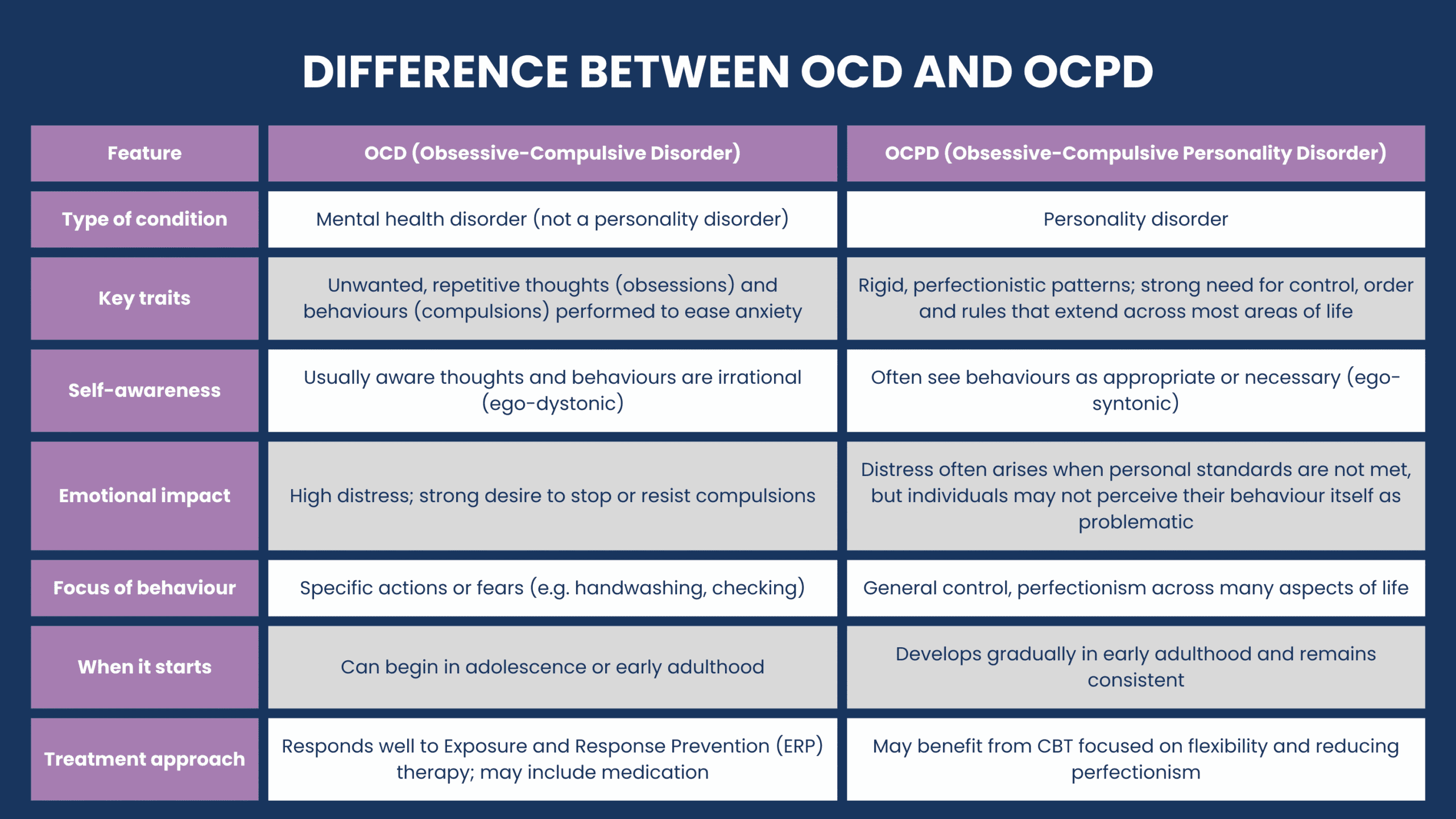
Obsessive-Compulsive Disorder (OCD) is a clinical mental health condition characterized by the presence of intrusive, distressing thoughts (obsessions) and repetitive behaviors or mental acts (compulsions). These symptoms are typically ego-dystonic, meaning they are experienced by the individual as unwanted, intrusive, and inconsistent with their personal goals or self-concept.

The Mechanism of Obsessions
Obsessions in OCD are not simply “worries” about work deadlines or financial planning. They are persistent, unwanted urges or images that cause significant anxiety. For someone struggling with OCD, these obsessions feel like a loss of control. The individual often recognizes that these thoughts are irrational, yet they find themselves unable to dismiss them without performing a compensatory action.
The Function of Compulsions
Compulsions are the repetitive behaviors performed in an attempt to neutralize the anxiety caused by obsessions. In a professional or academic setting, this might manifest as excessive checking of emails, rigid adherence to nonsensical rituals before starting a task, or an inability to complete projects due to a paralyzing need for “perfect” safety or order. Unlike productive habits, these compulsions are often time-consuming and interfere significantly with daily functioning and professional output.
OCPD: The Personality Construct of Perfectionism
Obsessive-Compulsive Personality Disorder (OCPD), by contrast, is a pervasive pattern of preoccupation with orderliness, perfectionism, and mental and interpersonal control. Crucially, OCPD is often ego-syntonic. This means the individual typically believes that their way of doing things—no matter how rigid or demanding—is the “correct” way.
The Pursuit of Efficiency at a Cost
In the workplace, an individual with OCPD may pride themselves on their work ethic, their attention to detail, and their adherence to strict schedules. However, this focus on perfectionism often leads to inefficiency. They may struggle to delegate tasks because they believe no one else can meet their standards, or they may become so bogged down in the minute details of a project that they miss the larger objective.
Rigid Standards and Control
The defining feature of OCPD is a lack of flexibility. While a person without OCPD might be able to shift gears when a project’s requirements change, an individual with OCPD may experience extreme frustration or paralysis when plans are disrupted. They are often characterized by a rigid dedication to work and productivity, frequently at the expense of leisure activities and interpersonal relationships. This is not driven by an internal compulsion to perform a ritual, but by a deeply ingrained belief system regarding how life and work “should” be ordered.
Key Distinctions in Professional Behavior

When examining the differences between OCD and OCPD through the lens of productivity and professional life, the distinctions become clear. Understanding these nuances is essential for fostering a healthy work environment and personal growth.
Obsession Versus Perfectionism
The primary driver of behavior in OCD is anxiety reduction. The individual performs a task to stop a distressing thought. In OCPD, the primary driver is a desire for order and perfection. An individual with OCPD is not performing a ritual to stop a “bad thought”; they are performing a task because they believe their standard of work is superior and that order is the most important value.
Ego-Dystonic vs. Ego-Syntonic
This distinction is perhaps the most important for individuals seeking to improve their performance. An individual with OCD usually wants to break free from their patterns; they are frustrated by the time lost to their compulsions. An individual with OCPD, however, often views their perfectionism as an asset. They might see their rigidity as a sign of dedication and professionalism, even when it is actively hindering their career progression or team cohesion.
Impact on Collaboration
Collaboration is often the greatest casualty of OCPD. Because those with the disorder value their own rigid systems above all else, they may find it difficult to work in teams. They may perceive coworkers as “lazy” or “careless” if those colleagues do not adhere to the same strict standards. Conversely, someone with OCD may be a highly effective collaborator, provided their compulsions are managed; their challenge is internal, whereas the challenge for someone with OCPD is often interpersonal.
Strategic Approaches to Managing Both Profiles
Whether one is identifying these patterns in oneself or attempting to support colleagues, the strategies for success differ based on which profile is present.
Managing OCD in a Professional Context
For those dealing with OCD, the focus is on clinical support and Cognitive Behavioral Therapy (CBT), specifically Exposure and Response Prevention (ERP). In the workplace, this involves identifying “triggers”—such as high-pressure projects—and developing tools to manage the anxiety without falling into the trap of ritualistic behavior. Success here is measured by the ability to remain functional despite the presence of intrusive thoughts.
Reframing OCPD for Personal Growth
Because OCPD is ego-syntonic, it is notoriously difficult to “treat” because the individual often does not see a problem with their behavior. Growth for someone with OCPD typically involves a shift in philosophy. This requires:
- Prioritization training: Learning to distinguish between “must-do” tasks and “might-do” tasks.
- Delegation practice: Accepting that “good enough” is often the threshold for professional success, while “perfect” is the enemy of completion.
- Flexibility exercises: Intentionally allowing for minor errors or changing a routine to build the capacity for adaptability.
Conclusion: The Path Toward Balanced Productivity
Distinguishing between OCD and OCPD is not about diagnostic labeling for the sake of judgment; it is about self-awareness and the optimization of one’s professional and personal life. OCD is a condition of internal distress that requires professional intervention to alleviate suffering and restore function. OCPD is a personality structure characterized by rigid standards that, while sometimes useful, often create self-imposed barriers to efficiency and team success.
Recognizing these traits in yourself or others allows for a more compassionate and strategic approach. If you find your work life dictated by the need to quell anxiety-driven rituals, professional mental health support is the most effective path forward. If you find your professional life hampered by an uncompromising adherence to order and a struggle to adapt to the realities of collaborative work, you may benefit from coaching, mentorship, or cognitive restructuring aimed at embracing flexibility and the value of “good enough.”
In both cases, the goal is the same: to move toward a more sustainable, fulfilling, and productive way of engaging with your responsibilities. By understanding whether the driving force behind your work habits is an anxiety-driven compulsion or a perfectionist personality trait, you can begin to implement the right strategies to foster growth and excellence. Balance is not found in the total absence of structure or the pursuit of flawless execution, but in the wisdom to know when to hold tight to standards and when to relinquish control for the sake of long-term progress.
aViewFromTheCave is a participant in the Amazon Services LLC Associates Program, an affiliate advertising program designed to provide a means for sites to earn advertising fees by advertising and linking to Amazon.com. Amazon, the Amazon logo, AmazonSupply, and the AmazonSupply logo are trademarks of Amazon.com, Inc. or its affiliates. As an Amazon Associate we earn affiliate commissions from qualifying purchases.