
In the intricate world of business and finance, contracts serve as the bedrock of nearly every transaction, partnership, and agreement. From a multi-million-dollar acquisition to a simple service agreement, the enforceability and reliability of these legal documents are paramount. At the very heart of a valid contract lies a concept often overlooked by the layperson but deeply understood by legal and financial professionals: consideration. Without it, a seemingly robust agreement can unravel, leaving parties without recourse and financial plans in disarray.
Consideration isn’t just a legal formality; it’s the tangible or intangible “value” exchanged between parties, making a promise legally binding. It’s the reason why a handshake agreement might feel morally compelling but often lacks the legal muscle of a meticulously drafted contract. For anyone engaged in commerce, investing, or managing financial assets, understanding consideration is not merely academic—it’s an essential tool for risk mitigation, strategic planning, and ensuring the stability of financial undertakings. This exploration delves into the essence of consideration, highlighting its critical role in business finance and how grasping its nuances can safeguard your financial interests.
The Cornerstone of Enforceable Agreements
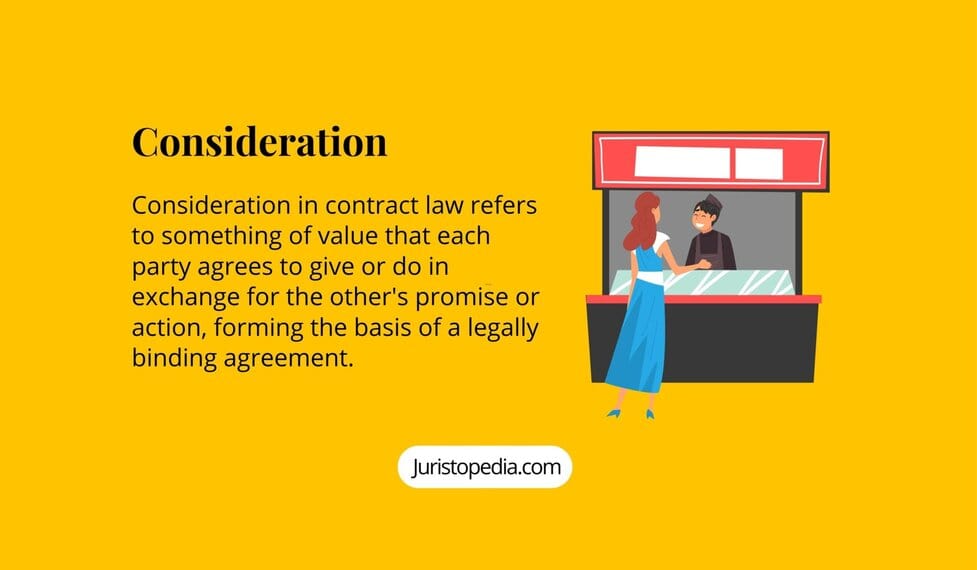
At its core, consideration is what makes a promise enforceable in the eyes of the law. It ensures that a contract is not merely a gratuitous promise but a genuine bargain, reflecting a mutual exchange of value. In the realm of business finance, where agreements often involve substantial monetary commitments and complex obligations, this principle takes on immense importance.
Defining Consideration: The Bargained-For Exchange
Legally speaking, consideration is defined as something of value bargained for and received by a promisor from a promisee. This ‘something of value’ can take many forms: a financial payment, a promise to perform a service, a commitment to deliver goods, or even a promise to refrain from doing something one has a legal right to do (known as forbearance). The key element is the “bargained-for exchange”—each party is giving up something or undertaking an obligation in return for the other party’s promise or performance.
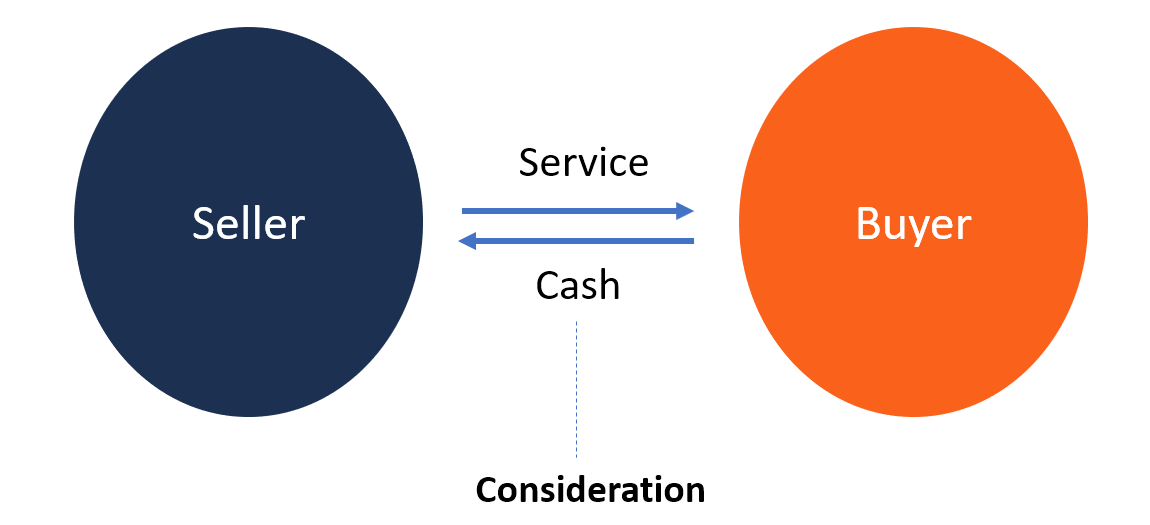
This concept is often encapsulated by the Latin phrase “quid pro quo,” meaning “something for something.” It distinguishes a legally binding contract from a mere gift. If someone promises to give you a million dollars, that’s a promise, but it’s not a contract unless you give them something in return—even if that “something” is just the promise to accept the money or perform a minor act. In a financial context, this could be the promise to repay a loan, provide collateral, or deliver shares in exchange for capital. Without this reciprocal exchange, there’s no consideration, and therefore, no enforceable contract in most jurisdictions.
Why Consideration Matters in Business Finance
For businesses and individuals dealing with financial matters, the presence and clarity of consideration are vital for several reasons:
-
Legal Enforceability: Perhaps the most critical function of consideration is making a contract legally enforceable. If a dispute arises over a loan agreement, an investment deal, or a sales contract, a court will first look to see if valid consideration existed. If it didn’t, the agreement might be deemed void or unenforceable, leaving the aggrieved party with no legal recourse to compel performance or seek damages. This directly impacts financial recovery and risk management.
-
Risk Mitigation and Dispute Prevention: Clearly defining the consideration in a contract helps prevent misunderstandings and disputes down the line. When both parties explicitly state what they are giving and receiving, there’s less room for ambiguity regarding obligations and expectations. This clarity is invaluable in reducing legal costs and preserving business relationships, both of which have direct financial implications.
-
Valuation and Deal Structuring: In mergers and acquisitions, venture capital funding, or complex financial instruments, understanding consideration is central to valuing the deal. What is being exchanged for what? Is the consideration sufficient to reflect the value being transferred? While the law doesn’t generally assess the adequacy of consideration (its fairness), the parties themselves must do so from a financial perspective to ensure a beneficial transaction. This directly impacts asset valuation, equity dilution, and return on investment.
-
Impact on Specific Financial Instruments:
-
Loans: The consideration for a lender is the promise of repayment (principal + interest); for the borrower, it’s the provision of funds.
-
Investments: An investor provides capital in exchange for equity, dividends, or interest payments.
-
Sales Agreements: A buyer provides monetary payment in exchange for goods or services; the seller provides the goods or services in exchange for payment.
-
Partnerships: Partners contribute capital, expertise, or resources in exchange for a share of profits, control, and future growth.
-
Types and Forms of Consideration in Financial Contexts
Consideration, though fundamentally about exchange, manifests in various forms, particularly in financial agreements. Recognizing these different types helps ensure that contracts are robust and legally sound.
Monetary Consideration
This is perhaps the most straightforward and common form of consideration in business and finance. It involves the direct exchange of money.
-
Direct Payments: The purchase price for goods or services, rent for property, fees for professional advice, or premiums for insurance policies are all examples of monetary consideration.
-
Loan Principal and Interest: In a lending agreement, the principal amount disbursed by the lender is consideration for the borrower’s promise to repay that principal plus interest. Conversely, the borrower’s promise to repay is consideration for the lender providing the funds.
-
Stock Purchases: When an investor buys shares in a company, the money paid for the shares is the consideration for receiving ownership (equity) in the company.
Non-Monetary Consideration with Financial Implications
While money is often involved, consideration isn’t exclusively monetary. Many financially significant agreements rely on non-monetary forms of consideration that still carry substantial economic value.
-
Promises to Perform Services: A consulting agreement, for instance, involves one party promising to provide expertise or specific services in exchange for the other party’s promise of payment. The service itself is the consideration.
-
Delivery of Goods: A manufacturer promises to deliver a certain quantity of products, which is consideration for the buyer’s promise to pay.
-
Forbearance: This refers to the act of refraining from doing something one has a legal right to do. For example, a creditor might agree to extend the payment deadline on a loan (forbearance) in exchange for the debtor promising to pay a higher interest rate or provide additional collateral. The act of not suing or not demanding immediate payment is valuable consideration.
-
Equity Stakes and Intellectual Property Rights: In startup funding or joint ventures, investors might provide capital, and founders might provide their intellectual property (patents, trademarks, proprietary software) or future services in exchange for equity stakes. These non-monetary contributions are critical forms of consideration.
-
Future Promises vs. Completed Acts:
-
Bilateral Contracts: Most business contracts are bilateral, meaning a promise for a promise (e.g., I promise to pay, you promise to deliver). Both promises constitute consideration.
-
Unilateral Contracts: Less common in formal business finance but still relevant, these involve a promise in exchange for an act (e.g., “I will pay you $1,000 if you find my lost dog”). The act of finding the dog is the consideration.
-
Adequacy vs. Sufficiency of Consideration
A crucial distinction in contract law, especially pertinent to business finance, is between the adequacy and sufficiency of consideration.
-
Sufficiency: The law requires that consideration be sufficient, meaning it must have some discernible value in the eyes of the law. It doesn’t have to be objectively “good” value, but it must be something real. A promise to perform an impossible act, for instance, would not be sufficient consideration.
-
Adequacy: Generally, courts do not inquire into the adequacy of consideration. This means that as long as there is some real value exchanged, the law typically won’t evaluate whether the deal was “fair” or whether the values exchanged were economically equivalent. A party can technically make a “bad deal” (e.g., selling a valuable asset for a nominal sum), and the contract will still be binding, provided sufficient consideration existed. This principle protects the freedom of contract and the ability of parties to negotiate their own terms, even if those terms appear lopsided. However, in certain financial contexts, extreme inadequacy might raise red flags for fraud, duress, or undue influence, which could lead a court to invalidate a contract.
Common Pitfalls and Misconceptions
Despite its fundamental nature, several common pitfalls and misconceptions surrounding consideration can undermine the validity of financial contracts. Being aware of these can save businesses and individuals from costly legal battles and unenforceable agreements.
Past Consideration is No Consideration
One of the most frequently misunderstood aspects is the concept of “past consideration.” An act or promise that has already been performed or given before a new promise is made cannot serve as valid consideration for that new promise. For instance, if an employee has already completed outstanding work and their employer then promises them a bonus for that work without any prior agreement or expectation of it, that promise for the bonus is generally unenforceable due to a lack of new consideration. The work was “past consideration.”
In a financial context, if a business owner helps a friend set up their company as a favor, and years later the friend promises a 5% stake in the company out of gratitude, that promise might not be legally binding without new consideration from the business owner. To make it binding, there would need to be a new exchange of value, such as a future commitment of services or a nominal payment.
Illusory Promises and Pre-Existing Duties
-
Illusory Promises: An illusory promise is one that appears to be a promise but doesn’t actually bind the promisor to do anything. If a business owner promises to “buy all the widgets I might want from you,” this is illusory because it doesn’t commit them to buying any widgets at all. Such a promise cannot serve as consideration because there’s no definite commitment. Financial contracts must contain clear and unequivocal obligations to be enforceable.
-
Pre-Existing Duties: Performing a duty that one is already legally or contractually obligated to do cannot serve as new consideration for a new promise. If a contractor is already bound by a contract to complete a building by a certain date, and the client later promises an additional bonus to complete it by that same date, the bonus promise is generally unenforceable because the contractor is merely performing an existing duty. This often comes into play when parties attempt to modify an existing financial agreement. Any modification typically requires new consideration from both sides.
Consideration in Contract Amendments and Waivers
Modifying an existing financial contract—be it a loan agreement, a supplier contract, or an investment term sheet—often requires new consideration. If Party A agrees to a lower interest rate on a loan (benefiting the borrower), Party B (the borrower) must offer something new in return, even if it’s a minor concession, for the amendment to be legally binding. Simply agreeing to pay the principal, which they were already obligated to do, isn’t new consideration.
However, there are exceptions. In some jurisdictions or under specific statutes (like the Uniform Commercial Code for contracts involving the sale of goods), contract modifications may not require new consideration if they are made in good faith. Similarly, a formal “waiver” of a right may sometimes be effective without new consideration, but these are often limited in scope. For robust financial agreements, assuming new consideration is needed for any amendment is the safest approach.
Practical Implications for Businesses and Individuals
Understanding the nuances of consideration moves beyond theoretical legal knowledge; it has tangible, practical implications for daily business operations and personal financial dealings.
Drafting Stronger Financial Contracts
The most direct application of understanding consideration is in the drafting and review of contracts.
-
Clarity and Specificity: Ensure that every contract clearly articulates what each party is giving and receiving. Vague terms regarding payment, deliverables, or obligations can lead to claims of insufficient consideration. For example, a service agreement should specify the exact services provided and the corresponding payment schedule.
-
Mutual Exchange: When reviewing a contract, always ask: “What is each party giving up or promising, and what are they receiving in return?” Both sides must contribute to the bargain. This ensures reciprocity and strengthens the enforceability of the agreement.
-
Avoiding Past Consideration: When modifying existing agreements or creating new ones based on past events, ensure there is fresh, new consideration exchanged to support the new promises. Document this new exchange explicitly.
Navigating Disputes and Enforceability
In the unfortunate event of a contract dispute, the presence or absence of valid consideration will be a primary focus of legal scrutiny.
-
Voidable Agreements: A contract lacking consideration is generally voidable or unenforceable. This means that if a party fails to uphold their end of the bargain, the aggrieved party may have no legal means to compel performance or seek damages. This can translate directly into financial losses, missed opportunities, and operational disruptions.
-
Legal Strategy: For businesses involved in litigation, understanding whether consideration existed is crucial for building a defense or offense. A claim that a contract lacked consideration can be a powerful defense against a demand for performance or payment.

Strategic Financial Planning
Beyond legal enforceability, consideration plays a strategic role in financial planning and decision-making.
-
Structuring Deals: When structuring investments, mergers, or complex financial partnerships, clearly defined consideration helps ensure that all parties understand the economic exchange. This aids in accurate financial modeling, risk assessment, and valuation.
-
Avoiding Wasted Resources: Entering into unenforceable agreements, whether due to a lack of consideration or other flaws, can lead to wasted time, effort, and financial resources. By ensuring all agreements are underpinned by valid consideration, businesses can focus their efforts on productive endeavors.
-
Ethical Considerations: While the law generally doesn’t delve into the adequacy of consideration, a fair and balanced exchange (both legally and economically) can foster stronger business relationships and a reputation for integrity, which are invaluable assets in the financial world.
In conclusion, “consideration of a contract” is far more than a dry legal term; it is the beating heart of every enforceable agreement in business and finance. It transforms a mere promise into a binding commitment, providing the legal certainty necessary for secure transactions, effective risk management, and successful financial ventures. For any individual or entity navigating the complexities of the monetary landscape, a thorough understanding of consideration is not just beneficial—it is absolutely essential for safeguarding assets, mitigating risks, and building a foundation of reliable and enforceable financial relationships.
aViewFromTheCave is a participant in the Amazon Services LLC Associates Program, an affiliate advertising program designed to provide a means for sites to earn advertising fees by advertising and linking to Amazon.com. Amazon, the Amazon logo, AmazonSupply, and the AmazonSupply logo are trademarks of Amazon.com, Inc. or its affiliates. As an Amazon Associate we earn affiliate commissions from qualifying purchases.