
In the vast and intricate landscape of technology, clarity, organization, and efficiency are paramount. Concepts that might seem elementary at first glance often underpin complex systems and drive critical functionalities. Among these foundational elements are prefixes and suffixes – linguistic tools borrowed from human language, yet profoundly transformative in their technical application. Far from being mere decorative additions, prefixes and suffixes in technology serve as vital identifiers, categorizers, and structural anchors, enabling everything from clear code readability to robust network security and optimized data management. Understanding their role is not just academic; it’s essential for anyone navigating, building, or utilizing modern digital systems.

This article delves into the multifaceted world of prefixes and suffixes within the technological domain, exploring their definitions, diverse applications, and the best practices for their effective implementation. From the syntax of programming languages to the architecture of networks and the strategies of digital marketing, these subtle yet powerful elements play an indispensable role in bringing order to the digital universe.
The Foundational Concepts: Defining Prefixes and Suffixes in Tech
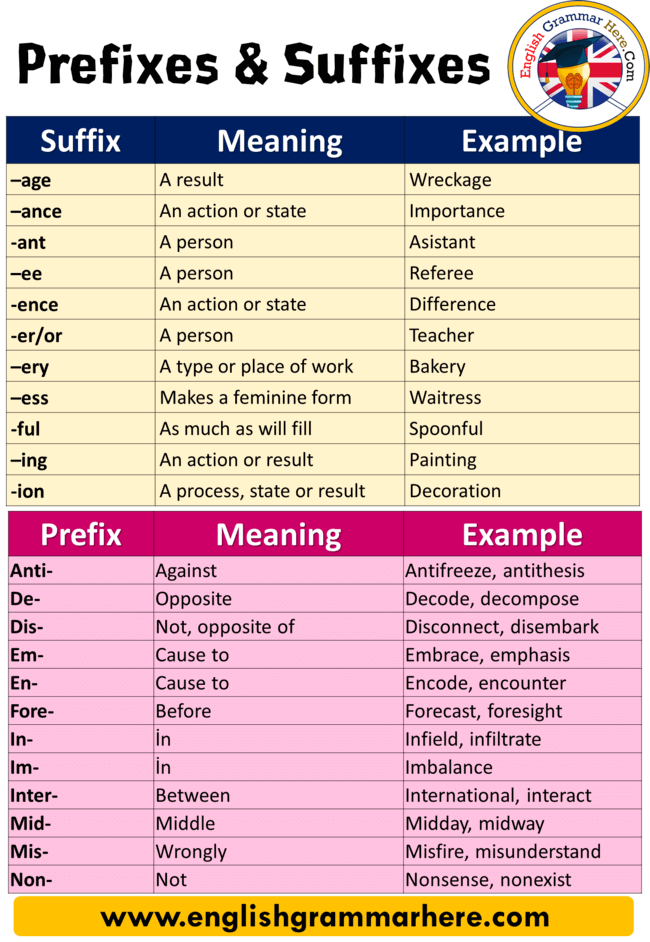
At its core, a prefix is an element placed at the beginning of a word, while a suffix is placed at the end. In technology, this simple linguistic definition extends to data strings, identifiers, filenames, network addresses, and myriad other constructs. They act as markers that provide immediate context, classification, or additional information about the primary entity they modify.
Linguistic Roots, Technical Applications
The human brain instinctively uses prefixes (e.g., “un-” in “undo,” “re-” in “reboot”) and suffixes (e.g., “-er” in “developer,” “-ing” in “processing”) to parse meaning and categorize information. This innate cognitive pattern is mirrored in technological design. Developers, engineers, and system administrators apply similar logic to manage complexity. A filename like report_Q3_2023.pdf immediately conveys that it’s a “report,” pertains to “Q3 2023,” and is in “PDF” format – report_ and Q3_ act as prefixes, while .pdf is a suffix. This simple example highlights their power in conveying rich metadata in a concise format.
Why They Matter: A Glimpse into Order and Clarity
The primary drivers for employing prefixes and suffixes in technology are clarity, consistency, and automation. Without them, distinguishing between similar entities or understanding their purpose would be significantly harder. Imagine a directory filled with files named document1, document2, document3 versus invoice_2023_001.xlsx, report_marketing_Q1.pdf, contract_vendorX_signed.docx. The latter set, using descriptive prefixes and suffixes, is instantly understandable and navigable.
Moreover, these structured identifiers facilitate automation. Scripts can be written to process all files starting with invoice_ or ending with .log. Databases can be queried for records where a specific field contains a known prefix. In essence, prefixes and suffixes inject a layer of semantic meaning into otherwise abstract data, making digital systems more robust, manageable, and intelligent. They are silent architects of order in a world of ever-increasing digital complexity.
Crafting Code and Data: Prefixes and Suffixes in Programming and Data Management
In the realm of software development and data handling, prefixes and suffixes are not just conventions; they are integral to maintainability, scalability, and performance. They guide developers, enhance data integrity, and streamline system operations.
Programming Paradigms: Naming Conventions and Object-Oriented Design
In programming, strict naming conventions often dictate the use of prefixes and suffixes for variables, functions, classes, and components. For instance, Hungarian notation, though less common today, famously used prefixes to indicate a variable’s data type (e.g., strName for a string, intCount for an integer). While explicit type prefixes have evolved, other forms persist:
-
Access Modifiers: In C# or Java,
_privateVariableoften denotes a private class member, using_as a prefix. -
Interface Naming:
IUserService(prefixI) is a common convention to identify interfaces. -
Component Naming: In web development frameworks,
btn-primaryorcard-headeruse prefixes to indicate a component type (btn,card) and its specific role. -
CSS Classes: Prefixes like
js-are used to denote elements that are targets for JavaScript manipulation, making code easier to reason about and refactor.
These conventions improve code readability, reduce cognitive load for developers, and minimize errors, especially in large, collaborative projects.
Data Structures and Algorithms: Optimizing Performance with Prefixes
Beyond naming, prefixes play a critical role in certain data structures and algorithms designed for efficient search and retrieval. A prime example is the Trie (pronounced “try”), also known as a prefix tree.
- Tries: This tree-like data structure stores a dynamic set of strings where each node represents a common prefix. Tries are highly efficient for tasks like autocomplete, spell checking, and dictionary searches. By traversing down the tree, common prefixes are shared among words, significantly reducing storage and search time compared to traditional hash tables or binary search trees for prefix-based queries.
Similarly, suffix arrays and suffix trees are advanced data structures that facilitate rapid pattern searching within large texts, with applications ranging from bioinformatics (DNA sequencing) to text editors (find and replace).
File Systems and Database Indexing: Streamlining Access
In data management, prefixes and suffixes are fundamental to organization and retrieval:
-
Filenames: Beyond simple descriptive naming, prefixes can denote project codes (
PROJ-001_document.docx), versioning (v1.0_config.json), or status (TEMP_log.txt). Suffixes (file extensions) like.jpg,.mp4,.csvare universally recognized identifiers for file type, dictating how an operating system or application should handle the data. -
Database Indexing: While not always visible as explicit prefixes/suffixes in column names, the underlying principles of indexing often involve creating sorted structures based on the prefixes of data values to speed up searches. For example, an index on a
customer_namecolumn allows the database to quickly find all customers whose names start with “Sm” without scanning the entire table. -
Unique Identifiers: GUIDs (Globally Unique Identifiers) or UUIDs (Universally Unique Identifiers) often have structured formats where certain segments (acting as prefixes or suffixes) might encode timestamp information or MAC addresses, offering both uniqueness and contextual data.
Enhancing Network Operations and Digital Security
The digital highways of the internet and the fortresses of cybersecurity rely heavily on structured identifiers, where prefixes and suffixes are indispensable for routing, authentication, and threat detection.

Network Addressing and Protocols: Structuring Digital Communication
-
IP Addressing: The foundational mechanism for internet communication, IP addresses utilize prefixes to delineate networks. In IPv4, subnet masks define the network portion (prefix) and the host portion (suffix) of an IP address. For example, in
192.168.1.0/24,/24denotes that the first 24 bits are the network prefix, indicating all devices within that range belong to the same local network. IPv6 employs a similar concept with longer prefixes. This hierarchical structure allows routers to efficiently direct traffic across the globe. -
Domain Names: The Domain Name System (DNS) organizes websites and services using a hierarchical structure of prefixes and suffixes.
www.example.comseeswwwas a subdomain prefix, and.comas the Top-Level Domain (TLD) suffix. This structure is critical for resolving human-readable names into IP addresses and managing internet resources. -
Port Numbers: While not strictly prefixes or suffixes, the convention of assigning specific port numbers (e.g., 80 for HTTP, 443 for HTTPS) to network services acts as a form of standard suffix, indicating the service type running on an IP address.
Cryptography and Digital Signatures: Integrity and Authentication Markers
In the realm of digital security, prefixes and suffixes are used to ensure data integrity, authenticity, and confidentiality:
-
Digital Signatures: When a digital signature is applied to a document or message, it often involves appending a cryptographic hash (acting as a unique suffix) to the original data, which is then encrypted with the sender’s private key. The recipient can verify this signature by decrypting the suffix and re-hashing the original data to ensure it hasn’t been tampered with.
-
Blockchain Transactions: Each transaction in a blockchain is typically identified by a unique hash, which serves as a unique suffix. Block hashes incorporate the hash of the previous block, creating an immutable chain where any alteration to a prefix block would invalidate subsequent suffixes.
-
File Headers and Footers: Many secure file formats embed specific byte sequences (magic numbers acting as prefixes) to identify the file type and structure. Similarly, cryptographic containers might use suffixes to indicate the end of encrypted data or checksums for integrity verification.
Cybersecurity: Identifying Threats and Protecting Assets
Prefixes and suffixes are instrumental in cybersecurity practices:
-
Malware Signatures: Antivirus software often detects malware by scanning for specific byte sequences (signatures) that act as prefixes or suffixes within executable files.
-
Log Analysis: Security Information and Event Management (SIEM) systems rely on log entries, which often use standardized prefixes for timestamps, event types, or severity levels. This structure enables rapid filtering, correlation, and anomaly detection to identify potential security incidents.
-
Threat Intelligence: Indicators of Compromise (IoCs) frequently involve specific prefixes or suffixes in domain names, IP addresses, or file hashes that are known to be associated with malicious actors or campaigns.
Optimizing User Experience and Search Engine Performance
Beyond the technical backend, prefixes and suffixes significantly impact how users interact with technology and how discoverable digital content becomes.
UI/UX Design: Guiding Users with Intentional Labeling
-
Microcopy: In user interfaces, labels and text elements often use subtle prefixes or suffixes to provide context. For example, a button might say “Add Item” or “Delete User,” where “Add” and “Delete” act as action prefixes. Input fields might have placeholder text like “Search for…” or display units like “GB” or “$” as suffixes to guide user input.
-
Iconography: While visual, the consistent placement of small icons (like a “new” tag or a “beta” badge) near product names can function as visual prefixes/suffixes, conveying status or features at a glance.
-
Breadcrumbs: Navigation paths like
Home > Products > Electronics > Laptopseffectively use>as a separator, where each segment acts as a contextual prefix for the next, guiding users through a site’s hierarchy.
SEO Strategies: Leveraging URL and Keyword Structure
-
URL Structure: Search engine optimization (SEO) heavily benefits from well-structured URLs. Descriptive prefixes in URL slugs (
/blog/what-is-seovs./p?id=123) help search engines understand content and users predict what they’ll find. Consistent use of keywords as prefixes in URLs is a known SEO best practice. -
Keyword Optimization: When targeting long-tail keywords, understanding common prefixes and suffixes users employ in search queries is crucial. For example, a user searching for “best laptop for graphic design” might also search for “laptop reviews graphic design” or “graphic design laptop price.” Optimizing content to cover these variations, often implicitly using prefixes/suffixes, enhances discoverability.
-
Title Tags and Meta Descriptions: These critical SEO elements often use target keywords as prefixes to immediately signal content relevance to both search engines and users, improving click-through rates.
Content Management: Organizing Digital Assets for Discoverability
In large content management systems (CMS), consistent naming conventions for articles, images, and other assets using prefixes and suffixes are vital. For instance, article_seo_best_practices.html or image_product_hero_v2.jpg. This structure aids content creators in locating files, helps version control, and allows automated systems to categorize and display content effectively. It ensures that digital assets are not just stored, but are also discoverable and manageable throughout their lifecycle.
Best Practices and Future Trends: Harnessing the Power of Structured Data
The strategic application of prefixes and suffixes is a hallmark of robust, scalable, and user-friendly technological systems. As technology evolves, so too does the importance of structured identifiers.
Consistency is Key: Establishing Naming Standards
The true power of prefixes and suffixes emerges from consistency. Arbitrary application diminishes their value, but a well-defined set of naming conventions – documented and adhered to across teams – transforms them into powerful tools for clarity and automation. This includes:
-
Clear Documentation: Establishing guidelines for when and how to use specific prefixes/suffixes.
-
Tooling Support: Utilizing linters, IDE extensions, and automation scripts that enforce these conventions.
-
Regular Review: Periodically assessing and updating naming standards to adapt to new technologies or project requirements.
Automation and AI: The Role of Structured Identifiers
As artificial intelligence and machine learning become more prevalent, structured data – often identified and categorized by prefixes and suffixes – becomes even more valuable. AI models can more easily process, understand, and generate insights from data where semantic meaning is embedded in its very identifiers. For instance, sentiment analysis models might categorize social media posts based on specific hashtag prefixes. Automated content generation tools can assemble articles by fetching content blocks identified by descriptive prefixes.
The Evolving Digital Landscape: Adapting Prefix and Suffix Strategies
The digital landscape is constantly changing, with new technologies and paradigms emerging regularly. From microservices architecture, where consistent API endpoint prefixes are crucial, to the semantic web, which aims to give data more meaning, the principles of prefixes and suffixes remain relevant. As we move towards more interconnected and intelligent systems, the disciplined use of these structural elements will continue to be a cornerstone of effective technological design, ensuring that our digital world remains ordered, efficient, and ultimately, understandable. By mastering the humble prefix and suffix, we unlock greater potential for innovation and manageability in the complex domain of technology.
aViewFromTheCave is a participant in the Amazon Services LLC Associates Program, an affiliate advertising program designed to provide a means for sites to earn advertising fees by advertising and linking to Amazon.com. Amazon, the Amazon logo, AmazonSupply, and the AmazonSupply logo are trademarks of Amazon.com, Inc. or its affiliates. As an Amazon Associate we earn affiliate commissions from qualifying purchases.