
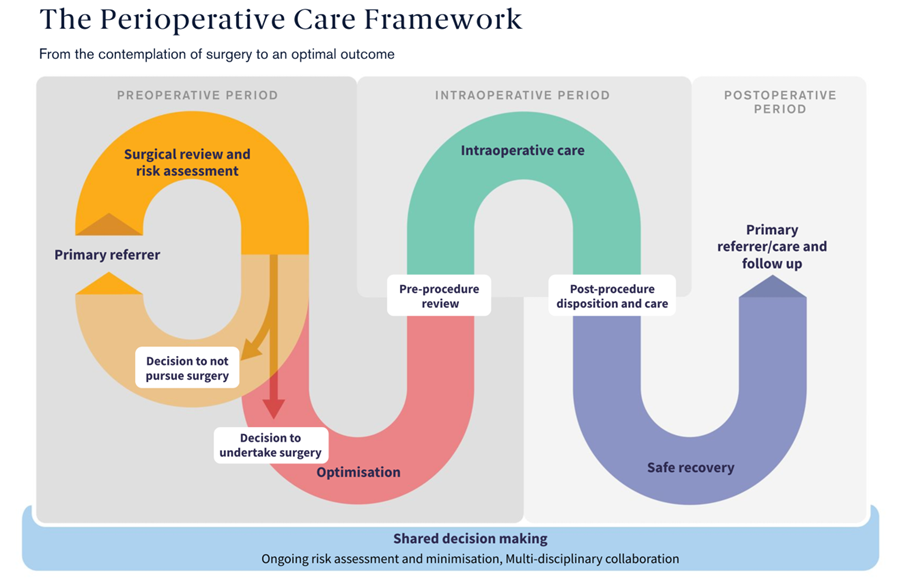
The phrase “perioperative” inherently evokes images of medical procedures, surgeries, and the careful journey a patient undertakes from diagnosis to full recovery. In a traditional sense, it encompasses the entire continuum of patient care, from the moment a surgical decision is made (preoperative), through the operation itself (intraoperative), and into the immediate recovery period (postoperative). However, in the 21st century, every facet of this critical journey is increasingly underpinned, enabled, and transformed by technology. “Perioperative technology” therefore refers to the comprehensive suite of digital tools, software systems, hardware, and methodologies that optimize, secure, and enhance patient care and operational efficiency throughout these crucial phases.

It’s an expansive field, touching upon everything from intricate robotic surgical systems and AI-driven diagnostic platforms to secure electronic health record (EHR) management and remote patient monitoring applications. The integration of technology into the perioperative landscape is not merely an enhancement; it is a fundamental shift that is redefining patient safety, surgical precision, recovery pathways, and the very economics of healthcare delivery. This article delves into the core components of perioperative technology, exploring its impact across the different stages and examining the critical challenges and future trends shaping this vital domain.
The Preoperative Technological Landscape: Setting the Stage for Success
The journey towards a successful surgical outcome begins long before a patient enters the operating room. The preoperative phase is a meticulously planned period focused on patient assessment, preparation, and risk mitigation. Technology plays an indispensable role here, streamlining processes, enhancing diagnostic accuracy, and improving patient engagement.
Digital Patient Management and Scheduling
Modern healthcare facilities rely heavily on sophisticated software platforms for patient management. These systems handle everything from initial consultation scheduling and appointment reminders to insurance verification and digital consent forms. Integrated patient portals allow individuals to access their health information, communicate securely with care providers, and complete pre-admission paperwork digitally, significantly reducing administrative burden and improving patient convenience. Advanced scheduling algorithms optimize operating room utilization, staff allocation, and resource availability, ensuring that complex surgical schedules run as smoothly as possible.
Diagnostic Imaging and AI-Powered Analysis
Perhaps one of the most visible technological advancements in the preoperative phase is in diagnostics. High-resolution imaging techniques such as MRI, CT scans, and PET scans provide detailed anatomical and physiological insights crucial for surgical planning. Beyond raw image acquisition, Artificial Intelligence (AI) and machine learning algorithms are revolutionizing image analysis. AI can assist radiologists in identifying subtle anomalies, segmenting tumors, or predicting disease progression with greater accuracy and speed than the human eye alone. This AI-enhanced diagnostic capability directly informs surgical strategy, enabling more precise and less invasive procedures.
Pre-Anesthetic Evaluation Systems
Anesthesia plays a critical role in surgical safety. Pre-anesthetic evaluation systems leverage digital questionnaires, biometric data capture, and predictive analytics to assess a patient’s risk profile for anesthesia and surgery. These systems can flag potential complications, recommend specific pre-optimization strategies (e.g., blood pressure control, nutritional support), and help anesthesiologists tailor a personalized anesthetic plan, thereby reducing the likelihood of adverse events and improving patient outcomes.
Intraoperative Innovations: Tools for Precision and Safety
The operating room (OR) itself is a high-tech environment where precision, real-time data, and advanced instrumentation are paramount. Intraoperative technology aims to augment the surgeon’s capabilities, enhance patient safety, and minimize invasiveness.
Robotic-Assisted Surgery and Automation
Robotic surgical systems, such as the da Vinci platform, have become emblematic of advanced intraoperative technology. These systems provide surgeons with enhanced dexterity, magnified 3D visualization, and tremor filtration, enabling highly complex procedures to be performed with unprecedented precision and minimal invasiveness. Beyond direct surgical assistance, automation extends to intelligent operating room integration systems that control lighting, climate, and equipment, creating an optimized and streamlined surgical environment.
Real-Time Monitoring and Data Integration
During surgery, continuous and accurate monitoring of vital signs, physiological parameters, and anesthetic depth is critical. Advanced patient monitoring systems integrate data from various devices – heart rate monitors, pulse oximeters, blood pressure cuffs, capnography, etc. – into a centralized display, often with predictive analytics capabilities. These systems can alert the surgical team to subtle changes in a patient’s condition, allowing for immediate intervention. Furthermore, the seamless integration of this data directly into the patient’s EHR creates a comprehensive, real-time record of the surgical event, vital for post-op care and future reference.
Advanced Imaging and Navigation Systems
Intraoperative imaging, such as C-arms and ultrasound, allows surgeons to visualize anatomical structures and instrument placement in real-time, crucial for orthopedic, neurosurgical, and vascular procedures. Surgical navigation systems, akin to a GPS for the human body, use optical or electromagnetic tracking to guide instruments with sub-millimeter accuracy based on preoperative imaging data. Augmented reality (AR) is also emerging, overlaying critical patient data or 3D anatomical models onto the surgeon’s view, further enhancing precision and spatial awareness during complex operations.
Postoperative Tech: Enhancing Recovery and Follow-Up
The post-surgical phase is just as critical as the preceding stages, focusing on recovery, pain management, complication prevention, and patient education. Technology extends its reach here to support healing and ensure continuity of care beyond the hospital walls.
Remote Patient Monitoring and Telehealth
Once discharged, patients often benefit from continued monitoring. Remote Patient Monitoring (RPM) solutions utilize wearable sensors and connected devices to track vital signs, activity levels, and other health metrics from the patient’s home. This data is securely transmitted to care teams, who can intervene proactively if concerning trends emerge. Telehealth platforms facilitate virtual follow-up appointments, allowing patients to consult with their surgeons or specialists without the need for an in-person visit, improving accessibility and reducing readmission rates.
Electronic Health Records (EHR) and Data Analytics
The EHR serves as the central repository for all patient information, from preoperative assessments to intraoperative notes and postoperative progress. In the postoperative phase, the EHR ensures that all members of the care team – nurses, physical therapists, pharmacists, and primary care physicians – have immediate access to critical information, facilitating coordinated care. Furthermore, advanced data analytics applied to aggregated EHR data can identify patterns related to recovery pathways, medication effectiveness, and complication rates, informing evidence-based improvements in care protocols.
Digital Rehabilitation and Patient Engagement Apps
Recovery often involves rehabilitation exercises and lifestyle adjustments. Digital health apps can provide patients with personalized exercise regimens, medication reminders, and educational content about their condition and recovery process. These apps often incorporate gamification elements or progress tracking to motivate patients, improving adherence to recovery plans and fostering greater self-management. Virtual reality (VR) is also being explored for pain management and physical therapy, offering immersive, engaging experiences that distract patients and aid in functional recovery.
The Foundational Role of Digital Security and Interoperability
While the benefits of perioperative technology are immense, its effective and ethical deployment hinges on two critical foundational pillars: robust digital security and seamless interoperability.
Protecting Patient Data: Cybersecurity in Healthcare
The vast amounts of sensitive patient data generated and shared across perioperative technological systems make healthcare a prime target for cyberattacks. A breach can have devastating consequences, compromising patient privacy, eroding trust, and disrupting critical care delivery. Therefore, state-of-the-art cybersecurity measures are non-negotiable. This includes end-to-end encryption, multi-factor authentication, intrusion detection systems, regular security audits, and comprehensive staff training on data protection protocols. Compliance with regulations like HIPAA (Health Insurance Portability and Accountability Act) in the US or GDPR (General Data Protection Regulation) in Europe is not just a legal requirement but a fundamental aspect of patient safety and ethical care.
Seamless Integration: The Challenge of Interoperability
Modern perioperative care involves numerous disparate systems – EHRs, imaging archives, lab systems, monitoring devices, robotic platforms, and more. For technology to truly optimize care, these systems must be able to communicate and exchange data seamlessly. A lack of interoperability leads to information silos, manual data entry, errors, and delays in critical decision-making. Developing universal data standards (e.g., HL7, FHIR), robust integration engines, and open APIs is crucial to breaking down these barriers, ensuring that the right information reaches the right care provider at the right time, regardless of the system it originated from.
Compliance and Regulatory Frameworks
The deployment of medical devices and software in the perioperative space is heavily regulated. Bodies like the FDA in the US or CE marking in Europe ensure that technologies are safe, effective, and meet stringent quality standards. Developers and healthcare providers must navigate complex regulatory landscapes, ensuring their innovations not only deliver clinical value but also adhere to the highest standards of safety and accountability.
Future Trends in Perioperative Technology: A Glimpse Ahead
The trajectory of perioperative technology is one of continuous innovation, driven by the relentless pursuit of safer, more efficient, and more personalized patient care.
Predictive Analytics and AI for Personalized Care
The future will see AI move beyond diagnostic assistance to proactive prediction. Predictive analytics, fueled by vast datasets from EHRs, genomics, and real-time monitoring, will identify patients at high risk for complications even before they manifest. This will enable highly personalized care pathways, from tailored anesthetic regimens to individualized recovery protocols, minimizing risks and optimizing outcomes.
Virtual and Augmented Reality in Training and Surgery
VR and AR are poised to transform both surgical training and intraoperative assistance. Surgeons can practice complex procedures in realistic virtual environments, refining their skills without patient risk. In the OR, AR overlays could provide “X-ray vision,” allowing surgeons to see hidden structures or critical patient data directly within their field of view, enhancing precision and situational awareness.
The Hyper-Connected Operating Room
Imagine an operating room where every device – from the surgical robot to the anesthetic machine and patient monitor – is interconnected, sharing data in real-time within a secure, intelligent network. This hyper-connected OR will leverage AI to synthesize information, offer real-time cognitive assistance, and even anticipate needs, creating a truly intelligent and adaptive surgical environment.

Conclusion
Perioperative technology has moved far beyond simple automation; it is now an indispensable partner in delivering high-quality, patient-centered care. From the initial diagnostic insights powered by AI to the precision of robotic surgery and the ongoing support of remote monitoring, technology underpins every stage of the surgical journey. Its evolution is characterized by a drive towards greater personalization, enhanced safety, and seamless integration of information. While challenges in cybersecurity and interoperability remain, the ongoing advancements in this field promise a future where surgical care is not only safer and more efficient but also profoundly more humane, ultimately leading to better outcomes for patients worldwide. The question is no longer “what is perioperative technology,” but rather, “how far can it take us in the pursuit of surgical excellence?”
aViewFromTheCave is a participant in the Amazon Services LLC Associates Program, an affiliate advertising program designed to provide a means for sites to earn advertising fees by advertising and linking to Amazon.com. Amazon, the Amazon logo, AmazonSupply, and the AmazonSupply logo are trademarks of Amazon.com, Inc. or its affiliates. As an Amazon Associate we earn affiliate commissions from qualifying purchases.