
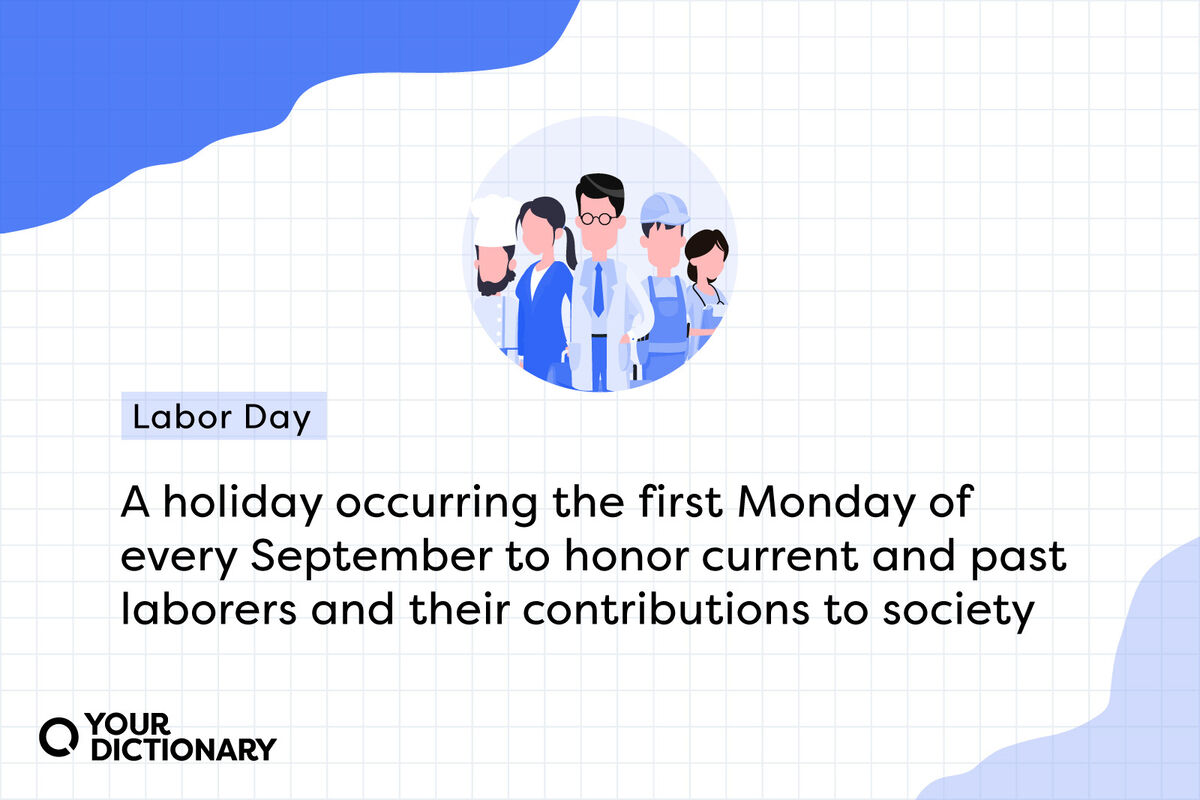
Labor Day, for many, signifies the unofficial end of summer, a final barbecue, or a long weekend sale. Yet, beneath these contemporary associations lies a profound and complex brand identity, forged through decades of struggle, advocacy, and societal evolution. To ask “what Labor Day stands for” is to inquire into its foundational brand strategy, its evolving corporate identity, and the marketing narratives that have shaped its public perception. This professional and insightful exploration delves into how the brand of labor and its commemorative holiday have been constructed, perceived, and continually reinterpreted.
The Genesis of a Brand: Labor Day’s Historical Identity
Every successful brand has an origin story, a moment of inception that defines its initial purpose and core values. For Labor Day, this genesis is rooted in the fervent socio-economic movements of the late 19th century, a period marked by industrialization, immense wealth disparity, and often brutal working conditions. The holiday was not merely declared but was strategically branded by labor advocates to encapsulate a powerful message of worker dignity and collective strength.
The Fight for Recognition: Early Labor Movements
The late 1800s witnessed an unprecedented surge in industrial growth across North America. Factories boomed, railways crisscrossed continents, and cities swelled with a burgeoning working class. Yet, this progress often came at a steep human cost: 12-hour workdays, six or even seven days a week, meager wages, dangerous environments, and the widespread exploitation of child labor. In this crucible of hardship, the first coherent brand identity for “labor” began to coalesce. Unions and workers’ organizations emerged, striving to counteract the prevailing corporate narrative that often depicted workers as expendable cogs in an industrial machine. Their initial branding efforts focused on highlighting human dignity, the right to a fair wage, and the necessity of reasonable working hours. Protests, strikes, and public demonstrations served as potent marketing campaigns, visually and viscerally communicating their grievances and demands to a wider audience. The call for an eight-hour workday, for instance, became a powerful slogan – a simple, understandable brand promise that resonated deeply with the masses.
Crafting the Official Narrative: From Grassroots to National Holiday
The idea of a dedicated “Labor Day” was itself a branding triumph. It sought to institutionalize and legitimize the contributions of the working class, elevating their status from mere cogs to foundational pillars of society. Oregon was the first state to declare it a legal holiday in 1887, followed by others. The pivotal moment arrived in 1894 when, amidst the tumultuous Pullman Strike and subsequent federal intervention, President Grover Cleveland signed legislation making Labor Day a national holiday. This act was a strategic move, partly to appease labor unrest and partly to formally acknowledge the significant socio-economic force that organized labor had become. The establishment of Labor Day as a federal holiday served to enshrine the brand of “the American worker” within the national consciousness. It provided official endorsement, lending governmental legitimacy to the workers’ cause and solidifying a specific identity for the day – one of respect, recognition, and celebration of the labor force.
Core Brand Values: Dignity, Rights, and Contribution
From its inception, the brand of Labor Day was built upon a bedrock of core values. Firstly, Dignity: it was a day to honor the inherent worth and respect due to every individual who contributes their effort to society. This value directly challenged the dehumanizing aspects of industrial labor. Secondly, Rights: the holiday underscored the hard-won battles for fundamental worker protections, such as safe working conditions, fair compensation, and the right to organize. It served as a reminder that these were not privileges, but entitlements. Thirdly, Contribution: Labor Day positioned workers not as mere subordinates, but as essential contributors to the nation’s prosperity and progress. It was a brand message that emphasized the collective power and indispensable role of labor in building the economy and society. These three pillars formed the immutable core of Labor Day’s original brand identity, a message carefully crafted and passionately championed by its early advocates.
Evolving Perceptions: How the Brand of Labor Has Shifted
Like any enduring brand, the identity of “labor” and its commemorative holiday has not remained static. It has undergone significant transformations, reflecting the seismic shifts in economic structures, technological advancements, and societal values. Understanding these shifts is crucial to grasping how the brand’s perception has evolved over time.
Industrial Era Branding: The Might of the Manual Worker
In the early and mid-20th century, the brand of labor was intrinsically linked to the industrial backbone of the nation. The imagery associated with Labor Day – and by extension, the worker – was one of brawn, grit, and the tangible creation of goods. Think of Rosie the Riveter, the steelworker, the coal miner, the farmer. These were the archetypes that dominated the public’s perception. The brand emphasized physical strength, solidarity, and the collective power of organized unions. Marketing messages from unions focused on collective bargaining, factory safety, and the “brotherhood” of workers. The visual identity of Labor Day parades, with their strong union banners and marching contingents, reinforced this powerful, unified brand of the manual laborer – the foundational engine of a burgeoning industrial superpower.
Post-Industrial Evolution: Knowledge Workers and Service Economy
As Western economies transitioned from manufacturing to service and information, the brand of “the worker” began a profound redefinition. The rise of the “knowledge worker” – professionals in technology, finance, healthcare, and education – brought new dimensions to the labor brand. The emphasis shifted from physical exertion to intellectual capital, from the factory floor to the office cubicle, and increasingly, to the digital interface. The traditional blue-collar branding no longer encompassed the vast majority of the workforce. Labor Day’s implicit branding had to expand to include these new categories of contributors. The challenge was to maintain the core values of dignity and contribution while broadening the visual and conceptual scope of who “the worker” was, a strategic re-branding effort necessitated by economic evolution.
The Modern Worker’s Brand: Flexibility, Innovation, and Digital Labor

Today, the brand of the worker is more fragmented and multifaceted than ever. The gig economy, remote work, automation, and the rise of artificial intelligence have introduced entirely new categories of “labor.” The contemporary brand emphasizes flexibility, adaptability, innovation, and often, personal branding. Individuals are increasingly seen as independent contractors, entrepreneurs, or “creators” rather than solely employees. Labor Day’s messaging struggles to capture this diverse landscape. How do you unify the brand of a factory worker, a software engineer, a freelance graphic designer, and a ride-share driver under a single, cohesive banner? This challenge forces a critical re-evaluation of the core brand promise and its relevance in a rapidly changing world. The digital realm has also created new forms of “labor”—from content creation to data entry—further diversifying the brand landscape.
Branding Labor Day Today: Marketing, Messages, and Modern Identity
In the 21st century, Labor Day’s brand identity is a complex tapestry woven from its historical roots, evolving societal perceptions, and contemporary marketing forces. Its meaning is no longer solely dictated by labor unions but is influenced by commercial interests, political agendas, and individual interpretations.
Corporate Branding and Consumerism: The “End of Summer” Sales Phenomenon
Perhaps the most pervasive modern branding of Labor Day comes from the retail sector. For many, Labor Day has become synonymous with “Labor Day Sales” – a final consumer push before the fall season. This corporate branding strategy re-positions the holiday from a commemoration of workers’ rights to a commercial event, an opportunity for end-of-season discounts on everything from mattresses to automobiles. The marketing messages focus on leisure, family, and consumption, subtly (or not so subtly) overshadowing the holiday’s original intent. While economically significant, this commercial branding dilutes the core message, transforming a day of reflection on labor’s contributions into a transactional experience. This represents a significant co-optation of the holiday’s original brand identity by powerful marketing forces.
Political Branding: Speeches, Policy, and the Worker’s Vote
Politicians on both sides of the aisle utilize Labor Day as a platform for political branding. It’s a prime opportunity to deliver speeches, outline policy proposals, and reaffirm their commitment to the working class. For some, it’s a chance to champion union rights and advocate for stronger worker protections, aligning with the holiday’s historical brand. For others, it’s an opportunity to praise “job creators,” promote economic growth, and discuss the virtues of individual enterprise, subtly shifting the brand focus from collective labor to individual achievement and entrepreneurial spirit. The day becomes a stage for shaping public perception around economic policies and garnering the “worker’s vote,” demonstrating how political narratives actively contribute to the ongoing re-branding of labor’s meaning.
Personal Branding in the Age of Labor: From Gig Economy to Entrepreneurship
In an increasingly individualized economy, the concept of “personal branding” has become central to the modern worker’s identity. From LinkedIn profiles to personal websites, individuals actively curate their professional image, skills, and value proposition. This shift is particularly evident in the gig economy, where freelancers and contractors are their own “brands,” responsible for marketing their services and securing work. Labor Day, in this context, can be seen as a collective acknowledgment of individual personal brands contributing to the larger economic fabric. The celebration extends not just to the collective “labor,” but to the myriad of distinct personal brands that constitute the modern workforce – from the highly specialized consultant to the creative entrepreneur. This necessitates an even broader and more inclusive definition of what “labor” means in the 21st century.
Reclaiming the Narrative: Strengthening Labor’s Brand for the Future
The challenge for Labor Day’s brand going forward is to reconcile its rich historical legacy with the complexities of the contemporary world. Reclaiming and strengthening its original narrative requires a thoughtful approach to redefine and re-communicate its enduring relevance.
Redefining “Work”: Inclusivity and Diverse Contributions
A crucial step in revitalizing Labor Day’s brand is to consciously expand its definition of “work” to be truly inclusive. This means acknowledging and celebrating all forms of labor, visible and invisible, paid and unpaid, traditional and unconventional. It means recognizing the labor of caregivers, volunteers, students, and those in creative pursuits, alongside the established professions. By broadening the scope, the brand can resonate with a wider audience, reaffirming that dignity and contribution are universal values regardless of the specific nature of one’s efforts. This inclusive redefinition is a brand strategy designed to capture the full spectrum of human endeavor that contributes to society.
Communicating Value: The Ongoing Struggle for Fair Representation
Despite advancements, many workers still face challenges related to fair wages, job security, and workplace equity. Labor Day offers a vital opportunity to re-emphasize the foundational brand message of value and fair representation. This involves advocating for policies that ensure living wages, promote safe working conditions, and protect workers’ rights in emerging sectors. Effective communication strategies – through public education, media campaigns, and community engagement – are essential to keep these core values at the forefront. It’s about ensuring that the original brand promise of dignity and rights remains relevant and actionable in today’s economic landscape, counteracting any dilution by commercial or political interests.

Building a Future-Proof Brand for Labor
Ultimately, building a future-proof brand for Labor Day involves continuous adaptation while remaining anchored to its core principles. It means acknowledging the impact of automation and AI on the future of work and ensuring that the brand of “labor” evolves to address these challenges. It requires fostering a dialogue about the value of human work in an increasingly automated world and articulating a vision where technology augments, rather than diminishes, human contribution. By strategically engaging with these evolving realities, Labor Day can maintain its status as a vital commemoration, a powerful reminder of the dignity of work, the importance of collective action, and the enduring value of every individual’s contribution to the societal whole. It ensures that “what Labor Day stands for” remains a relevant and powerful brand message for generations to come.
aViewFromTheCave is a participant in the Amazon Services LLC Associates Program, an affiliate advertising program designed to provide a means for sites to earn advertising fees by advertising and linking to Amazon.com. Amazon, the Amazon logo, AmazonSupply, and the AmazonSupply logo are trademarks of Amazon.com, Inc. or its affiliates. As an Amazon Associate we earn affiliate commissions from qualifying purchases.