
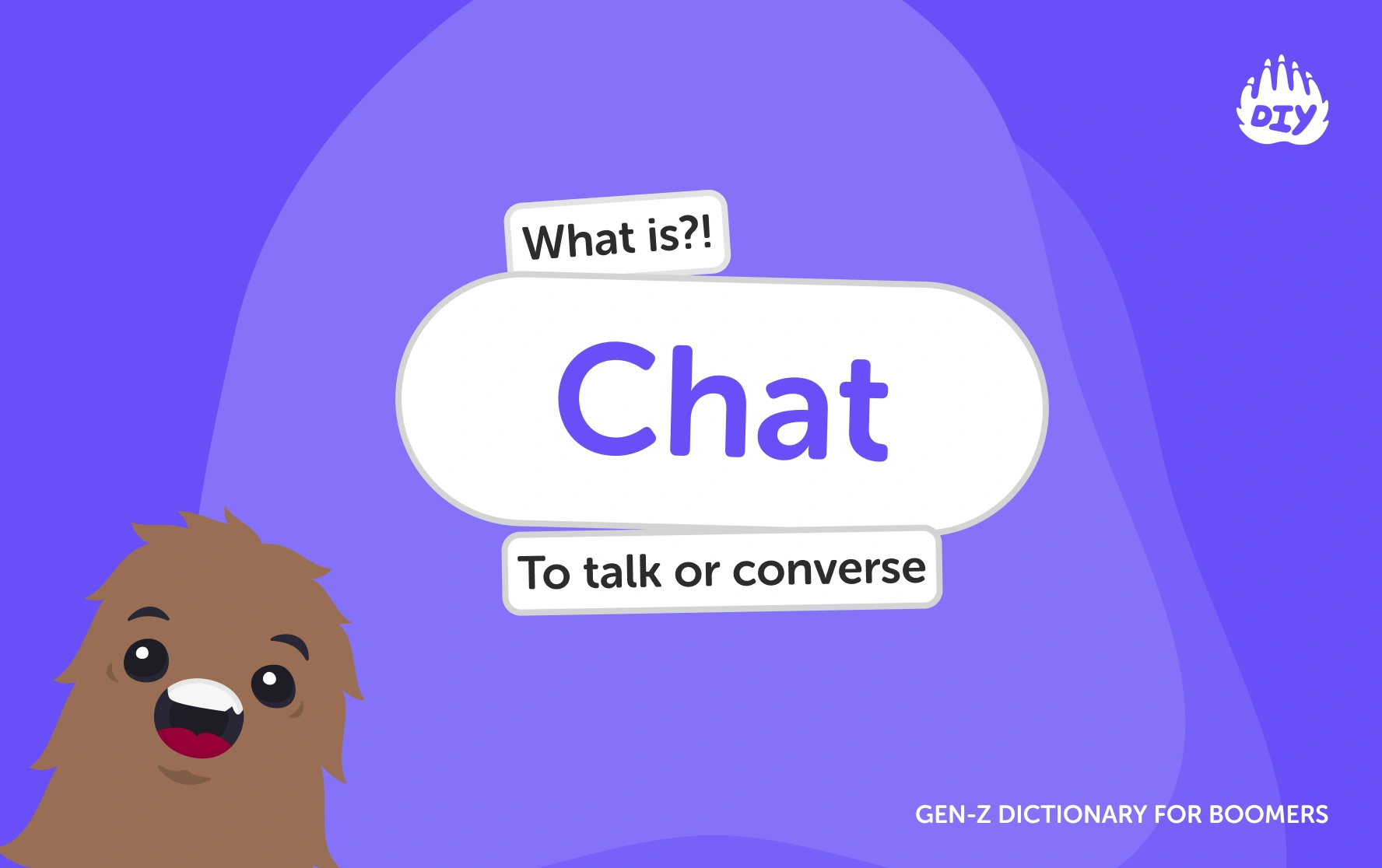
In the early days of the internet, the term “chat” referred to a simple, text-based exchange between two or more users connected to a local network or a rudimentary server. Today, the question “what does chat mean?” yields a far more complex answer. In the modern technological landscape, chat is no longer just a feature; it is a fundamental interface, a medium for artificial intelligence, and a cornerstone of global digital infrastructure. From the synchronization protocols that power instant messaging to the neural networks that drive conversational AI, the evolution of chat reflects the broader trajectory of the digital age.
The Technological Foundation of Modern Chat
At its core, digital chat is a method of synchronous communication where data packets are transmitted in real-time or near-real-time between endpoints. Unlike email, which is asynchronous and relies on a store-and-forward model, modern chat architecture is built for immediacy. This transition from static communication to dynamic interaction required significant leaps in networking technology.
The Transition from SMS to Instant Messaging (IM)
The history of chat began with Short Message Service (SMS), a protocol that utilized the signaling paths of cellular networks. However, the true “chat” experience emerged with the rise of Internet Protocol (IP)-based messaging. Services like AOL Instant Messenger (AIM) and ICQ shifted the burden from cellular bandwidth to data networks, allowing for richer media and longer conversations. This shift was more than just a change in medium; it introduced the concept of “presence”—the ability to see if a contact was “online” or “away,” a technological feat that required constant heartbeats between the client and the server.
Real-Time Communication Protocols: WebSockets and XMPP
To achieve the “instant” in instant messaging, developers had to move away from standard HTTP requests, which were traditionally one-way and high-latency. Two major technologies paved the way for modern chat:
-
XMPP (Extensible Messaging and Presence Protocol): An open-standard communication protocol based on XML. It allowed for decentralized, scalable messaging and was the original backbone for Google Talk and early Facebook Chat.
-
WebSockets: This technology provides a full-duplex communication channel over a single TCP connection. Unlike traditional web browsing, where the client must request data, WebSockets allow the server to “push” messages to the client the moment they are received. This is what enables the seamless, “typing…” indicator and instant message delivery we expect today.
End-to-End Encryption: Securing the Digital Dialogue
As chat became the primary mode of communication, digital security became paramount. The “Tech” behind chat today is heavily focused on End-to-End Encryption (E2EE). Protocols like the Signal Protocol utilize a “Double Ratchet Algorithm,” which ensures that even if one message key is compromised, subsequent messages remain secure. This complex cryptographic layer ensures that only the sender and receiver can decrypt the data, making the chat provider a “blind” intermediary.
The Rise of Conversational AI and Intelligent Chatbots
In the last decade, the definition of chat has expanded to include interactions between humans and machines. The phrase “chat” is now synonymous with “Large Language Model (LLM) interfaces.” When users “chat” with a computer today, they are interacting with billions of parameters designed to predict and generate human-like text.
Natural Language Processing (NLP) and Understanding (NLU)
The engine behind modern AI chat is Natural Language Processing. NLP allows a computer to break down a sentence into its constituent parts, while NLU (Natural Language Understanding) attempts to derive intent and context. Early chatbots relied on “pattern matching”—if a user said “Hello,” the bot responded with “Hi.” Modern systems use deep learning to understand that “How’s it going?” and “What is the status of my order?” require entirely different cognitive approaches despite being part of the same “chat” interface.
Large Language Models (LLMs) and Generative AI
The current “AI Chat” gold rush, led by models like GPT-4 and Claude, represents a paradigm shift. These are not just programmed bots; they are generative systems trained on petabytes of data. In this context, “chat” is the medium through which we access the sum of human knowledge. The technology uses “transformers”—a type of neural network architecture—to track relationships in sequential data, allowing the AI to maintain a coherent conversation over thousands of words.
The Shift from Scripted Bots to Context-Aware Agents
Older enterprise chat tools were often frustrating because they followed rigid decision trees. If you stepped outside the script, the bot failed. The current tech trend is moving toward “context-aware agents.” These systems use “Vector Databases” to store a history of interactions and relevant documents, allowing the chat interface to act as a personalized assistant that remembers past preferences and specific data points, making the “chat” feel less like a query and more like a collaboration.
Chat as an Interface: The “Everything App” Philosophy

In many parts of the world, chat has moved beyond messaging to become an Operating System (OS) in its own right. The “chat-first” interface is now being utilized to manage everything from productivity to hardware control.
Conversational Commerce and Integrated Ecosystems
The “Super App” model, exemplified by WeChat and increasingly emulated by platforms like WhatsApp, turns the chat window into a gateway for third-party services. Through APIs (Application Programming Interfaces), users can call a ride, pay a bill, or book a flight without leaving the chat thread. This is technologically achieved through “Mini Programs”—lightweight applications that run within the host chat app, using the chat interface as the primary navigation tool.
The Role of Chat in Collaborative Workspace Software
Platforms like Slack and Microsoft Teams have redefined chat for the corporate world. Here, chat is a database of institutional knowledge. The tech focus here is on “Integrations” and “Searchability.” These platforms use complex indexing algorithms to ensure that a file shared six months ago in a specific “channel” can be retrieved instantly. They also integrate with DevOps tools, allowing engineers to “chat” with their servers—issuing commands to deploy code or monitor system health directly within the messaging UI.
Voice and Video Integration within Chat Frameworks
Modern chat is no longer restricted to text. The integration of VoIP (Voice over IP) and WebRTC (Web Real-Time Communication) has made high-definition voice and video a standard component of the chat experience. This requires sophisticated “codecs” (compression/decompression algorithms) that can maintain call quality even over unstable internet connections by dynamically adjusting bitrates in real-time.
The Impact of Chat Technology on User Experience and Accessibility
As chat technology matures, its focus has shifted toward making digital communication more inclusive and frictionless. The “meaning” of chat today includes its ability to bridge gaps that were previously insurmountable.
Breaking Language Barriers with Real-Time Translation
One of the most impressive feats of modern chat tech is the integration of Neural Machine Translation (NMT). When you chat with someone speaking a different language on a modern platform, the system often translates the text in milliseconds. This involves a three-step process: speech-to-text (if using voice), machine translation via neural networks, and text-to-speech or display. This technology has effectively democratized global communication, allowing real-time collaboration across linguistic borders.
Designing for Inclusivity: Chat for Diverse Abilities
For users with visual or motor impairments, the “chat” interface has become an essential accessibility tool. Screen readers have become highly optimized for the linear flow of chat messages. Furthermore, Haptic Feedback and Voice-to-Text technologies allow users to engage in the “chat” ecosystem regardless of their physical ability. The development of “Assistive Context” technology—where AI summarizes long chat threads for a user—is the next frontier in making these high-volume information streams manageable for everyone.
Future Horizons: What’s Next for Digital Conversation?
The trajectory of chat suggests that we are moving toward a future where the interface disappears entirely. As we look forward, several emerging technologies are poised to redefine the “chat” experience once again.
Decentralized Chat and Web3 Integration
With growing concerns over data privacy and corporate ownership, the tech world is looking toward decentralized messaging protocols. Using blockchain technology or Peer-to-Peer (P2P) networks like IPFS, future chat apps may not rely on a central server at all. In this model, your “chat” identity is a cryptographic key, and your messages are stored across a distributed ledger, ensuring that no single entity can censor or shut down the communication line.
The Convergence of Chat and Augmented Reality (AR)
As we move into the era of spatial computing, chat will likely transition from 2D screens to 3D environments. Augmented Reality (AR) glasses will allow chat bubbles to appear in the user’s field of vision, or even project avatars of the person they are talking to into their physical space. This will require massive advancements in “latency reduction” and “spatial audio” to ensure that the digital presence feels as natural as a face-to-face conversation.
In conclusion, “chat” is no longer a simple verb describing a casual conversation. It is a high-tech ecosystem that encompasses sophisticated networking protocols, cutting-edge artificial intelligence, and complex security frameworks. As the interface of choice for both human-to-human and human-to-machine interaction, chat continues to be the primary laboratory for the next generation of technological innovation. Whether through a text bubble on a smartphone or a voice command to an AI, the “chat” remains our most vital link to the digital world.
aViewFromTheCave is a participant in the Amazon Services LLC Associates Program, an affiliate advertising program designed to provide a means for sites to earn advertising fees by advertising and linking to Amazon.com. Amazon, the Amazon logo, AmazonSupply, and the AmazonSupply logo are trademarks of Amazon.com, Inc. or its affiliates. As an Amazon Associate we earn affiliate commissions from qualifying purchases.