
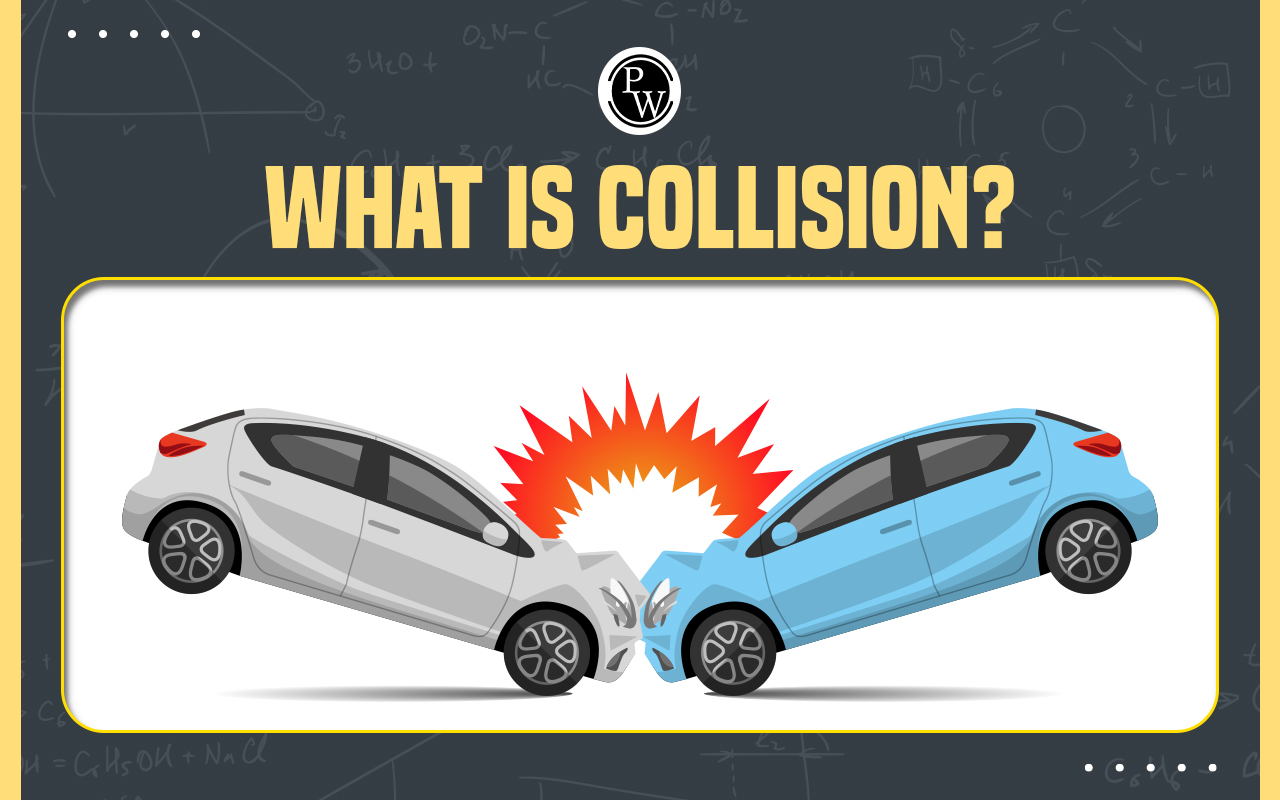
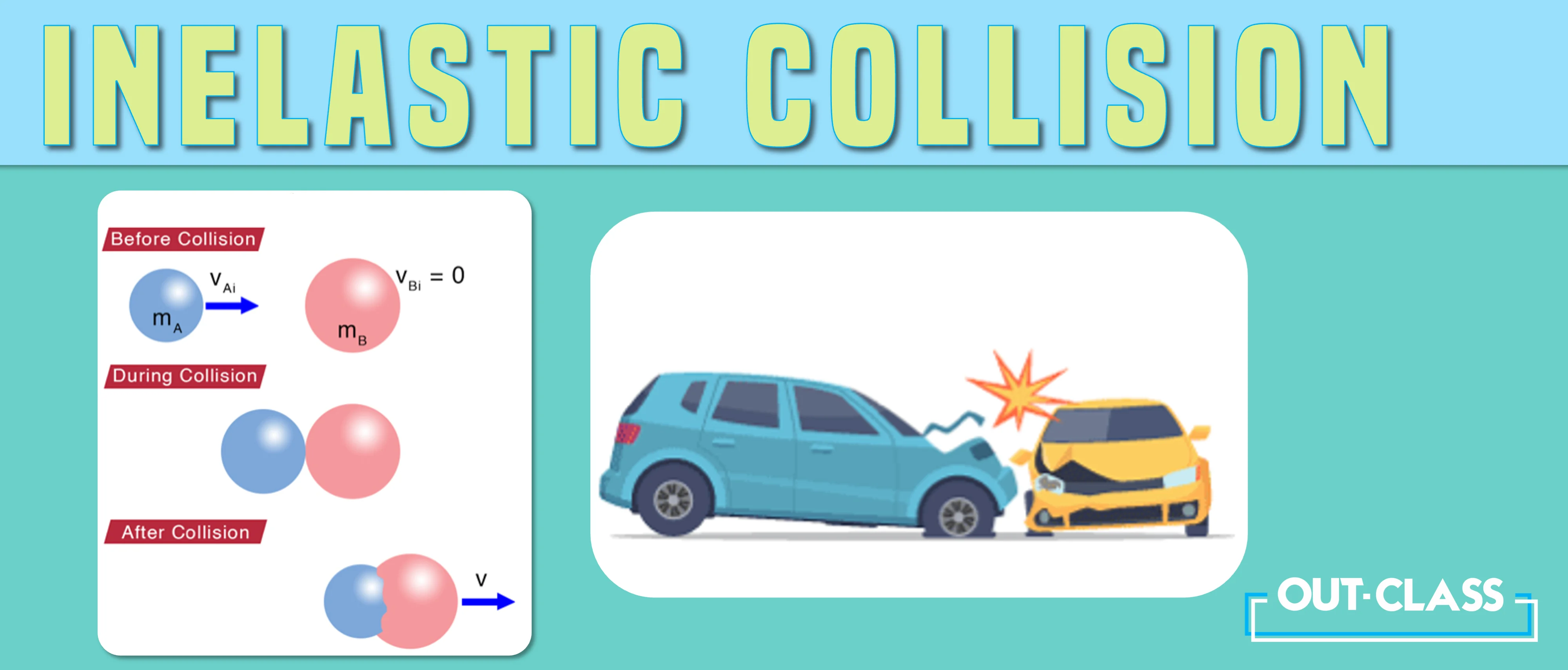
In its most fundamental sense, “collision” conjures images of two objects meeting with force – a car crash, billiard balls striking, or a meteor impacting a planet. While this physical interpretation remains valid, in the expansive and intricate world of technology, the concept of collision extends far beyond mere physical impact. It encompasses a rich tapestry of meanings, from literal data clashes and network interference to abstract encounters of algorithms and ideas. Understanding what collision means in a technological context is crucial for grasping the principles behind network communication, data security, interactive software, and even the very process of innovation itself. It’s a concept that, whether a problem to be avoided or a catalyst for creation, fundamentally shapes how our digital world operates, communicates, and evolves.
Collision in Network Protocols: The Foundation of Connectivity
The earliest and most tangible manifestation of “collision” in computing largely emerged from the challenges of connecting multiple devices to share a single communication medium. This is where network protocols stepped in to manage the inevitable clashes.
Ethernet and CSMA/CD
One of the most iconic examples of collision in technology comes from the early days of Ethernet, particularly with shared-medium networks using hubs. Imagine several computers trying to talk simultaneously over the same cable. A “collision” would occur when two or more devices attempted to transmit data packets at precisely the same moment onto the shared network segment. The electrical signals would literally interfere with each other, corrupting both transmissions and rendering the data unintelligible.
To manage this, early Ethernet employed a protocol called Carrier Sense Multiple Access with Collision Detection (CSMA/CD). Here’s how it worked:
-
Carrier Sense (CS): Before transmitting, a device “listens” to the network to check if it’s idle. If it hears traffic, it waits.
-
Multiple Access (MA): Multiple devices can access the network medium.
-
Collision Detection (CD): If a device transmits and simultaneously detects that another device is also transmitting (i.e., a collision has occurred), it immediately stops its transmission.
-
Jamming Signal: Upon detecting a collision, the transmitting devices send a brief “jamming signal” to ensure all other devices on the segment are aware of the collision.
-
Random Backoff: Each device then waits for a random period (a “backoff” time) before attempting to retransmit. This randomization helps prevent the devices from colliding again immediately after the previous one.
While effective, collisions significantly reduced network efficiency. The more devices on a shared segment, and the higher the traffic, the more frequent the collisions, leading to substantial delays and retransmissions. This inherent limitation was one of the driving forces behind the evolution from shared hubs to intelligent switches. Switches segment the network, creating dedicated communication paths between devices, thereby largely eliminating collision domains and improving overall network performance dramatically.
Beyond Ethernet: Conceptual Collisions in Modern Networks
Though physical Ethernet collisions are largely a relic of the past in most modern switched networks, the underlying concept of conflicting demands for shared resources remains highly relevant. In today’s complex network architectures, while direct physical signal collisions are rare, “conceptual collisions” manifest in various forms:
-
Congestion: When too much data attempts to traverse a network link or device (like a router) at once, it creates a bottleneck. While not a “collision” in the Ethernet sense, it’s a conflict for resources that leads to packet queuing, delays, and potential packet loss – a form of digital “traffic jam.”
-
IP Address Conflicts: Two devices inadvertently configured with the same IP address on a network will “collide,” leading to communication failures for one or both devices, as the network cannot reliably route traffic to a unique destination.
-
Routing Conflicts: In large, dynamic networks, misconfigured routing protocols can lead to conflicting paths or routing loops, where data packets bounce back and forth indefinitely, a form of conceptual collision that starves network resources.
Understanding these modern forms of collision is crucial for network engineers to design, manage, and troubleshoot robust and efficient network infrastructures.
Collision in Data Management and Security: Safeguarding Information
Beyond network traffic, the concept of collision takes on a critical, often abstract, role in how we store, retrieve, and secure digital information. Here, “collision” often refers to the unexpected or undesirable outcome when distinct pieces of data map to the same identifier or location.
Hash Collisions and Data Integrity
Hashing is a fundamental technique in computer science, used to transform a string of characters (or any data) into a fixed-size string of bytes, often called a “hash value” or “digest.” This hash is then used for various purposes, including quickly locating data in databases, verifying data integrity, and securing information. A good hash function is designed to produce a unique hash for unique input data.
A hash collision occurs when two different inputs produce the exact same hash value. While theoretically, any hash function can produce collisions (given that there are infinitely many possible inputs but only a finite number of possible hash outputs), robust hash functions are designed to make these collisions extremely rare and difficult to find.
Why are hash collisions problematic?
-
Data Integrity: If two different files produce the same hash, it becomes impossible to verify which file is authentic using only the hash. This compromises the integrity check.
-
Performance in Hash Tables: Hash tables (a common data structure for efficient data retrieval) use hash values to quickly locate data. If multiple items hash to the same “bucket,” the system must employ slower methods to find the correct item, degrading performance.
-
Security Vulnerabilities: In cryptographic contexts, hash collisions can be exploited for malicious purposes.
Cryptographic Collisions and Security Implications
When hashing is used for cryptographic purposes (e.g., in digital signatures, password storage, or blockchain), the property of “collision resistance” is paramount. A cryptographic hash function is considered collision-resistant if it is computationally infeasible to find two different inputs that hash to the same output.
The discovery of practical methods to create collisions for widely used cryptographic hash functions, such as MD5 or SHA-1, has significant security implications:
-
Digital Signature Forgery: If an attacker can find two documents (one legitimate, one malicious) that produce the same hash, they could get a trusted party to digitally sign the legitimate document. The attacker could then present the malicious document with the same signature, making it appear authentic.
-
Password Cracking: While passwords are typically hashed with “salts” to prevent pre-computed dictionary attacks, collision vulnerabilities could theoretically be exploited in more sophisticated attacks.
-
Certificate Forgery: Early issues with MD5 collisions demonstrated how attackers could potentially forge SSL/TLS certificates, undermining trust in secure web communication.
Therefore, the development and adoption of stronger, more collision-resistant hash functions (like SHA-256 and SHA-3) are critical components of modern cybersecurity, constantly evolving to stay ahead of potential collision-finding attacks.
Collision in Interactive Systems: From Gaming to Robotics
In the realm of interactive digital experiences and autonomous systems, “collision” takes on a more direct, albeit often simulated, physical meaning. It’s about detecting when virtual or physical objects occupy the same space, driving realistic interactions and safe operations.
Collision Detection in Game Development
One of the most intuitive applications of collision is found in video games and simulations. Collision detection is the computational process of determining whether two or more virtual objects in a game environment have intersected or come into contact. This is absolutely fundamental for:
-
Physics Simulation: Making objects react realistically when they hit each other (e.g., a ball bouncing off a wall, debris scattering after an explosion).
-
Character Interaction: Preventing a player character from walking through walls, allowing them to pick up items, or determining when they’ve been hit by an enemy projectile.
-
Game Mechanics: Triggering events when objects collide (e.g., scoring points when a character collects a coin, or opening a door when a key touches it).
-
Environmental Interaction: Ensuring vehicles adhere to terrain, or that projectiles accurately impact surfaces.
Sophisticated algorithms are used to perform collision detection efficiently, as it can be a computationally intensive task, especially in games with many interacting objects. Methods range from simple bounding boxes or spheres (approximating objects with simpler shapes) for quick initial checks, to more precise per-pixel or mesh-based collision detection for detailed interactions. The accuracy and performance of collision detection directly impact the believability and playability of a game.
Real-world Robotics and Autonomous Systems
Moving beyond virtual environments, collision detection and, crucially, collision avoidance are critical functionalities for physical robots and autonomous systems operating in the real world. Here, a collision can have tangible, often dangerous, consequences.
-
Robotics: Industrial robots, surgical robots, or service robots must be able to detect and avoid colliding with their environment, other robots, or, most critically, humans. This involves using sensors (Lidar, cameras, ultrasonic) to build a real-time map of their surroundings and algorithms to predict potential collisions and plan safe trajectories.
-
Autonomous Vehicles: Self-driving cars rely heavily on advanced sensor suites and AI to continuously scan their environment, detect other vehicles, pedestrians, cyclists, and obstacles, and perform collision avoidance maneuvers (braking, steering) to ensure passenger safety. A collision here is not just a glitch; it’s a potentially life-threatening event.
-
Drones: Unmanned aerial vehicles (UAVs) use similar technologies to navigate complex airspaces, avoid buildings, trees, power lines, and other flying objects, especially in crowded urban environments or during complex missions.
The advancement of collision detection and avoidance technologies is paramount for the widespread adoption and safe integration of robotics and autonomous systems into our daily lives.
Collision as a Metaphor: Innovation and Progress
Finally, the concept of “collision” transcends its literal and technical definitions to become a powerful metaphor for innovation, problem-solving, and the dynamic process of creation within the tech industry.
The Collision of Ideas in Software Development
Software development, particularly in agile and collaborative environments, thrives on the “collision” of diverse ideas, perspectives, and expertise. When designers, developers, product managers, and users bring their unique viewpoints to the table, their ideas inevitably “collide.”
-
Brainstorming Sessions: These are literal collisions of thoughts, where different approaches to a problem are proposed, debated, and refined.
-
Code Reviews: Different developers reviewing each other’s code can lead to collisions in coding styles, architectural choices, or algorithmic efficiency. These collisions, managed constructively, lead to more robust, efficient, and maintainable software.
-
Cross-functional Teams: Bringing together individuals from different specializations (e.g., front-end, back-end, UX, QA) means their inherent biases and methods will collide, often resulting in more holistic and user-centric solutions that no single individual could have conceived alone.
This metaphorical collision isn’t about destruction, but about friction that generates heat and light, forging stronger, more innovative solutions through constructive debate and synthesis.
Overcoming Challenges: A “Collision” with Reality
The journey of developing any new technology or software product is often a series of “collisions” with reality. An initial idea or design will inevitably collide with:
-
Technical Limitations: The proposed solution might not be feasible with current technology or within budget constraints.
-
User Feedback: What seemed like a brilliant feature might “collide” with user expectations or usability issues during testing.
-
Market Demands: A product strategy might collide with competitive pressures or shifting market trends.
Each of these collisions forces a re-evaluation, an adaptation, and a refinement of the original plan. It’s through these iterative “impacts” and subsequent adjustments that technology matures, products improve, and innovation truly takes hold. Embracing these collisions, rather than avoiding them, is a hallmark of successful tech companies and development teams.

Conclusion
From the literal clashing of data packets on an Ethernet cable to the abstract confluence of ideas driving the next wave of innovation, the concept of “collision” is deeply embedded in the lexicon and operational fabric of the digital world. It signifies points of impact, whether detrimental to be avoided, critical for security, essential for realistic interaction, or constructive for creative breakthroughs. Understanding its multifaceted meanings—be it a physical interference, a data integrity risk, a real-time spatial interaction, or a metaphorical clash of concepts—is fundamental to comprehending the challenges, mechanisms, and evolutionary forces at play in technology. As our digital landscapes become ever more complex and interconnected, the ability to manage, mitigate, and even harness the various forms of collision will remain paramount for building resilient, secure, efficient, and truly innovative systems.
aViewFromTheCave is a participant in the Amazon Services LLC Associates Program, an affiliate advertising program designed to provide a means for sites to earn advertising fees by advertising and linking to Amazon.com. Amazon, the Amazon logo, AmazonSupply, and the AmazonSupply logo are trademarks of Amazon.com, Inc. or its affiliates. As an Amazon Associate we earn affiliate commissions from qualifying purchases.