
Landfills, often seen merely as final resting places for our refuse, are in fact complex ecosystems with profound financial implications. Far from simple holes in the ground, modern sanitary landfills represent significant capital investments, ongoing operational expenditures, and long-term liabilities that ripple through local economies, public finance, and the broader business landscape. Understanding “what are landfills” from an economic perspective unveils a critical sector grappling with increasing waste volumes, stringent regulations, and the constant pressure to find sustainable, cost-effective solutions. This article will dissect the financial realities of landfills, exploring their economic footprint, the business models that govern them, and the investment opportunities emerging as societies strive to move beyond conventional waste disposal.

The Financial Landscape of Waste Disposal
The journey of waste from our homes and businesses to its ultimate disposal at a landfill is a path paved with substantial financial considerations at every stage. The costs are multifaceted, impacting both public and private sectors, and influencing everything from local taxes to the price of consumer goods.
Initial Investment and Operational Costs
Establishing a modern landfill is an undertaking that demands significant upfront capital. Acquiring suitable land is often the first hurdle, with land values varying wildly based on location, proximity to population centers, and environmental considerations. Beyond land acquisition, the construction phase involves engineering marvels designed to prevent environmental contamination. This includes extensive excavation, the installation of multi-layered liners (typically composed of compacted clay, synthetic geomembranes, and drainage layers), leachate collection systems, and gas collection systems. These components alone can cost tens to hundreds of millions of dollars, depending on the landfill’s size and design capacity.
Once operational, a landfill incurs a continuous stream of expenses. Daily operations involve managing incoming waste, compacting it efficiently, and covering it with soil or alternative daily cover materials to control odors, pests, and litter. Fuel for heavy machinery, maintenance of equipment, and labor costs for operators, engineers, and administrative staff form a substantial portion of the recurring budget. Furthermore, regulatory compliance necessitates regular environmental monitoring, including groundwater testing, air quality sampling, and leachate analysis, adding another layer of recurring expense. These operational costs are often borne by municipalities, private waste management companies, or through a combination of public-private partnerships.
Revenue Streams and Fees
To offset these considerable expenses, landfills generate revenue primarily through tipping fees. A tipping fee is the charge levied on waste haulers or individuals for each ton (or cubic yard) of waste brought to the facility. These fees vary widely depending on the region, the type of waste, the landfill’s capacity, and local demand. In densely populated areas with limited landfill space, tipping fees can be significantly higher, reflecting the scarcity and the cost of transport to more distant facilities. For municipalities, these fees can represent a significant portion of their waste management budget, sometimes covering operational costs and contributing to capital improvement funds. Private operators, conversely, rely on tipping fees as their primary source of income, crucial for maintaining profitability and shareholder returns.
Beyond direct tipping fees, some modern landfills can generate additional revenue through the capture and utilization of landfill gas. As organic matter decomposes anaerobically within the landfill, it produces methane, a potent greenhouse gas. This gas can be collected and processed for various uses: directly burned to generate electricity, converted into renewable natural gas (RNG) for vehicles, or used to fuel industrial processes. These “landfill gas-to-energy” projects not only mitigate environmental impact but also create a valuable energy commodity, offering an additional revenue stream and an attractive return on investment for the facility owners.
Hidden Costs and Externalities
While tipping fees and energy revenues are direct financial aspects, landfills impose numerous “hidden” costs and negative externalities on society and the environment, which often are not fully internalized into the operational budget. These include the long-term environmental degradation potential, such as groundwater contamination from leachate leaks, air pollution from uncaptured methane and other volatile organic compounds, and the physical degradation of surrounding landscapes.
Economically, these externalities manifest as costs to public health (e.g., increased respiratory issues in nearby communities), ecological damage, and reduced property values in areas adjacent to landfills. While regulations aim to minimize these impacts, the full cost of environmental remediation and public health interventions can be astronomical and are often borne by taxpayers, even decades after a landfill closes. The societal cost of carbon emissions from landfills, even with gas capture, also represents an unquantified economic burden in the context of climate change. A complete financial picture of landfills must account for these broader societal and environmental costs, pushing for greater investment in prevention and mitigation.
Landfills as a Business: Industry Economics
The waste management industry is a vast and complex sector, with landfills forming a critical, though increasingly scrutinized, component. It is an industry driven by demographic trends, economic activity, and evolving environmental policies.
The Waste Management Market
Globally, the waste management market is enormous, valued at hundreds of billions of dollars and projected to grow significantly. This growth is fueled by increasing urbanization, population growth, and rising consumption patterns, which collectively generate ever-greater volumes of municipal solid waste (MSW). Within this market, the landfill sector, while facing pressure from recycling and waste-to-energy initiatives, remains a dominant disposal method, particularly in regions where land is plentiful and labor costs are lower.
The market is characterized by a mix of large multinational corporations, regional players, and municipal operations. Large private companies like Waste Management, Republic Services, and Veolia operate extensive networks of landfills, collection services, and recycling facilities, leveraging economies of scale and sophisticated logistics. These companies are major employers and significant contributors to local economies through taxes, wages, and procurement. The cyclical nature of economic activity directly influences waste generation, making the industry somewhat resilient during downturns but also subject to fluctuations in commodity prices for recycled materials.
Challenges and Profitability Margins
Despite its size, the landfill business faces numerous challenges that impact profitability. Landfill siting is a perpetual battle, often met with fierce “Not In My Backyard” (NIMBY) opposition from communities concerned about environmental impact, traffic, and odors. This makes securing new permits lengthy, expensive, and increasingly difficult, leading to a finite supply of disposal capacity in many regions. As existing landfills reach capacity, the cost of developing new ones or transporting waste to more distant sites escalates, squeezing profit margins.
Operational challenges include managing ever-changing waste streams, adapting to new regulatory requirements, and investing in advanced technologies for environmental protection. Labor costs, particularly for skilled equipment operators and environmental technicians, are consistently rising. Furthermore, the volatility of energy markets can impact the profitability of landfill gas-to-energy projects, requiring careful financial forecasting and risk management. While typically seen as a utility-like business with stable cash flows, the landfill sector demands continuous investment and strategic foresight to maintain financial viability.
Regulatory Compliance and Financial Risk
The waste management industry, and landfills in particular, is one of the most heavily regulated sectors. Environmental protection agencies at federal, state, and local levels impose stringent requirements on landfill design, operation, monitoring, and closure. These regulations are designed to minimize environmental contamination but come with significant compliance costs. Failure to comply can result in hefty fines, legal action, and costly remediation projects, posing substantial financial risks to landfill owners and operators.
Financial assurance requirements are a critical component of regulatory oversight. Landfill operators are typically required to demonstrate that they have sufficient funds set aside for future closure and post-closure care (monitoring and maintenance for decades after the landfill stops accepting waste). This often involves securing letters of credit, surety bonds, trust funds, or other financial instruments, which tie up capital and add to the overall cost of doing business. The long-term nature of these liabilities means that financial risk extends far beyond the operational life of the landfill, necessitating robust financial planning and risk assessment.
The Long-Term Financial Burden and Liabilities
The economic life of a landfill does not end when it stops accepting waste. In fact, some of its most significant financial obligations begin only after closure, stretching for decades into the future.
Post-Closure Care and Environmental Remediation
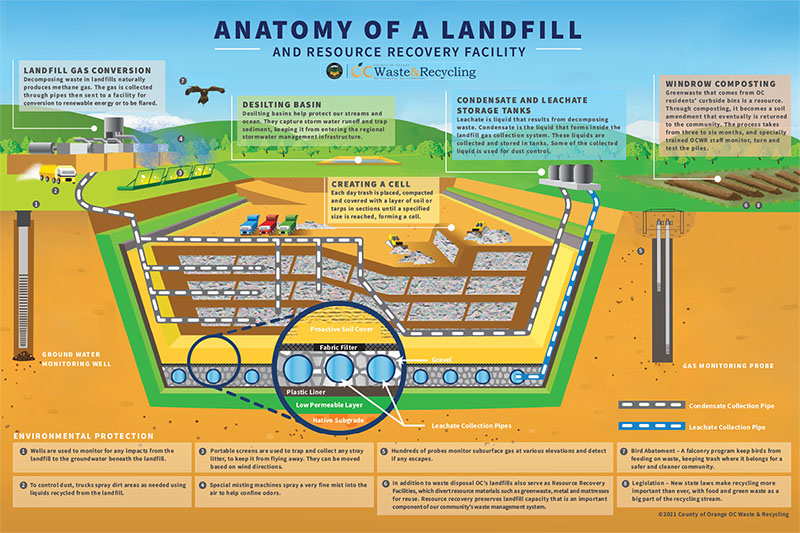
Once a landfill reaches its permitted capacity, it undergoes a formal closure process. This involves capping the landfill with multiple layers of soil and synthetic materials to prevent water infiltration and control gas emissions, establishing vegetation, and installing final environmental monitoring systems. The costs associated with landfill closure can be substantial, often running into tens of millions of dollars, depending on the landfill’s size and the complexity of the closure plan.
However, the financial commitments don’t end there. Post-closure care typically extends for 30 years or more after closure, requiring ongoing monitoring of groundwater, leachate, and landfill gas, maintenance of the cap and drainage systems, and necessary repairs. These long-term maintenance costs are a significant liability, requiring careful financial planning and dedicated funding mechanisms throughout the landfill’s operational life. Furthermore, should any environmental contamination occur—even decades after closure—the landfill owner remains liable for costly remediation efforts, including soil and groundwater treatment, which can escalate into open-ended financial burdens.
Impact on Property Values and Local Economies
The presence of a landfill often has a discernible impact on the economic landscape of surrounding communities. While landfills provide jobs and may generate tax revenue or host fees for host municipalities, they can also negatively affect property values in proximate areas. Perceived issues like odor, increased truck traffic, and visual blight can deter potential homebuyers and businesses, leading to slower economic growth or even decline in specific neighborhoods.
For municipalities, managing these impacts involves a delicate balance of local tax revenue, potential host community benefits (e.g., lower waste disposal fees for residents), and the social costs borne by residents. The long-term nature of landfill liabilities means that communities can be left dealing with the legacy of waste long after the economic benefits of operation have diminished. This often leads to heated debates about the distribution of costs and benefits, highlighting the complex financial and social dimensions of waste management infrastructure.
Funding Mechanisms and Public-Private Partnerships
To manage these significant current and future financial obligations, various funding mechanisms are employed. Municipal landfills often rely on a combination of general fund appropriations, user fees, bonds issued for capital projects, and dedicated trust funds for post-closure care. Private operators, on the other hand, leverage tipping fees, debt financing, and equity investments, with financial assurance mechanisms in place to cover long-term liabilities.
Public-Private Partnerships (PPPs) are becoming increasingly common in the waste management sector. These collaborations allow municipalities to leverage private sector expertise, capital, and efficiency in building and operating landfills, while sharing risks and responsibilities. PPPs can unlock funding for large-scale projects, spread financial burdens over longer periods, and potentially lead to more innovative and efficient waste management solutions, addressing both capital outlay and long-term liability concerns.
Investing in Sustainable Waste Solutions: Beyond the Landfill
The economic and environmental challenges posed by landfills are driving significant investment and innovation in alternative waste management strategies. The future of waste offers exciting opportunities for investors, businesses, and policymakers focused on resource recovery and sustainability.
Opportunities in Waste Reduction and Recycling
The most impactful way to mitigate landfill costs and environmental damage is to generate less waste in the first place. This principle, enshrined in the waste hierarchy, prioritizes reduction, reuse, and recycling. Investment opportunities abound in technologies and services that support these goals. This includes companies developing innovative packaging solutions that minimize material use, platforms facilitating the reuse economy (e.g., resale marketplaces, repair services), and advanced sorting and processing technologies for recycling facilities.
From an economic perspective, robust recycling programs can create local jobs, conserve valuable raw materials, and reduce the need for expensive new landfill capacity. While commodity prices for recycled materials can be volatile, the long-term trend towards a circular economy suggests increasing demand for recovered resources, making investments in recycling infrastructure and processing increasingly attractive. Governments also play a crucial role, often providing grants, tax incentives, and extended producer responsibility (EPR) schemes to stimulate investment in these areas.
Waste-to-Energy and Advanced Conversion Technologies
Beyond traditional recycling, significant financial interest is growing in waste-to-energy (WtE) and advanced conversion technologies. WtE facilities, which incinerate waste to generate electricity or heat, offer a dual benefit: reducing landfill volumes by up to 90% and producing renewable energy. While initial capital costs are high, these plants can generate substantial revenue from both tipping fees and electricity sales, offering an attractive return on investment over their operational lifespan.
Furthermore, emerging advanced conversion technologies, such as pyrolysis, gasification, and anaerobic digestion, offer even more sophisticated ways to extract value from waste. These processes can convert non-recyclable waste into various products, including synthetic fuels, chemicals, and biogas, reducing reliance on fossil fuels and traditional disposal methods. Investments in these cutting-edge technologies are crucial for scaling up sustainable waste management, offering a pathway to significant long-term economic and environmental returns.
Driving Innovation for Economic and Environmental Returns
The shift away from a purely linear “take-make-dispose” economy towards a more circular model is not just an environmental imperative; it’s a massive economic opportunity. Driving innovation in waste management involves fostering research and development in new materials, waste treatment processes, and smart logistics systems. This includes leveraging artificial intelligence and robotics for more efficient waste sorting, developing biodegradable alternatives to plastics, and creating digital platforms for waste tracking and material exchange.
Governments, venture capitalists, and corporate innovators are increasingly recognizing the vast potential for economic growth and job creation in the circular economy sector. Investments in waste innovation contribute to reducing the long-term financial burden of landfills, mitigating climate change, and creating new industries and market opportunities. The quest for truly sustainable waste management is a journey fueled by financial foresight, technological ingenuity, and a commitment to a healthier planet.
Financial Implications for Businesses and Individuals
The economic realities of landfills and waste management extend beyond the immediate industry players, impacting businesses of all sizes and individual citizens.
Corporate Social Responsibility and Green Investing
For businesses, waste management costs are a direct operational expense. Increasingly, companies are realizing that proactive waste reduction and sustainable disposal practices are not just about compliance but are critical components of corporate social responsibility (CSR) and brand reputation. Investing in internal waste reduction programs, choosing suppliers with sustainable practices, and diverting waste from landfills through recycling or composting can lead to significant cost savings, enhance brand image, and attract environmentally conscious consumers and investors.
The rise of “green investing” has seen a surge of capital directed towards companies involved in sustainable waste management, renewable energy, and circular economy initiatives. Investors are increasingly evaluating companies not just on traditional financial metrics but also on their Environmental, Social, and Governance (ESG) performance. This trend creates a financial incentive for businesses to prioritize waste reduction and invest in eco-friendly practices, driving capital towards more sustainable solutions and away from industries heavily reliant on conventional landfilling.

Personal Finance: Waste Costs and Eco-Conscious Choices
At the individual level, the costs associated with waste are often embedded in municipal taxes, service fees for waste collection, and the price of consumer goods. Higher landfill costs in a region can translate to higher waste disposal bills for residents. Understanding these financial linkages empowers individuals to make more informed choices about their consumption habits.
Adopting eco-conscious behaviors—such as reducing consumption, reusing items, composting organic waste, and actively participating in recycling programs—can indirectly lead to personal financial savings. Less waste means lower demand for waste services and potentially lower taxes or fees over the long term. Moreover, supporting businesses with strong sustainability practices and investing in products designed for longevity and recyclability contribute to a more sustainable economy, mitigating the future financial and environmental burdens associated with landfills. The choices individuals make collectively shape the demand for landfill capacity and the financial viability of alternative solutions.
In conclusion, “what are landfills” is a question that, when viewed through a financial lens, reveals a complex web of investments, operational costs, revenue streams, long-term liabilities, and evolving market dynamics. As the world confronts the twin challenges of waste generation and environmental protection, the economic imperative to move beyond simple disposal and towards a circular, resource-efficient future becomes ever clearer. The financial incentives for innovation, investment in sustainable solutions, and responsible consumption are not just environmental aspirations, but sound economic strategies for a resilient future.
aViewFromTheCave is a participant in the Amazon Services LLC Associates Program, an affiliate advertising program designed to provide a means for sites to earn advertising fees by advertising and linking to Amazon.com. Amazon, the Amazon logo, AmazonSupply, and the AmazonSupply logo are trademarks of Amazon.com, Inc. or its affiliates. As an Amazon Associate we earn affiliate commissions from qualifying purchases.